
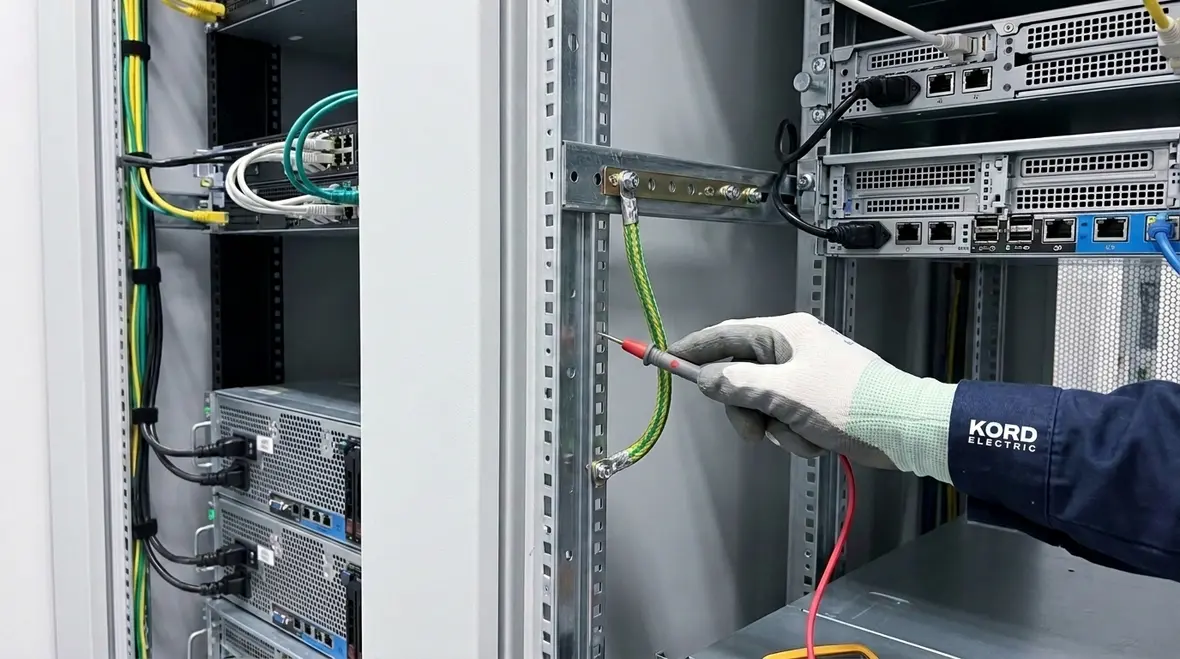
NFPA 70 Section 645.15 IT Equipment Bonding Guide
At Kord Electric, we focus on commercial and industrial facilities and major property buildings, because electrical safety cannot be treated like a hobby. When we plan or upgrade power systems, we consider requirements such as NFPA 70 Section 645.15 IT equipment bonding early, not as an afterthought. In this article, we explain how the National Electrical Code supports reliable, safe operation for data and control equipment, and how our technicians guide teams through the practical steps.
And yes, we know “bonding” sounds like something you do with a motivational poster. Still, when done right, it keeps sensitive equipment stable during faults and helps protect people and systems. Let’s walk through the rules, the intent, and what you should ask for on real projects.
What NFPA 70 means for commercial and industrial electrical work
NFPA 70, also called the NEC, sets minimum safety standards for electrical installations. In commercial and industrial spaces, we care about more than passing inspection. We care about reducing downtime, preventing equipment damage, and keeping workers safe when something goes wrong. Therefore, we treat the NEC as a design and verification tool, not a paperwork hurdle.
In practice, our expert service staff reviews how systems connect across the building. Then we align that with the NEC’s safety approach: manage fault current paths, control voltage stress, and ensure equipment has an intended connection to protective pathways. Meanwhile, teams often focus on breakers and panels, but bonding and grounding rules steer the whole story for IT and control networks.
To support that bigger picture, we also connect this topic with broader code education. Facility teams often review guides such as NFPA 70: All About the National Electrical Code (NEC) 2026 from our Kord Fire resources, as well as Kord Electric’s own article Understanding NFPA 70, the National Electrical Code Explained for 2026 before they dive into detailed bonding rules. Those perspectives help us connect electrical code intent with real-world risk.
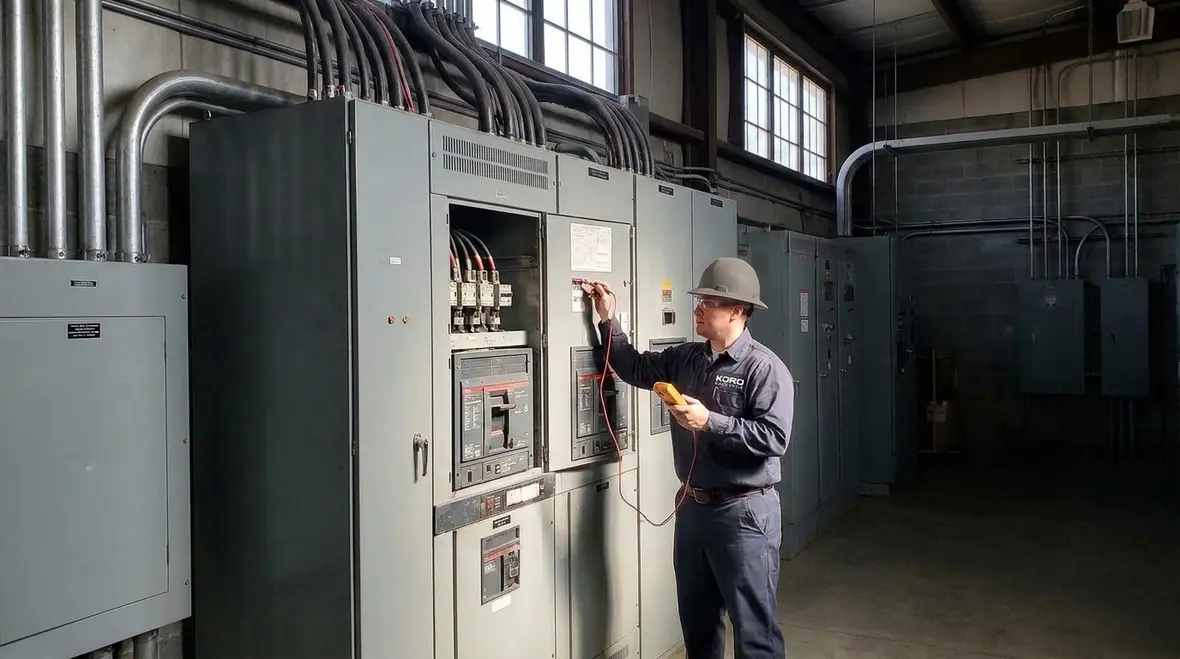
Why Section 645.15 IT equipment bonding matters in real life
NFPA 70 Section 645.15 IT equipment bonding focuses on how we connect bonded parts associated with IT equipment to ensure safe operation. This matters most when equipment has multiple interconnections, long cable runs, and shared communication networks. In other words, your servers and network gear do not operate in isolation, and neither should their bonding scheme.
When bonding gets sloppy, the consequences show up as nuisance faults, unstable network behavior, unexpected resets, or damage after transient events. Additionally, in certain fault conditions, you want a defined path for electrical energy. So we use bonding to reduce differences in electrical potential across connected equipment frames and raceways. That supports both safety and performance.
Our technicians explain this in plain terms during site walkthroughs. First, we map which components connect to which. Next, we verify that bonding conductors connect the right points, using the correct size, routing, and terminations. Finally, we document it so your maintenance team can keep it correct during future changes.
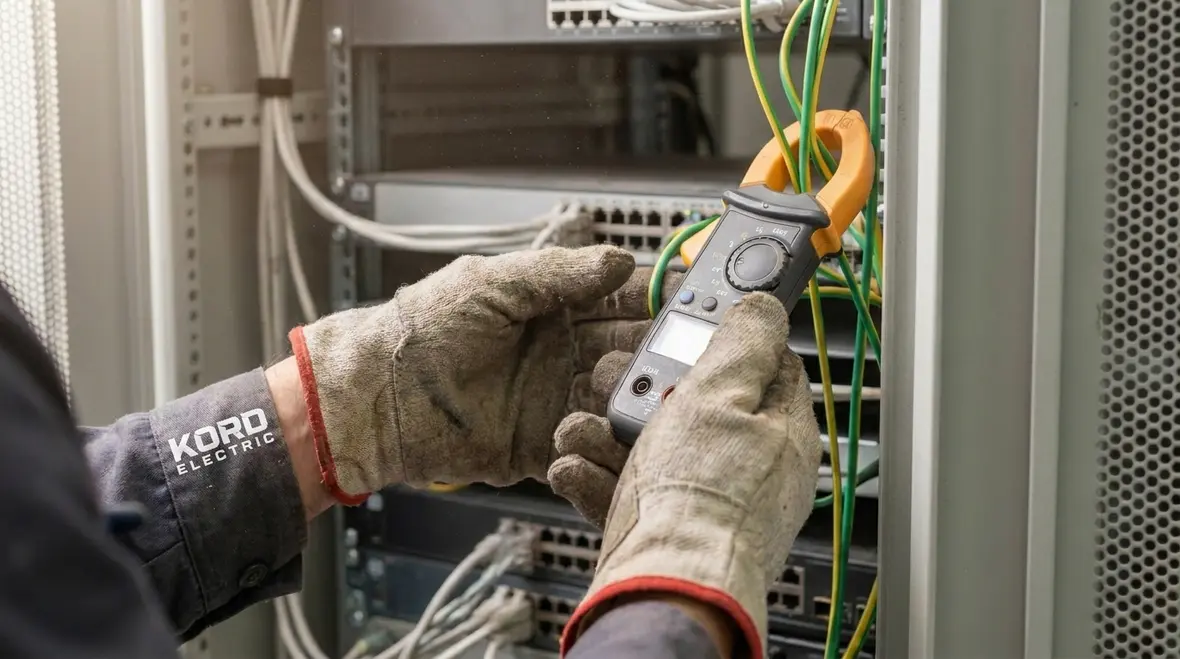
How IT bonding differs from general electrical grounding
Many people assume grounding and bonding mean the same thing. They do not. Grounding ties systems to an earth reference, while bonding connects conductive parts together to reduce voltage differences. Therefore, IT equipment bonding often targets the integrity of equipment frames, cable shields, and pathways for fault energy in sensitive areas.
In industrial and commercial buildings, we see mixed environments. You might have power distribution, process controls, access systems, and IT networks sharing physical infrastructure. As a result, bonding strategies must handle both electrical safety and signal noise considerations. Although the NEC does not design your network, it does influence how disturbances move through connected metallic paths.
Our team also accounts for how equipment gets installed over time. For example, a new rack may add bonding points, increase cable density, and change how shields connect. Then a later move of a server can break a bonding path if the installer does not restore it correctly. This is why we emphasize repeatable field practices for our commercial and industrial customers.
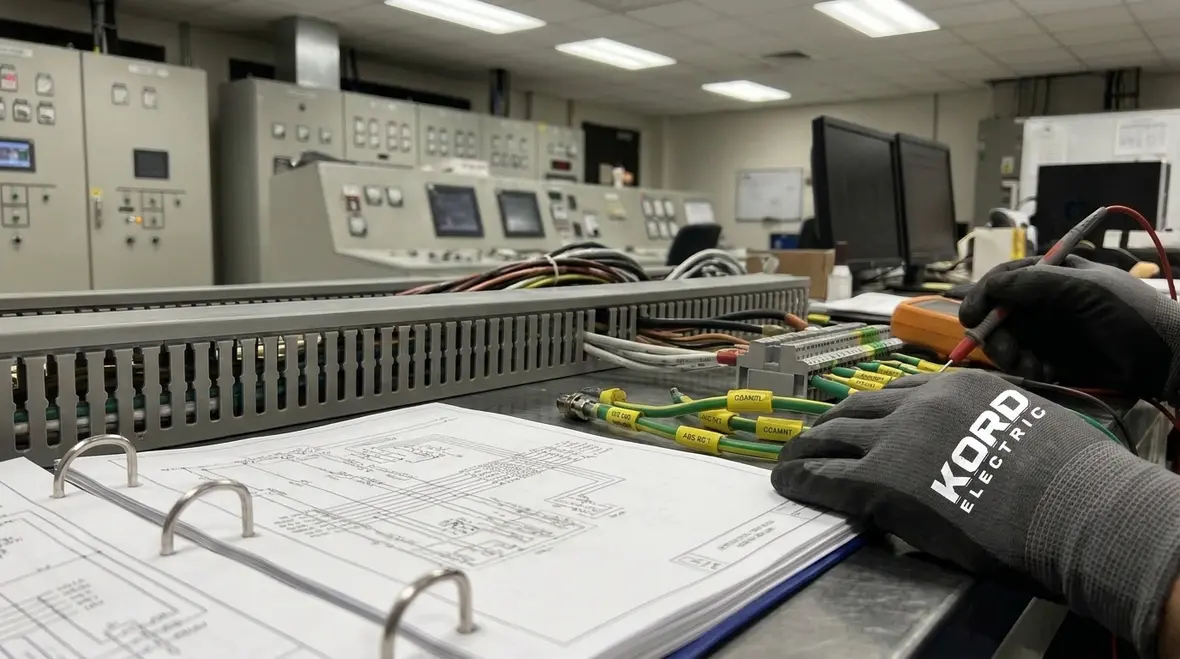
Detailed steps we follow to verify bonding compliance
Code compliance is not a single test. So we verify through planning, installation checks, and documentation. Our technicians, including our expert service staff, use a consistent method for major property buildings.
First, we review the design intent
- We confirm the IT and control equipment locations, rack layouts, and cable pathways
- We identify where bonded parts interface with raceways, enclosures, and cable shields
- We check whether your project uses new infrastructure or reuses existing pathways
Next, we inspect field installation
- We confirm bonding jumpers and conductors connect the intended points
- We check terminations for tight connections and correct hardware
- We verify routing avoids sharp bends and protects conductors from damage
Then, we perform practical verification
- We trace bonding continuity between frames and conductive enclosures
- We validate that cable shields and grounding elements follow the expected scheme
- We document results in a way that helps your facilities team maintain the system
Finally, we help your team connect these checks to operating reality. After all, equipment does not stay fixed. People add devices, change racks, and re-route cables. Therefore, our goal is to make the bonding strategy durable, so it survives the messy truth of day to day facility operations.
And if you are thinking, “We will handle it later,” we get it. Later is a popular date on construction schedules. Unfortunately, later is also where small bonding issues turn into big troubleshooting bills.

Common mistakes we prevent during upgrades for data and control spaces
During audits and modernization projects, we often see predictable errors. However, the good news is that these mistakes are preventable when teams follow a clear process.
Mistake one: bonding points do not match the equipment layout
Sometimes plans show bonding at one location, but the field layout changes. Later, a rack moves and the bonding conductors no longer reach the correct frame or enclosure. Therefore, we verify physical locations against the plan before any final closeout.
Mistake two: metal paths get assumed instead of confirmed
People often assume that conduit, trays, and enclosures create a reliable bonding path. Yet, connections may include paint, coatings, or nonconductive sections. As a result, the path may not work as intended. We confirm bonding using appropriate testing and inspection, not assumptions.
Mistake three: installers skip documentation
When we do not document bonding relationships and connection points, future contractors struggle. Then every upgrade becomes a guessing game. Consequently, we provide clear notes and maintainable records so others can act without risky improvisation.
Mistake four: oversized complexity where simple protection works
Some projects over engineer bonding with extra parts that create confusion. Meanwhile, others under engineer by cutting steps. We recommend a balanced approach: correct connections, correct conductors, and clear field execution. In the end, simple and correct beats complex and fragile, every time.
NFPA 70 alignment with fire risk thinking in major facilities
Electrical systems do not exist in a vacuum. They interact with fire safety planning, emergency response, and life safety systems. While bonding rules target electrical behavior, they also reduce the likelihood of unsafe conditions that can contribute to hazards.
At Kord Electric, we coordinate our electrical approach with the broader safety mindset represented in our Kord Fire resources, including Kord Fire and Kord Fire Australia. We also keep an eye on related safety topics discussed by organizations such as FirePumps, which focus on dependable readiness for critical systems.
Therefore, when we install or upgrade bonding schemes for IT equipment, we treat it as part of the facility’s safety foundation. We aim to keep systems stable under fault conditions and support the building’s overall readiness. And that mindset matters most for commercial and industrial sites where continuity and safety are both non negotiable.
Real project outcomes when we handle IT equipment bonding properly
When our team applies NFPA 70 Section 645.15 IT equipment bonding principles correctly, results show up in day to day operations. First, equipment experiences fewer unexplained resets and fewer instability events caused by uncontrolled potential differences. Second, facility teams spend less time chasing intermittent issues that come from broken bonding paths or unclear installation history.
We also see better long term maintainability. Because our technicians explain the bonding logic, your in house staff can spot future risks during rack adds, cable changes, and enclosure modifications. In other words, you gain knowledge, not just hardware.
And yes, fewer surprises means fewer late night calls. If you have ever listened to a server beep during peak hours, you understand why that is a gift. We treat your operational uptime like it matters, because it does.
For facilities planning broader upgrades, it often makes sense to align IT bonding improvements with larger power and reliability work. Resources such as our Building Electrical System Design: Planning Power for Commercial Facilities guide and our dedicated Los Angeles County electrical services support help teams coordinate bonding, distribution changes, and emergency readiness in one plan instead of scattered projects.
FAQ
Ready to strengthen electrical safety for your IT spaces
When you manage commercial and industrial systems, you need electrical work that holds up under real operation. We at Kord Electric design, install, and verify bonding for IT and control equipment with a clear focus on safety, maintainability, and performance. Our technicians and expert service staff explain what we do and why, so your team can keep it correct. If you are planning an upgrade, renovation, or audit, contact us to review your current bonding approach and next steps.
Contact Kord Electric today.


