NFPA 70 Section 695.3 Reconditioned Fire Pump Equipment
In commercial and industrial settings, fire pump systems cannot afford guesswork. That is why we focus on safe electrical supply, correct wiring practices, and code aligned control setups. When owners ask about maintenance and upgrades, we often see questions about NFPA 70 Section 695.3 reconditioned fire pump equipment and what it means in real life. In this guide, we explain how the National Electrical Code treats reconditioned fire pump equipment, and how our team helps facilities keep systems compliant. We will walk through what “reconditioned” must involve, which testing and documentation steps matter, and how electrical service quality affects pump reliability. And yes, we will keep it practical. After all, nobody wants their fire pump to act like a phone battery at 2 percent during a “quick errand.”
Why NFPA 70 Section 695.3 reconditioned fire pump equipment matters for facilities
Third person view or not, the story stays the same: when a fire pump runs, it needs power that behaves the way the code expects. NFPA 70 Section 695.3 reconditioned fire pump equipment exists because not every replacement or refurbishment is equal. However, we do not treat it like a paperwork exercise. Instead, we treat it like a safety requirement that protects lives, reduces liability, and prevents system downtime.
In practice, facilities choose reconditioned components to control costs and extend equipment life. Yet if reconditioning fails to restore design performance, the electrical and mechanical results can become unpredictable. Consequently, code rules require evidence that the equipment still meets the required standards after refurbishment. At Kord Electric, our expert technicians review the electrical side of these systems, then align the installation and documentation so the whole system remains reliable under real fire conditions. One might say the code wants your pump to be “back to factory settings,” even if it is not brand new. Pop culture comparison aside, fire pumps do not get remakes without a quality check.
What the code expects from reconditioned components
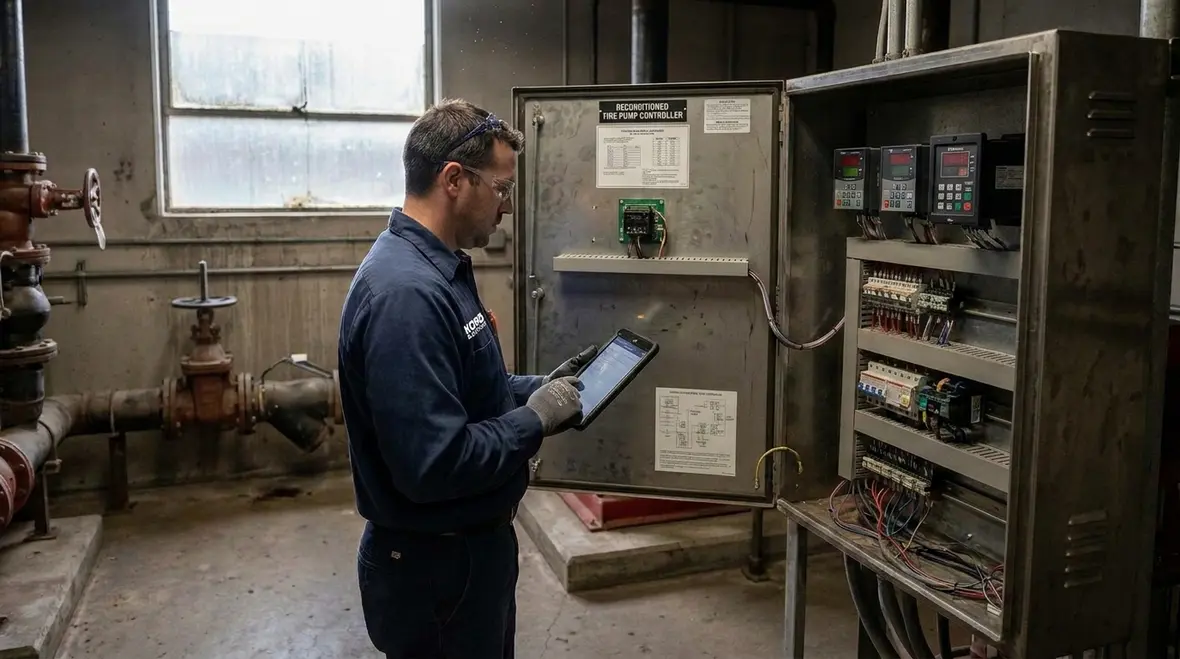
Our technicians explain this part clearly: the code does not simply allow reuse because something looks good. Instead, it expects reconditioned fire pump equipment to be restored in a way that supports safe operation. Therefore, compliance hinges on what was done during reconditioning, what standards were followed, and how the equipment is verified after service.
We see two common gaps in commercial and industrial buildings. First, facilities sometimes recondition equipment without fully matching the original performance requirements. Second, paperwork may exist, but it may not show the right checks. That is where expert service staff at Kord Electric steps in. We help owners and contractors confirm the electrical and control requirements, then we coordinate with the reconditioning work so the final outcome matches code expectations.
Meanwhile, Kord Fire also shares the practical side of NFPA 70 compliance for pump and fire protection systems. Their work in the field highlights an important point: the code focuses on function and safety, not marketing. The electrical supply, wiring methods, and control behavior all matter when the pump starts under emergency conditions. If one link fails, the chain fails. And fire systems do not negotiate.
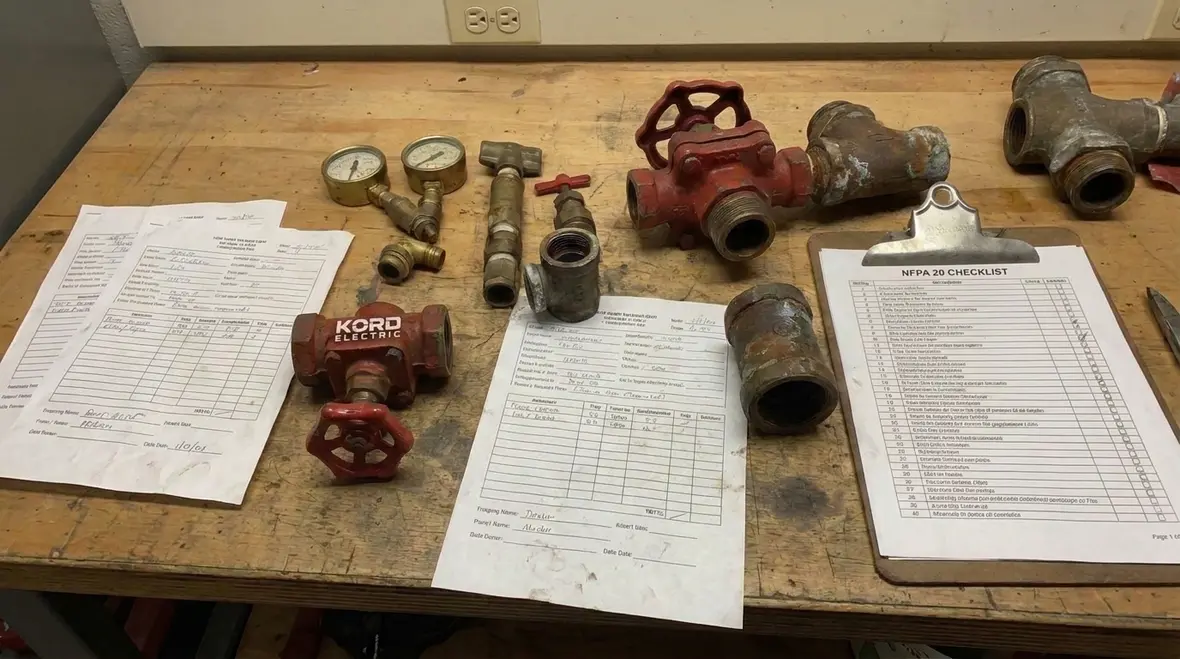
If your team wants a broader overview of how NFPA 70 shapes electrical decisions beyond pump rooms, resources like Kord Electric’s article “What Is NFPA 70? Understanding the National Electrical Code” and the companion guide “Understanding NFPA 70: The National Electrical Code Explained for 2026” help connect detailed topics like Section 695.3 to the wider NEC story across your building.
Electrical supply and wiring decisions that affect pump start-up
NFPA 70 does not treat fire pump circuits as ordinary loads. Fire pump systems depend on stable power, proper conductor sizing, correct protective devices, and control wiring that performs as intended. Even when the pump equipment passes mechanical checks, electrical issues can still cause delays, misoperation, or nuisance trips.
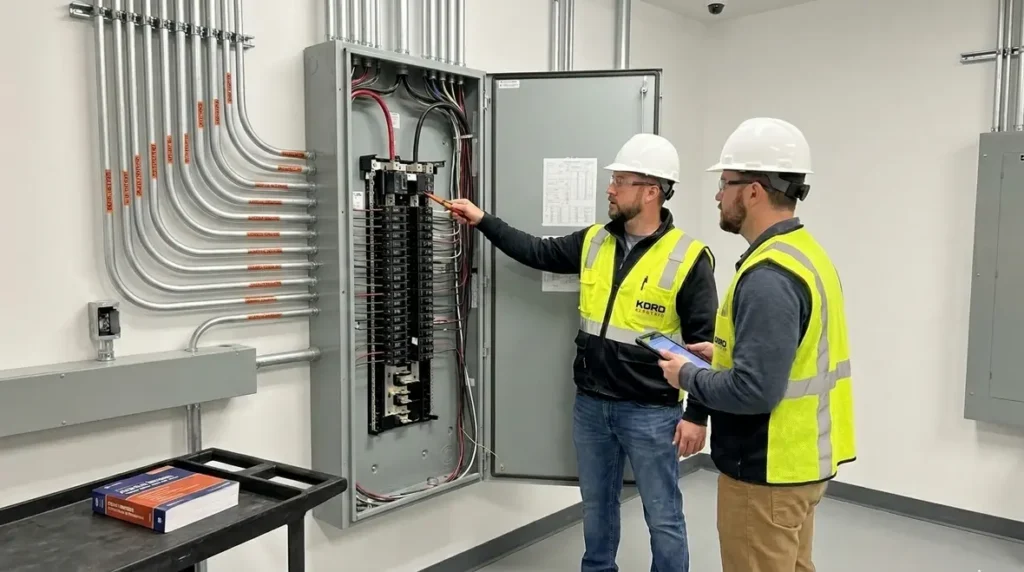
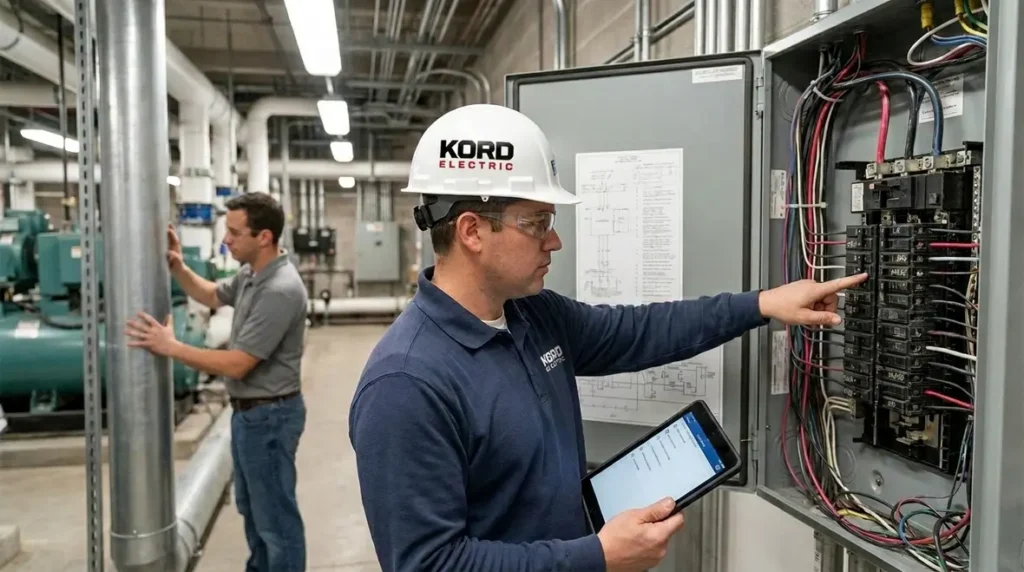
Here is how we connect the dots. First, Kord Electric evaluates the facility’s power distribution layout for the pump controller and associated circuits. Then our technicians check the installation details that often get missed during busy buildouts. For example, we look at termination quality, routing that avoids interference, and labeling that helps maintenance teams respond quickly. Additionally, we review grounding and bonding practices because they affect fault behavior and control stability.
For major property buildings and industrial sites, these steps matter more than people think. If the fire pump controller receives poor connections or unstable control power, the system may hesitate during the exact moment it must run. In other words, the code may allow reconditioned equipment, but it still expects the electrical environment to be correct. Others might call it “boring electrical hygiene.” We call it “the difference between ready and sorry.”
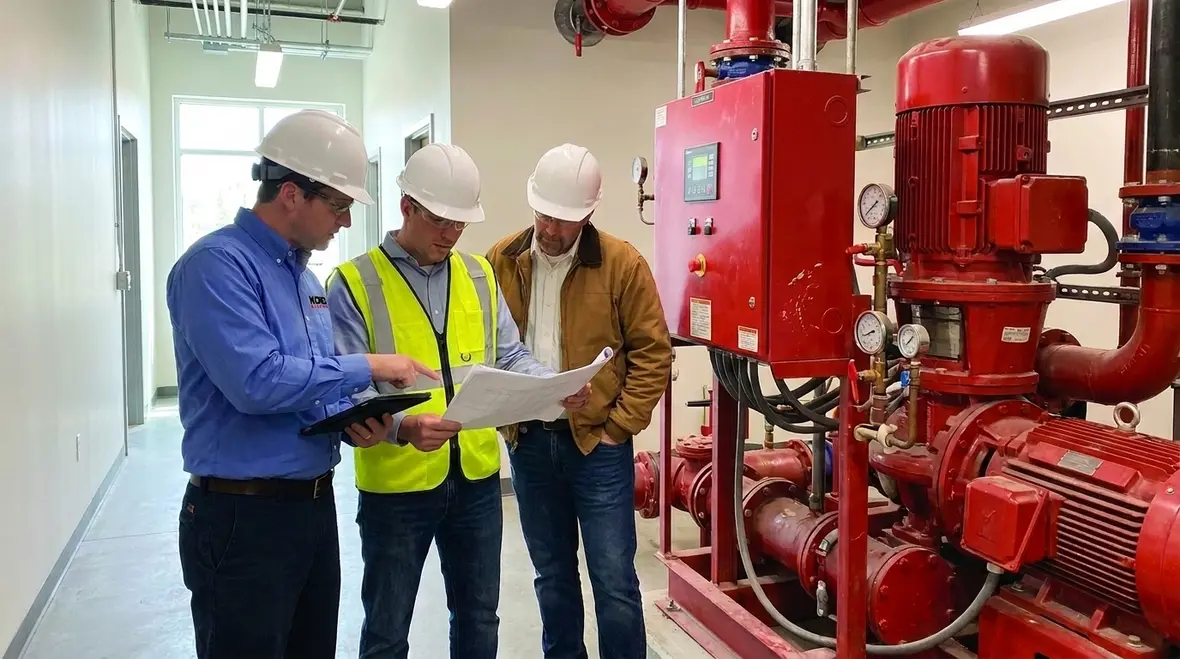
On the fire protection side, Kord Fire’s article “NFPA 70: All About The National Electrical Code (NEC) 2026” explains why reliable power and correct wiring are inseparable from sprinkler and fire pump performance. When you read that together with Kord Electric’s NEC coverage, the message is simple: if the power is not right, the pump cannot save the day.
Coordination between electricians, fire service, and inspectors
Because fire pump systems cross multiple disciplines, coordination determines how smoothly compliance happens. We do not operate like an island. Our expert service staff communicates with fire protection partners, reconditioning providers, and the inspection team. That coordination reduces misunderstandings and prevents last minute changes that lead to rework.
When a facility plans reconditioned fire pump equipment, we help set expectations early. We ask what equipment is being reconditioned, what tests will be performed, and how documentation will be provided. Then we align the electrical work with those outcomes. For example, we confirm that the wiring methods and control circuit requirements match the equipment data. We also ensure the facility can maintain the system and verify performance over time.
Third parties often assume that the electrician only cares about wire size and breakers. Yet in a fire pump system, that focus connects directly to how the controller behaves during an emergency start. Hence, our technicians keep the conversation practical, so the fire pump remains dependable. We have seen projects where good intent met bad timing. It is like showing up to a movie after the plot twist. The message is still there, but the impact is ruined.

For facilities that want an even deeper NEC foundation before they dive into specialty topics like Section 695.3, the Kord Electric blog hub is a helpful next step. Articles on subjects such as open conductor supports, FMC fire spread basics, equipment servicing space, and terminal identification all reinforce the same theme: when everyone understands the rules, projects move faster and safer.
Testing, documentation, and maintenance practices that uphold compliance
After reconditioning, compliance depends on what you can prove and what you can maintain. Therefore, we advise commercial and industrial facilities to treat documentation as part of the system itself. Clear records help maintenance staff verify what work occurred, what standards were used, and what checks confirm performance.
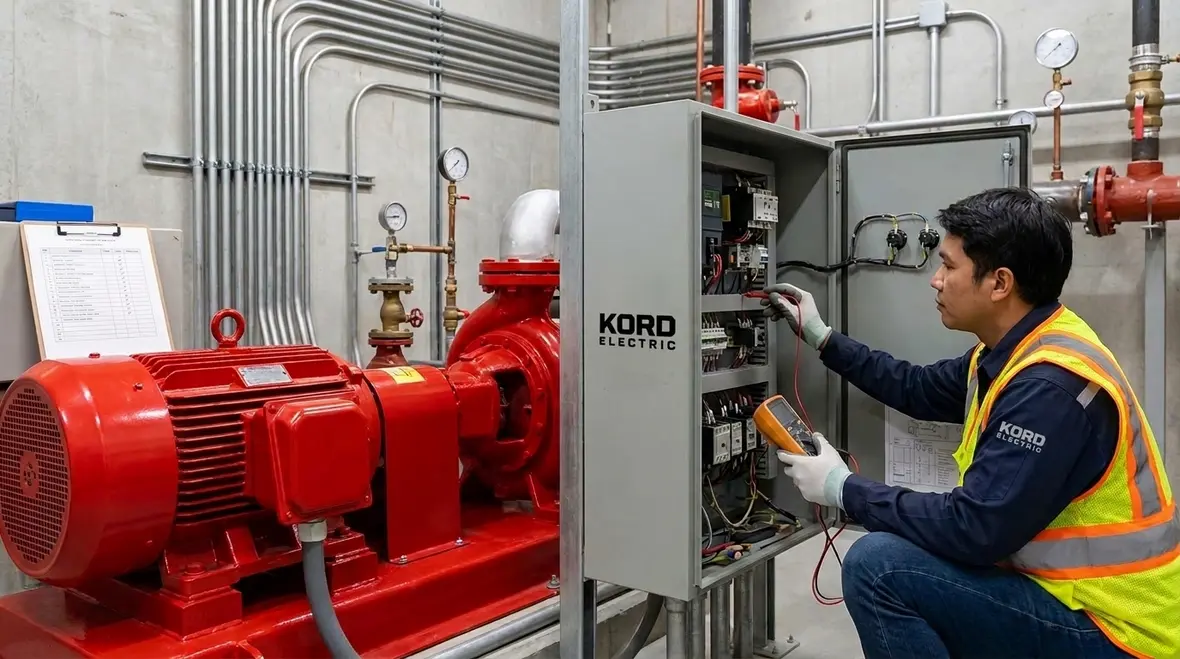
In the electrical domain, we also support maintenance practices that protect reliability. Our technicians review how circuits are tested during routine inspections, how control functions are verified, and how any changes are managed. We emphasize safe lockout and labeling processes so technicians can work quickly without guesswork. Furthermore, we help facilities keep a clean maintenance trail, including any updates to wiring, terminations, control settings, or protective devices.
To stay aligned with the code mindset, we recommend that facilities schedule periodic reviews, especially after modifications or reconditioning cycles. Kord Electric focuses on the electrical health of the system so the pump’s electrical start sequence stays dependable. When we do this well, the fire pump performs when it should. And if it does not perform, we find the issue before it becomes a headline. Nobody wants that kind of “brand awareness.”
If your facility team wants to build consistent habits around inspections and recordkeeping, code focused series on the Kord Electric blog, including coverage of NEC calculated load rules and installation limitations, offer examples of how to turn “keep records” into a real-world process that your staff can follow.
Dual column: what owners should ask before approving reconditioned pump equipment
Documentation and standards
- What exact checks were performed after reconditioning
- Which performance criteria were verified
- What labels, manuals, and test reports will be provided
- How the equipment matches original design intent
Electrical integration and safety
- How the pump controller receives power and control voltage
- Conductor sizing, termination quality, and labeling
- Grounding and bonding practices for safe fault behavior
- How the system will be tested after installation
Common mistakes we see on major buildings and how we prevent them
Even experienced teams sometimes stumble when they manage reconditioned equipment. First, they may assume that the mechanical reconditioning automatically covers electrical compliance. It does not. The pump may be restored, yet the electrical integration can still fall short if wiring, terminations, or control circuits do not match the equipment requirements.
Second, we often see incomplete handoff between parties. For example, a reconditioning provider may deliver a report, but the report may not clearly connect to the electrical installation needs. As a result, the facility may end up with “almost compliant” work that fails inspection. Third, facilities sometimes underfund maintenance planning. They install correctly, then delay follow up tests. Later, the system becomes harder to troubleshoot because records get lost.
Kord Electric reduces these risks by taking a structured approach. Our expert service staff explains requirements in plain language, then coordinates electrical execution with documentation and testing expectations. We build the job so the electrical system supports reliable pump operation, not just short term pass rates. That is how large properties avoid the “it worked last time” trap.
When you want to see how this method plays out across other NEC topics, Kord Electric’s blog posts on cabinet wall positions, SE conductors through framing members, and equipment servicing space access all demonstrate the same pattern: clear interpretation, careful installation, and records that help your team prove what was done.
How this ties into your wider NFPA 70 strategy
NFPA 70 Section 695.3 reconditioned fire pump equipment is one chapter in a much larger safety book. In real projects, facility teams do not just follow a single section. They coordinate service equipment layout, conductor protection, terminal identification, raceway choices, and grounding and bonding so the electrical system behaves predictably under both normal and emergency conditions.
Kord Electric’s NEC resources, including “How to Read NFPA 70: A Practical Guide to the National Electrical Code” and “How to Read NFPA 70 National Electrical Code,” help teams build that big-picture view. When you combine those guides with Kord Fire’s NEC perspective on fire protection systems, you get a shared language across electrical and life safety disciplines. That shared language is what turns code requirements into buildable, maintainable systems.
If you want to go deeper on code interpretation, it is also worth exploring detailed topics such as installation limitations for NFPA 70 300.4, NEC FMC fire spread basics under Section 305.31, and open conductor support requirements in Section 225.12. All of these touch the infrastructure that supports your fire pump power and control circuits.
Who should manage NFPA 70 Section 695.3 reconditioned fire pump equipment projects?
Because fire pumps sit at the intersection of electrical engineering, mechanical systems, and fire protection, no single trade can safely “own” the entire topic. Owners should make sure their teams include qualified electricians, experienced fire protection specialists, and reputable reconditioning providers. From there, someone has to lead the coordination work so decisions do not conflict.
At Kord Electric, we focus on the electrical side of that leadership. Our technicians and expert service staff translate NFPA 70 language into real-world steps for conductors, overcurrent protection, controllers, and on-site testing. We also work closely with inspection authorities so facilities understand not just the letter of the requirements, but the intent behind them.
For facilities across Los Angeles County, that coordination extends beyond pump rooms. The Los Angeles County electrical services overview explains how our team supports commercial and industrial properties with code aligned planning, installation, troubleshooting, and upgrades across their entire electrical system, including critical life safety loads.
FAQ
Conclusion and call to action
When a facility considers NFPA 70 Section 695.3 reconditioned fire pump equipment, we recommend treating compliance as a system effort, not a single transaction. Kord Electric supports commercial and industrial properties with expert technicians who coordinate electrical integration, documentation readiness, and practical testing steps. If your project involves reconditioned components, renovations, or inspection preparation, contact us. We will help your team build confidence that the fire pump system will perform when it matters, without drama and without last minute surprises.
Sources used for context: kordelectric.com, kordfire.com, kordfire.com.au, and firepumps.org.
For a deeper dive into how NFPA 70 shapes electrical safety decisions across your facility, explore related Kord Electric resources such as “Understanding NFPA 70: The National Electrical Code Explained for 2026” and “What Is NFPA 70? Understanding the National Electrical Code.” These guides pair well with Kord Fire’s NEC coverage so your electrical and fire protection teams stay aligned from design through inspection.