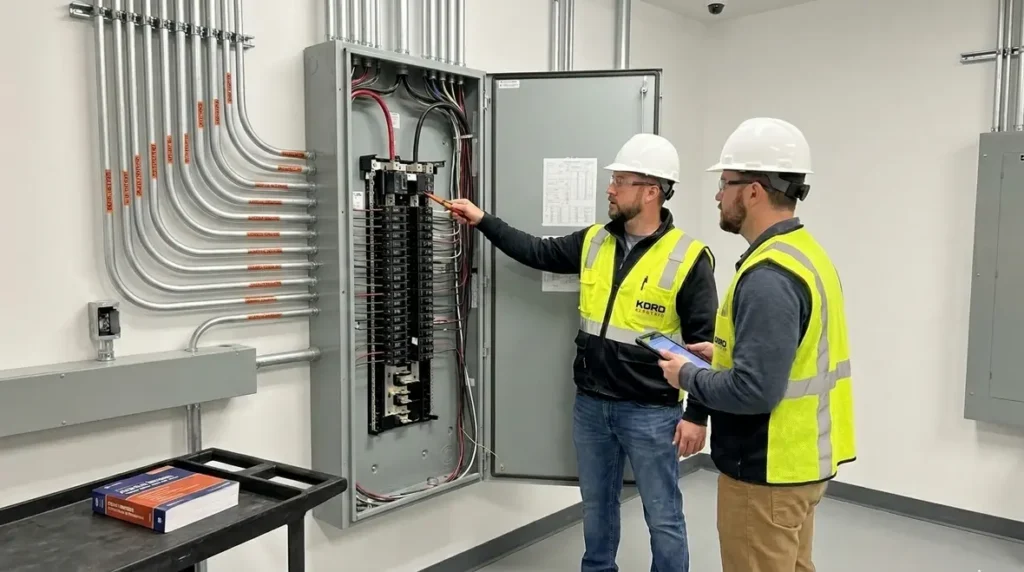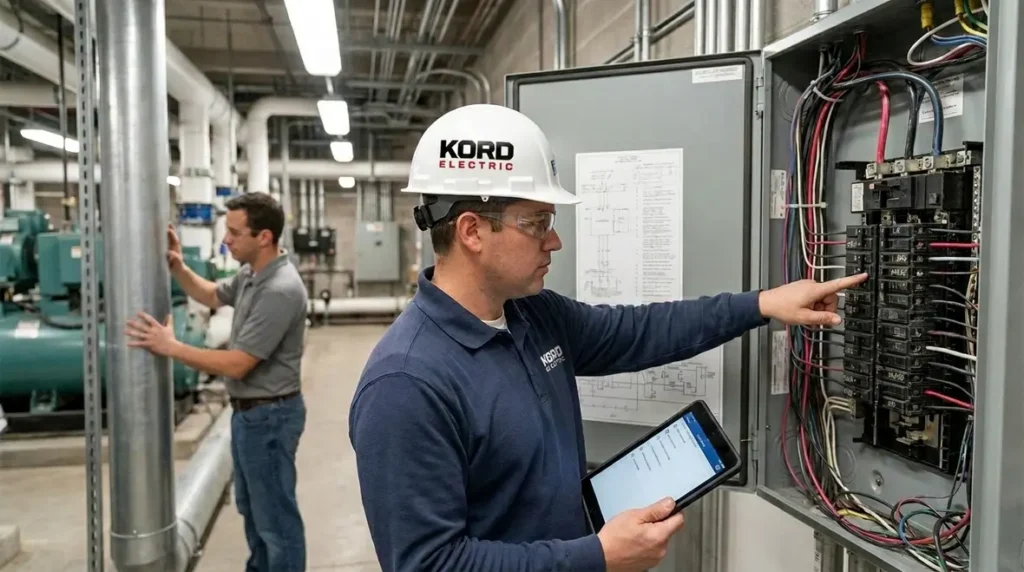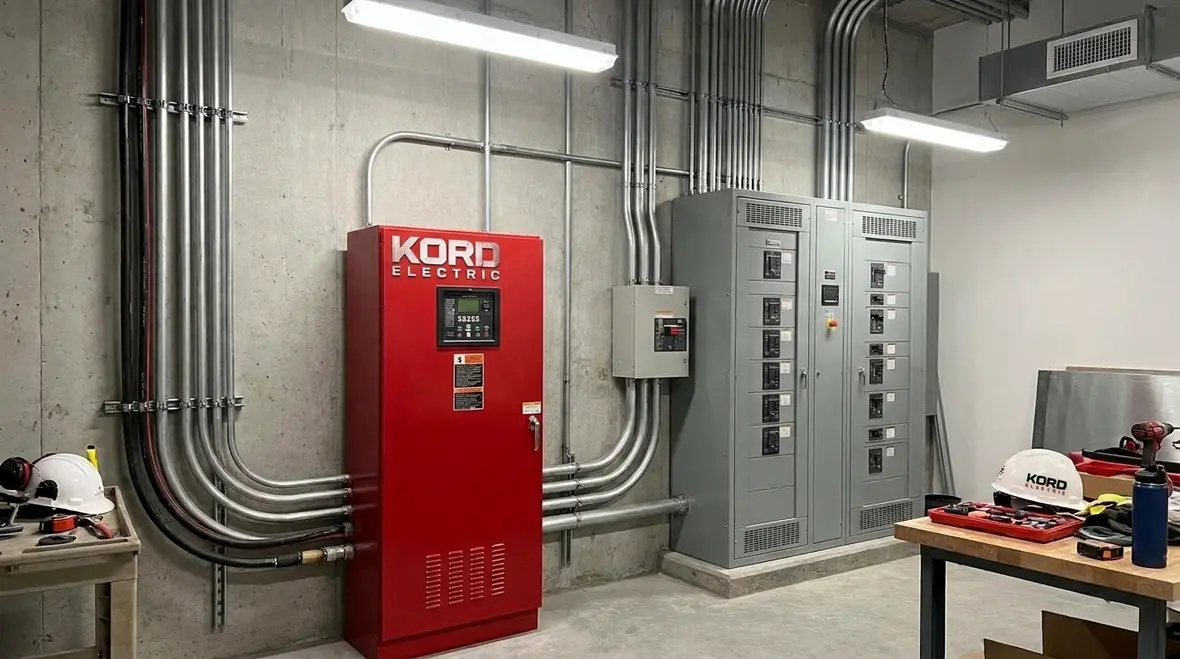
NEC Section 695.4 Fire Pump Power Sources Explained
NEC Section 695.4 fire pump power sources and what our clients should know
In commercial and industrial buildings, fire pumps can not be an afterthought. Early on, our team at Kord Electric focuses attention on NEC Section 695.4 fire pump power sources, because this topic sets the rules for how power must reach a fire pump when seconds matter. In fact, when the power supply fails, the fire pump still needs a dependable path to keep working. Therefore, we make sure our clients understand the intent behind the code, not just the words. Also, we explain it in plain terms, with our expert service staff walking through options step by step, like a calm instructor who never talks down to you. And yes, we know the electrical code can feel like it was written by a committee of sleep deprived accountants, but we translate it into practical decisions for property owners.
Why NEC rules matter for high risk buildings
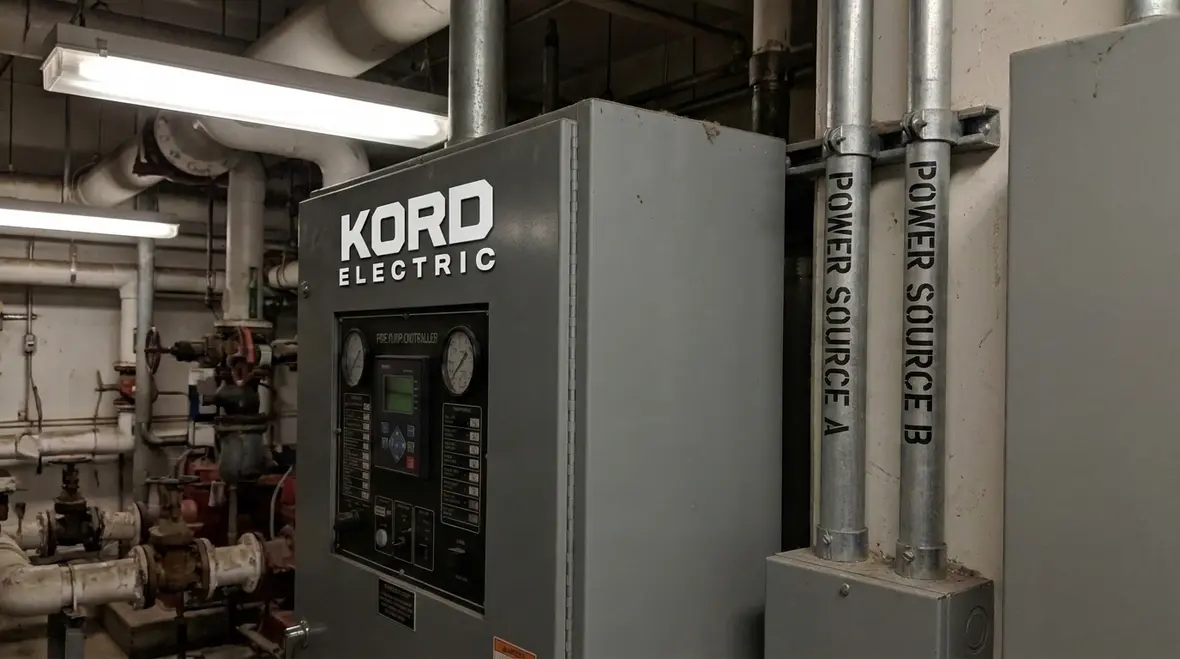
When a facility depends on a fire pump, the electrical system must behave under stress. Consequently, the National Electrical Code sets structure for reliability, coordination, and protection. This is not about being strict for the sake of strictness. Instead, it is about reducing failure points during abnormal conditions such as loss of normal power, voltage dips, and equipment faults. Moreover, our technicians treat these requirements as a design constraint, not a paperwork task. We design, review, and test so the fire pump power scheme can survive real world conditions. And as a bonus, proper planning often avoids costly last minute changes when contractors discover that “it should be fine” does not match the code.
How the code guides power supply reliability for fire pumps
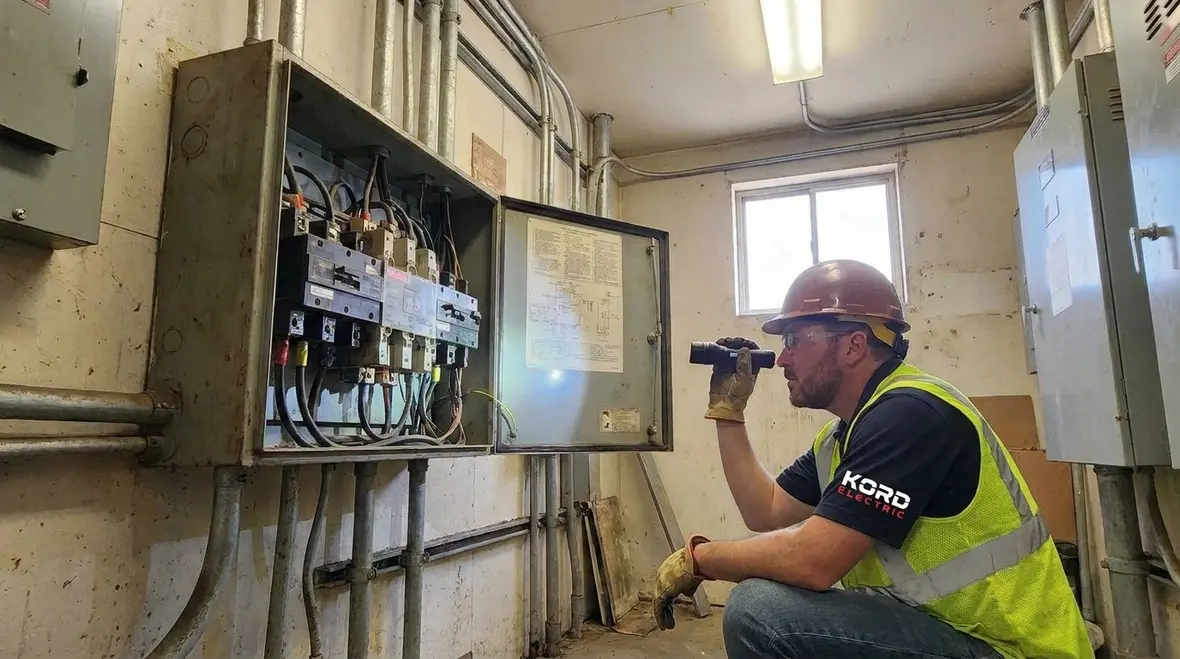
Our expert service staff often sees confusion around what “power sources” actually means in practice. To clear this up, we look at how the code expects at least two dependable power paths, or a dependable arrangement that meets the listed criteria. Then we tie that expectation to how systems are installed, monitored, and protected. For example, we help our clients plan for transfer behavior and ensure that conductors and protective devices do not create new hazards. Additionally, we coordinate the arrangement with the rest of the building electrical system, including distribution panels and standby sources. In the real world, this means we confirm the routing, labeling, and protection settings. We also verify that the system is designed to keep the pump functional rather than simply present power on paper.
Because fire pump performance connects directly to life safety, we often pair these conversations with big picture NEC resources that show how individual sections live inside the wider code framework. For building teams who want to dig deeper into that context, Kord Electric’s NEC explainer series and Kord Fire’s education on fire pump behavior help clarify how Section 695.4 interacts with topics like overcurrent protection, grounding, and emergency systems planning.
Our field perspective on fire pump feeders, protection, and coordination
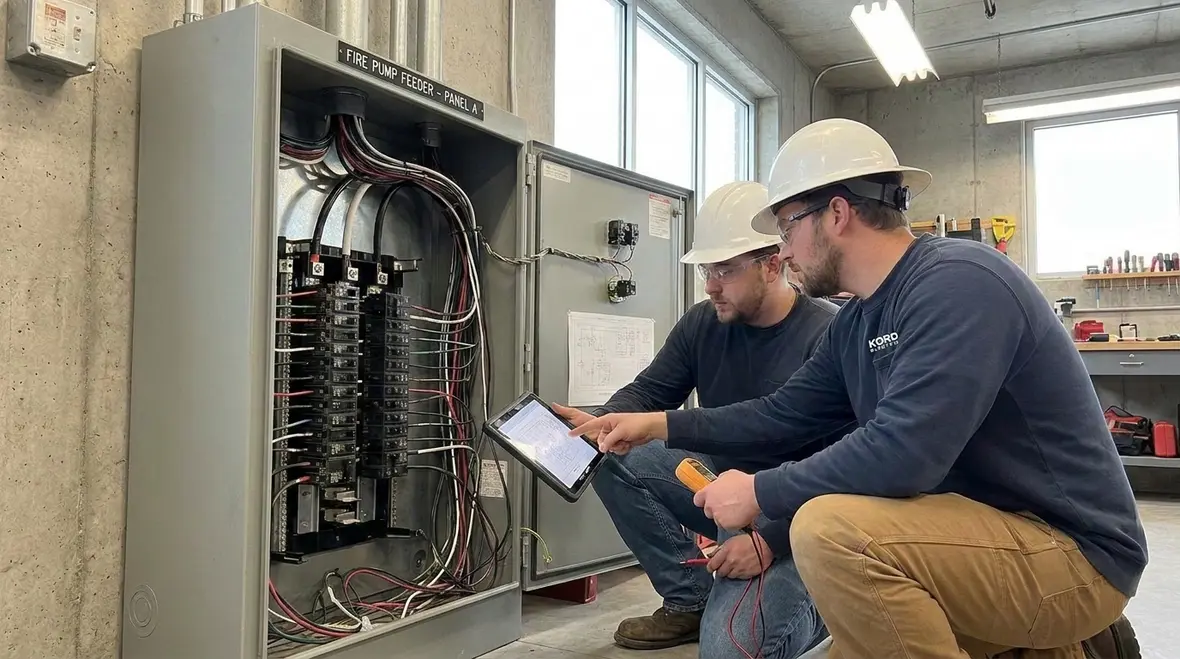
In commercial and industrial facilities, the fire pump circuit often sits at the crossroads of multiple trades. Therefore, coordination becomes everything. Our technicians check not only the fire pump controller and wiring, but also how the upstream distribution handles fault currents and selective operation. If a protective device trips in the wrong scenario, the pump fails when you need it most. Hence, we focus on coordination so protective clearing does not block the pump during credible fire conditions. At the same time, we avoid overspecifying in a way that can cause nuisance trips. And because every building is different, we review the actual one line diagram and job constraints before we finalize recommendations.
From there, we also plan for practical installation details. Conduit fill, conductor insulation ratings, separation from non related circuits, and proper termination quality all influence performance. Moreover, we pay attention to labeling and identification, because crews need clear guidance when they service equipment later. When maintenance teams can trace circuits quickly, the system stays reliable year after year. In other words, we treat the fire pump power scheme like a living system, not a one time installation moment.
This is also where we connect design intent to the broader NEC conversation. Topics like conductor protection, connection quality, and grounding, covered across Kord Electric and Kord Fire’s NEC-focused articles, show up directly in fire pump feeder design. When owners understand that NEC Section 695.4 fire pump power sources sit inside that bigger reliability story, long term planning becomes easier and less stressful.
Testing, monitoring, and keeping the system ready when trouble hits
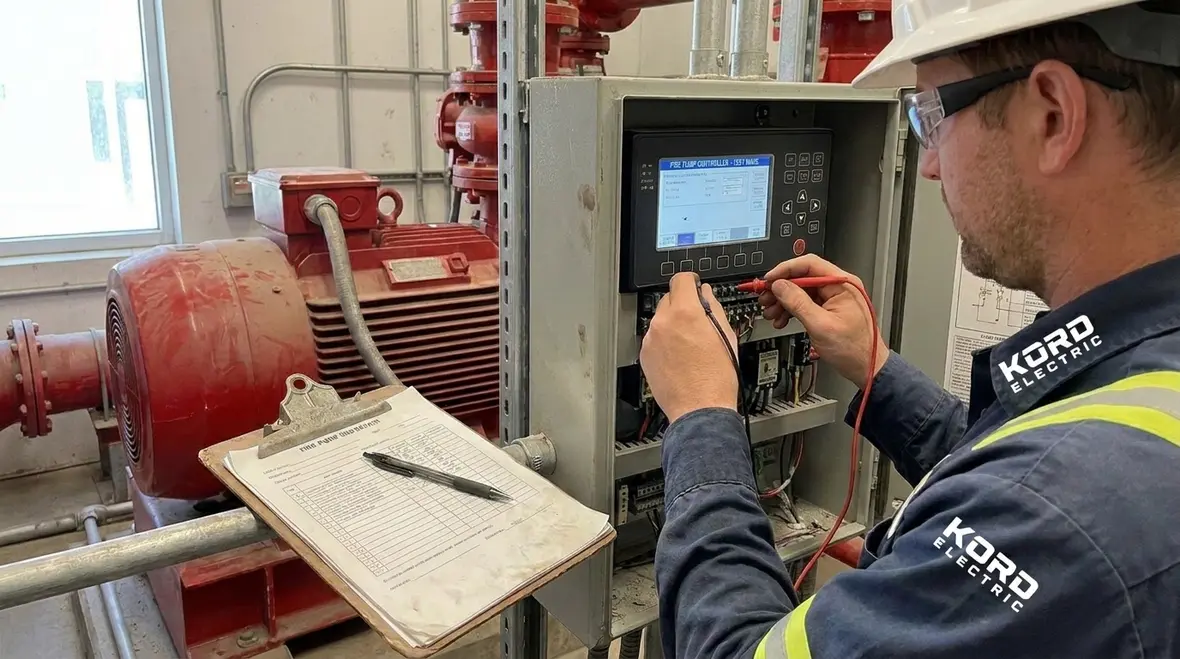
Reliability does not stop at installation. It continues through inspection, testing, and monitoring. Consequently, we help facilities build a process that verifies the fire pump electrical components and controls. That includes verifying that the power arrangement performs as intended during transfer scenarios and that alarms communicate correctly. Also, we review how the monitoring signals integrate with the building systems, so operators understand what is happening, not just that something happened. Our approach aligns with guidance published by respected sources in the NEC space, including our own educational resources such as Kord Electric and Kord Fire materials about NEC concepts. While those articles explore the broader electrical code framework, we translate the lessons into jobsite checklists that crews can follow.
In many facilities, the weakest link is not the code requirement itself. Instead, it is the gap between design intent and operational reality. Therefore, we recommend regular reviews and documenting results. And when a test reveals a problem, we correct it in a way that supports future reliability, not just quick recovery. Because you only get one shot when conditions turn urgent, and the building deserves better than luck.
We often encourage facility teams to review related NEC primers before a major test cycle, including Kord Electric’s high level guides to NFPA 70 and Kord Fire’s dedicated fire pump and life safety content. When stakeholders see how monitoring, documentation, and NEC Section 695.4 fire pump power sources all point toward the same reliability goal, it becomes easier to justify budget and staffing for recurring tests.
Common mistakes we see in commercial and industrial installs
We see the same few errors often, even in well funded projects. First, some teams treat fire pump power as “standard power” and forget the special reliability rules. Then, they select protective devices or routing practices that work for normal loads but do not support the fire pump’s critical role. Second, some people assume that a standby source equals compliance without verifying transfer conditions and coordination. Third, installation teams sometimes leave labeling incomplete, which later slows inspections and troubleshooting.
To prevent these issues, our technicians follow a structured review. We start with the design basis and the facility risk. Next, we examine the one line and connection points, then we verify how the power scheme matches the NEC Section 695.4 fire pump power sources intent. After that, we check conductor routing, protection, and equipment interfaces. Finally, we confirm that testing and documentation support ongoing service. This process keeps the project steady, and it keeps your facility safer.
And yes, we have heard the joke that “the breaker will probably behave.” Probably is not a plan. We use plans, checklists, and field testing, because fire protection does not deserve wishful thinking.
How Kord Electric supports property owners from design to service
At Kord Electric, we support commercial and industrial facilities and major property buildings, not random one off projects that make schedules look like a sitcom. We work with electrical contractors, building owners, and facility teams to keep the fire pump electrical system aligned with NEC expectations. Meanwhile, our technicians coordinate with related fire protection and electrical teams so designs stay consistent from drawings to installation.
Where we add real value is in clarity. We explain what the NEC requirements mean for the actual system you have. We also discuss tradeoffs in a straightforward way, so decision makers can plan budgets without cutting corners that later create risk. Then, after installation, we help maintain the system’s readiness through service support. For clients who want deeper learning, we point them toward educational references from our network, including the fire safety and NEC focused content found at https://kordfire.com and https://kordfire.com.au. We also reference broader safety education resources from organizations like https://firepumps.org when it helps frame best practices in real operational settings.
Many teams also find it helpful to pair this fire pump specific guidance with a wider NEC overview. Resources such as Kord Electric’s “Understanding NFPA 70: The National Electrical Code Explained for 2026” on the Kord Electric blog help stakeholders see how Section 695.4 connects to other sections that control overcurrent protection, grounding, and emergency system behavior. That cross linking makes strategic planning for upgrades and new projects far simpler.
When a building in Los Angeles County or the surrounding area needs help aligning fire pump circuits and other critical loads with code expectations, owners can also explore Kord Electric’s broader Los Angeles County electrical services for commercial and industrial facilities, which cover everything from infrastructure upgrades to code driven maintenance.
FAQ about fire pump power requirements for facilities
Schedule a code focused fire pump electrical review with Kord Electric
If you run a commercial or industrial facility, do not wait until the next inspection to discover gaps in your fire pump power design. Our technicians at Kord Electric can review your electrical one line, feeder and protection coordination, transfer behavior, and service readiness. Then we map findings to practical next steps that keep your system dependable. Contact us to schedule a focused assessment and gain peace of mind that your fire pump power arrangement supports safe operation when it matters most.
For facility leaders who want to connect this topic with the larger NEC picture, you can also explore Kord Electric’s broader code education resources on the Kord Electric blog alongside fire-pump-focused learning at Kord Fire. Together, these materials help you translate NEC Section 695.4 fire pump power sources from dense rule text into clear, defensible decisions for your building.
When you are ready to move from questions to action, our commercial and industrial services team can coordinate reviews of your fire pump circuits as part of a larger electrical safety, reliability, and modernization plan for your facility.