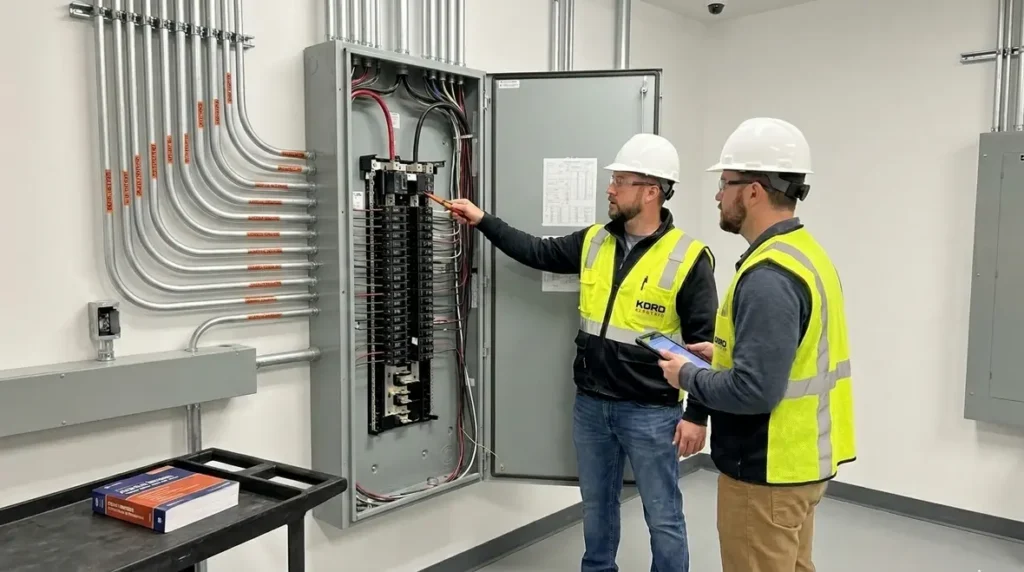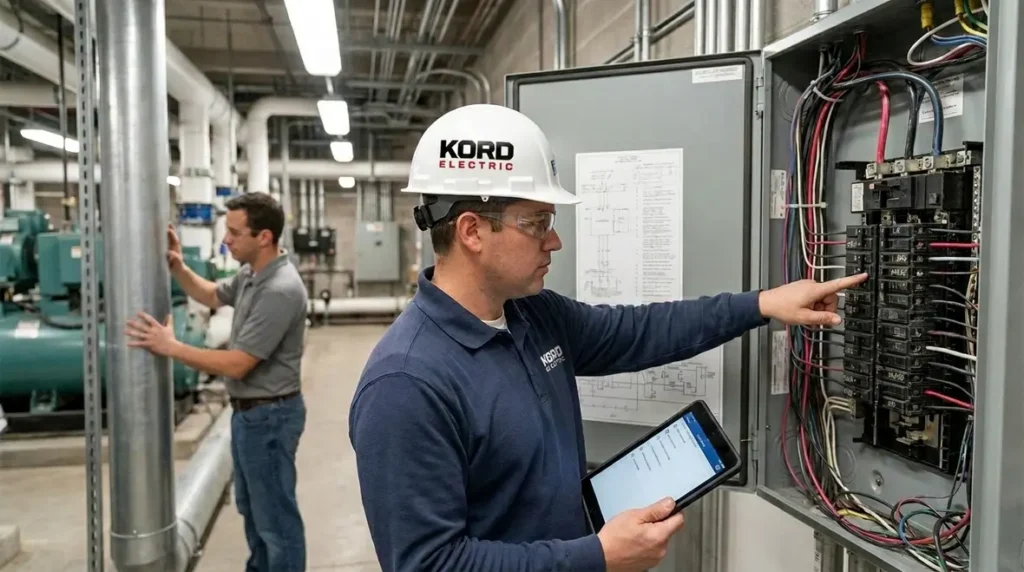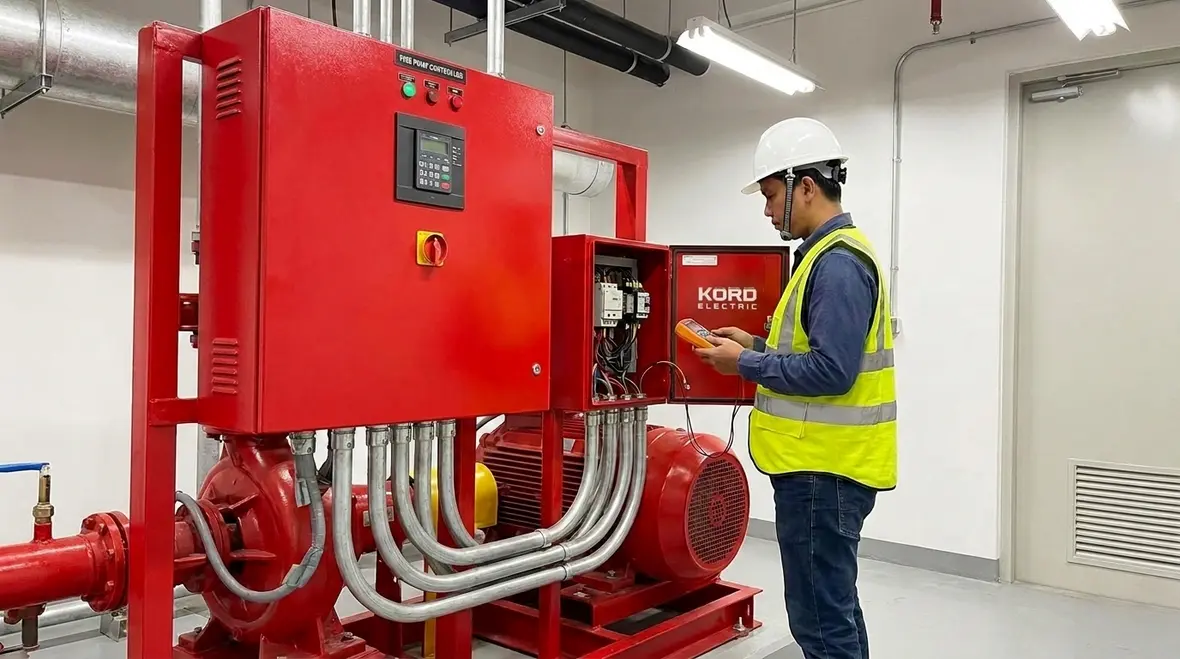
NFPA 70 Section 695.1 Fire Pump Electrical Scope
NFPA 70 Section 695.1 Fire Pump Electrical Scope: what we handle for commercial and industrial life safety
At Kord Electric, we work with commercial and industrial facilities where fire pumps are not “nice to have” equipment, but mission critical systems. And in that world, the NFPA 70 Section 695.1 fire pump electrical scope matters because it sets expectations for the electrical side of fire pump systems, including how the circuits and wiring support dependable operation.
We do not treat this as a one time checklist. Instead, our technicians and expert service staff explain the requirements in plain language, so building owners and facility managers can make informed decisions. After all, nobody wants a fire pump that works in theory and fails in real smoke. That is not a plot twist; that is a liability. So we plan, install, inspect, and document electrical work with the code in mind, and we keep the process steady and calm from start to finish.
Why the National Electrical Code shapes fire pump reliability
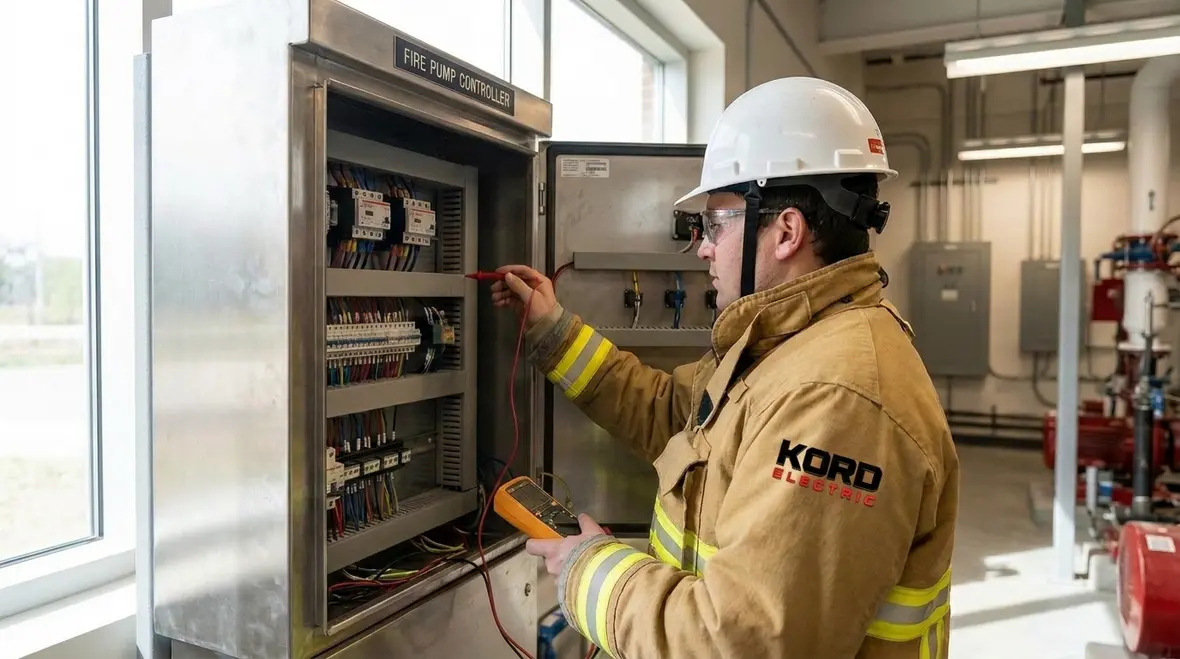
The National Electrical Code, also known as NFPA 70, focuses on electrical safety and proper performance. When we talk about fire pump equipment, the stakes rise because the pump may need to run under harsh conditions during an emergency. Therefore, the NEC does not just say “install wiring.” It pushes for wiring methods, circuit protection, and installation details that support dependable operation.
Our experts also look at how the electrical design matches the overall fire pump system requirements. For instance, if the wiring has weak points, loose connections, or poor routing, a system can lose integrity exactly when it needs to stay steady. In other words, reliability is not luck. It is engineering choices made early, then verified with careful workmanship.
Additionally, commercial and industrial sites often have complex power distribution, and that complexity can trip up teams who focus only on the pump and ignore the electrical path. So our technicians trace the journey from power source to controller, then to pump motors and associated devices, and we do not leave gaps in understanding.
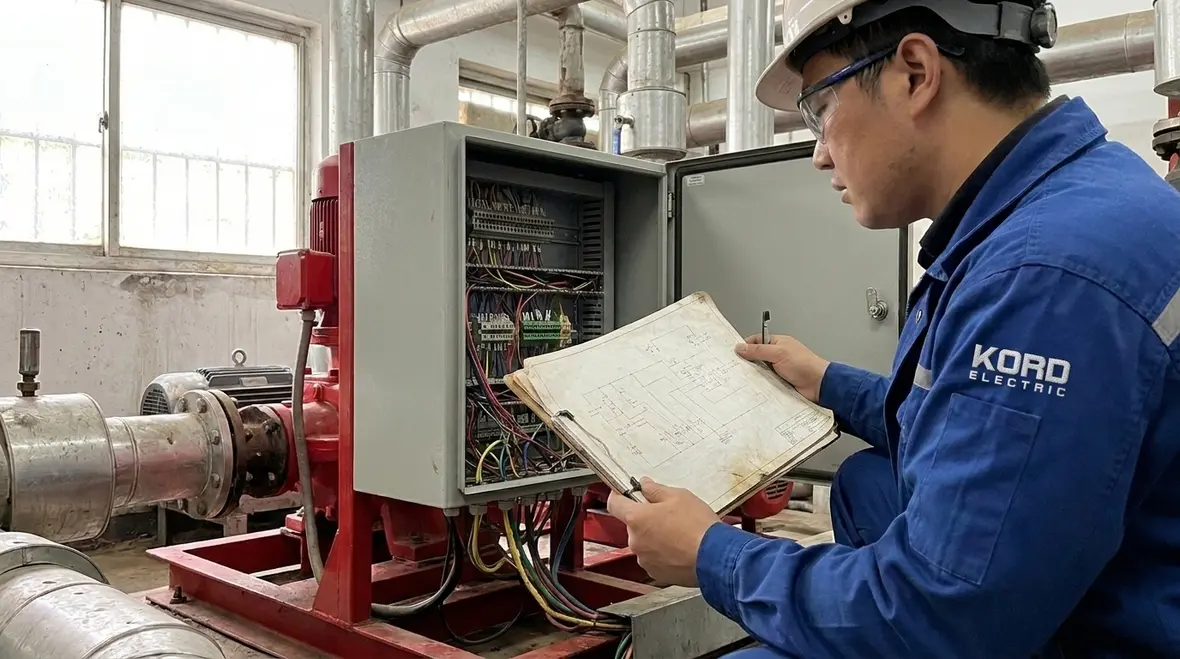
What the code expects for fire pump circuit setup
In practice, NFPA 70 requires that fire pump circuits receive special attention. Therefore, we build the design around code intent: reduce failure risk and keep circuits available for fire pump operation.
Our team typically addresses these core setup needs during planning and installation for major property buildings and industrial sites:
- Correct circuit arrangement so the fire pump system operates as intended.
- Proper wiring methods that resist damage and support safe operation.
- Appropriate power and control coordination between electrical equipment and the pump system controls.
- Inspection ready installation so documentation matches real field conditions.
Then, we verify the details during commissioning. Our technicians do not just “pull wires.” They confirm routing, termination quality, labeling, and the physical conditions that keep circuits intact. And if something looks unclear, we explain it. We would rather answer questions now than revisit later with downtime and a growing sense of dread.
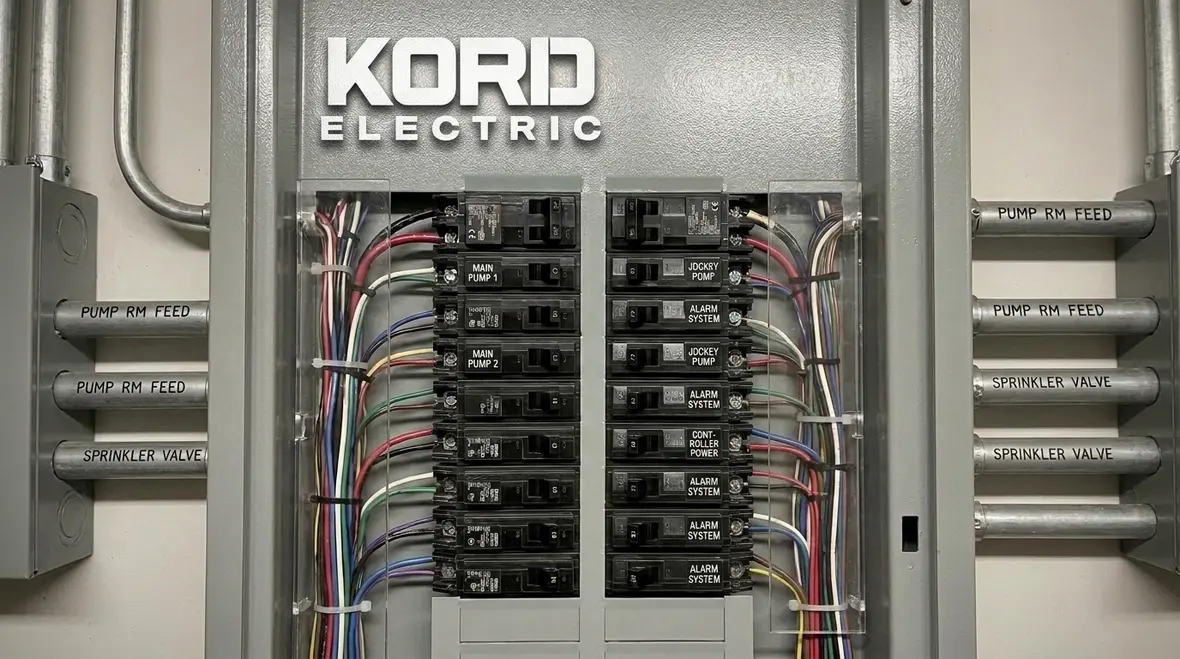
How we apply NEC guidance without turning it into a mystery novel
Some facilities treat code compliance like a scavenger hunt. You find the checkbox, you move on, and nobody really knows why it matters. We do not run our process that way. Instead, our expert service staff translates NEC guidance into decisions you can manage.
For example, we help stakeholders understand how the electrical scope affects selection and installation of system components. We also show the links between the NEC electrical rules and real operational needs during emergencies. That includes how equipment should be installed so it stays functional when it must.
To keep projects efficient, we also coordinate early with other trades and the facility team. As a result, the electrical work aligns with mechanical layouts, controller placement, and the fire pump room design. Then, when inspectors arrive, the project matches the plan. And if anyone asks, our technicians explain the reasoning calmly, with the code foundation underneath.
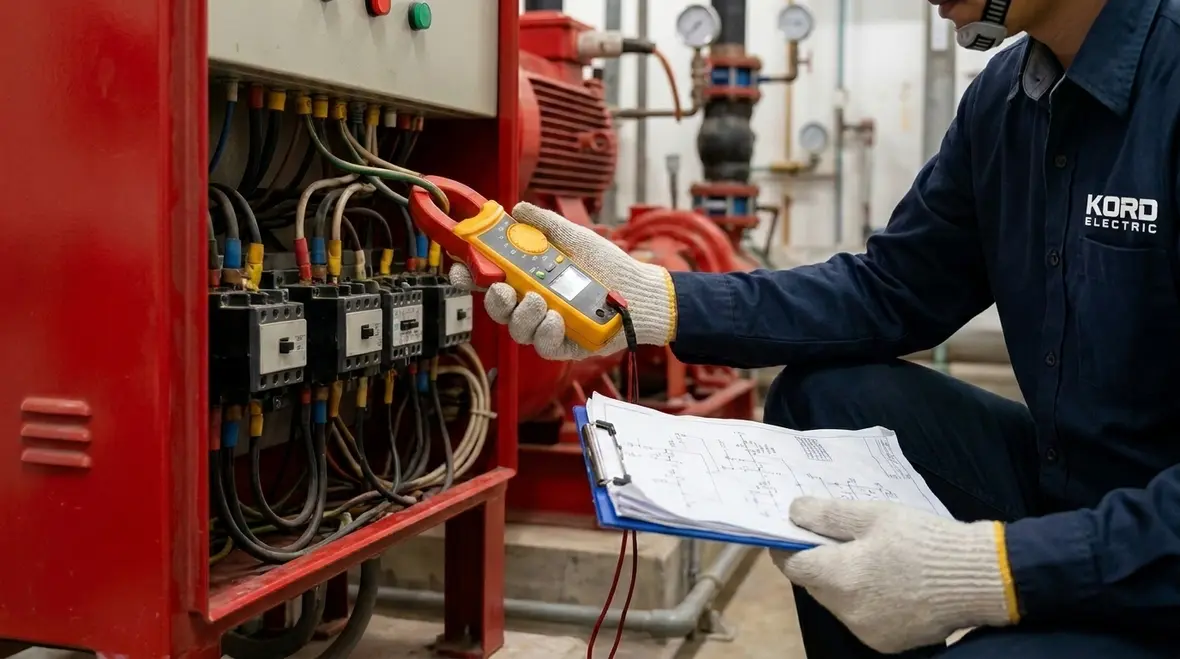
Testing, inspections, and documentation that stand up to reality
Electrical safety is not complete when the last cover plate goes on. Therefore, we treat verification as a core part of the job. After installation, our technicians focus on testing and documentation that support long term readiness for commercial and industrial sites.
This includes:
- Field checks to confirm termination quality, routing, and labeling.
- Coordination with system tests aligned with fire pump performance expectations.
- As built documentation that reflects what actually happened in the field.
- Clear handoff notes for facility staff, so maintenance teams know what they are looking at.
We know that some teams are juggling operations, compliance deadlines, and production schedules at the same time. So we keep our approach organized. And yes, we sometimes joke that documentation is the “plot armor” of compliance. It does not fight the fire, but it protects the project when questions show up later.
For guidance on electrical code interpretation and fire safety priorities, our approach stays informed by resources we reference during planning and review. We also align with broader fire protection education and industry best practices connected to the NEC and related fire pump electrical considerations. For facility teams who want to go deeper on code context, resources like our Kord Electric blog coverage of understanding NFPA 70, the National Electrical Code explained for 2026 and allied fire protection discussions at Kord Fire’s NEC overview help connect day to day decisions with the bigger code picture.
Common electrical weak points we prevent in large property buildings
When we look at past failures and close calls, patterns show up. Most issues do not start with one big mistake; they start with small weaknesses that stack over time. Then, during an emergency, that stack becomes a problem.
Here are practical weak points our technicians focus on when serving commercial and industrial buildings:
- Poor routing that puts cables where they can get damaged during maintenance or equipment movement.
- Loose or incorrect terminations that can lead to intermittent faults.
- Inadequate labeling that slows maintenance and increases the chance of wrong connections.
- Controller wiring oversights that create mismatches between expected and actual behavior.
- Documentation gaps that leave facility staff guessing years later.
We prevent these through design review, careful installation habits, and verification steps. Additionally, we involve our technicians early so they understand the building’s layout and operational goals. This reduces rework. And rework is expensive. In fact, it is like paying for a second cup of coffee because the first one went cold. Nobody wants that.
Planning for the future: code awareness and fire pump electrical upgrades
Code requirements evolve, and high value facilities need a plan that stays current. At Kord Electric, we help building owners and property teams approach upgrades with a long view, not a panic button approach.
When a project involves changes to fire pump systems, we focus on how the electrical portion supports the whole system. That includes evaluating existing wiring conditions, checking circuit integrity, and confirming that upgrades match current expectations. Then, we coordinate the work so the facility can keep operating safely.
Also, we understand that many major properties have multiple life safety systems. Therefore, upgrades should not create mismatches across the building. Our team manages the electrical side with clear communication and steady execution so other stakeholders can plan around the work.
For additional context on national code education, fire protection focus, and electrical safety principles that support fire pump planning, organizations and resources like NFPA focused education, specialized fire pump groups, and related industry training such as those highlighted by firepumps.org reinforce why disciplined electrical work matters. At the same time, our guidance stays tightly connected to commercial and industrial reality so facilities see practical next steps, not just theory on paper.
If your fire pump planning overlaps with broader power reliability work, our related Kord Electric blog resources on emergency power for business continuity and critical power system redundancy for facilities can help your team connect fire pump reliability to the rest of the electrical system, from normal operation to the worst day in the building’s life.
FAQ
Conclusion: call Kord Electric for code aligned fire pump electrical work
Fire pump electrical work should feel steady, not stressful. At Kord Electric, our technicians and expert service staff plan and install with the electrical code intent in mind, verify the details in the field, and provide documentation that facility teams can trust. If you manage a commercial or industrial building and need fire pump electrical scope support, reach out to us. We will review your situation, explain the path forward, and keep the project organized from day one to final handoff.
If your needs go beyond the fire pump and into broader power reliability, our Los Angeles County electrical services team can help you coordinate fire pump electrical work alongside emergency power, distribution upgrades, and critical system improvements, so your entire facility moves toward a consistent, code aligned standard of performance.
To explore more ways we design and maintain dependable electrical systems for commercial and industrial facilities, you can also review related topics in the Kord Electric blog, where we connect NFPA 70 requirements, real world field conditions, and practical strategies for keeping life safety and critical operations online.