

Critical Power System Redundancy for Facilities
At Kord Electric, we take Critical Power System Redundancy seriously because the lights, controls, servers, and life safety gear in commercial and industrial facilities do not get second chances. In our experience, when power fails, the real problem is not just darkness. It is lost production, corrupted data, delayed repairs, and customers who do not care that the outage was “unavoidable.” Therefore, our work focuses on design choices that keep power available during the moments that usually matter most. Still, we keep it practical, not academic. Others can sell parts. We help build systems that stay steady, even when the unexpected shows up like a plot twist from a bad movie.
Why power redundancy keeps businesses running when things go wrong
When power systems lack redundancy, a single failure can snowball. For example, a transformer issue can trip downstream breakers, a control power dropout can stop switching, and a UPS fault can cascade into a full shutdown. Then the facility does not just lose electricity. It loses momentum. Consequently, a well planned approach to Critical Power System Redundancy limits the chain reaction and buys time for safe transfer and repair.
To keep the story grounded, our technicians explain this in plain terms on site. They point to real equipment and real failure modes, then they show what happens when the system is designed with parallel paths and controlled transitions. In other words, redundancy is not only about having backups. It is about ensuring the backup can pick up the load with correct sequencing, correct settings, and correct protection.
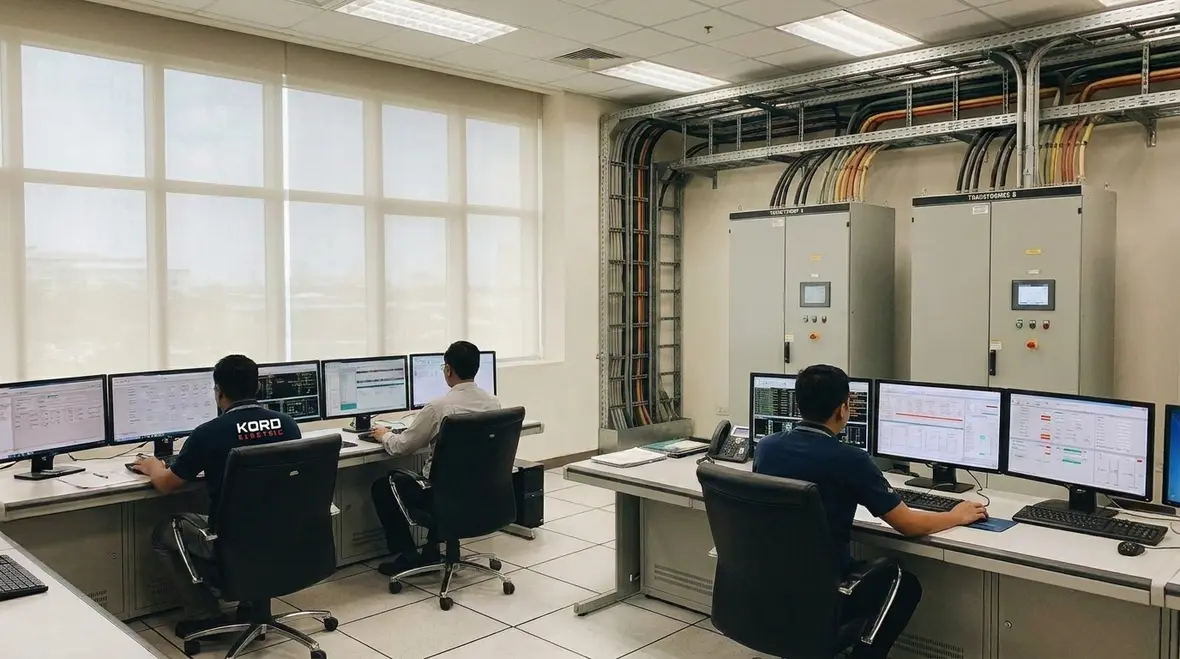
How redundancy changes the reliability math for facilities
Reliability is not a vibe. It is a system behavior. In commercial and industrial facilities, redundancy often shifts power availability from “maybe” to “meets the goal” by reducing the chance of total loss. For instance, designers can use parallel feeders, redundant UPS modules, or multiple distribution paths so one component can fail without taking the whole system down.
Now, here is where many teams get sloppy. They think “redundant” means “connected loosely.” However, real redundancy requires coordination between power sources, breakers, transfer switches, relays, and monitoring. If protection settings do not match, one section can trip and still spread the outage. Likewise, if transfers are not timed correctly, the load can see a gap or an overload condition.
That is why our expert service staff emphasizes design clarity during maintenance and inspections. They review how the system actually performs, not only how the drawings look. Next, they recommend targeted adjustments and confirm that the facility can handle both planned and unplanned events with smooth operation.
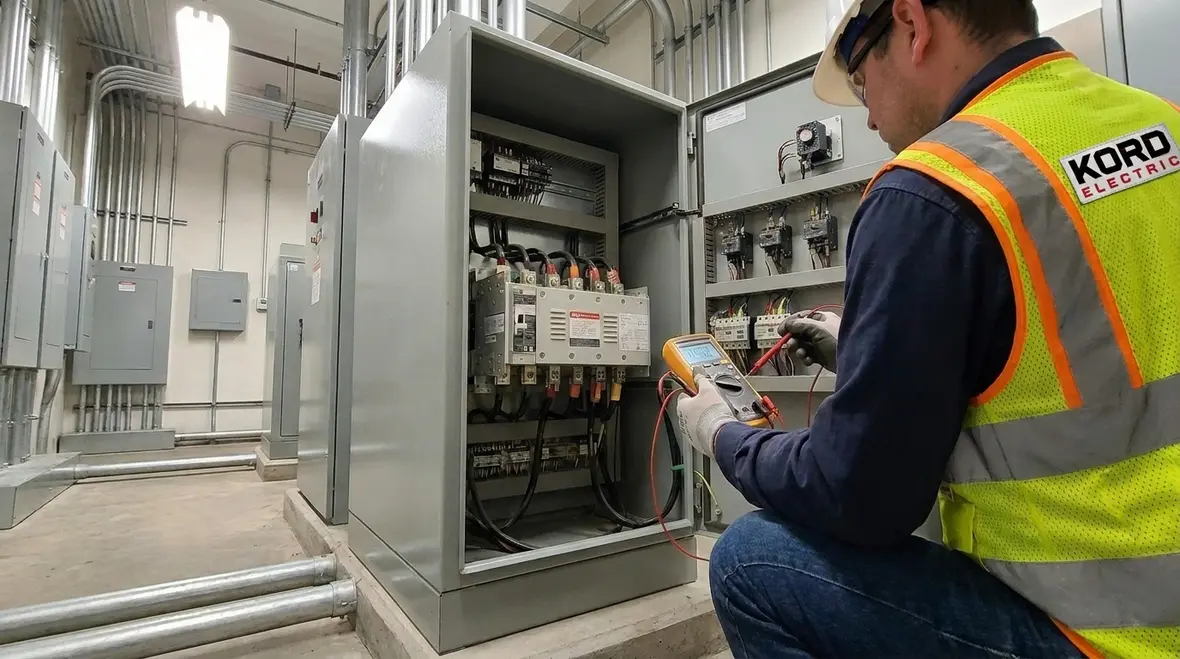
Common redundancy gaps Kord Electric sees in real commercial builds
Even strong electrical projects can develop weak spots over time. Therefore, we often see these gaps during ongoing inspections and maintenance planning for major property buildings and industrial sites.
- Single point of failure in control circuits, not just in the main power path.
- Inadequate breaker and protection coordination, which can cause nuisance trips during transfer.
- Unverified transfer logic, where the system should switch seamlessly, but field conditions cause delays.
- UPS battery aging that reduces ride through time just when demand spikes.
- Generator maintenance drift, where run tests happen “on paper” but performance under load is not confirmed.
Our technicians do not blame anyone. They simply document. Then they explain what the failure path looks like and how to close it. Also, they note that the most expensive moment is the one during an outage, when the team discovers gaps under pressure. Nobody wants that surprise. Not even villains, and they usually get better planning.

Maintenance plans that support redundancy, not just “check the box” work
Redundancy only works when the system stays ready. That is why Kord Electric supports commercial and industrial electrical maintenance plans that match how critical gear ages, heats up, and behaves under real conditions.
As outlined in our maintenance plan approach at Kord Electric Blog: Commercial and Industrial Electrical Maintenance Plans, we focus on routine tasks that keep power components aligned with their intended performance. In practice, that means scheduled inspections, preventive testing, and documented maintenance that helps the facility stay within expected thresholds.
Our team also helps others avoid a common mistake. They maintain the obvious items, then forget the supporting systems that make redundancy possible. For example, the monitoring system, the control power distribution, and the transfer mechanism all matter. If a sensor fails quietly, the system can behave as if redundancy is present, while the actual outcome fails at the worst time.

Designing for transfer and protection: the part people skip
Many people think redundancy equals more equipment. In truth, the heart of a stable critical power strategy lies in transfer and protection coordination. When the system shifts sources, it must do so with the right timing and the right limits, while protection devices act predictably.
For a facility, this includes:
- Proper switching sequence to avoid overlaps that overload sources.
- Correct settings and coordination so one device failure does not trip the entire system.
- Test plans that confirm ride through time, transfer time, and load behavior.
- Load review to ensure critical circuits receive the intended power quality during transition.
Then comes verification. Our technicians verify that the system transitions as designed. They explain what each test proves, what data matters, and what a “pass” should look like. We also coordinate with facility leaders so maintenance windows do not create unnecessary disruption.
And yes, we sometimes hear the line, “We never had a problem.” That can be true, like never getting hit by a meteor. But relying on luck is not an engineering plan. We build plans that work even when luck stops showing up.
What redundancy should include for major property buildings and industrial sites
Commercial and industrial facilities often need redundancy across more than one layer of their power system. Therefore, a thoughtful approach typically includes the following areas.
- Multiple supply paths where feasible, so a single source fault does not shut down operations.
- UPS support for sensitive loads like controls, comms, and process equipment.
- Generator readiness with testing that confirms performance under real load conditions.
- Selective distribution so problems stay in the smallest possible area.
- Monitoring and alarm clarity so operators act quickly instead of guessing.
Our expert service staff also considers life safety and compliance needs tied to how these buildings operate. Even when a facility has redundancy, a poor operational plan can undermine reliability. For that reason, we help teams align maintenance, training, and response steps with the actual electrical design.
For facilities in Southern California and surrounding regions that need broader electrical support, our team also provides comprehensive Los Angeles County electrical services to keep commercial and industrial operations running smoothly.
FAQ: Critical Power System Redundancy for commercial and industrial facilities
Ready to strengthen your critical power strategy
If your commercial or industrial facility depends on steady power, you should not wait for an outage to learn what fails first. Kord Electric supports major property buildings with maintenance planning, technical verification, and practical guidance from our technicians and expert service staff. We assess your current system, explain the real risk points, and help you build a more dependable approach to power availability. Reach out today and let us review your critical power setup before the next “surprise” event shows up.
When you are ready to turn Critical Power System Redundancy from a buzzword into a real system behavior, our team can integrate design review, testing, and maintenance into one plan so your facility can ride through faults, planned shutdowns, and utility events with calm, predictable performance.
We also help align redundancy planning with broader electrical strategies, including preventive maintenance, emergency response, and code-driven upgrades, so your investment in reliability supports the full operating life of your facility instead of just the next outage.
To explore how Critical Power System Redundancy can fit into a long term reliability roadmap for your site, our technicians and expert service staff can walk your team through options, priorities, and a realistic schedule for improvements.
If your facility operates complex electrical rooms, data centers, or process equipment, we can also coordinate redundancy choices with power quality, grounding, and future expansion plans so today’s upgrades keep supporting tomorrow’s loads.
For commercial and industrial properties that cannot afford “try again tomorrow” downtime, Critical Power System Redundancy becomes part of daily risk management, not a side project. Kord Electric is ready to help you plan, test, and maintain that resilience across your entire electrical chain.
Our services go beyond a single project. By pairing redundancy design with ongoing service, including inspections and testing, facilities can build a repeatable, documented approach to reliability that operations teams can trust shift after shift.
For facilities coordinating with multiple stakeholders, such as property managers, safety teams, and operations leaders, we also provide clear reporting and step by step action plans so everyone understands how Critical Power System Redundancy supports safety, uptime, and long term asset performance.
When outages happen elsewhere in the grid, your facility does not have to join the scramble. With the right combination of redundant paths, verified transfer, and disciplined maintenance, your power system can stay calm while everyone else is looking for flashlights.
If you are organizing capital improvements or planning upgrades, this is also the right time to align new equipment choices with Critical Power System Redundancy goals so every project moves your facility toward stronger uptime, not just new hardware.
Kord Electric can coordinate redundancy planning with related electrical services, from preventive maintenance to emergency support, so your team has a single, knowledgeable partner across the full life cycle of your commercial or industrial power system.
For facilities that support life safety systems, data, or critical production, Critical Power System Redundancy is not a luxury. It is a design principle that shapes how power is delivered, protected, and restored every day the building is in use.
By approaching redundancy as a combination of architecture, settings, testing, and maintenance, we help clients move from “we hope it works” to “we know how it behaves,” especially when the unexpected shows up.
If you want to align your redundancy strategy with best practices from commercial and industrial maintenance, we can also connect your plan to structured programs similar to those in our maintenance resources so your system stays ready year after year.
Ultimately, Critical Power System Redundancy is about protecting people, processes, and property with power systems that keep working when the easy options fail. Our technicians take that responsibility seriously, and they are ready to help your facility do the same.
When you are ready to see how your current setup compares to a fully coordinated redundant system, Kord Electric can perform assessments, explain the findings in practical language, and outline the steps to close your highest risk gaps first.
From there, we can help you phase in improvements over time, combining equipment upgrades, protection coordination, and maintenance changes into a roadmap that respects budgets while still moving decisively toward stronger reliability.
And as your facility evolves, we can revisit Critical Power System Redundancy to confirm that expansions, tenant changes, or new equipment loads still fit within the safe, stable behavior you need from your power system.
As you consider your next steps, remember that the best time to tune Critical Power System Redundancy is before the outage, not after the emergency report. Kord Electric is ready to help you make that timing work in your favor.
Connect with us to discuss how Critical Power System Redundancy, coordinated maintenance, and a practical, field tested design approach can keep your facility running when others go dark.
Our team is here to support commercial and industrial clients who want their electrical systems to match the reliability their operations demand, not just the minimum code requirements on paper.
When Critical Power System Redundancy is planned with real operating conditions in mind, it becomes one of the most valuable risk controls in your entire facility strategy.
Let us help you turn that strategy into a clear, tested, and maintainable reality for your site.
From the first assessment to ongoing support, Kord Electric is committed to keeping your critical power steady, predictable, and ready for whatever comes next.
If you are planning upgrades, expansions, or simply want to understand your current risk profile, now is the right time to bring Critical Power System Redundancy into the conversation.
We are ready to walk your site, review your drawings, and translate all of it into an actionable plan your operations team can trust.
Reach out today and let us review your critical power setup before the next “surprise” event shows up.


