
NFPA 72 Compliance for Commercial Fire Alarms
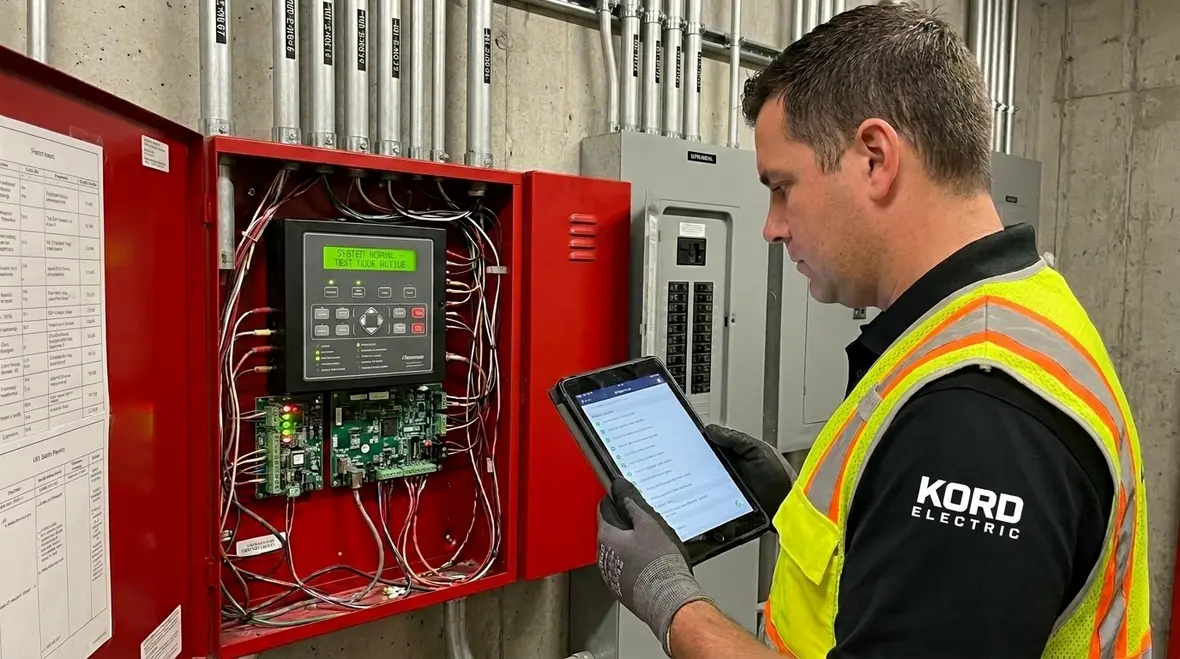
Building owners often think NFPA 72 compliance is a piece of paper that magically keeps risk away. That is not how it works, and our team at Kord Electric wants to keep it real. We help commercial and industrial facilities and major property buildings understand and maintain the lifesaving fire alarm systems they rely on. In this guide, our expert service staff explains what building owners should know about NFPA 72 compliance, how it impacts day to day operations, and why your inspections, testing, and records should not feel like a surprise pop quiz. If a fire alarm system is the heart, NFPA 72 compliance is the rhythm that keeps it steady when conditions get stressful.
NFPA 72 compliance and why it matters in commercial buildings
In commercial and industrial spaces, a fire alarm system must do more than “sound an alarm.” It must alert the right people, in the right way, at the right time. That is where NFPA 72 compliance comes in. It sets expectations for design, installation, inspection, testing, and maintenance. Therefore, building owners do not just meet a requirement, they support safer outcomes.
Our technicians explain it like this: regulations guide the system’s behavior under real conditions, not under ideal showroom lighting. Moreover, the system often connects to other life safety actions such as occupant notification and emergency response workflows. If the system drifts out of spec, the whole chain can become unreliable. And in a real event, “close enough” does not cut it. Fire safety is not the place for improvisation, even if Hollywood makes it look easy.
Plan it before it installs: design, documentation, and intent
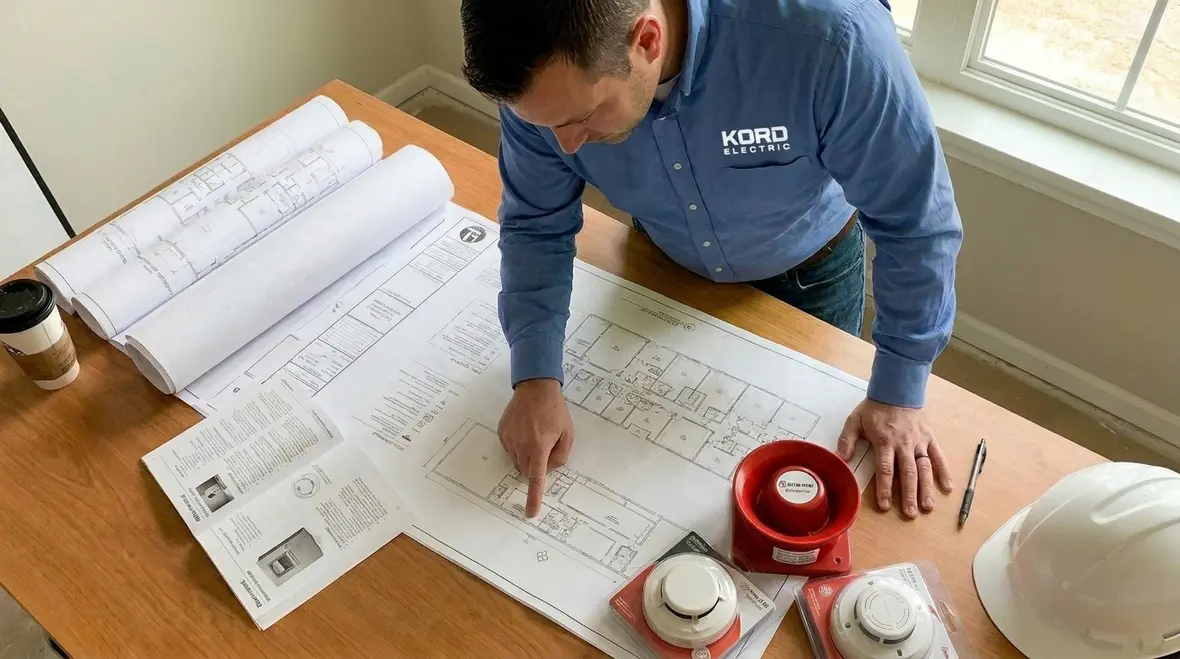
Many building owners only think about fire alarm performance after something goes wrong. Yet, the best time to ensure correct behavior is before the system ever turns on. First, teams must define the occupancy and the hazards. Then, they select notification appliances, initiate devices, control equipment, and programming methods that match the building’s needs.
Our expert service staff helps property teams understand how plans and documentation support ongoing compliance, not just the initial build. For example, design choices impact inspection paths, test cycles, and maintenance access. If wiring routes, device locations, or control logic do not support proper testing, the facility later struggles to prove the system remains dependable.
Also, thorough records matter. When technicians document layouts, device characteristics, and system modifications, future service becomes faster and safer. In other words, proper documentation is the system’s memory. Without it, even strong equipment can become difficult to verify and manage.
Inspection and testing: the routine that proves the system works
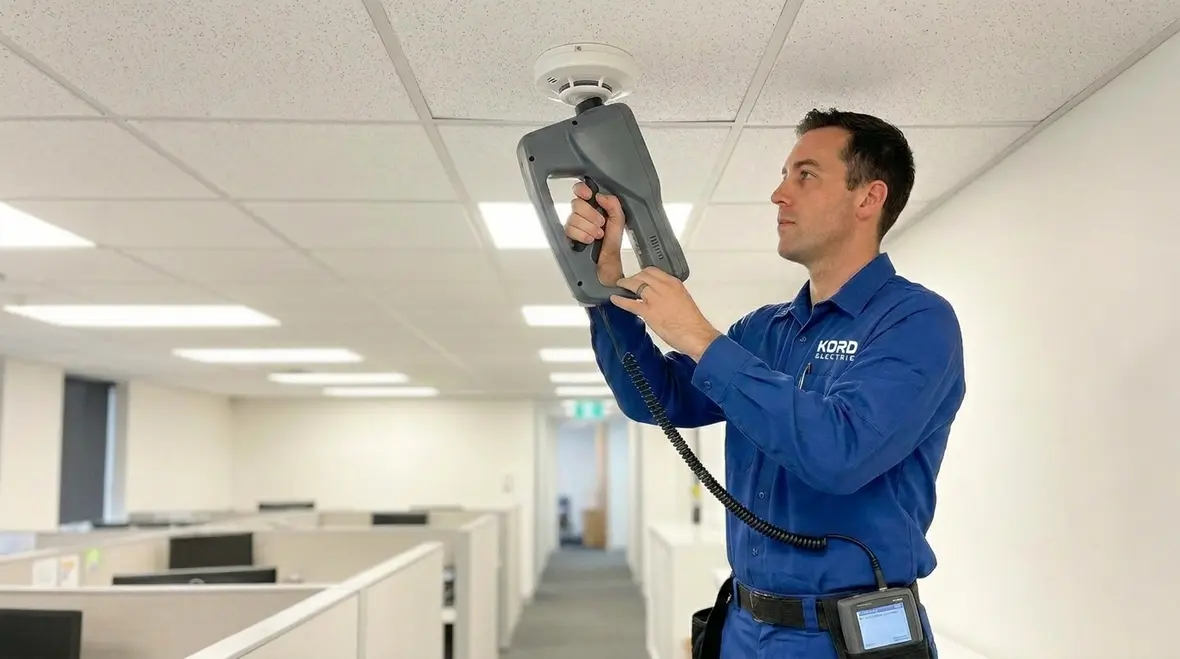
Fire alarm systems do not stay reliable by hoping. They stay reliable through planned inspection and testing. NFPA 72 lays out how owners and service teams should evaluate devices and functions over time, so the system continues to perform as designed. Consequently, building owners should treat these activities as operational safety, not as a seasonal chore.
During field work, our technicians follow established methods to verify that notification appliances audibly alert occupants, initiating devices detect conditions correctly, and control equipment logs events properly. Additionally, they confirm that trouble signals, supervisory signals, and alarm signals work in the right sequence.
Most facilities have one thing in common: they want minimal disruption. We understand that. So we coordinate testing to reduce interference with operations, and we communicate clearly before service begins. After all, no one wants their production line halted because someone “forgot to schedule the sounder test.” A small plan prevents big confusion.

Maintenance that keeps systems stable, not just functional
Maintenance should do more than confirm the system “turns on.” It should keep the system stable, predictable, and aligned with the facility’s current conditions. As buildings change, so do life safety needs. A renovated office suite, a new storage area, or modified tenant spaces can alter device coverage and detection paths.
Our expert service staff helps commercial and industrial clients manage the life safety updates that often get overlooked. For instance, when a facility adds electrical loads or modifies panel arrangements, it can indirectly affect power stability, control signals, and system behavior. Therefore, electrical coordination matters, and owners benefit when fire alarm work runs alongside solid electrical support.
That is one reason we also help with electric panels for major property buildings. When the power side is properly built, labeled, and maintained, fire alarm reliability improves. It is like making sure the stage crew has the right cables before the show starts. Nobody applauds the wiring, but everyone notices when it fails.

Common gaps we see during service calls
Our technicians see patterns. Not every problem starts with equipment failure. Often it starts with missed steps, unclear responsibilities, or weak change control. Consequently, owners can protect themselves by focusing on the most common gaps before they become expensive.
Here are issues that frequently show up in commercial and industrial facilities
- Device trouble history that repeats without corrective action, which turns “routine trouble” into a known risk
- Documentation gaps that make it hard to verify what was changed, when it was changed, and why
- Unauthorized modifications or incomplete updates to system programming after building changes
- Limited access to panels, control units, and device locations, which slows testing and increases service cost
- Power and electrical coordination problems that lead to nuisance behavior or unstable signals
And yes, we have seen facilities treat fire alarm testing like a haunted house walkthrough. “We will check it after the tenant move.” That is not a plan, that is a gamble. Our team works to replace that approach with clear schedules, documented outcomes, and straightforward communication.
How Kord Electric supports ongoing fire alarm performance
Commercial and industrial fire safety requires more than one-time installs. It needs consistent expertise, strong coordination, and service teams that understand how systems work in real buildings. Kord Electric brings that ongoing focus to major property buildings.
When our technicians service a facility, they do not just chase defects. They verify operation against the intent of the system, then they document what they found and what they corrected. Furthermore, they help building owners plan for the next steps, including what should be addressed now and what can be scheduled later with less urgency.
We also align with electrical health. When owners keep electric panels and life safety power systems in good shape, it reduces the chances that fire alarm performance becomes unpredictable. If you want fire protection that behaves like it should, you treat the whole support structure as part of the safety system, not as separate worlds.
For a deeper code perspective on how design, installation, and testing come together, many building teams also review dedicated resources like the NFPA 72 overview from Kord Fire Protection as a companion to their service planning.
Preparing owners and property managers for audits and reporting
Even strong systems can look weak on paper if reporting and records are not maintained. Therefore, building owners should build a routine that keeps documentation organized, complete, and easy to review. This includes tracking inspection results, testing outcomes, corrective actions, and any system updates after renovations or equipment replacement.
Our expert service staff helps property teams understand what documentation needs attention and how to keep it current. Then, when an authority or internal review asks questions, the facility can respond with clarity instead of scrambling for files at the last minute.
That approach protects the building and protects the people who manage it. Also, it reduces downtime because service crews do not waste time trying to decode old changes. Instead, they move straight to verification, which saves money and keeps the system in a dependable state.
FAQ about NFPA 72 compliance
Related NFPA 72 compliance resources and services
For building owners who want to connect NFPA 72 compliance with broader fire protection strategy, resources from Kord Fire Protection can help. Articles such as the dedicated NFPA 72 overview and guides to fire alarm inspection and testing give facilities a clearer picture of how design, documentation, and routine service work together over the life of the system.
If your facility also needs a partner on the fire side, Kord Fire Protection offers inspection, testing, and code consulting grounded in real NFPA standards and local requirements. Coordinating your electrical work through Kord Electric and your fire alarm service through Kord Fire Protection helps create one consistent path for NFPA 72 compliance instead of scattered to-do lists.
Whether you are reviewing a recent inspection report, planning upgrades, or preparing for an upcoming fire marshal visit, having a coordinated electrical and fire alarm strategy helps keep systems ready, documentation defensible, and occupants protected.
Conclusion: schedule the right service and stay ahead
Building owners in commercial and industrial facilities do not win by waiting for trouble. They win by keeping records tight, testing scheduled, and systems stable through real maintenance. Kord Electric helps your team understand NFPA 72 compliance, coordinate updates, and keep fire alarm performance dependable. If you want calm, confident answers instead of last minute scrambling, contact us for a focused assessment and a clear plan. We will bring our technicians and expert service staff to work with you, not around you. Let’s keep your building ready.
To align your fire alarm systems, power distribution, and NFPA 72 compliance strategy, consider pairing your next inspection cycle with a review of your electrical infrastructure and panels. That way, the next time a test tone sounds, it is part of a plan you expected, not a surprise you have to chase.
When you are ready to connect the dots between everyday operations, documentation, and life safety performance, schedule service that treats your fire alarm as the critical system it is.


