
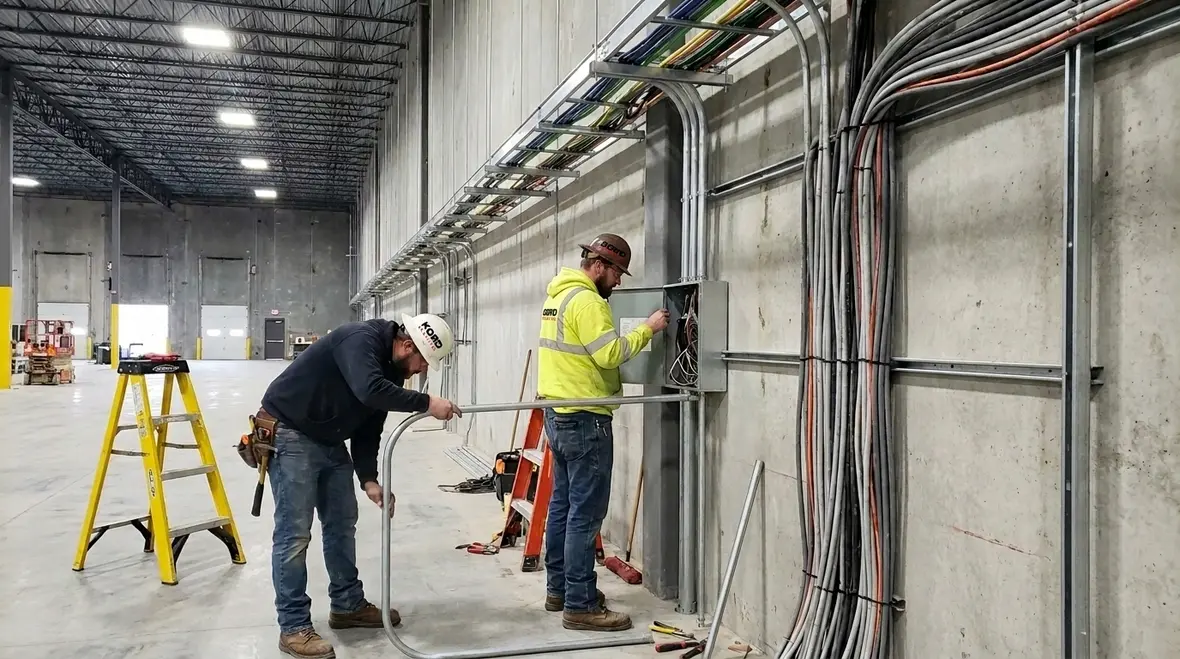
NEC Wiring Methods for Commercial Installations
At Kord Electric, we take NEC wiring methods seriously, especially in commercial electrical installations where code compliance is not optional and downtime is expensive. We plan wiring routes, select conductor types, set methods for raceways and cables, and verify the details before anyone pulls a wire or turns on a circuit. And yes, we also check the paperwork, because even the best electrician cannot fix a missed spec on paper with wishful thinking. To guide every project, our team uses proven NEC wiring methods aligned with the needs of major commercial and industrial facilities, including multi-tenant buildings, factories, warehouses, and other property types that carry real operational load.
Commercial wiring starts with disciplined design
When our customers ask how we handle commercial electrical installs, our technicians usually begin with the same calm truth: the wiring method is only as good as the design behind it. First, we review the electrical room layout, equipment requirements, and future expansion plans. Then we map circuits to loads like lighting, HVAC systems, receptacles for maintenance areas, pumps, process equipment, and life safety loads where required.
After that, we choose the installation approach based on environment and performance needs. For example, a facility with dust or moisture requires different wiring tactics than a clean office tower. Likewise, a warehouse with forklifts needs physical protection that holds up to real-world contact. In other words, we do not “wing it,” because commercial work does not forgive shortcuts.
Our expert service staff also explains the why, not just the what. They translate code requirements into field choices, so facility managers understand why a particular wiring route or protection method matters. That clarity helps others coordinate with general contractors, building operations, and sometimes security teams, too. And if you are thinking, “This sounds like a lot,” well, you are right. But it is better to feel prepared than to chase troubleshooting later like it is a late season mystery show.
How we select raceways, cables, and conductor types
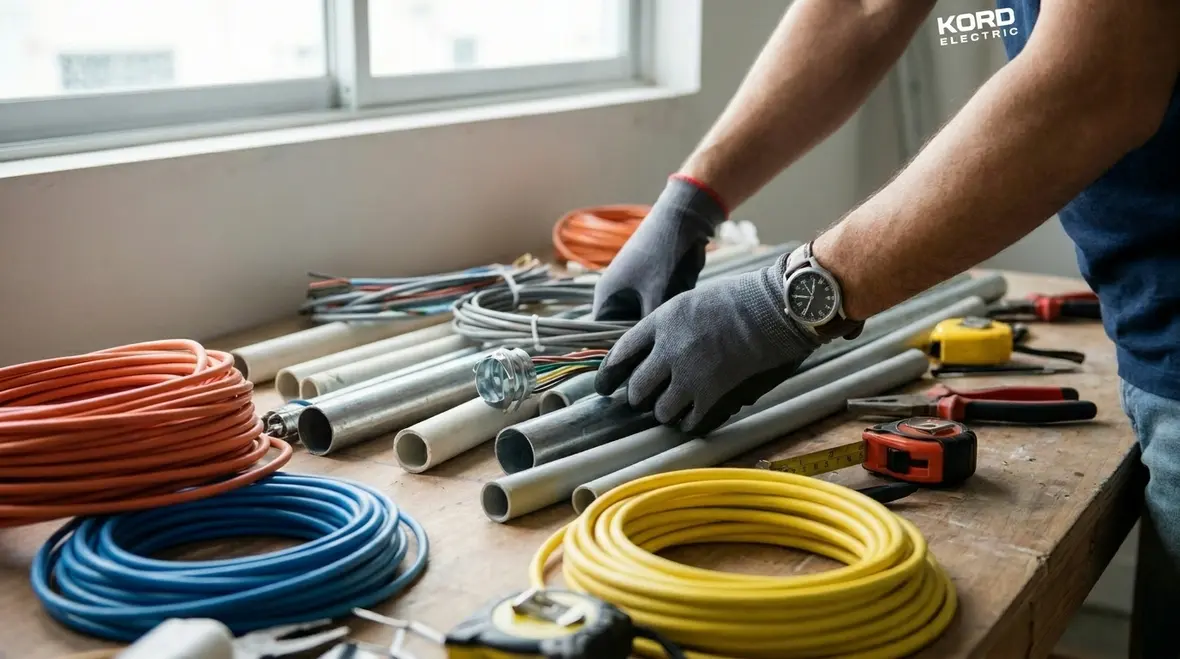
Once the design is locked, we select wiring components that match the job conditions. We consider conductor insulation rating, cable construction, and the physical pathway the wiring will follow. Next, we match those choices to how the system will be used: wet locations, damp areas, exposed runs, concealed spaces, and service entrance conditions.
Then we plan the supporting method. Some commercial sites require rigid and heavy-wall raceways, while others use EMT or other systems depending on physical hazard and exposure. Where cables travel through ceilings or walls, we focus on proper support spacing, entry methods, and secure routing so conductors do not end up stressed or poorly protected.
Our technicians also think about installation reality. They stage materials to minimize delays, verify box fill and conductor counts, and confirm that bends and transitions support safe current carrying without creating damage points. Even a small mistake at the transition can create a big problem when the facility is fully occupied and electricians are no longer in a “freedom to rework” mood.
Installation pathways in offices, warehouses, and plants
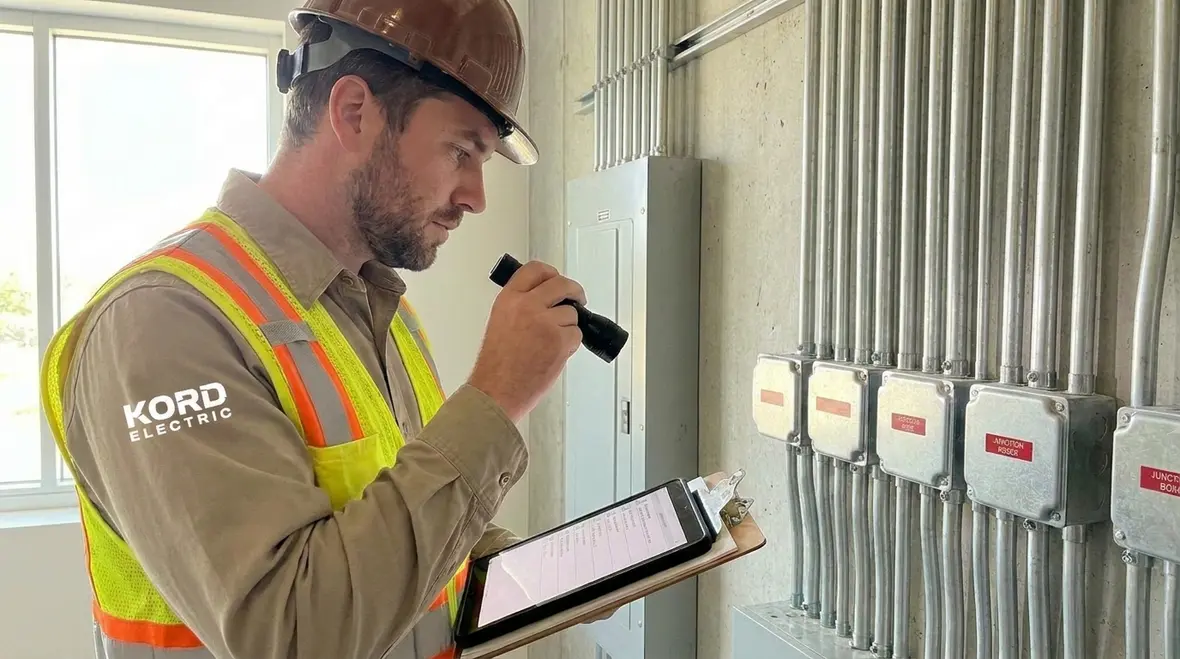
Commercial electrical installations rarely stay simple. One corridor might be a clean, finished space, while an adjacent area is an equipment room with vibration, heat, and maintenance access needs. As a result, we build wiring routes that fit each zone rather than forcing one approach across the entire building.
For office and tenant spaces, we focus on neat routing, clean transitions to devices, and safe concealment within approved boundaries. For industrial floors, we prioritize impact resistance and protection where tools, machinery, and traffic increase the odds of physical contact. For plants and process areas, we coordinate pathways around equipment layouts and keep cable runs organized so future maintenance stays manageable.
Meanwhile, we manage penetrations and sealing where required for fire and smoke control. We also coordinate with mechanical trades to avoid clashes that lead to last-minute reroutes. And when a route must cross a different system, we ensure the method supports separation needs and safe installation practices. Our team treats these steps like an orchestra rehearsal: if the timing is off, everything sounds messy later.

What conduit, cable tray, and support rules look like on site
Many people hear “wiring methods” and think only about the material choice. However, commercial work also depends on how we run and support those materials. We plan cable tray layouts or conduit routing with proper spacing and secure anchoring, and we verify that supports handle weight and maintain alignment over time.
We also manage bends and transitions. In the field, every bend creates a moment of stress on the cable or conductor system. Therefore, we route with care and install fittings that match the wiring type and conditions. If a facility expects vibration, we plan accordingly to reduce movement and stress on terminations.
Then comes the part people notice when something fails: terminations. Our technicians secure conductors properly, dress wiring neatly, and ensure the installation supports reliable connections. We label circuits so operations and future troubleshooting stay simple. That makes a facility manager’s day easier when a breaker trips and everyone wants answers faster than a sports highlight reel.

How we handle bonding, grounding, and safety continuity
Safety continuity is not a “nice-to-have” on major properties. It is the backbone of a dependable commercial system. We verify bonding and grounding practices that support fault protection and safe operation, and we confirm that connections remain secure and durable.
In practice, this means we plan how metal raceways and enclosures tie into the grounding system. We also ensure equipment grounding paths remain intact across transitions between rooms, equipment areas, and service gear. If a site has multiple panels or sections, we coordinate routing so grounding continuity does not rely on shortcuts that only work in theory.
Our expert service staff also explains the safety story in plain language. They show facility teams how proper grounding supports protective devices, why terminations matter, and how correct installation reduces risk during normal operation and fault conditions. And yes, we include jokes when the conversation allows it. Electricity is serious, but we are not trying to drain the human spirit out of the room.
Keeping commercial projects efficient without cutting code corners
Efficiency matters, because construction schedules do not wait for “perfect conditions.” At the same time, speed without quality creates rework, change orders, and angry meetings that no one enjoys. So we build a repeatable process that keeps commercial and industrial projects moving.
First, we coordinate the wiring method plan with equipment layouts, architectural constraints, and mechanical schedules. Then we confirm material lists, lead times, and install sequencing. After that, we perform careful onsite installation and then check details before energization. We treat inspection readiness as part of the project plan rather than a last-minute scramble.
Finally, we document key installation details so the facility team has a clear record. That includes routing notes, panel labeling, and any method-specific details that help with future upgrades. This documentation becomes a quiet superpower later, when someone needs to find a circuit quickly and does not want to play “guess the breaker” like a game show.
Planning for long-term reliability and maintenance
For many commercial properties, NEC wiring methods are not just about “passing inspection.” They directly influence how easy—or miserable—future maintenance becomes. Clear raceway layouts, labeled panels, well-documented conductor paths, and accessible junction points help maintenance teams perform preventive work faster and safer. If you are already thinking about long-term performance, Kord Electric’s electrical preventive maintenance services give you a structured path to keep those NEC-compliant installs operating as they should for years.
Connecting NEC wiring methods to system upgrades
When facilities begin planning major changes—such as rewiring aging infrastructure, upgrading panels, or adding new production lines—clear NEC wiring methods turn into a strategic advantage. They make it easier to understand existing loads, evaluate panel capacity, and identify where new feeders, conduits, or cable trays should go. If your building is already thinking about a larger reset, the rewiring cost guide for commercial electrical systems walks through what shapes investment and how to plan upgrades without losing sight of compliance, safety, and uptime.
FAQ: NEC wiring methods for commercial installations
Commercial teams choose Kord Electric for code-ready electrical installs
If a facility manager wants dependable power, safe wiring, and fewer surprises, Kord Electric is ready to help. Our technicians and expert service staff plan NEC-aligned installation details, install with careful workmanship, and document results so your team can operate with confidence. We build for commercial and industrial facilities and major property buildings, where performance and compliance matter every day. If you are planning an upgrade, new build, or retrofit, contact Kord Electric to discuss your wiring method needs and get a clear plan for the next step.
For properties specifically focused on lighting and load performance, pairing NEC wiring methods with professional lighting design can unlock even more value. Kord Electric provides dedicated lighting installation services for commercial and industrial facilities, helping teams align fixtures, controls, and wiring so energy savings and visibility improvements arrive together. Whether you are upgrading a warehouse, office tower, or production floor, coordinating wiring methods with lighting and distribution design turns scattered upgrades into a consistent, code-ready strategy.
And if your facility is heading toward a broader modernization effort—new equipment, EV chargers, or larger load centers—integrating NEC wiring methods early keeps each piece of the puzzle working together. From data center distribution to commercial kitchen upgrades and voltage stabilization, Kord Electric’s service offerings are built to support complex facilities that want fewer emergencies, clearer plans, and installations that stand up to real-world use.
When you are ready to move from “we should probably fix that someday” to a detailed, code-focused action plan, Kord Electric is prepared to map your NEC wiring methods, coordinate the work, and deliver commercial electrical installations that feel as solid as they look.


