Office Automated Lighting Scheduling by Kord
Automated Lighting Scheduling for Offices: How Kord Electric Cuts Waste Without Cutting Comfort
At Kord Electric, we install automated lighting scheduling for offices that helps corporate teams work under the right light, at the right time, and with less wasted energy. Instead of relying on switches, building habits, and hope, our approach uses schedules and controls that adjust lighting to real office hours. As a result, businesses see fewer unnecessary hours of illumination, and employees still get a steady, comfortable environment when they arrive.
Now, some people treat office lights like a buffet. They leave them on “just in case.” But energy bills are not fans of that plan. So, we help facilities move from “manual guesswork” to measured control, while our technicians explain the why behind every step. And yes, we keep it practical, because no one wants a lighting system that talks back at 2 a.m.
Why Lighting Schedules Matter for Corporate Buildings
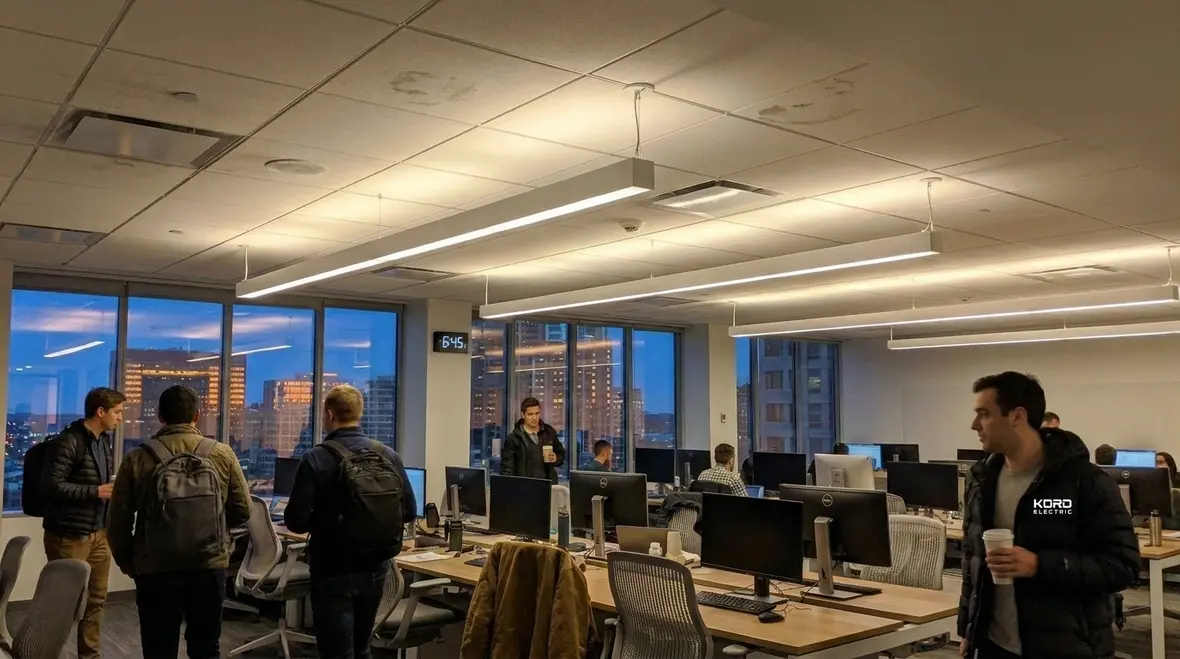
In commercial and industrial facilities, lights often stay on longer than they need to. However, the problem is not just the bulb. It is the chain reaction: lights run when spaces sit empty, zones run when they should rest, and the whole building pays for decisions made room by room. Over time, this creates steady, preventable energy waste.
Lighting schedules solve that waste by aligning power use with occupancy patterns. For instance, conference rooms may only need lighting during meeting blocks, hallways can dim during low traffic, and work areas can follow a predictable routine tied to shift schedules. Furthermore, a good schedule reduces wear because controls manage usage instead of letting every space drift into “always on.”
At Kord Electric, we focus on major property buildings and commercial operations, because those sites have the zones, the loads, and the schedules that make a real difference. And when schedules are tuned correctly, the building feels the same to occupants while the utility bill quietly behaves better.
Lighting schedules also connect directly to California’s energy and lighting codes, especially for facilities that fall under Title 24 requirements. When lights respond to real occupancy and time-of-day needs, buildings are not just saving money; they are staying aligned with the standards that inspectors and plan reviewers watch closely. For many properties, integrating automated scheduling becomes one of the most straightforward ways to improve both efficiency and compliance without tearing into every panel and fixture at once.
In that context, automated lighting scheduling for offices does more than dim a few fixtures. It gives property teams another lever to manage peak demand, respond to evolving code expectations, and keep energy performance trending in the right direction. When combined with code-aware design strategies like those used in Kord Electric’s broader lighting work, the schedule becomes a living part of the building’s long-term energy plan rather than a static timer tucked away in a closet.
Build a Real Schedule, Not a Fantasy Calendar
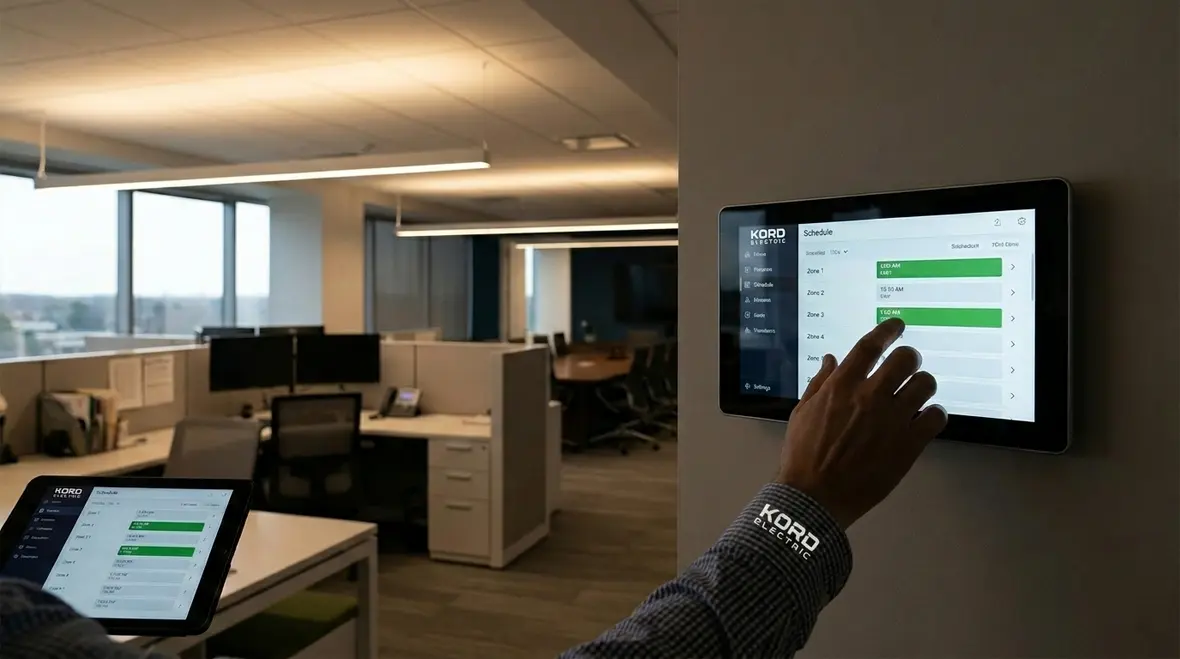
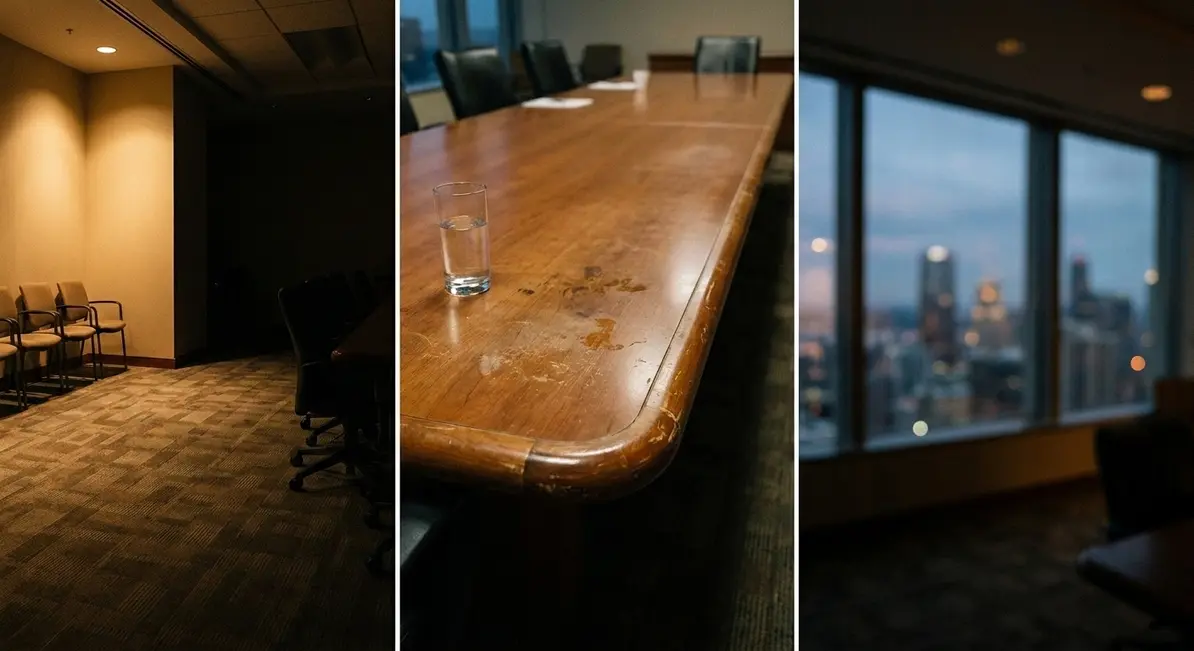
To set up an effective lighting plan, our team starts with how a building actually runs. Then, we turn that into a schedule you can trust. Typically, we map lighting zones to use patterns such as office hours, cleaning cycles, maintenance windows, and after hours security needs.
In many corporate offices, schedules fall apart when they try to treat every day the same. Yet reality varies. Holidays change traffic. Client visits shift meeting times. Some floors run daytime shifts while other areas support late operations. Therefore, our process includes a review of typical weeks and a plan for exceptions.
Here is how we approach it, step by step.
- Zone alignment: We separate work areas, corridors, lobbies, restrooms, and conference zones so the schedule matches the space.
- Control strategy: We decide where scheduling alone works, and where we pair it with dimming or occupancy controls.
- Override rules: We build in manual overrides for special events so staff does not feel trapped by automation.
- Season tuning: We adjust for daylight changes so lights do not run full power during bright hours.
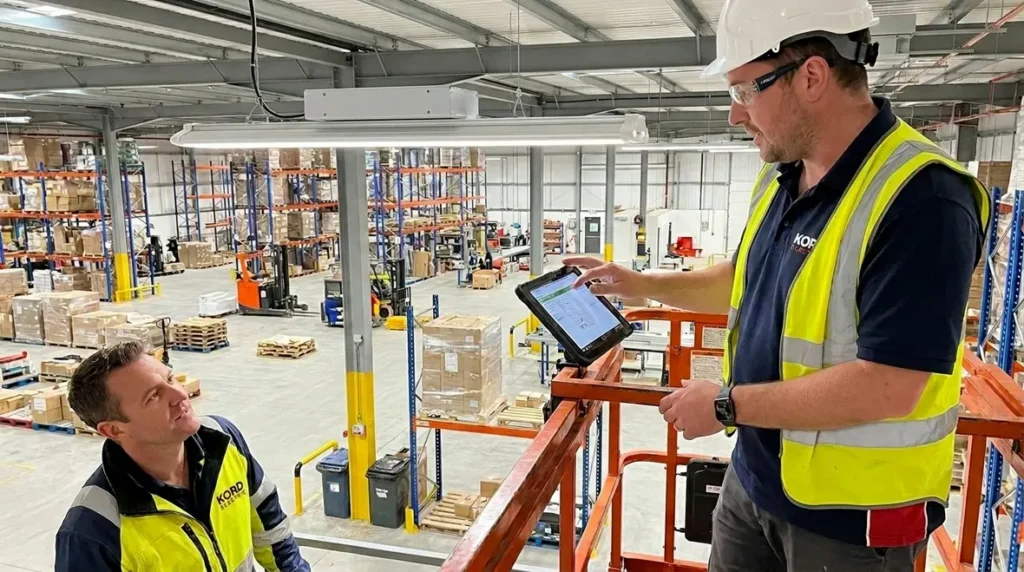
Our technicians walk the site team through what the system will do and why. That is important, because when people understand the logic, they stop treating automation like a mystery box. And when the questions come, our expert service staff answers them plainly, not like they are speaking in a secret contractor dialect.
We also document these decisions clearly so building managers are not left hunting through cryptic labels months later. Schedules are mapped to zones in a way that actually matches the way people talk about the building—“north open office,” “third floor conference wing,” “shipping corridor”—not just breaker numbers. That way, when someone asks for a seasonal adjustment or a shift change, the updates are fast, accurate, and low drama.
Connecting Schedules to Preventive Electrical Strategies
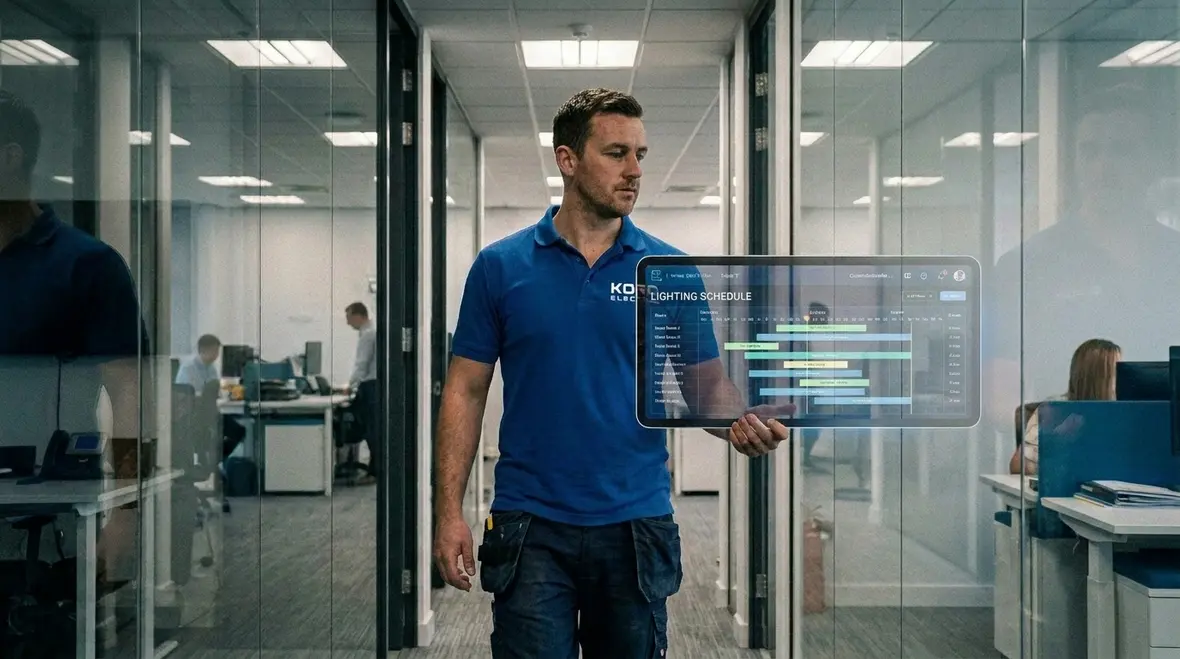
Thoughtful scheduling also fits into a broader preventive mindset. When lighting systems, panels, and controls are all working from a documented plan, it becomes easier to fold them into structured maintenance programs. Instead of waiting for someone to complain about flicker or timing drift, facility teams can bring lighting into the same rhythm as their electrical preventive maintenance visits, inspections, and testing routines.
For many large facilities, that means tying lighting schedules to the kind of structured care outlined in Kord Electric’s electrical preventive maintenance services. When schedules, panels, and distribution equipment are reviewed together, the building benefits from fewer surprises and a clearer picture of how its systems really operate day to day.
Smart Control That Works With Your Facility, Not Against It
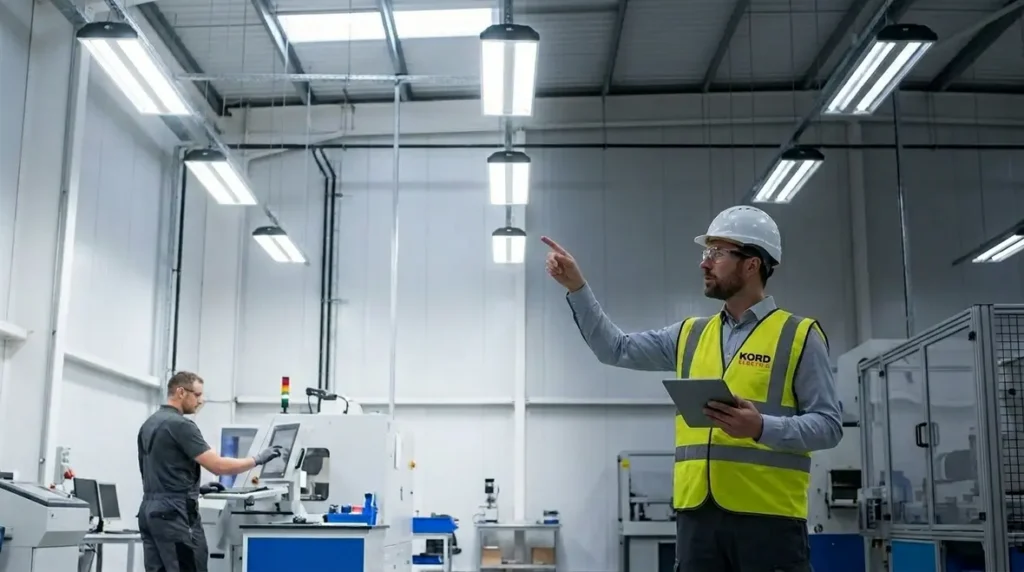
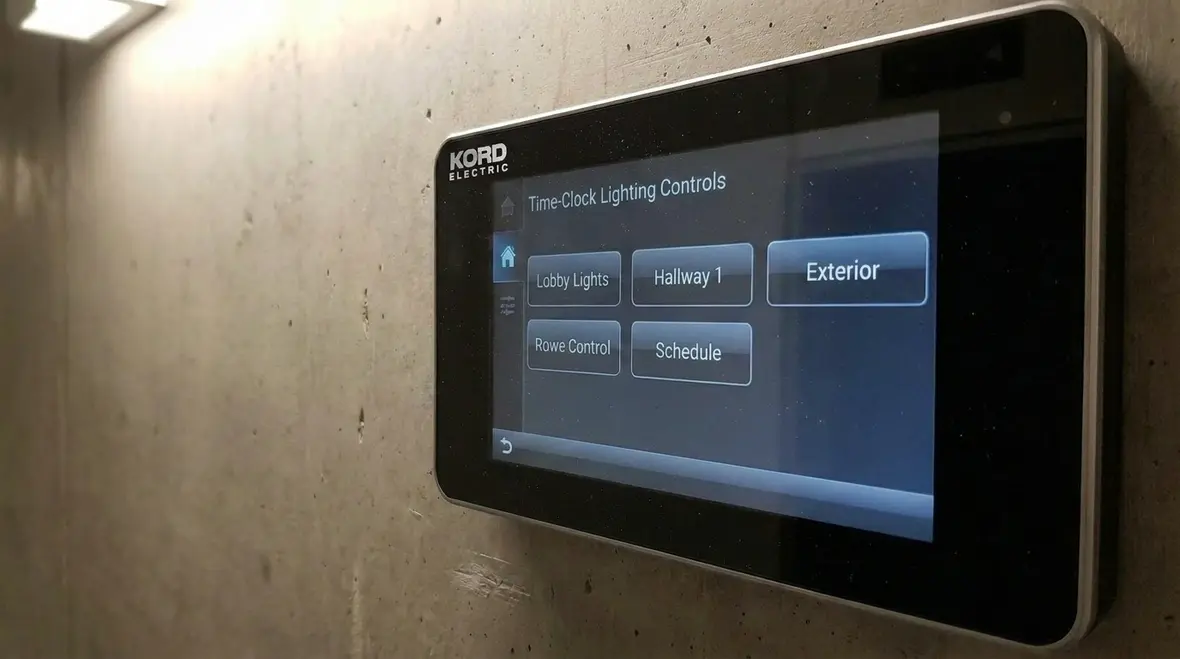
A lighting schedule is only as good as the control design behind it. For commercial and industrial properties, we make sure the automation method fits the building. Some systems handle scheduling through time clocks and panel logic. Others integrate with building management systems. Either way, we aim for reliability, clear settings, and stable performance during peak building use.
Just as importantly, we prevent the common “automation fail” scenario: lights that turn on too early, turn off during critical work, or ignore local needs. To avoid this, we focus on safe ranges, staged transitions, and proper zone boundaries.
When we bring our automated approach into a facility, we also take a deeper look at preventive maintenance. After all, controls and drivers are not immune to real-world wear and dust. Our team supports the systems we install by aligning with the kind of preventive mindset shown in our electrical preventive maintenance practices. In that spirit, we help ensure the building does not wait until something breaks to learn it exists.
Integrating With Existing Lighting and Compliance Strategies
For many properties, automated lighting scheduling for offices is not a standalone project. It is part of a broader plan that may include LED upgrades, new fixture layouts, and code-driven improvements. Where facilities are already investing in lighting upgrades or planning new work, we coordinate schedules with the design and installation strategies used in Kord Electric’s lighting installation services. That way, controls, fixtures, and wiring all support the same goals from day one.
We also keep an eye on how state and local requirements impact automation, especially in places where Title 24 and similar codes call for defined control strategies. Schedules that work hand in hand with occupancy sensors, daylight controls, and code-compliant zoning help buildings avoid last-minute changes during inspections. Instead of retrofitting automation under pressure, the control strategy grows naturally from a plan that already assumes inspectors will be checking both fixtures and timing logic.
Reduce Energy Waste by Targeting the Real Operating Windows
Once the schedule framework is set, the next win comes from targeting the operating windows that drive energy use. This is where facilities often leave money on the table, because they schedule too broadly or too conservatively.
At Kord Electric, we treat lighting as a load with behavior. Therefore, we shape the schedule around actual patterns rather than just official hours. Examples include:
- Morning ramp: Instead of turning lights on at a fixed time, we align start times with when staff arrives or when zones need readiness.
- Midday stability: Many spaces shift between busy and quiet periods, so lights should follow those shifts where possible.
- Clean down: After a workday ends, we schedule lighting for cleaning tasks instead of leaving full lights running until closing time.
- Night security: We keep only required lighting at lower levels, based on safety needs for entrances, stairs, and corridors.
And for those who think this is just “set it and forget it,” we agree with the sentiment but not the logic. Buildings change. Teams grow, leases renew, and floor usage changes. So, we schedule reviews and fine tuning, which keeps the performance steady and keeps occupants comfortable.
Where Automated Lighting Scheduling for Offices Delivers the Biggest Wins
In practice, the savings stack up in the spaces that quietly waste the most time under the lights. Open office floors that stay bright long after the last person leaves. Conference rooms that glow empty between meetings. Corridors that run at full output all night. By matching automated lighting scheduling for offices to the building’s true rhythm, those silent, off-hours kilowatts finally get pulled back under control.
For large portfolios or multi-building campuses, those improvements scale. A small reduction in nightly runtime across dozens of floors and thousands of fixtures becomes a meaningful line item on annual operating budgets. When property teams combine schedules with LED retrofits, sensor-driven controls, and well-planned maintenance, the result is a system that wastes less, lasts longer, and still feels natural to the people working under it.
Maintenance, Checks, and Clear Documentation Keep It Running Smooth
Automation does not remove the need for good electrical upkeep. Instead, it raises the importance of smart maintenance, because controls become part of how the building works. That is why we connect our scheduling work to a preventive approach, so the system stays accurate and dependable.
Our expert service staff uses a practical routine mindset. They check how devices respond, verify settings match the intended schedule, and confirm that components function as expected. When issues appear, we treat them early, because a small drift in timing can become a large waste over months.
Furthermore, we provide documentation and clear explanations so building managers know what to expect. We also make it easy for their team to request changes without guessing. After all, the goal is calm, reliable operation. If a facility wants to run smoothly like a well rehearsed orchestra, the lighting system should not play percussion when it should play strings.
For owners and facility managers who want to take that preventive mindset even further, Kord Electric builds structured programs that combine controls, panels, and distribution equipment into a long-term care plan. You can explore how that strategy works in more depth by reviewing their dedicated page on electrical preventive maintenance, which shows how proactive inspections and testing keep critical systems stable instead of reactive.
Documentation That Survives Turnover and Growth
One of the biggest threats to any automated system is institutional memory. People change roles, tenants shift, and what once made perfect sense to the original construction team can become a guessing game for the next facility manager. That is why every automated lighting scheduling deployment comes with clear labeling, updated one lines where appropriate, and written guidance on how schedules interact with local controls and safety systems.
When documented correctly, a schedule becomes an asset, not an obstacle. New building staff can review what exists, see how it ties into maintenance and compliance, and request strategic updates instead of random overrides. In the long run, that clarity keeps both energy usage and daily operations predictably calm.
Featured FAQ About Office Lighting Scheduling
Get a Lighting Schedule That Fits How Your Building Actually Runs
If a building team wants lower waste and steadier comfort, Kord Electric can help. We design and install automated lighting scheduling for offices that matches zone use, operating windows, and real staff patterns. Then, our technicians and expert service staff explain the setup in clear language and help maintain performance with a preventive mindset. Stop paying for lights that burn while spaces sleep. Contact Kord Electric today to discuss your facility and get a schedule plan built for your building, not a generic template.
For facilities planning broader lighting upgrades, controls projects, or compliance-driven improvements, automated scheduling fits naturally alongside professional installation and design work. Explore Kord Electric’s dedicated lighting installation services to see how thoughtful design, code-aware layouts, and reliable project delivery connect with the control strategies outlined here. Together, they form a complete path from concept to commissioning to everyday operation.
Whether your portfolio includes a single headquarters or a mix of office towers, campuses, and industrial sites, the next round of improvements does not have to be complicated. Start with the lights your teams use every day, schedule them around reality, and let a proven commercial electrical partner handle the details behind the scenes.