Electrical Panel Thermal Scanning Benefits
At Kord Electric, we believe the best electrical work starts before a problem makes noise. That is why electrical panel thermal scanning benefits matter for commercial and industrial facilities and major property buildings. When we use thermal imaging on energized equipment, we spot hidden heat patterns that can signal loose connections, failing components, or overloaded circuits. As a result, our team helps clients fix issues early, protect power quality, and reduce the chances of unplanned downtime. And yes, like any good early warning system, it is far less dramatic than a flickering emergency light at 2 a.m. while everyone pretends they are calm.
Why thermal imaging catches trouble early in commercial power systems
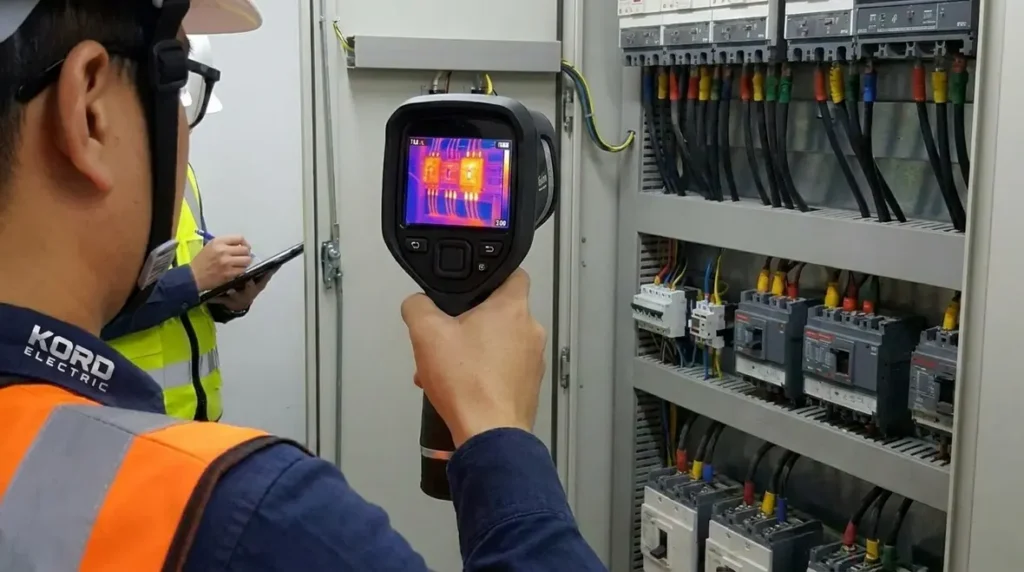
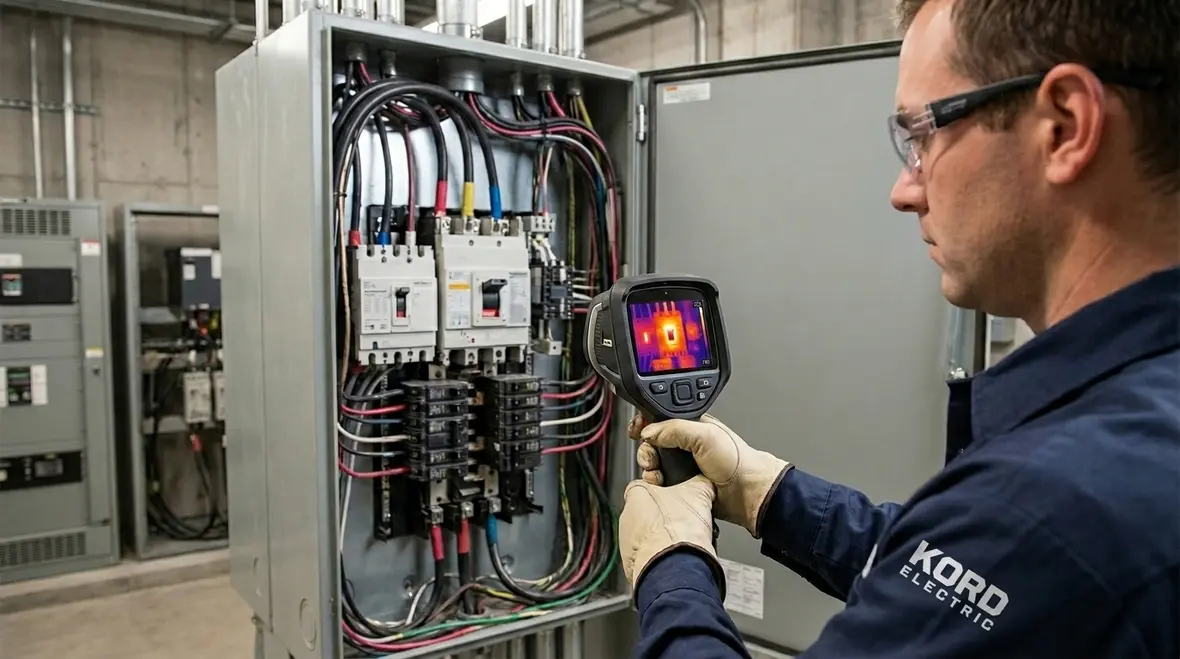
Thermal screening is not about guessing. Instead, we use a non contact infrared camera to measure surface temperatures on panel components while the system operates. Then we compare results across phases, similar components, and prior service snapshots. If one area runs hotter than expected, our technicians treat it as a clue, not a mystery.
Even when equipment looks fine, heat often tells the truth. For example, a slightly loose lug can create high resistance. As current flows, that resistance turns electrical energy into heat. Over time, heat accelerates insulation aging and can lead to arcing. Therefore, the proactive advantage becomes clear: we do not wait for a failure event. We track risk while the system still has room to recover.
What our technicians look for on energized panels
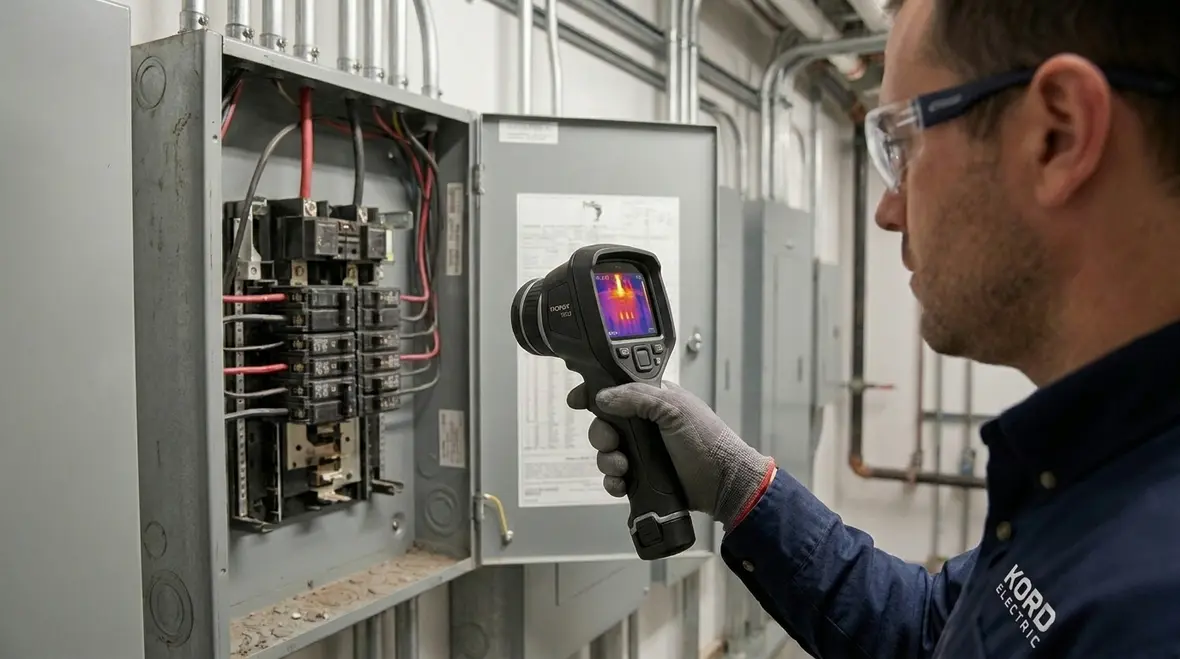
Thermal analysis works because we focus on real-world panel behavior. Our expert service staff checks patterns that usually show up before a breakdown. And because we work with large commercial and industrial setups, we know what “normal” looks like for each building.
During our service, we look for hot spots at common failure points such as
- Breaker terminals and contact points where connections can loosen
- Bus bars and panel interior sections where uneven loading can develop
- Neutral connections where imbalances can create unexpected heat
- Splice points and wiring terminations where corrosion or poor torque may exist
- Transformer adjacent gear when panels share loads across systems
Then we pair those findings with panel labeling, load history, and visual checks. In other words, thermal data plus context delivers the most accurate path forward. Our technicians explain the readings in plain terms, so facility managers understand what matters and what can wait.
How this supports better reliability and fewer shutdowns
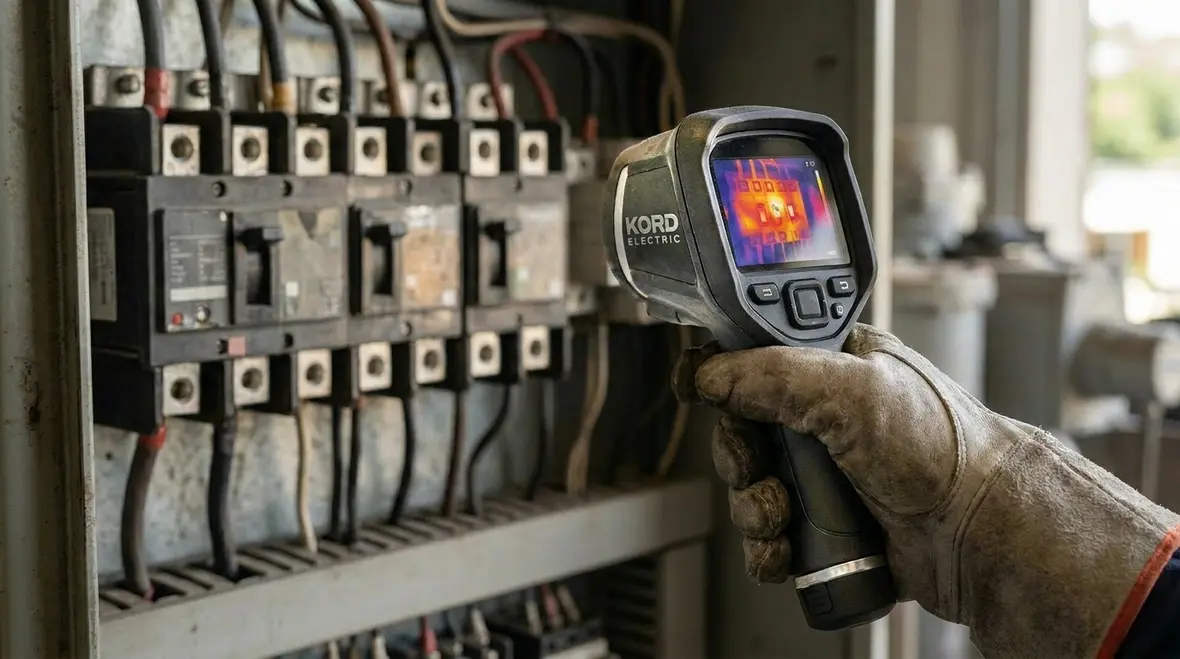
Commercial and industrial operators live on schedules. When power equipment fails, the cost goes beyond repair. It can impact production, HVAC performance, refrigeration, IT reliability, and safety systems. In that environment, electrical panel thermal screening benefits become a business advantage, not just a maintenance task.
When we detect an abnormal temperature rise, we can recommend targeted actions. That might include tightening connections, replacing a worn breaker, or planning a component upgrade. Most importantly, these actions happen during planned service windows. So clients avoid emergency callouts that disrupt operations and inflate costs.
Also, thermal scanning can support ongoing reliability programs. We can build a trend history across seasons and load changes. Therefore, a “slow burn” issue does not surprise anyone. Instead, the client sees the story early and chooses the timing.
Improving safety with early heat detection
Heat does not stay polite. It can damage insulation, deform components, and increase the chance of arcing. And while modern equipment includes protective features, those protections do not eliminate risk when the problem grows inside a panel.
With thermal screening, our technicians can identify conditions linked to safety concerns before they become visible smoke or burned metal. For safety focused facilities, this matters because emergency response depends on systems staying dependable. A building that relies on life safety devices, critical controls, and secure access cannot afford avoidable electrical stress.
We also explain how to interpret findings based on temperature differences and component type. Our expert service staff will not overwhelm people with jargon. They walk through what the heat likely means and how fast it should be addressed, based on the severity and the operating conditions.
Reducing repair costs with smarter planning
Repair costs grow when maintenance becomes reactive. A loose connection might start as a mild temperature elevation, then develop into a damaged terminal or a breaker that trips under load. By the time a failure occurs, the repair often expands into more labor, longer downtime, and potentially additional component replacement.
We see this pattern often enough to plan against it. In our blog on rewiring cost guidance for commercial electrical systems, we outline how costs shift when systems need more labor, new materials, and extended service time. While rewiring deals with a different phase of work, the lesson fits here: proactive interventions reduce the chance that problems escalate into larger projects.
So instead of waiting for a full overhaul, we help clients make smaller fixes at the right time. That approach fits major property buildings that manage many tenants, varied operating schedules, and strict service windows.
How we document results for audits, budgets, and ongoing maintenance
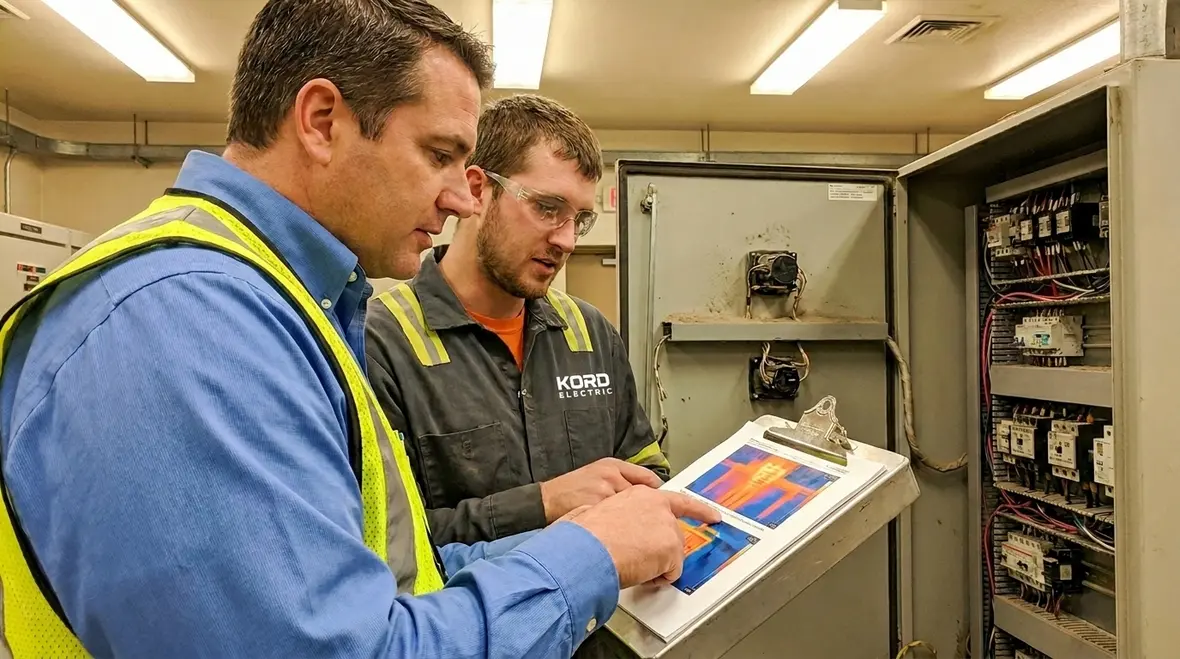
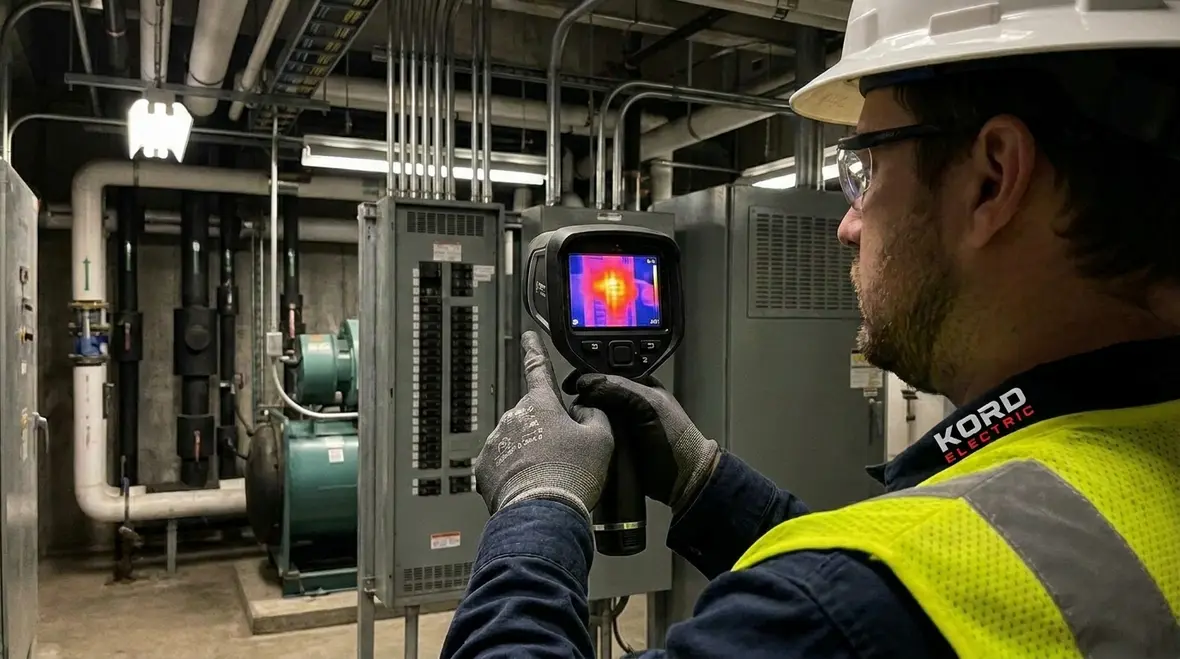
Thermal scanning becomes even more valuable when results stay organized. Kord Electric provides documentation that helps clients act confidently. We capture thermal observations, label affected areas, and connect findings to operational risk. Then our technicians summarize what they recommend next and why.
Because many commercial and industrial facilities plan maintenance using budgets and internal compliance processes, clear documentation supports decision making. It also helps when teams need to compare results across future visits.
In addition, our reporting supports communication between maintenance teams, facilities leadership, and outside stakeholders. Therefore, everyone works from the same facts instead of opinions. And when someone says, “It seems fine,” our response is calm and professional: “The camera says otherwise,” with just enough humor to keep the meeting from turning into a courtroom drama.
What electrical panel thermal scanning looks like during service
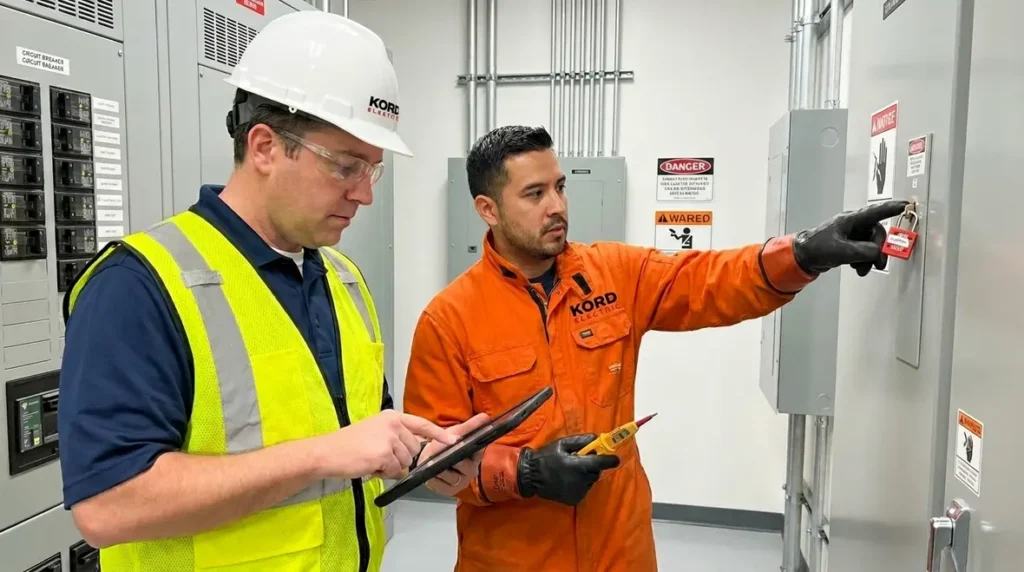
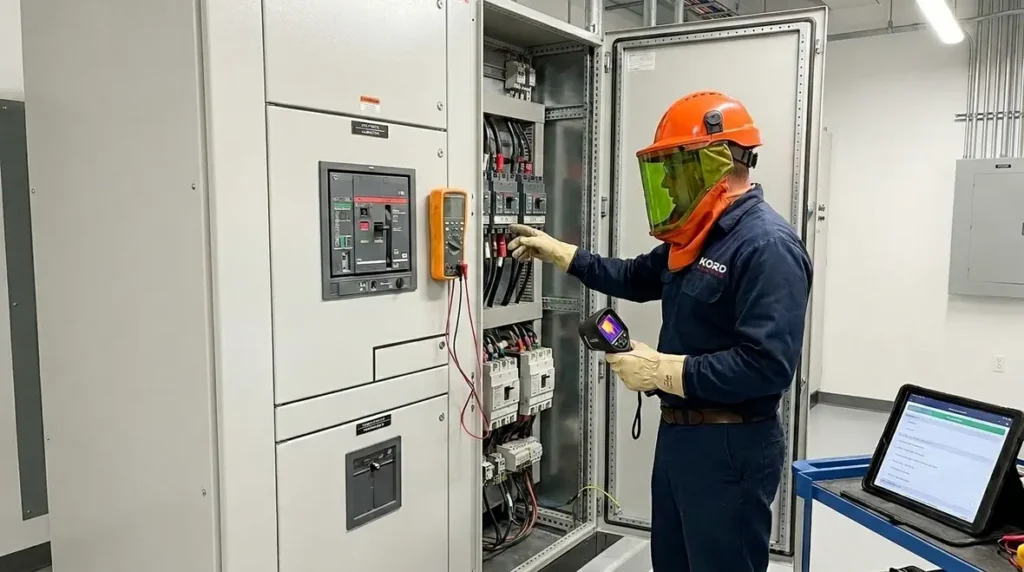
We plan each visit to match how the facility operates. First, we review existing panel schedules, known issues, and any prior thermal reports. Next, our technicians inspect targeted equipment and collect thermal readings while circuits operate under normal conditions when possible.
Then we evaluate temperature patterns phase to phase and component to component. After that, we discuss findings and prioritize actions. Some items may require immediate attention, while others can follow a planned repair timeline.
Finally, we coordinate recommendations with the client’s operational constraints. Commercial and industrial buildings often have load patterns tied to shift changes, occupancy, and seasonal HVAC demands. So we time the work to produce usable results, not just pretty pictures.
How electrical panel thermal scanning fits into maintenance plans
Electrical panel thermal scanning benefits become even stronger when they are part of a structured preventative maintenance program. Many facilities integrate regular scans into their broader commercial and industrial electrical maintenance plans, so each set of images adds to a longer story about system health, load patterns, and component aging.
By pairing infrared results with breaker testing, torque checks, and power quality analysis, facilities gain a fuller picture of what is happening inside critical panels. That combination supports smarter budgeting, fewer surprises, and a clearer roadmap for upgrades over the life of the building.
FAQ
Conclusion and call to action
If a commercial or industrial facility aims for steady power and fewer surprises, we recommend starting with a planned thermal scan of electrical panels. At Kord Electric, our technicians explain results clearly, prioritize fixes, and help clients reduce the odds of downtime. So instead of reacting when something overheats, we help you see the early signals while you still control the schedule. Contact Kord Electric today to book a thermal scanning visit for your major property building and protect your operations.
For facilities that want an even more comprehensive strategy, we can integrate thermal imaging into broader commercial and industrial electrical maintenance plans or connect it with other commercial and industrial services tailored to complex properties. That way, electrical panel thermal scanning benefits become one part of a larger plan to keep your systems reliable, safe, and ready for growth.
Whether you manage a manufacturing plant, logistics hub, corporate campus, or multi-tenant tower, our commercial and industrial electrical services are designed to fit your schedule, your risk profile, and your long-term goals for uptime and safety.