Troubleshooting Commercial Electrical Flickers Guide
When a customer walks into a lobby and the lights start to pulse, it does not feel like a minor issue. In fact, troubleshooting commercial electrical flickers often begins with a simple question: why does this happen in the middle of a workday, not during a quiet power outage movie scene. Kord Electric sees flicker complaints from offices, retail, warehouses, and large properties all the time, and we treat them like a real reliability problem, not a “wait and see” situation. Our team uses clear checks to find the cause, and then we fix the root issue so the lights stop acting like they are auditioning for a sci fi role.
Why commercial lights flicker and what it usually means
Flicker in commercial lighting is rarely random. Often, it shows up when something changes the electrical supply, the connections, or the way drivers and fixtures draw current. If the flicker happens when HVAC motors kick on, when elevators start, or when certain panels switch loads, then the electrical system is telling on itself. Likewise, if only part of a building flickers, that points toward a feeder, a branch circuit, a dimming control, or fixture level hardware.
Our expert service staff explains it plainly. First, they look at pattern and location. Then, they confirm whether flicker tracks with specific loads or happens everywhere at once. After that, they narrow down to the most likely causes, which can include voltage dips, poor terminations, failing drivers, overloaded circuits, or grounding issues. And yes, sometimes the problem is something as unglamorous as a connection that loosened over time. Light fixtures do not mind, but electrons do.

Top causes of flicker in commercial and industrial buildings
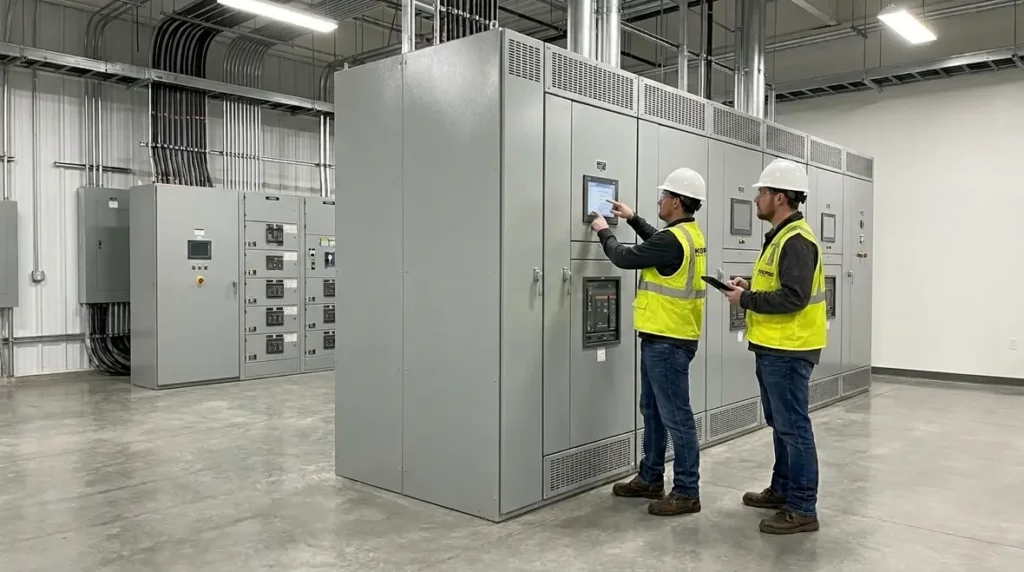
In commercial and industrial facilities, flickering usually comes from one of a few buckets. To make sense of it fast, we keep our troubleshooting commercial electrical flickers process tied to evidence, not guesses.
1) Voltage variation and dips
When the voltage near a load dips, lights can flicker even if the building stays “on.” This can come from utility supply issues, a weak transformer, or internal events like large motor start ups. The lights may flicker at the same time as equipment cycles, especially with inductive loads. For many facilities, this looks a lot like the voltage fluctuation problems our team solves in depth on our voltage fluctuations in commercial and industrial facilities guide, where we break down how unstable power impacts motors, servers, and sensitive electronics.
2) Loose or failing connections
Loose terminals at panels, breaker connections, or fixture wiring can create intermittent contact. As current changes, heat and vibration can worsen the connection, and flicker becomes the early warning sign. In older buildings, this is a common culprit, especially when panels have not seen a detailed inspection or torque verification in years.
3) Incompatible dimmers and controls
If a building uses dimming, occupancy controls, or smart lighting systems, the driver and control must match. Some LED fixtures do not respond well to certain dimmers or a control that outpaces the driver. The result looks like flicker, shimmer, or inconsistent brightness. In spaces that recently upgraded lighting but reused older controls, this compatibility issue shows up a lot.
4) Driver failure or fixture defects
Modern commercial LED systems rely on drivers. When a driver ages, overheats, or fails under load changes, it can flicker while the rest of the circuit looks normal. That is why we separate “fixture flicker” from “power flicker.” Targeting that difference is the same disciplined approach our team uses on commercial lighting upgrade projects, where fixtures and drivers have to cooperate with existing wiring and controls, not fight them.
5) Overloaded circuits and poor load balance
When too much load rides a breaker or feeder, voltage drops and phase imbalance can follow. As a result, lighting flickers can appear on one side of a building but not the other. Over time, overloaded conductors and panels also run hotter, slowly eroding reliability long before a full outage appears.

How our technicians troubleshoot flicker step by step
Our approach is systematic. Therefore, we avoid random swapping of parts that can waste time and money. First, we ask for details from the facility team. Then, we collect building specific observations. Next, we test and measure at the likely points of failure. Finally, we document the findings so the fix lasts.
Step one: confirm the pattern
Our technicians check whether flicker happens in the whole facility, only certain zones, or only at specific times. Meanwhile, they track whether it lines up with equipment start ups like compressors, pumps, or conveyors. If the flicker correlates with those events, we focus on feeders and voltage stability. In buildings that already wrestle with nuisance breaker trips or occasional brownout style behavior, this step quickly reveals how deep the problem goes.
Step two: inspect controls and fixture drivers
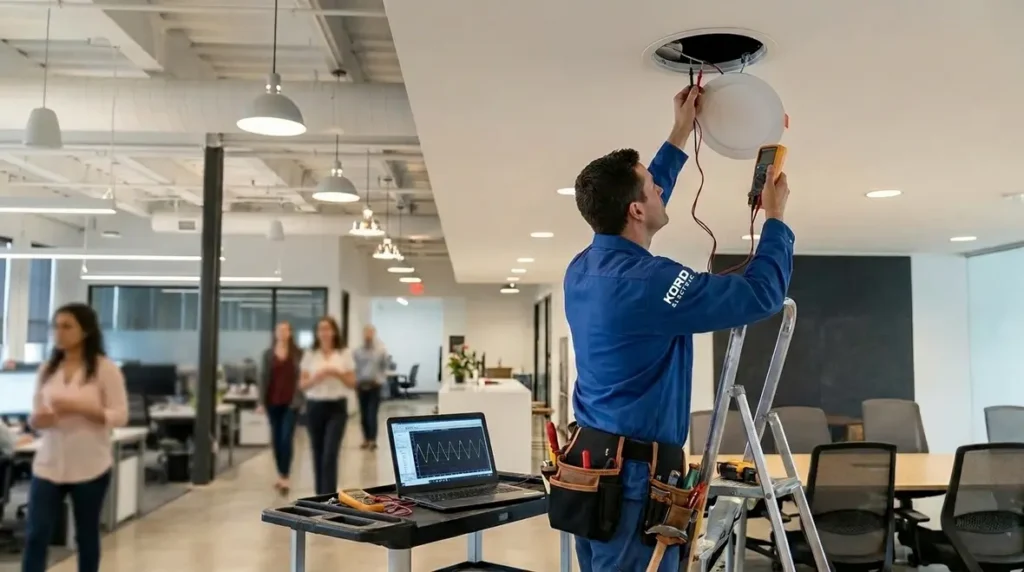
For lighting systems that use dimming or controls, we review the configuration. We also inspect for overheating around drivers, damaged connectors, and mismatched components. If only a group of fixtures flickers, this step often reveals the fastest path. In some cases, we recommend pairing this corrective work with a planned retrofit like a recessed lighting installation upgrade so the building gains both stability and better light quality at the same time.
Step three: check connections and terminations
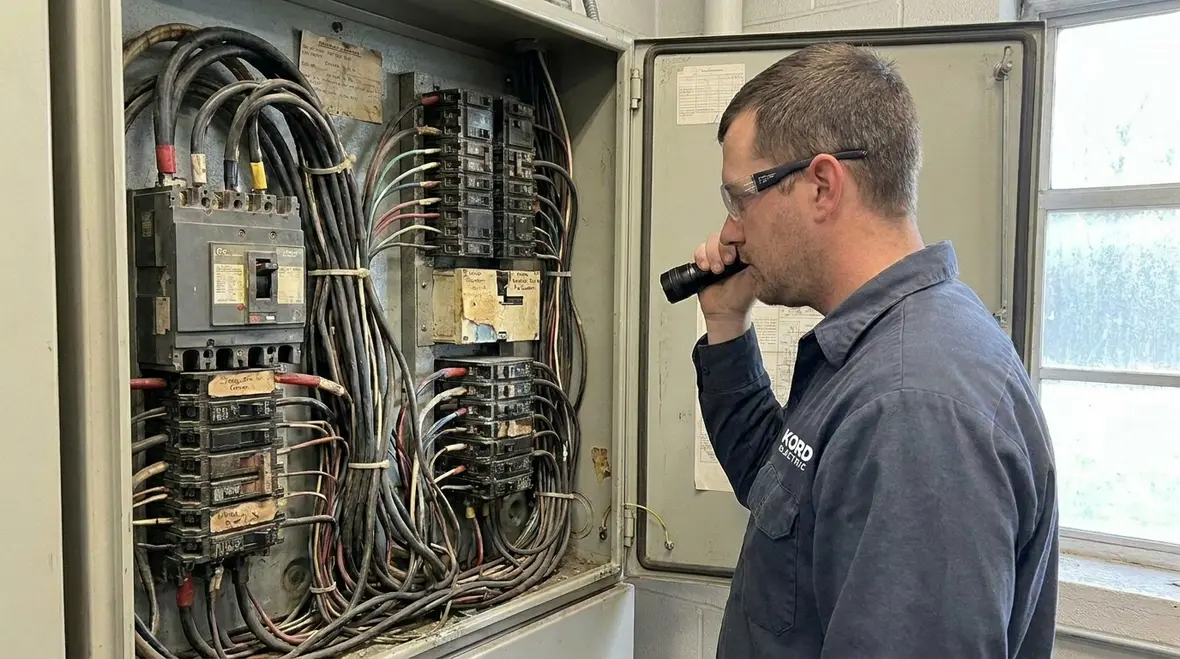
Next, we inspect panel terminations, breaker interfaces, and any junctions that serve the affected circuits. We look for signs of heat discoloration and looseness, then we tighten and verify correct connections. When a facility has not had a detailed electrical inspection recently, this step can uncover issues that would also show up in broader electrical repair and troubleshooting work, not just lighting complaints.
Step four: measure and log electrical data
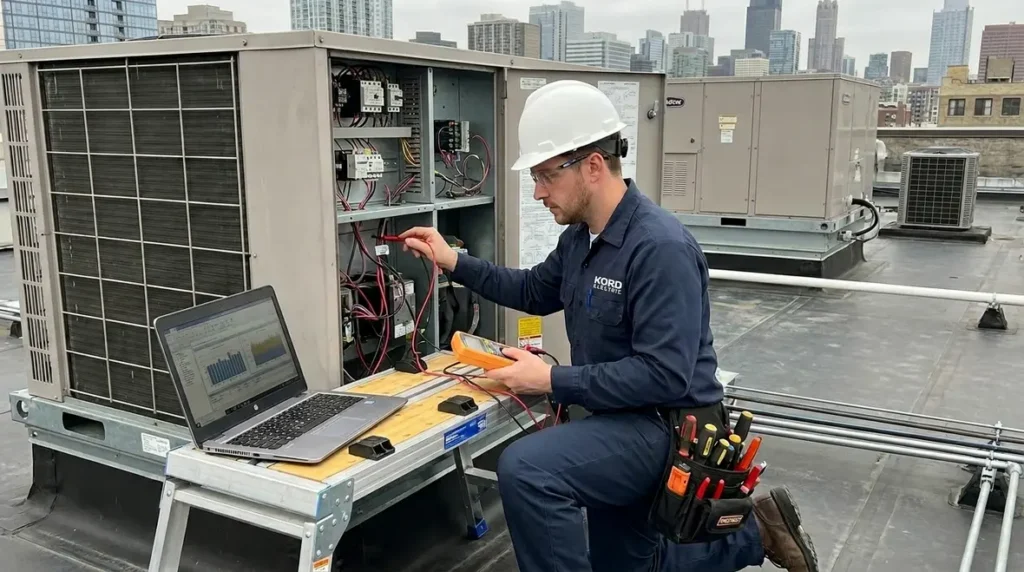
Then, we evaluate voltage and current behavior. We test under normal operating conditions and, when possible, during the equipment events that trigger flicker. That lets us confirm whether troubleshooting commercial electrical flickers points to voltage dips, instability, or load spikes. Our team uses metering tools and data logging approaches similar to the ones described in our broader electrical preventive maintenance service, where we track electrical health across entire campuses and portfolios.
Step five: fix and verify
After we identify the cause, we correct it using proper parts and safe installation practices. Then, we verify the lighting behavior after the repair. In other words, we do not just stop flicker today. We aim for stable lighting tomorrow too. That mindset is the same one we bring to emergency calls, where we not only restore power but confirm that the system is ready for the next load surge, not just the next hour.
Electrical preventive maintenance that stops flicker before it returns
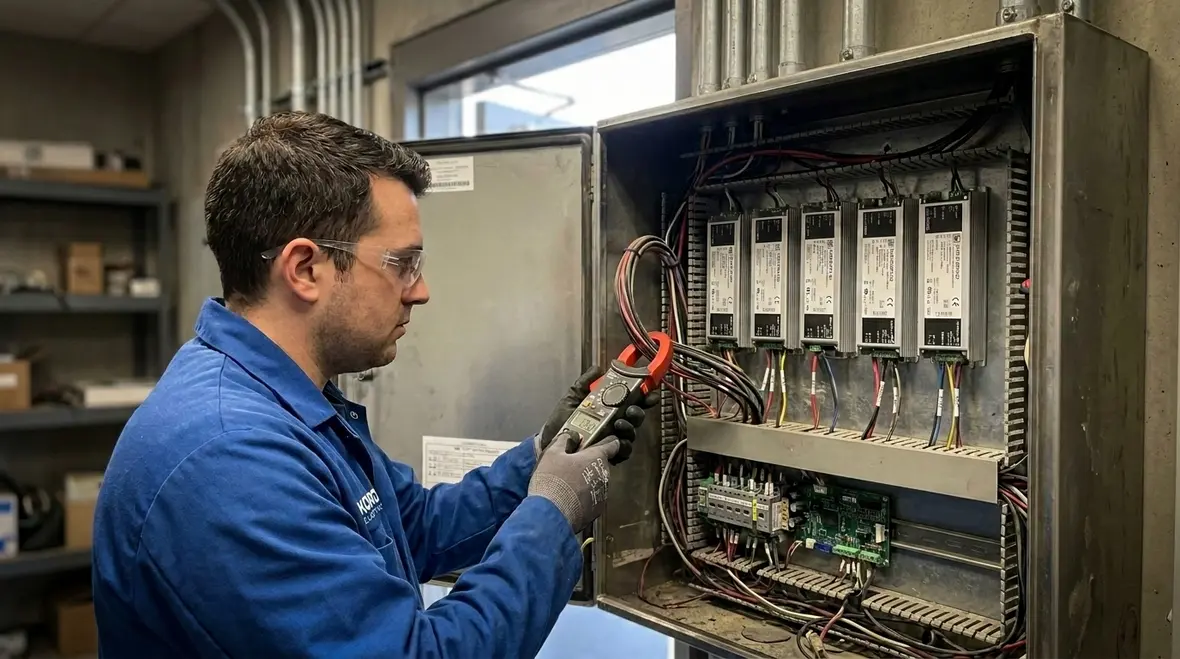
Flicker often starts small. However, it tends to grow once the underlying issue keeps stressing the system. This is exactly why Kord Electric focuses on electrical preventive maintenance for commercial and industrial facilities and major property buildings. If a connection is near failure today, it can become an outage later. And if a driver is overheating today, it will not get better by itself. The building needs a plan, not a hope.
Our maintenance program aligns with the practical items listed in our preventive maintenance guidance at kordelectric.com/electrical-preventive-maintenance/. In short, we inspect, test, and address conditions that can lead to electrical problems. That includes checking panel health, evaluating connections, looking for signs of overheating, and verifying protective devices. We also help facilities schedule work at times that reduce business interruptions. No facility wants an electrical plan that runs like a pop quiz.
Further, preventive maintenance supports long term reliability and improves energy performance where applicable. When we reduce intermittent faults and stop abnormal load behavior early, lighting stabilizes. Therefore, flicker becomes less likely to interrupt workspaces, customer areas, and critical spaces like lobbies and corridors. For complex campuses, combining this maintenance with targeted voltage fluctuation repair can practically erase long running nuisance flicker that staff has been quietly tolerating for years.
Quick troubleshooting steps facility staff can take safely
Facility teams often notice patterns before anyone else does. Therefore, our expert service staff encourages safe, low risk checks that help us diagnose faster. We do not want staff opening panels or testing live conductors. But you can still gather useful clues.
- Record when flicker happens. Note the time, day, and what equipment started recently.
- Mark affected areas. Identify whether flicker is limited to certain rooms, floors, or zones.
- Check control settings. If dimming or occupancy controls exist, verify if any schedules or settings changed.
- Look for heat marks. Scan visible fixture areas for discoloration, loose trim, or buzzing driver sounds.
- Compare with other loads. If elevators, HVAC, or compressors trigger the flicker, report that correlation.
Then, when Kord Electric technicians arrive, we use that information to target the right circuit and speed up resolution. In short, your observations help us avoid the “needle in a haystack” approach, even if the haystack is just ceiling tile and fluorescent dreams.
What Kord Electric fixes for long term stability
Once we find the root cause, we correct it with solutions built for commercial realities. That means we address the electrical side, the lighting controls, and the fixture hardware when required. We also verify the fix works under normal operation and real load changes.
Common repairs include tightening and correcting terminations, replacing damaged drivers or fixtures, reworking control compatibility, and balancing loads where the system supports it. In some cases, we recommend upgrades to improve stability when the existing setup no longer matches modern loads. And if a building has frequent load swings, we help the facility plan improvements that reduce stress on the electrical system.
Just as importantly, we communicate. Our technicians explain what they found, why it caused troubleshooting commercial electrical flickers, and what we did to stop it. So the facility team does not feel like they are reading a technical novel with no ending. They get the summary, the evidence, and the next steps. For facilities that want even more resilience, we often recommend pairing these repairs with a structured commercial and industrial electrical maintenance plan so flicker does not sneak back in six months later.
FAQ about commercial lighting flicker
Ready to stabilize your lighting across the facility
If your building has recurring flicker, it is usually the electrical system asking for attention. Kord Electric serves commercial and industrial facilities and major property buildings, and we bring disciplined troubleshooting and preventive maintenance planning that supports long term stability. Our technicians explain the cause clearly, fix it at the root, and verify performance after repairs. For properties where flicker is severe enough to interrupt operations or safety, we can coordinate with our emergency electrical services team to respond quickly, then transition into a long term electrical preventive maintenance plan once things are stable. Contact Kord Electric today to schedule an inspection. Let’s replace uncertainty with steady light and a facility team that can finally stop blaming the ghosts.
Whether you manage a single high traffic lobby, a warehouse full of sensitive inventory, or a campus with thousands of fixtures, troubleshooting commercial electrical flickers does not have to be a guessing game. With structured diagnostics, planned maintenance, and upgrades that match your actual load profile, your lighting can go back to doing what it does best: staying on, staying stable, and staying out of the spotlight.