Office Building Lighting Energy Upgrades Guide
At Kord Electric, we often walk into an office and see the same story playing on repeat: lights that burn too long, glare that annoys people, and energy bills that seem to climb for fun. So, with our office building lighting energy upgrades, we help commercial and industrial facilities cut waste and raise comfort at the same time. And yes, we do it without turning your workday into a lighting science fair. Our technicians explain each step in plain terms, then they execute the retrofit with care, so your building looks better and runs smarter.
Why energy efficient retrofits make sense for commercial buildings
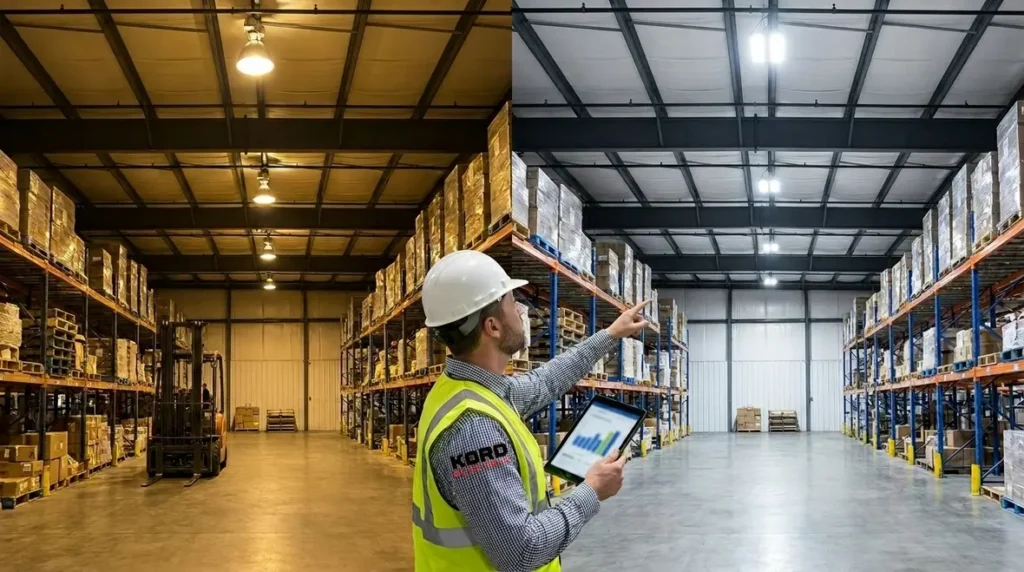
Modernizing office lighting is not just a nice upgrade. It is a practical move that affects comfort, operating cost, and maintenance schedules. In many facilities, older fixtures still rely on outdated technologies and inefficient components. As a result, the building spends money producing light that people do not even want, use, or benefit from. Therefore, energy efficient retrofits focus on delivering the same or better lighting while reducing electrical demand and shortening downtime.
Additionally, retrofits help buildings stay aligned with current standards for workplaces. They also support consistent task lighting across offices, corridors, and common areas. When lighting quality improves, people work better. When lighting waste drops, budgets breathe easier. That is the whole thing, really. It is not magic, it is engineering and good installation.
What Kord Electric changes during a lighting retrofit
Our team approaches retrofits like a plan, not a guess. First, we review the existing system and your building’s layout. Next, we identify where the biggest energy losses happen, such as inefficient luminaires, poor controls, and aging drivers. Then we design a path to improve output, distribution, and control performance.
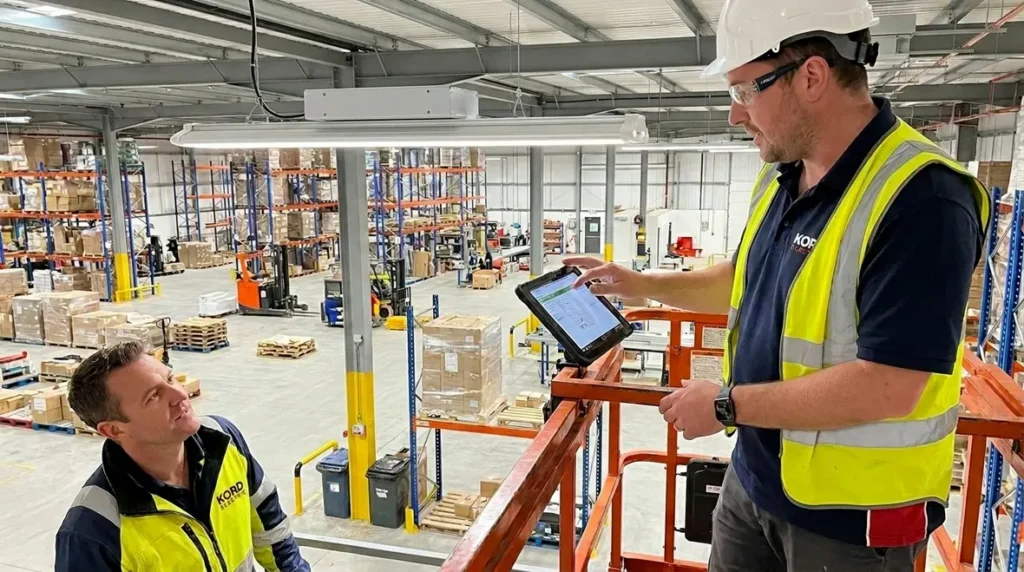
Our expert service staff does not just swap parts and disappear. Instead, they explain why the changes matter. For example, we often replace outdated fixtures with higher efficacy LED luminaires and update drivers for stable performance. We also improve controls, because lighting that turns on, dims, or switches based on real occupancy and daylight can save energy without harming visibility. And if someone worries about “instant dimming” or flicker, our technicians explain what to expect and how we verify performance.
Because every facility runs differently, we tailor the work to your hours, safety rules, and operational needs. We focus on commercial and industrial environments, including major property buildings, where coordination and reliability matter.

How energy savings actually show up on your bills
Energy efficient retrofits reduce load in multiple ways. To begin with, LEDs use less power for the same usable light level. Then, controls cut runtime by using occupancy sensors, timers, and daylight harvesting. In offices, this matters because spaces do not stay equally busy all day. Instead, work concentrates in certain zones and peaks at certain hours.
Additionally, modern systems reduce heat waste. When older lighting runs, it not only consumes electricity, it also adds heat that can increase cooling demand. Therefore, improving lighting efficiency can support overall HVAC performance. The building gets less “extra warmth” from the lights, and that can reduce strain on cooling systems during hot seasons.
Most importantly, Kord Electric helps facilities avoid the common trap of upgrading fixtures but ignoring controls. Without smart control logic, you might lower watts a bit, but you still run lights like it is 1998. Nobody wants that. We focus on the full system so savings show up in a way your finance team can trust.

Improving comfort and productivity without glare
Lighting upgrades should not feel like a random remodel. They should improve how a space looks and functions. In many office buildings, older fixtures create glare, hot spots, or uneven illumination. As a result, people squint, strain, or adjust blinds more than they should. Eventually, this turns into complaints, headaches, and unnecessary replacements.
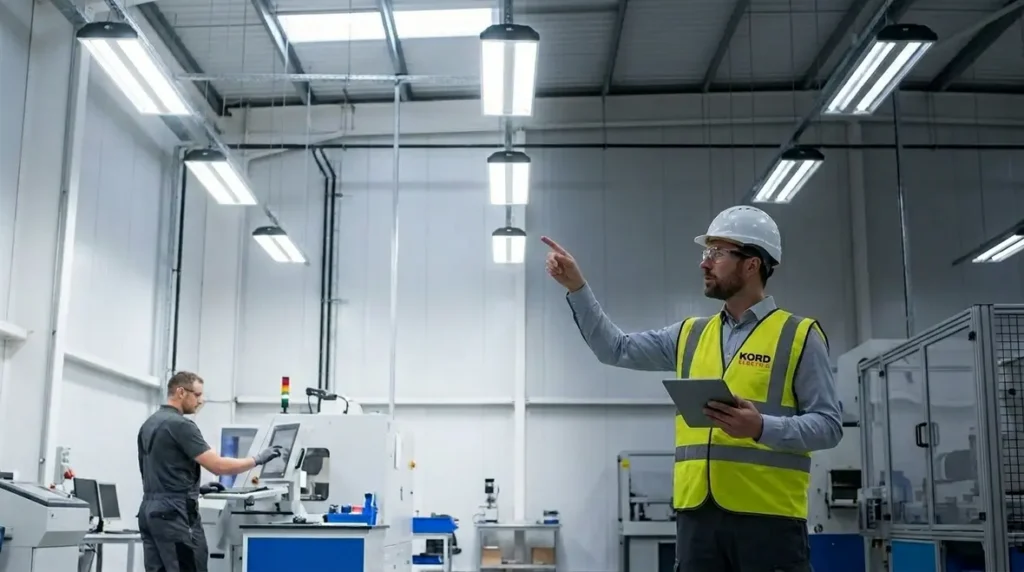
With office building lighting energy upgrades, we consider distribution and uniformity, not just brightness. We match luminaire spacing to ceiling heights and desk layouts, and we use appropriate optics to reduce glare. We also plan lighting levels for different zones, such as workstations, meeting rooms, and break areas.
Then we verify the outcome based on your needs. Our technicians explain the choices so stakeholders understand the “why,” not just the “what.” When people can see clearly, they move confidently through hallways, focus better at desks, and enjoy meetings without fighting the lighting. And in a workplace, that kind of calm matters. Even the most dedicated employee cannot concentrate if the room looks like a spotlight show.

Controls, sensors, and daylighting: the part people forget
It is easy to focus on the fixture and overlook the control layer. However, controls often drive the biggest runtime savings. Occupancy sensors reduce energy in conference rooms, restrooms, storage areas, and low traffic corridors. In addition, dimming lets lights respond gradually when spaces fill and empty.
Daylight harvesting can also help in buildings with strong window exposure. When sunlight provides enough illumination, the lighting system can dim without making the space feel dark or uncomfortable. Consequently, you use less electricity while maintaining stable comfort levels.
Our expert service staff often walks stakeholders through how the system behaves. For instance, they explain expected response time, where sensors should mount for accurate detection, and how zoning prevents one area from controlling another. We also coordinate wiring and layout so the system remains dependable during long operating hours.
In commercial and industrial facilities, reliability is everything. Lighting controls should not be “set and pray.” They should perform consistently and support building management.
Maintenance upgrades that reduce downtime and hassle
Retrofits improve more than energy use. They also affect maintenance work, spare parts needs, and labor scheduling. Older systems may require frequent lamp changes, ballast replacements, or driver troubleshooting. That means interruptions and costs that stack up quietly over time.
LED systems generally lower maintenance frequency because they use solid-state components and last longer. Yet the real advantage comes from matching fixture selection to the environment. For example, warehouses need different optics and rugged components than offices. Therefore, we select fixtures and drivers that align with usage patterns and mounting conditions.
Additionally, controls and smart components can offer better visibility into system health. This can help facilities plan maintenance before failures disrupt operations. Our technicians explain service access and recommend practical maintenance routines so the system stays steady across seasons.
So while your building gets brighter and more efficient, your facilities team also faces fewer surprises. That is the kind of “boring” benefit that saves real time and money. In this case, boring is good.
How Kord Electric plans the retrofit for real buildings
Every commercial and industrial facility has its own rhythm. Some operate late nights, some run on strict schedules, and some require detailed safety coordination. Kord Electric builds retrofit plans that respect those realities.
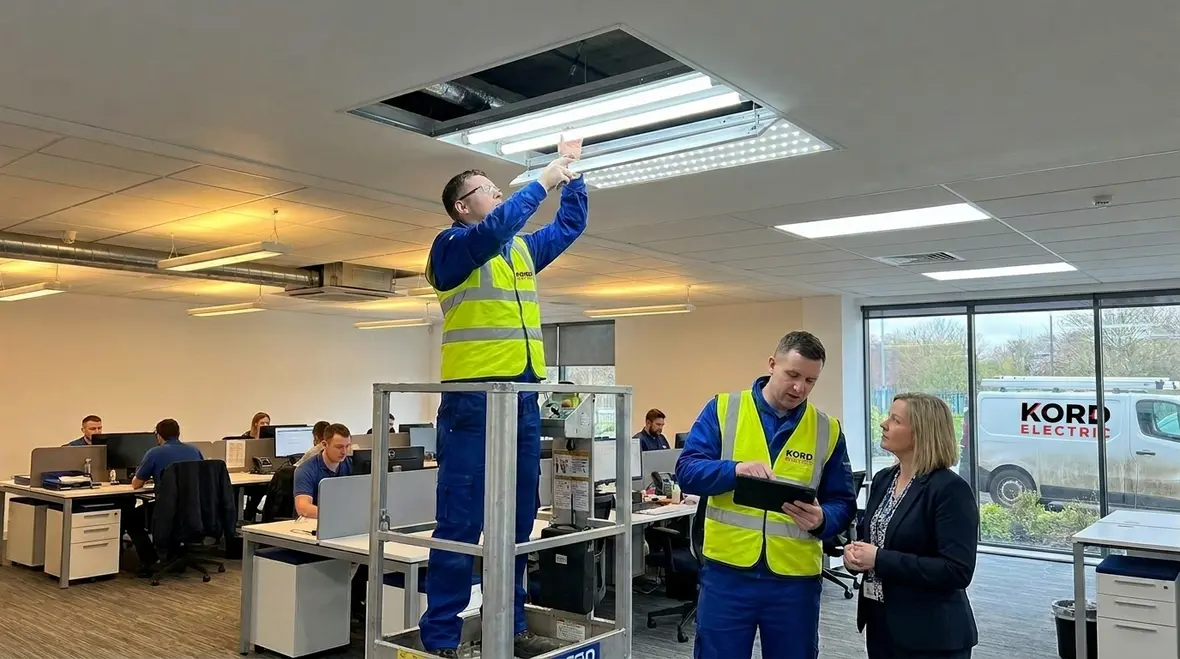
We start with a site walk and a review of existing lighting, controls, and electrical conditions. Next, we evaluate expected improvements in light levels and uniformity. Then we propose an installation approach that limits downtime and keeps work areas safe. We also consider how the new system will integrate with any building management strategies where applicable.
After installation, we support commissioning and verification. Our team does not treat the retrofit like a “hand off.” Instead, our technicians walk the building stakeholders through the operation and what they should monitor. If a space needs adjustments, we handle it so the performance stays aligned with your goals.
In other words, you get upgrades designed for your facility, delivered by experienced staff, and explained in a way that people can actually understand. That is our style. Clear steps, careful work, and results you can track.
Connecting lighting upgrades with broader building goals
For many property teams, lighting is just one part of a much larger strategy. When we plan office building lighting energy upgrades, we also look at how those changes interact with code compliance, inspections, and long term asset value. That includes aligning retrofit plans with California commercial lighting requirements where applicable, so the system does more than save energy on paper. It also helps future projects, audits, and tenant improvements move smoothly instead of stalling at the permitting desk.
Because lighting upgrades often coincide with other projects, such as electrical preventive maintenance or broader lighting installation work, we coordinate schedules and priorities. That way, your team does not feel like every project competes for the same ceiling space. Instead, upgrades fit into a clear sequence with predictable milestones and practical communication.
When property managers and facility directors evaluate options, they are not just weighing fixture types. They are deciding how their buildings will perform five or ten years from now. Our job is to connect those long term goals with the nuts and bolts of fixtures, controls, and wiring in a way that feels manageable, not overwhelming.
How lighting upgrades support compliance and inspections
In many jurisdictions, large commercial and industrial buildings must demonstrate that lighting systems meet energy standards and safety codes. When we design office building lighting energy upgrades, we factor in these requirements from the start. That way, you are not bolting compliance on at the last minute. Instead, your retrofit supports the same expectations inspectors bring to new construction, including shut off controls, daylight response where needed, and documented performance.
Because our teams work regularly with commercial lighting compliance for office buildings and industrial facilities, they know how to spot small details that could otherwise cause delays at inspection. That includes control zoning, sensor placement, labeling, and documentation that proves the system operates as designed. For property teams that oversee multiple buildings, this steady approach can make future projects easier, because your portfolio starts from a stronger baseline.
The result is a lighting system that not only feels better to occupants and costs less to run, but also lines up with expectations during code reviews and utility incentive programs. In other words, the upgrade supports both daily operations and long term compliance goals.
Planning budgets and timelines for lighting retrofits
Any time a property team considers a lighting retrofit, two questions arrive fast: how much will this cost, and how long will it take? While the exact numbers depend on square footage, ceiling heights, fixture types, and control complexity, our process always starts with a clear conversation. We walk through your current layout, discuss usage patterns, and identify which areas deliver the fastest return when upgraded first.
From there, we outline phases that fit your schedule. Some buildings prefer after hours work, while others choose a floor by floor sequence that mirrors tenant moves. Whatever the approach, our technicians and expert service staff keep communication steady so everyone knows which zones come next, when brief outages might occur, and how to coordinate around critical operations.
For larger portfolios, we can also help prioritize which properties should receive office building lighting energy upgrades first. Buildings with higher operating hours, outdated fixtures, or persistent maintenance issues usually move to the front of the line, because the return on investment tends to be strongest there. That way, capital plans support real performance gains instead of scattered, one-off repairs.
FAQ
Ready to modernize your workplace lighting?
If your office, warehouse, or major property building still runs older lighting, it is time to modernize with confidence. Kord Electric designs and installs office building lighting energy upgrades that cut waste, improve comfort, and reduce maintenance headaches for commercial and industrial facilities. Our technicians explain every step, coordinate installation around your schedule, and verify performance after work is complete. Reach out to us today for an on site assessment and a retrofit plan built for your building, not a template.
If you want to connect your upgrade plans with broader electrical strategies, explore how our lighting installation services support complex commercial and industrial projects from design through installation. For properties focused on keeping critical systems reliable year round, our electrical preventive maintenance programs can complement lighting retrofits by catching issues before they interrupt daily operations.