
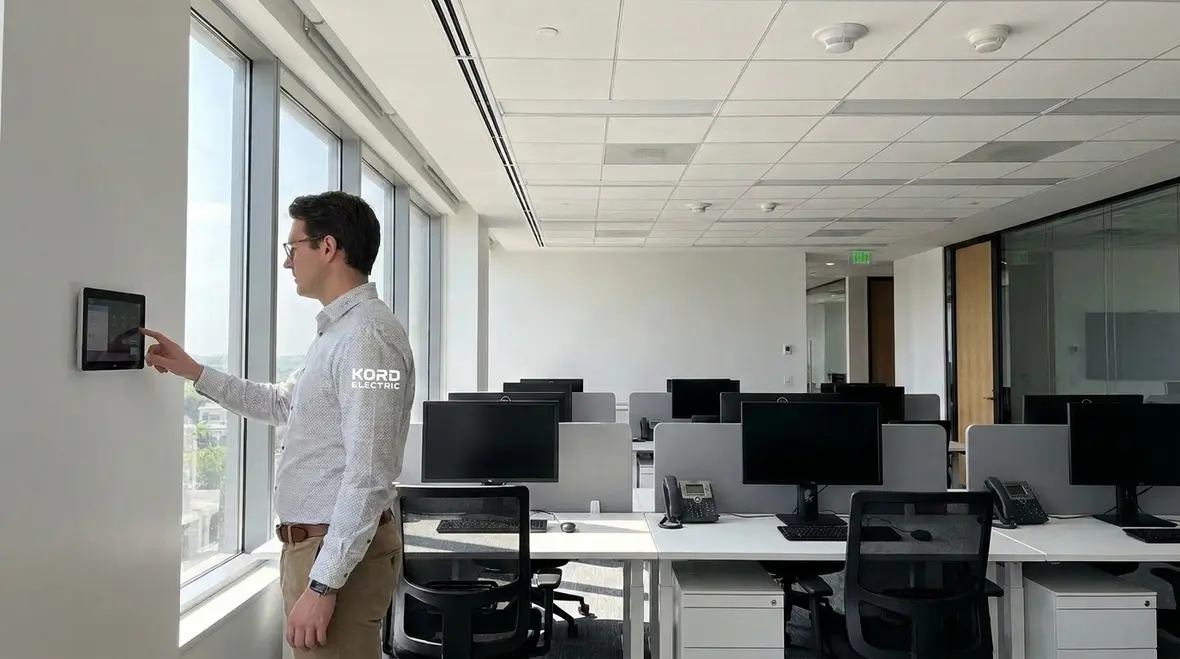
Office Lighting Controls: Sensors, Automation & Energy Efficiency
At Kord Electric, we build Office Lighting Controls: Sensors, Automation & Energy Efficiency into commercial and industrial facilities so lighting stays right for how people actually work. We install systems that notice occupancy, measure available daylight, and adjust light output without making staff feel like they are trapped in a sci fi experiment. In other words, our solutions remove the guesswork that makes offices waste energy and frustrate occupants.
Meanwhile, our technicians and expert service staff explain every step in plain language. They do not hide behind jargon, because frankly, nobody wants to learn about lux like it is a new hobby. And yet, when the system runs, it just feels… correct. You get comfort, control, and predictable performance across large property buildings, not random lighting moods.
How office lighting controls keep workspaces steady, efficient, and calm
In busy offices and industrial environments, lighting can either support the day or quietly work against it. The right control system keeps output steady, prevents annoying flicker and surprise shutoffs, and helps teams focus on their work instead of waving their arms at sensors. Kord Electric designs office lighting control strategies so spaces feel calm and reliable, even as occupancy and daylight shift hour by hour.
We connect lighting behavior to the real rhythm of your building. That includes steady light levels across open office rows, thoughtful dimming near windows, and reliable illumination in corridors, stairwells, and support spaces. Instead of relying on guesses or default factory settings, we tune the controls to your operations and verify that the behavior matches what people actually need to see, move, and work comfortably.
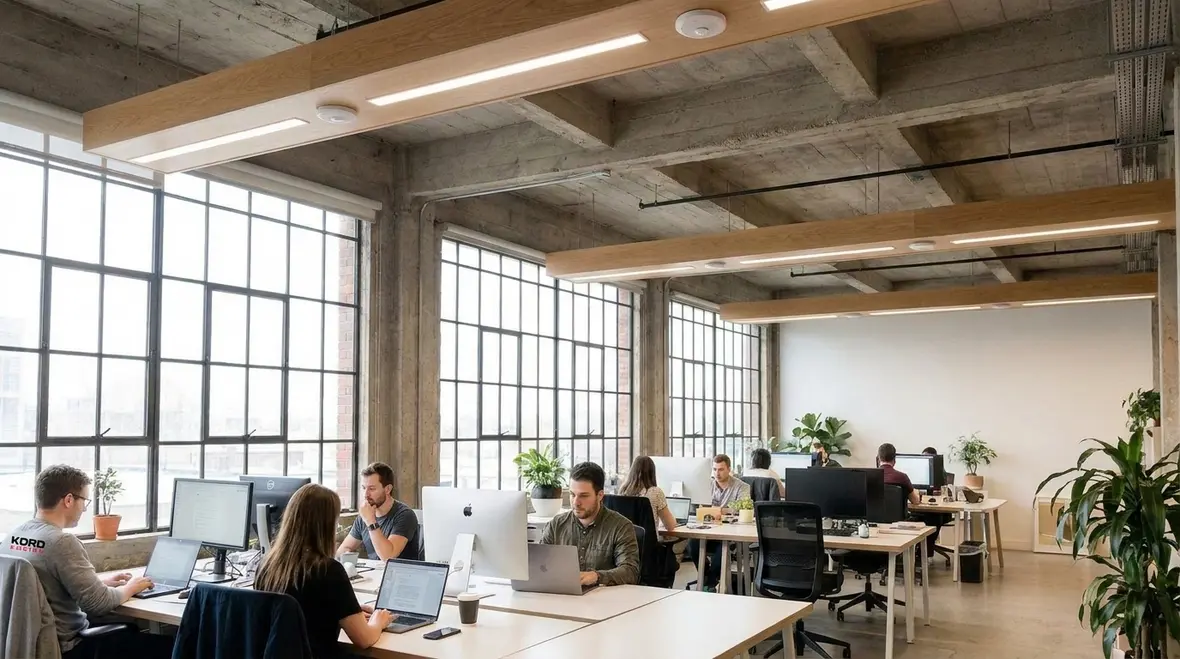
Because office lighting control ties into broader building strategies, we also coordinate with distribution, automation, and maintenance plans. For teams exploring their next steps, Kord Electric’s resources on commercial lighting control systems for facilities show how zoning, sensors, and energy savings work together instead of fighting each other.
What office lighting control systems actually do
In commercial and industrial buildings, lights often fail in two ways: they stay on too long, or they change in ways people do not like. Therefore, a good control system acts like a quiet manager. It monitors conditions and then makes decisions based on rules you choose.
First, sensors detect motion and occupancy. Then, controls use time schedules, occupancy patterns, and daylight readings to determine when lights should dim, brighten, or turn off. As a result, you reduce waste while still supporting tasks like reading plans, using computers, and moving through corridors.
Next, automation coordinates zones. Instead of treating the entire floor as one big switch, the system breaks lighting into areas like offices, conference rooms, and common spaces. This zoning approach helps because the needs of a row of desks differ from the needs of a lobby. Finally, reporting tools can track trends so owners and facility teams can see what is happening over time.
For many major properties, this means fewer complaints and fewer late night calls. You know the type. Someone is standing in a dark stairwell thinking they have joined a “choose your own adventure.” We fix the root cause before it turns into a franchise.
Where sensors, zoning, and scheduling fit best in workplaces
We typically start with how a facility moves. Then, we match the control design to that rhythm. For example, office lighting control works best when sensors and zoning reflect actual occupancy patterns.
Consider the most common areas in commercial buildings:
Open office zones: We use occupancy detection and daylight sensing so lights dim near windows while staying bright where it matters.
Private offices and meeting rooms: We coordinate local controls with schedules, so rooms light up when used and return to energy saving levels when empty.
Corridors and stairways: We select motion based logic and safe timing so people never feel like they are walking through a prank.
Break rooms and support spaces: We set rules that avoid “lights on all day” waste, while still supporting bursts of use.
Because schedules only solve part of the problem, we pair scheduling with sensor feedback. That way, the system does not rely on guesses like “nobody works past 6.” Instead, it adapts when a late meeting actually happens. At Kord Electric, our technicians review these patterns with facility teams so the system aligns with real operations, not best case assumptions.
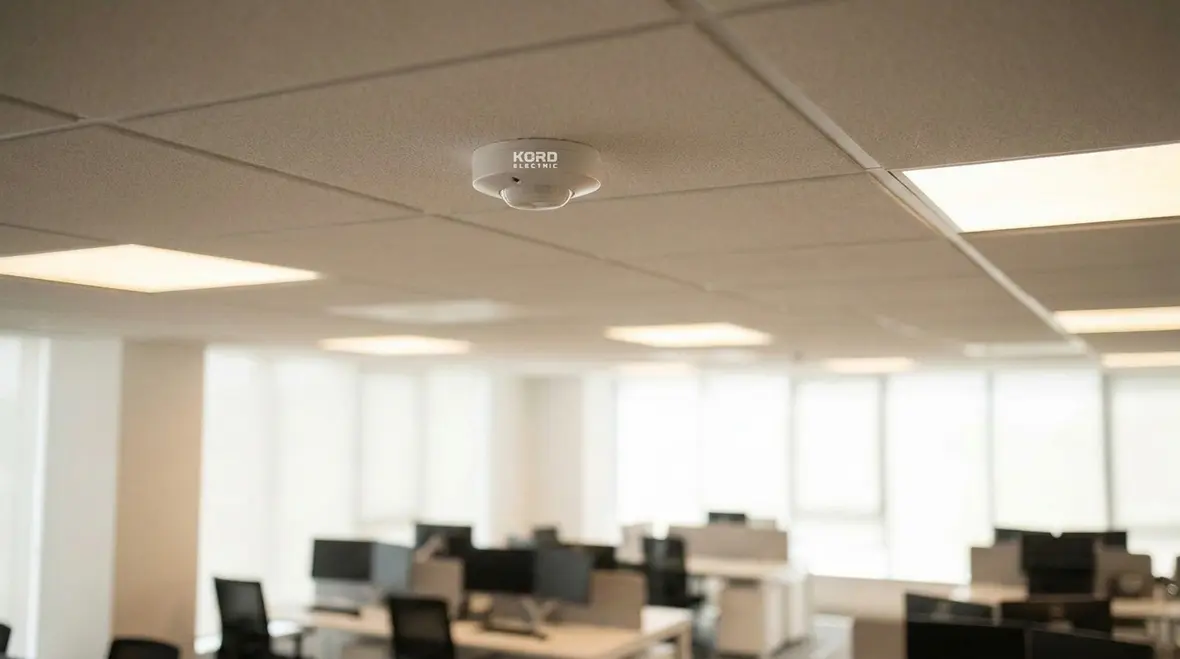
This zoning and scheduling approach also pairs well with broader electrical strategies. For example, when teams examine Los Angeles County electrical services for commercial and industrial facilities, they often connect lighting controls with distribution upgrades, maintenance planning, and reliability improvements so the whole system pulls in the same direction.
Automation that supports comfort, not constant surprises
People tolerate dimming when it feels smooth and predictable. However, they notice when lighting changes are abrupt or confusing. Therefore, we design automation logic with human comfort in mind.
First, controls use gradual transitions. When daylight drops or occupancy changes, the system ramps output smoothly rather than flipping like a light switch with a grudge. Second, we set minimum dim levels and timeout behavior so spaces stay usable during normal routines. Third, we coordinate scenes for meeting rooms and training areas so teams can work without manually adjusting brightness every time someone stands up to get coffee.
Additionally, we plan how the system responds to seasonal shifts. Daylight patterns change, and sun angles move, so control strategies must adjust. For large property buildings, this becomes even more important because different floors face different exposures.
And yes, sometimes employees joke about “the lights having a mood.” But once the system stabilizes, the mood becomes professional. Dimming follows daylight. Off time follows vacancy. Everyone gets a consistent experience, and facility managers get calmer evenings.
Energy efficiency that shows up on utility bills
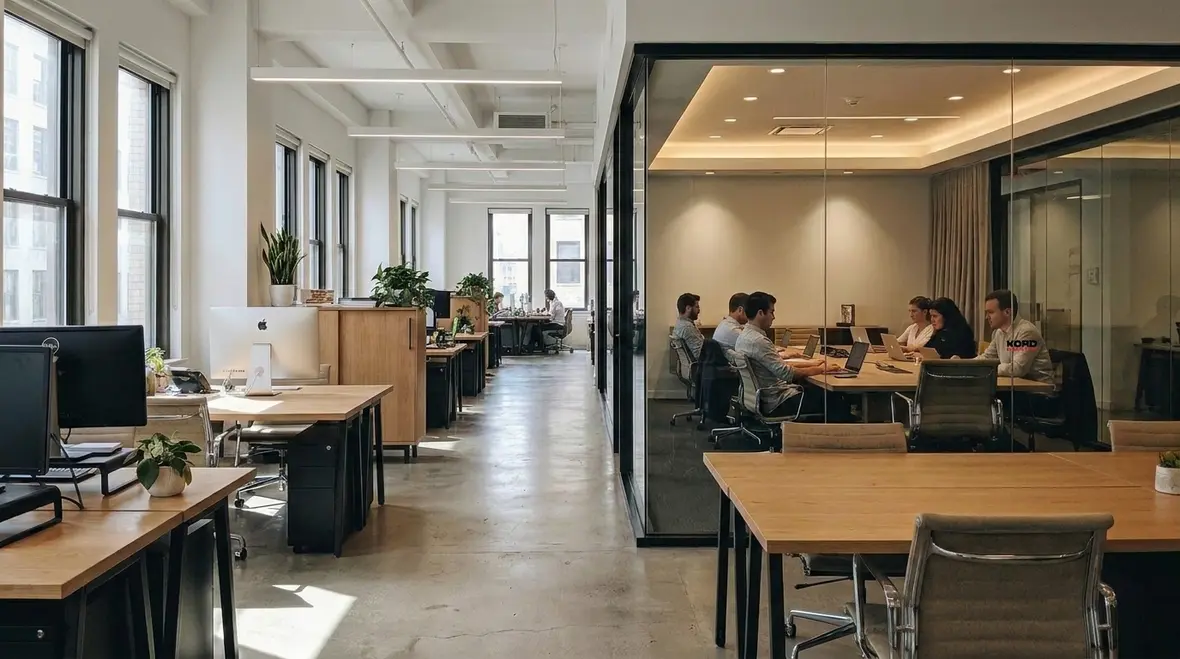
Energy savings happen when lighting output matches reality. If the lights remain at full brightness during low daylight, you pay for light you do not need. If lights stay on during long vacancies, you pay again. In commercial and industrial settings, these losses add up fast.
With Office Lighting Controls: Sensors, Automation & Energy Efficiency in place, we reduce both types of waste. Sensors cut off lighting in unoccupied areas. Daylight sensing trims power near windows. Schedules and scene settings keep output stable during work periods. Meanwhile, automation ensures transitions happen without over correction.
To be clear, we do not treat savings like a magic trick. We measure what matters, then design the control strategy around it. Our service staff can walk facility teams through the logic and confirm the expected behaviors for each zone. That way, you do not end up with “energy savings” that only exist in a slide deck while occupants complain on day one.
Also, in many major property buildings, energy goals tie into broader sustainability plans. Lighting controls can support those goals without disrupting operations. The system does the heavy lifting quietly, while the facility stays productive.
For facilities comparing options, it can help to see how controls behave alongside other upgrades. Kord Electric’s articles on commercial lighting control design, retrofit strategies, and automated lighting control benefits show how careful planning turns sensors and schedules into real, trackable efficiency instead of wishful thinking.
Commissioning, maintenance, and clear explanations from our experts
Many control systems fail not because the hardware is weak, but because the setup does not reflect the building. Therefore, we prioritize commissioning. Our technicians verify sensor placement, confirm zone boundaries, and test how automation responds across typical schedules.
Next, we focus on ongoing support. Lighting controls need occasional review as spaces change. If a tenant reorganizes furniture, occupancy patterns shift. If a retrofit changes reflectance, daylight levels can change. When that happens, we help facility teams adjust the control settings.
Our expert service staff also explains the system clearly. They show which settings impact comfort and which settings impact energy use. Then, they show how to interpret system behavior when something seems “off.” Instead of blaming the building, we troubleshoot the logic. It is like having a mechanic who also teaches you how to read the dashboard.
For commercial and industrial facilities, this support matters because downtime costs money. We aim to keep the system stable, documented, and easy to operate for the people who manage the building day to day.
Dual column plan for a control rollout in major buildings
For large property buildings, you need a rollout plan that reduces disruption while building confidence. Below, we lay out a practical path we use.
Step |
What we do |
1. Audit zones |
We map occupancy patterns, daylight exposure, and lighting layout so control areas match how people work. |
2. Define behavior |
We set rules for dimming, occupancy timeouts, scenes, and corridor logic based on real operations. |
3. Install and verify |
We install sensors, controls, and wiring, then validate each zone with real tests, not guesses. |
4. Commission thoroughly |
We tune transitions and confirm system response across work hours and vacancy periods. |
5. Train your team |
We walk facility staff through operation and the “why” behind the settings so they feel confident. |
6. Support and adjust |
We provide expert service to handle changes as the building evolves over seasons and upgrades. |
FAQs about office lighting control systems
Office Lighting Controls: Sensors, Automation & Energy Efficiency for the spaces that matter
When Kord Electric designs lighting control for a commercial or industrial facility, we focus on behavior that people trust. We tune occupancy and daylight response so the building supports work, not distractions. Then, we back it with commissioning and service support so your system stays reliable as conditions change.
If you are ready to bring order to lighting across your major property buildings, contact Kord Electric today. Our team will review your spaces, explain the control approach in plain language, and help you move forward with confidence. As you plan upgrades, you can also connect those controls with broader programs like Kord Electric’s regional commercial support and dedicated service offerings for complex facilities.
For organizations in Southern California and beyond, lighting controls often become part of a wider plan that includes power reliability audits, maintenance, and targeted upgrades. Connecting those steps with coordinated services such as Kord Electric’s regional programs helps ensure that lighting, distribution, and automation all reinforce each other instead of working at cross purposes.
If your facility is evaluating where to start, pairing a lighting control assessment with broader support options like Los Angeles County Electrical Services for commercial and industrial buildings can create a single, clear roadmap from audit and design through installation, commissioning, and long term service.
Office Lighting Controls: Sensors, Automation & Energy Efficiency turn everyday lighting into a quiet, reliable system that supports safety, comfort, and measurable savings. Kord Electric is ready to help you make that shift in the spaces that matter most to your teams and tenants.


