Commercial Lighting Control Systems for Facilities
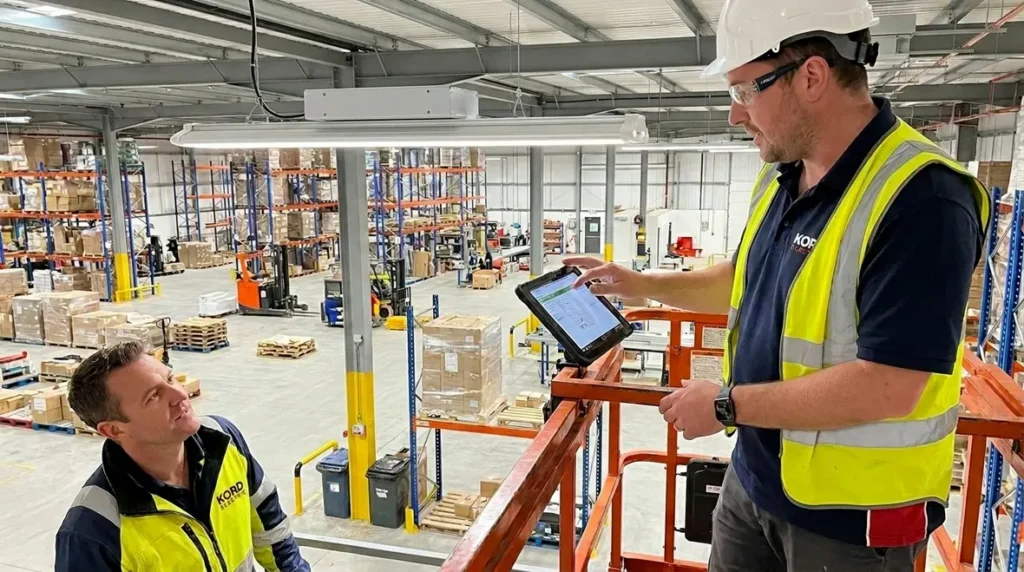
Kord Electric helps commercial and industrial facilities run smarter with commercial lighting control systems that cut wasted energy and improve how spaces feel. When we install modern lighting control, we do not just “add switches.” Instead, we integrate schedules, dimming, occupancy sensing, and zoning so the building behaves like it actually knows what’s happening inside it. As our expert service staff explains on site, the goal is simple: lights should respond to people and tasks, not the clock and your best guess. And yes, once the system is set correctly, you will spend less time yelling at the lights like they owe you money, which is a nice change from certain pop culture TV episodes.
Why commercial spaces gain the most from lighting control
In offices, warehouses, retail corridors, and multi story properties, lighting often sits on full power longer than it should. However, the real waste shows up after hours, in partially occupied zones, and in areas where daylight does the heavy lifting. As a result, a facility pays for light it does not need. Furthermore, when lighting stays uniform, teams also work harder to see details, and that can hurt productivity and quality control.
Commercial lighting control systems address this with layered control, so different areas follow different logic. For example, a loading dock can use occupancy based schedules with higher minimum output during active periods, while a meeting area can dim smoothly to match user needs. Meanwhile, hallway lighting can follow a predictable path that still respects safety and egress. Kord Electric technicians plan the approach so it supports code expectations and daily operations, not just a demo in the showroom.
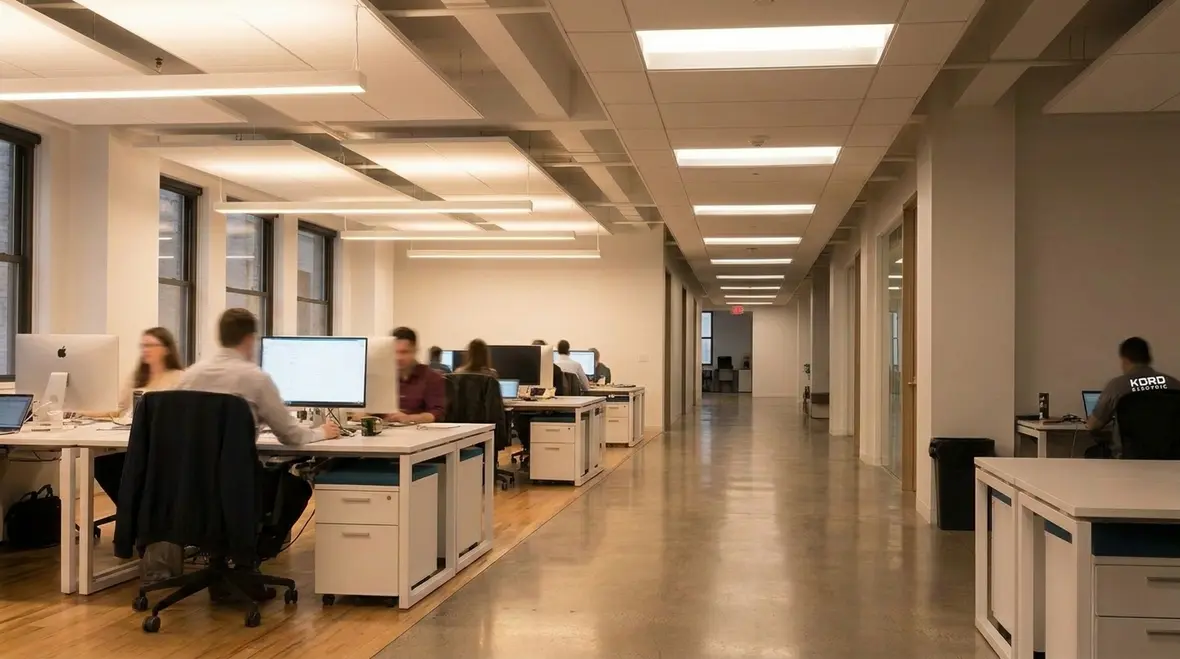
When facilities pair modern control strategies with code-aware planning, those gains extend beyond energy savings. Smarter controls improve visual comfort, support better inspection quality, and help reduce nuisance calls to “fix the lights” that never quite behave. For property teams that juggle energy budgets, safety expectations, and tenant satisfaction, lighting control quickly shifts from “nice add-on” to “core building infrastructure.” Thoughtful projects often begin with a review of layout, code obligations, and workflow, similar to how Kord Electric approaches lighting installation code compliance across complex facilities.
How technicians design zones, schedules, and dimming
Our team does not treat a building like one big room. Instead, we break it into zones based on use patterns, lighting layout, and how people move. Then we coordinate schedules so each zone turns on when activity actually starts. After that, we set dimming targets, which matters because not every space needs the same brightness at all times.
So, what do our technicians do during the design phase? They map the lighting plan to the building workflow. For instance, manufacturing bays may require higher illumination during shifts, while office suites may need lower output and glare control when daylight is strong. Additionally, we review how maintenance teams access fixtures and how staff wants control at switches, panels, and through any building management view.
Think of it like orchestration. One conductor can manage the entire symphony, but multiple sections still need their own cues. Lighting works the same way. If we get zoning wrong, you will feel it right away. If we get it right, the system runs quietly in the background and your building behaves like a calm, competent professional who never misses a deadline.
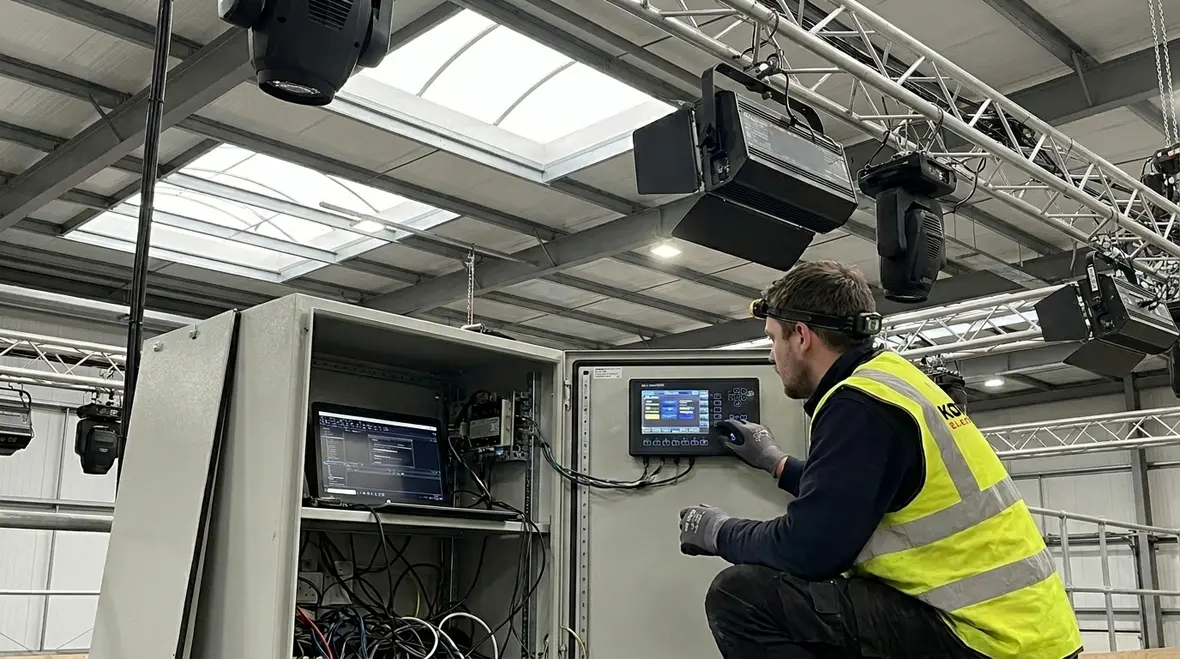
During planning, we also consider how code-driven requirements such as mandatory occupancy sensors and multi-level controls in certain areas will shape the zone logic. For California properties, that often means aligning zoning and dimming strategies with Title 24 expectations, much like the integrated approach described in the California commercial lighting code guide for 2026. By treating code compliance, energy savings, and user comfort as one conversation, commercial lighting control systems deliver better, longer-lasting results.
Daylight harvesting and occupancy sensing that actually works
A lot of systems claim they can “optimize.” However, optimization fails when sensors do not match real behavior. Kord Electric addresses that by selecting sensor types and placement that fit the space. For occupancy detection, we consider movement patterns, typical sight lines, and how quickly people use the area. For daylight harvesting, we take into account window orientation, outside light variability, and how interior surfaces reflect brightness.
Then we tune response times and minimum levels so lighting does not flicker, bounce, or feel random. As a transition, we validate the setup during commissioning so the system reacts the way people expect. Moreover, we make sure emergency and safety pathways stay compliant, because the last thing anyone needs is a “smart” system that forgets safety when it gets clever.
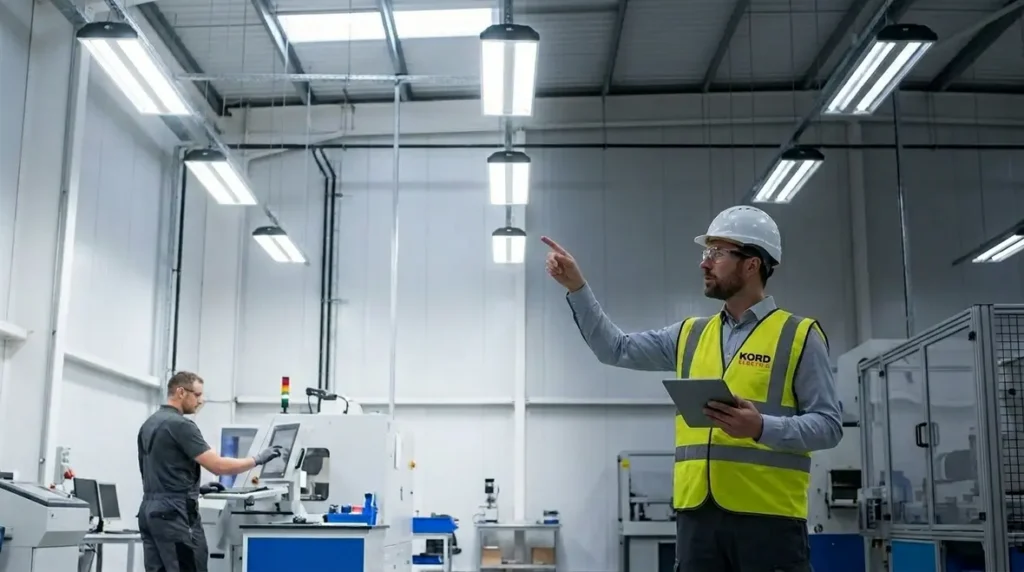
In a warehouse or production facility, occupancy sensing can reduce runtime for seldom used areas without turning them into dark zones that slow work. In an office, daylight harvesting can reduce glare and maintain comfortable illumination. That blend of comfort and savings is where commercial lighting control systems earn their keep.

Well-tuned sensors also help facilities stay on the right side of modern energy codes. Daylight-responsive zones around windows and skylights, occupancy controls in storage rooms, and demand-responsive lighting in larger buildings show up frequently in compliance checklists. By integrating these elements from the start, Kord Electric makes it easier to align everyday operations with long-term goals like commercial lighting compliance in California and portfolio-wide energy reduction targets.
Commissioning and retrofits: what Kord Electric handles
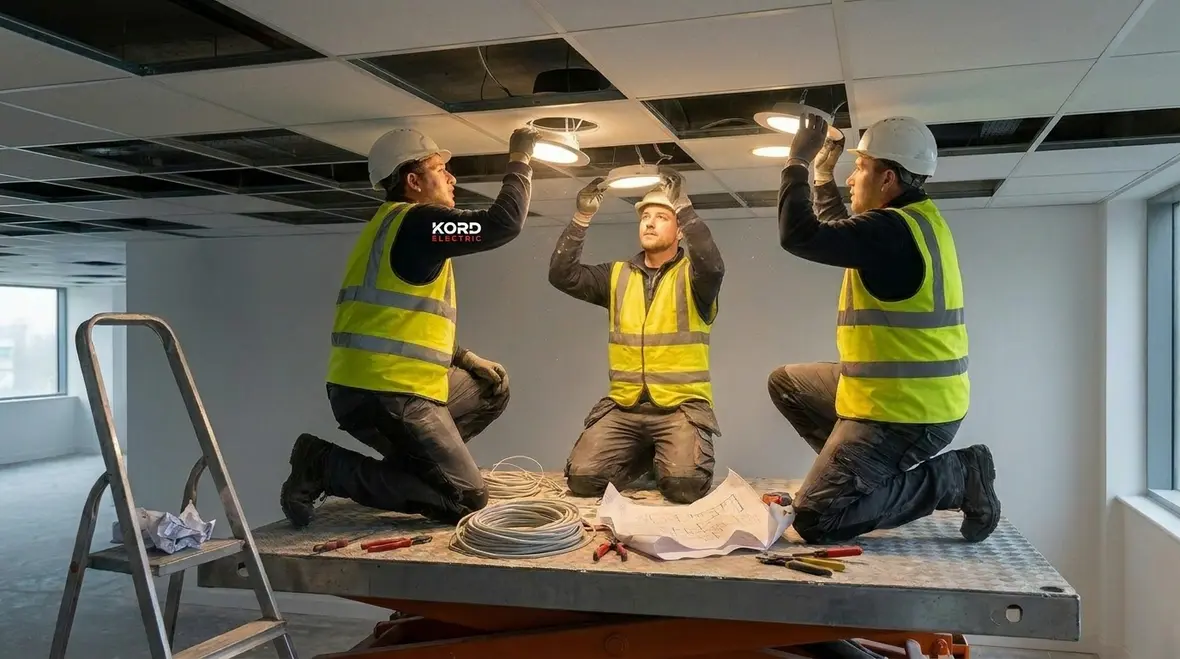
Many facilities want upgrades, but they do not want the building to feel like a construction battlefield. Therefore, our technicians plan retrofits to limit disruption and keep operations safe. We coordinate installation timing, lay out control device placement, and confirm fixture compatibility. Then we test each circuit and zone logic so you get predictable results.
For example, when projects involve recessed fixtures, we follow best practices for installation planning and integration. If you are building out a new area or updating older lighting, a clean fixture layout supports stable control behavior. One key step involves verifying layout and cutout alignment, because it affects both light output and how the system responds over time. Our team supports this through disciplined installation and alignment checks, which we explain directly on our recessed lighting installation resources for facilities that want the details done correctly the first time.
After the physical work, we perform commissioning. That means we verify sensor settings, dimming curves, and schedules under real operating conditions. Also, we confirm communication paths to the control and any building management interface. If something does not behave as expected, we adjust it before the project closes.
For larger upgrades, commissioning also includes documenting setpoints, schedules, and sensor groupings in a way that operations teams can understand later. That level of clarity helps when facilities pursue follow-up projects like preventive electrical maintenance or broader system reviews. When commercial clients engage Kord Electric for electrical preventive maintenance, having a well-commissioned lighting control system already in place makes inspections, thermal scans, and Title 24 documentation more straightforward.
Integrating with building management and future upgrades
Commercial buildings rarely stay the same. Departments expand, tenants change, and workflows shift. For that reason, Kord Electric designs lighting control so it integrates cleanly with building management and supports future improvements. Rather than locking a facility into a single rigid setup, we plan for growth and easier adjustments.
Additionally, we consider how operations teams want to manage the system. Some facilities need clear panel controls for daily use, while others prefer app based views or dashboard reporting. We help others choose the right balance so staff can understand what the system does without needing a degree in circuit psychology.
As we integrate controls, we map the right points for monitoring, scheduling, and alerts. For instance, facilities often benefit from tracking lighting status by zone, and learning when unusual behavior occurs. That insight supports preventive maintenance and reduces the time spent troubleshooting outages. And of course, it helps property managers explain improvements to stakeholders with less hand waving.
This integrated mindset also sets the stage for future upgrades. When a building later pursues a comprehensive LED retrofit or a broader lighting redesign, having documented zones, control sequences, and energy performance from existing commercial lighting control systems makes it easier to forecast payback. Many facility teams use this information side by side with guidance from resources like the commercial lighting upgrade cost guide to build stronger business cases for phased improvements.
Common mistakes that waste energy and frustrate staff
Even well intended projects can go sideways. One common mistake involves setting dimming levels too low, which forces people to override controls and then everything runs at near full output all day. Another mistake involves poor zoning that ignores real use patterns. When that happens, lights turn on where nobody works and stay dim where work needs brightness.
Next, some teams skip commissioning or shorten the tuning process. As a result, occupancy delays can feel annoying, and daylight harvesting can react too aggressively. Then staff starts to distrust the system, which leads to constant manual changes. Finally, some upgrades fail at the compatibility stage, especially when fixtures or control components do not align with the intended control strategy.
To avoid these issues, our expert service staff walks through the setup with clear guidance. We explain how the controls behave in daily routines, and we adjust parameters until the system feels steady. That matters because a control system is not finished when power turns on. It is finished when people trust it and operations teams can run it with confidence.
FAQ: commercial lighting control systems
Ready to upgrade your facility’s lighting performance
If your facility runs lights longer than it should, or certain zones never feel quite right, Kord Electric is ready to help. We design, install, and commission lighting control for commercial and industrial buildings, with zoning, scheduling, dimming, and sensing that matches how people work. Our expert technicians explain what you get, what it does, and how to operate it day to day. For facilities planning broader electrical improvements, commercial lighting control systems also align naturally with services like electrical preventive maintenance and other industrial and commercial lighting upgrades, so each project strengthens the next.
Whether you are tackling a single-floor retrofit, a portfolio-wide LED upgrade, or a new construction project that must hit aggressive energy targets, Kord Electric can help you turn “always on” lighting into responsive, efficient control. Contact Kord Electric today to schedule an assessment and move from guesswork to reliable control, backed by a commercial electrical team that understands how lighting, safety, and productivity fit together.