Commercial Electrical Emergency Response Plan Guide
When a storm hits, a transformer fails, or a crucial circuit just decides to quit, businesses cannot afford delays. That is why Kord Electric builds a rapid commercial electrical emergency response plan that helps facilities act fast, stay safe, and recover with less downtime. In the sections ahead, we explain how a strong plan gets created, how we assign roles, and how our team keeps decisions calm under pressure. And yes, we also include the kind of practical steps people usually skip until the smoke alarm starts auditioning for a leading role.
What a rapid commercial plan needs for real emergencies
We design emergency plans for commercial electrical systems the way we would design a fire escape: clear, simple, and ready to use. First, the plan must cover major property buildings and industrial facilities where power loss can ripple through production lines, elevators, HVAC systems, security systems, and critical IT loads. Next, it must define what “rapid” means in minutes, not in vibes.
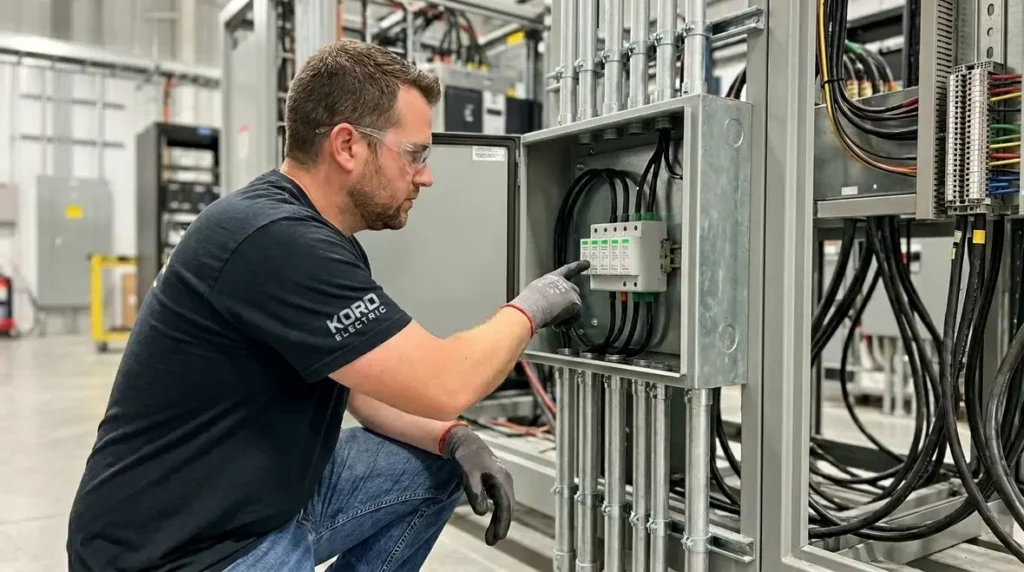
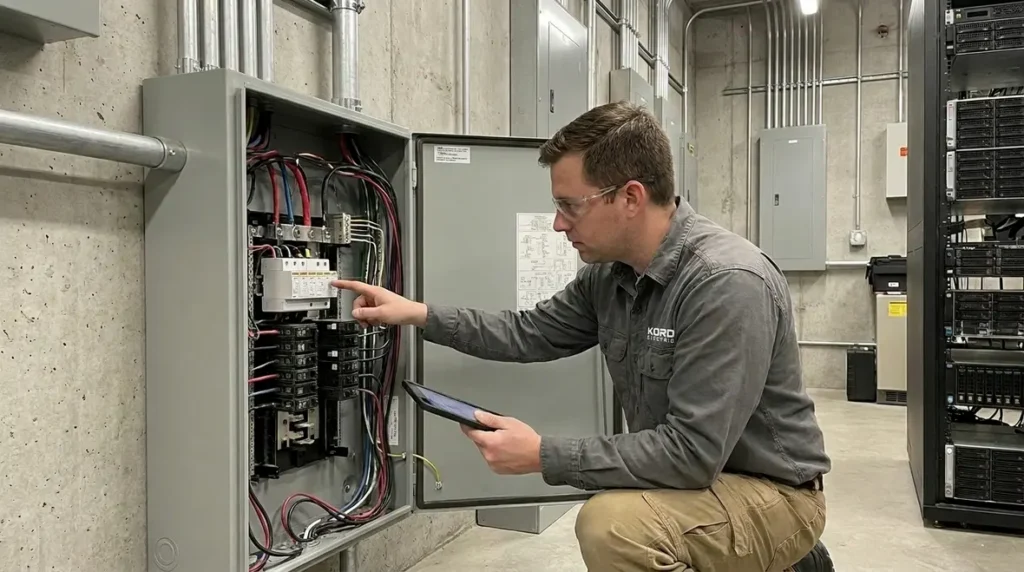
Typically, our approach starts with a quick risk scan and then grows into a detailed playbook. We look at the facility’s voltage levels, switchgear layout, panel schedules, backup power, and the routes technicians follow to reach the right equipment. After that, we connect the electrical story to the building story, so the team that manages people and the team that manages power speak the same language.
Meanwhile, our expert service staff helps translate technical details into plain instructions. For example, instead of just saying “inspect the switchgear,” we outline what to check, what to record, and who confirms safety before anyone gets close. That is how you keep the plan accurate and usable when stress shows up.
Solid planning also ties directly into ongoing reliability. If you want your emergency playbook to rest on a stronger foundation, connecting it with a structured electrical preventive maintenance program makes the response faster, safer, and more predictable across your portfolio.
How we build your response team and clear roles
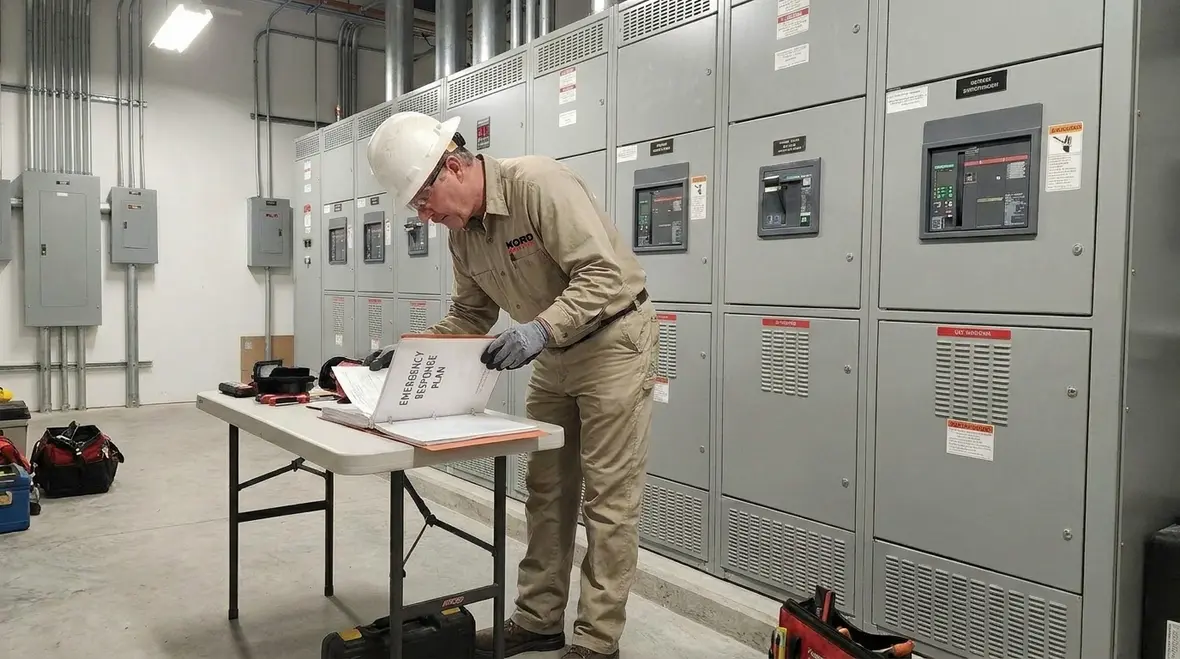
A solid commercial electrical emergency response plan is not one document. It is a team system. Therefore, we help facilities set roles before anything goes wrong. We assign responsibility for incident command, power shutdown decisions, lockout and tagout steps, communications, and documentation.
In practice, we separate duties into lanes. One lane handles safety and perimeter control. Another lane handles electrical verification, such as checking incoming feeds, identifying affected busses, and verifying whether backup power transferred correctly. A third lane handles customer impact updates, so leadership understands what is down and what can stay online.
To keep things smooth, we recommend a call tree with clear call order and backup contact methods. In addition, we define escalation paths: if a fault repeats or if readings suggest damage, the team knows when to stop troubleshooting and bring in deeper support. Our technicians often review these roles during walkdowns, so the plan matches the building you actually operate, not the building someone drew on paper during lunch.
Aligning electrical decisions with operations
For many commercial and industrial properties, the biggest breakdown during an event is not the equipment. It is the communication. We help your facilities, safety, and operations leaders agree on who decides what, when they decide it, and how that information flows to the people on the floor. That way, electrical decisions do not float in isolation from what operations actually needs in the next five, fifteen, and thirty minutes.
Mapping power, controls, and critical loads before trouble arrives
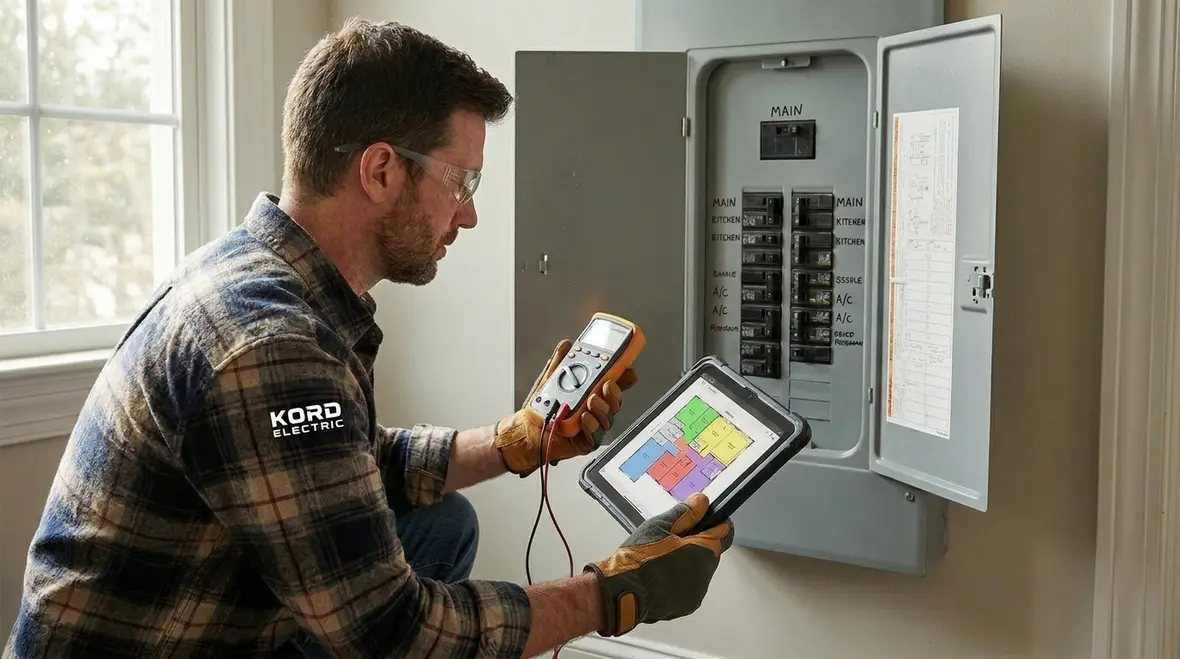
During an emergency, people do not want a scavenger hunt. So we map systems ahead of time. We inventory critical loads and create a prioritized list. Then we connect that list to electrical assets: switchgear compartments, transfer switches, ATS units, UPS areas, branch panels, and key feeders.
Next, we document how systems work together. For example, we note which circuits share protective devices, which loads depend on control power, and where interlocks live. Then we connect the dots between the electrical data and the building operations, so teams can make intelligent decisions like restoring life safety circuits first and delaying non essential loads.
We also support preventive maintenance planning as part of the same ecosystem. If you already maintain equipment on schedule, emergencies get less dramatic. You still may face outages, but you face them with better odds. Our preventive maintenance service supports that by keeping components checked, tested, and corrected before failure becomes urgent.
And if anyone asks, yes, we do treat emergency mapping like a seatbelt. You do not notice it until you need it, and then suddenly you are very grateful it exists.
Turning maps into decisions, not just drawings
Good one-lines and panel schedules are a starting point, not the finish line. We walk your facility and verify what is actually installed, where disconnects live, how feeders route, and which critical loads have realistic backup. Then we translate those details into decision trees that non-engineers can follow when the lights flicker and alarms start complaining.
Step by step actions for the first 30 minutes
The first moments matter. So we build a playbook that works even when information feels messy. Our technicians guide facilities through a staged process that starts with safety and ends with structured restoration.
Step one is to confirm conditions and shut down hazards when needed. If the situation involves smoke, arcing, or burning smells, the plan prioritizes staying back and controlling the area. Step two is to verify system status using safe observation and approved checks. Step three is to isolate the fault path based on available labeling, one line diagrams, and field conditions.
Step four is to protect critical services. If the facility uses backup power, we verify the transfer and monitor stability. Then we restore in a planned order, so the restart does not cause new trips or overloads. Step five is to document what happened. That includes time stamps, equipment identifiers, readings when safe, and what actions the team took.
Transition matters here. After each stage, we require a brief checkpoint: what we know, what we suspect, and what we will do next. This stops the team from jumping ahead. It also helps leadership make decisions faster, because the facts show up in a consistent format.
Why “first 30 minutes” thinking changes outcomes
When teams rehearse the first half hour, they avoid two common traps: freezing in place or rushing ahead. A well-rehearsed commercial electrical emergency response gives people confidence to move deliberately, shut down the right things, and keep leadership updated without turning the radio channel into chaos.
Testing, training, and drills that do not waste time
A plan that never gets tested becomes a bedtime story. So we help facilities run training and drills that reflect real operations. That includes tabletop exercises and practical scenarios for major property buildings, such as partial power loss, switchgear trouble, or transformer failure. We also include communication drills, because the way people talk during events affects how fast decisions land.
Our expert service staff often leads training sessions and explains electrical concepts in a calm, business casual way. We do not assume everyone knows what “coordination” means under pressure. Instead, we connect the idea to outcomes: fewer nuisance trips, faster isolation, and safer restoration.
Then we refine the plan based on drill results. If a team member struggles with a specific step, we adjust the instruction. If maps do not match the installed layout, we update them. Finally, we schedule follow up reviews to reflect changes in tenants, equipment, and building upgrades.
In the end, drills build muscle memory. And muscle memory beats panic. Panic is great for action movies, but terrible for live switchgear.
Integrating drills with maintenance and compliance
Realistic practice sessions do more than build confidence; they reveal where documentation, labeling, or equipment conditions are quietly setting you up for trouble. We often connect drill outcomes with updates to your maintenance schedule, documentation standards, and code-compliance checks, so every exercise leaves your electrical system and your team in better shape than before.
Keeping recovery organized and preventing repeat failures
After immediate hazards get addressed, recovery must stay controlled. So we separate restoration from repair. Restoration gets critical loads back first, while repair work identifies root causes. We encourage teams to preserve evidence when possible, like fault indicators and trip logs, because that data shortens the path to permanent fixes.
Once service returns, we run a post event review. We capture lessons and update the emergency procedures. If the same protective device trips repeatedly, the plan should prompt deeper troubleshooting and a protective device review. If heat marks appear or insulation concerns surface, the plan should trigger inspection, testing, and corrective action.
We also align emergency readiness with ongoing preventive maintenance. When systems receive regular attention, the event window often shrinks. More importantly, teams spend less time guessing and more time restoring with confidence. Our preventive maintenance efforts support this by keeping equipment in better condition, and by spotting issues before they turn into surprise emergencies.
In short, the recovery stage turns an outage into a learning cycle. That is how you reduce future risk without turning your facility into a lab every week.
Connecting recovery to long-term reliability
Post-event reviews are a perfect moment to ask bigger questions: Does your current backup strategy match how the building is really used? Are there obvious candidates for system upgrades, targeted replacements, or expanded electrical preventive maintenance? We help you turn each incident into a roadmap for fewer emergencies and calmer response the next time something unexpected happens.
FAQ: rapid response planning for commercial and industrial facilities
When to connect emergency planning with broader services
If your facility relies on critical power for production, data, or life safety systems, it often makes sense to pair emergency planning with other specialized services. For example, facilities considering infrastructure changes like EV charging or major lighting retrofits can benefit from coordination with Kord Electric’s emergency electrical services so new projects support, rather than complicate, your commercial electrical emergency response procedures.
Conclusion and call to action
If your facility cannot afford slow decisions, then your plan must be ready before the incident. Kord Electric helps commercial and industrial properties build a rapid emergency playbook that organizes roles, maps critical loads, and supports clean restoration. Our technicians and expert service staff walk through procedures, train teams, and align emergency readiness with ongoing electrical care. If you want fewer surprises and faster recovery, contact Kord Electric today and we will help you build a plan that works when it matters most.
When you are ready to go beyond planning and secure on-call support for unexpected outages, Kord Electric’s dedicated emergency electrical services team is available to help stabilize systems, restore power safely, and keep your operations moving with minimal downtime.