Outdoor Lighting Installer Commercial Installation and Design Guide
Outdoor Lighting Installer: Commercial Installation & Design Guide, brought to life by Kord Electric
At Kord Electric, we treat outdoor lighting like a real system, not a decorative afterthought. Our Outdoor Lighting Installer: Commercial Installation & Design Guide walks a facility through the full process, from early layout to final checks. And yes, we also prevent the classic “it looked fine on the sidewalk” problem that turns into failed inspections later. Think of it as night vision for your compliance team.
Others might slap fixtures where they fit. We plan where they should live, then we install with the care your property manager expects. In this guide, our expert service staff and technicians explain what matters for commercial installation, industrial sites, and major property buildings, with practical steps that keep you safe, visible, and on the right side of local codes.
What we design first for commercial sites, so it passes later
In our process, we start with the jobsite goals, because lighting choices only work if they match the site’s real use. As a result, our designers and technicians map traffic routes, pedestrian areas, loading zones, and building entrances before we touch a single conduit. Then we review mounting heights, beam spread, glare control, and target light levels for each zone.
Next, we confirm the electrical plan supports the design. After that, we decide how the system will be controlled, whether that means timers, photocells, or smart scheduling that reduces energy use after hours. At the same time, we align with inspection requirements, so you do not end up arguing with a checklist at 8:00 AM. Nobody wins that game, not even the guy who brings coffee like it is a weapon.
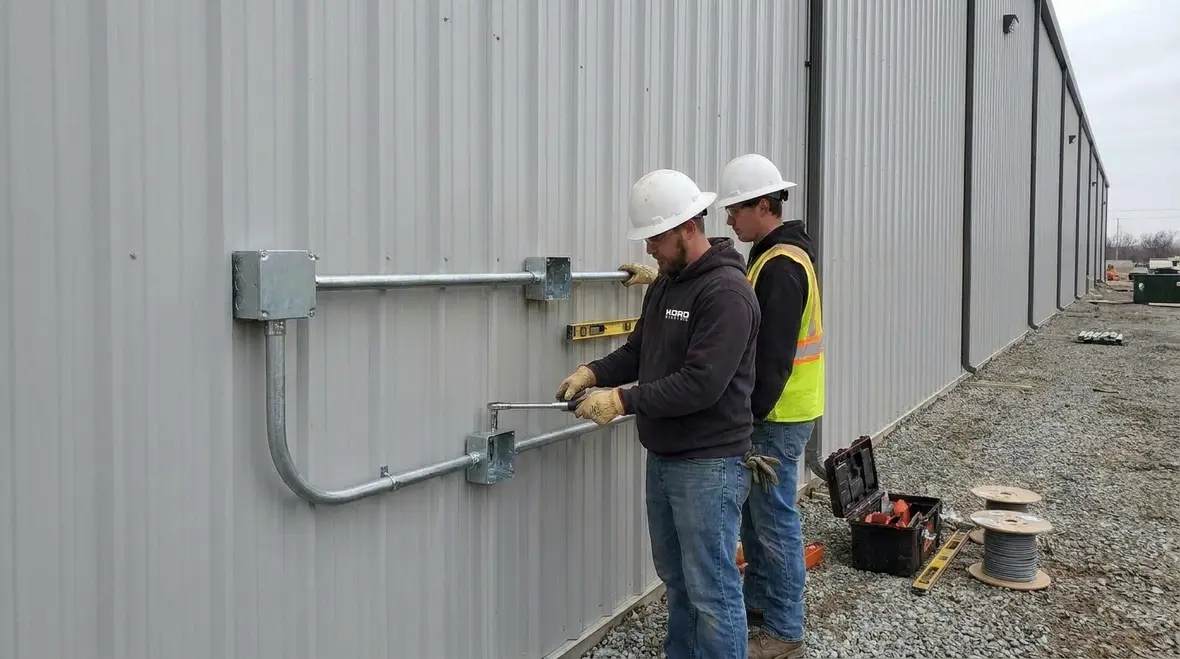
Lighting installation mistakes that fail inspections, and how we prevent them
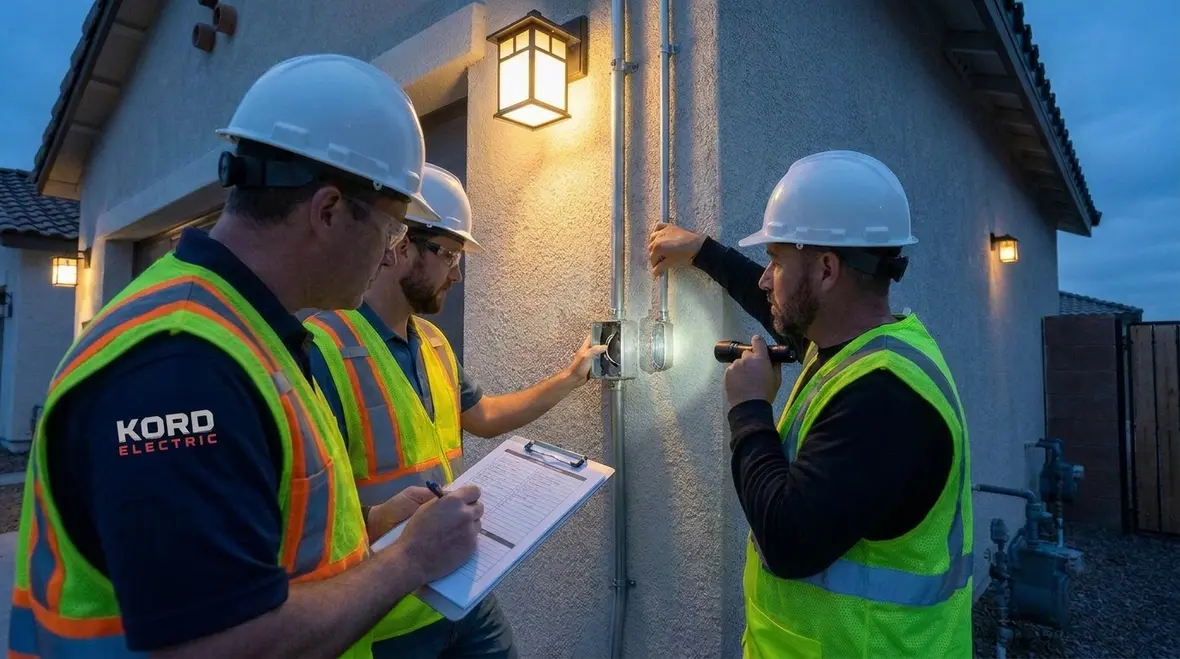
We often see the same issues during pre-inspection visits. So, we follow the lessons laid out in our own Kord Electric blog article about lighting installation mistakes that fail inspections, as well as related resources like our Lighting Installation Code Compliance Guide and commercial lighting installation planning articles. In plain terms, we do not want your property to “fail the vibe check” and lose time.
Here are the most common problems we actively stop:
- Incorrect fixture mounting and aim: When lighting points the wrong direction, you get glare and poor coverage. We align fixtures to the layout, then we verify output during startup.
- Improper wiring and connections: We use the correct methods for the environment, including weather exposure and mechanical protection. Also, we check terminations and torque where required.
- Wrong conduit and routing: If the path ignores trenching needs, bends, or separation rules, it can cause code failures and future headaches. We route with inspection access in mind.
- Poor conductor sizing: Under-sizing leads to voltage drop and performance complaints. We size conductors to the load and run length.
- Missing labeling and documentation: Facilities get inspected, and inspectors expect clear, readable records. We provide closeout documentation that your team can actually use.
- No GFCI or safety controls where needed: Outdoors demands protection. We confirm the right devices are used for the application.
Now, here is the calm part. We do not rush the final steps. Instead, our expert service staff checks the system in the real world, after installation and before handoff, so you do not discover problems only after the crew has moved on.
If you want to see how this plays out across interior and exterior systems, you can also review our companion article on lighting installation mistakes that fail inspections, which expands on these patterns and how to avoid them before inspectors arrive.
How our Outdoor Lighting Installer team sets up wiring, conduit, and safety
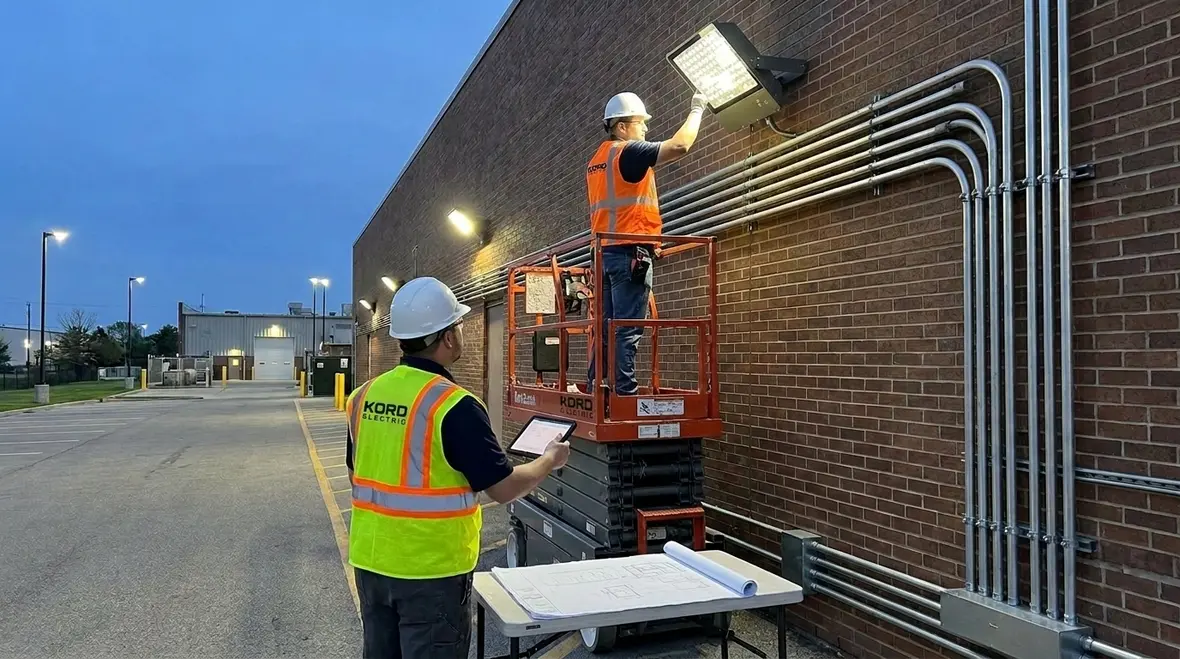
When people talk about an outdoor lighting installer, they often focus on the fixtures. However, the electrical backbone decides whether the system behaves for years. So, our technicians install with strict attention to conduit routing, weatherproofing, and protective measures designed for commercial and industrial environments.
First, we plan cable runs and conduits so they stay protected from impact, moisture, and heat sources. Next, we maintain the required separation from other services where applicable, and we avoid tight bends that can stress conductors. Then we confirm all components are rated for outdoor use and that connections are made correctly.
After wiring is in place, we test. We check circuits, verify correct operation of controls, and confirm lighting levels at the key locations. Finally, we document what we installed, because the future you will thank the present you when maintenance time arrives. If you have ever tried to troubleshoot a mystery switch with no labels, you already know why this matters.
Glare control, aiming, and coverage: the difference between “bright” and “useful”
Bright is not the same as useful. At commercial facilities, poor aiming can create glare that annoys drivers, affects cameras, and pushes visibility into the wrong spots. Meanwhile, under-aimed fixtures leave dark pockets where pedestrians and equipment operators do not want to “figure it out.”
That is why we treat aiming like part of the design, not the last step of install. We start by establishing target zones. Then we select optics and mounting positions that deliver even coverage. After installation, we measure and adjust as needed to meet the requirements of each area.
We also think about how people move through the site. Loading bays need reliable visibility without washing out signage. Parking lots need consistent light across rows. Walkways need safer footing and clear sightlines. And for large buildings, we reduce spill light toward neighboring areas when the site constraints demand it.
In other words, we build a system that supports operations, not one that simply glows like a mall sign at midnight.
Controls, compliance, and energy choices that your operations team will like
Once lights function correctly, the next job is making them run efficiently. We help commercial and industrial facilities choose control methods that match occupancy patterns and reduce waste. For example, we can integrate photocells for dusk to dawn operation, set schedules for night routines, or add zoning so high-traffic areas stay lit while other zones dim or remain off.
Furthermore, we verify that controls do not create nuisance behavior like rapid cycling or unexpected outages. We also coordinate with facility practices so the system fits the way your team works, not the other way around.
As the system grows, we plan for maintainability. We keep access considerations in mind, we recommend practical component placement, and we make sure the control wiring supports future service. If your facility expects the lights to last and the controls to stay understandable, we help deliver that outcome.
Many property managers also pair these strategies with broader services such as our Los Angeles County electrical services, so outdoor lighting, power distribution, and preventive maintenance all work together instead of as separate projects.
How Kord Electric keeps the project moving without surprises
Facilities do not need endless delays. So, we structure each project for clear steps and clean communication. First, we review the site constraints and confirm the scope for commercial installation & design. Next, we coordinate material planning, access needs, and scheduling, so the jobsite stays safe and orderly.
Then our expert service staff explains the plan in real terms. They walk through what gets installed, why it gets installed a certain way, and what to expect during testing. When questions come up, they do not hide behind vague answers. They break it down, calmly, like someone explaining a game plan rather than reading from a manual.
We also pay attention to the handoff. Our closeout process includes documentation, verification of operation, and guidance for day-to-day use. That way, your team does not start the next maintenance call with, “Wait, what did they do?”
And just so we are clear, we do not treat outdoor lighting like a reality show where everything is decided at the last minute. We prefer the boring version: done right, done clean.
FAQ: commercial outdoor lighting installation
Ready to light your site the right way?
If your commercial property needs outdoor lighting that supports safety, operations, and inspections, Kord Electric is ready. Our expert service staff and technicians plan the layout, install the electrical system correctly, and verify performance before handoff. We work with commercial and industrial facilities, and major property buildings, where reliability matters.
From early design through final inspection, our Outdoor Lighting Installer: Commercial Installation & Design Guide keeps each step grounded in real-world use, not just drawings. We can also align your project with broader services like lighting audits, code compliance support, and regional electrical service programs, so your exterior lighting does not operate in isolation from the rest of your power system.
If you want to see how this thinking applies across your entire facility lighting strategy, you can explore related planning resources in the Kord Electric blog, including commercial lighting installation best practices, lighting audit insights, and inspection-ready wiring and documentation tips.
Contact Kord Electric to schedule a site review and get a clear path from design to a clean, compliant install. Let’s turn nighttime into an advantage.
For facility teams that want outdoor lighting, power distribution, and ongoing maintenance to stay aligned, consider pairing this work with our regional service offerings highlighted on the Los Angeles County electrical services page, so your exterior lighting upgrade becomes one part of a long-term reliability plan instead of a one-off project.