Commercial Electrical Panels Types Capacity and Maintenance
Commercial Electrical Panels: Types, Capacity & Maintenance for Built Environments
At Kord Electric, we focus on what matters for major propertie buildings, commercial sites, and industrial facilities: dependable power and safe distribution. Our Commercial Electrical Panels: Types, Capacity & Maintenance approach starts with the right panel style, the right load capacity, and a maintenance rhythm that keeps equipment steady. In this guide, we explain how our expert service staff evaluates electrical panels, sizes capacity, manages upgrades, and helps keep faults from turning into expensive downtime. Others may treat panels like background equipment, but we treat them like the control center they truly are. And yes, we have seen panels behave like drama queens when they are under‑serviced.
What an electrical panel really does in commercial and industrial sites
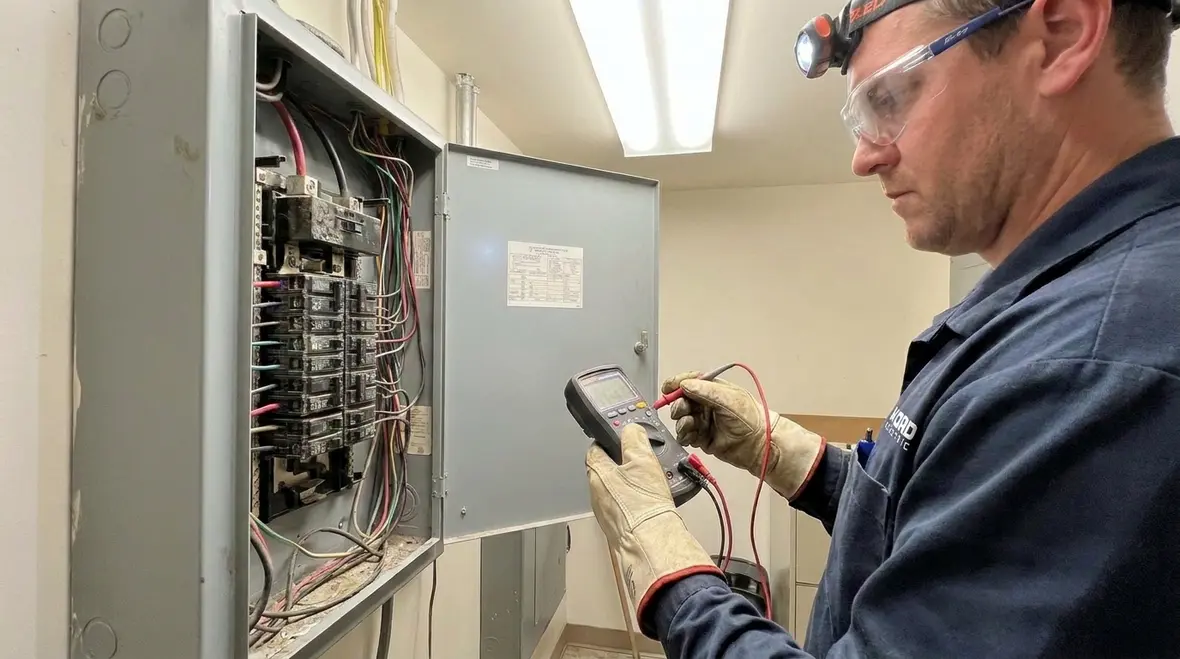
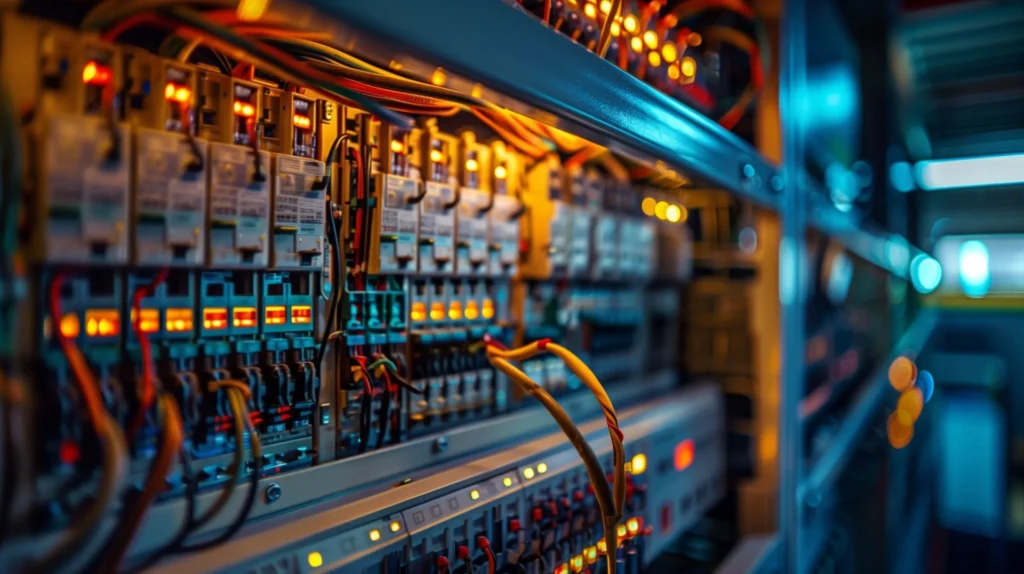
In commercial and industrial settings, an electrical panel does more than “hold breakers.” It gathers incoming power, organizes it into circuits, and protects the facility from overload and short circuits. In many buildings, the panel also supports how power flows to HVAC, lighting, elevators, refrigeration, pumps, and process loads. As a result, when an electrical panel performs poorly, you feel it everywhere, from tripped breakers to voltage swings that can damage sensitive equipment.
We rely on our technicians to look past the front door of the panel. They trace how circuits connect, how protective devices coordinate, and how the building uses energy across the day. Then, we document what we find, because guesswork has no place in a power system.
When our expert service staff explains panel function on site, we keep it clear. You do not need a degree in electrical engineering to understand this. You just need the truth: the panel is where safety and performance meet, and it must stay within design limits.
Common electrical panel types used by Kord Electric
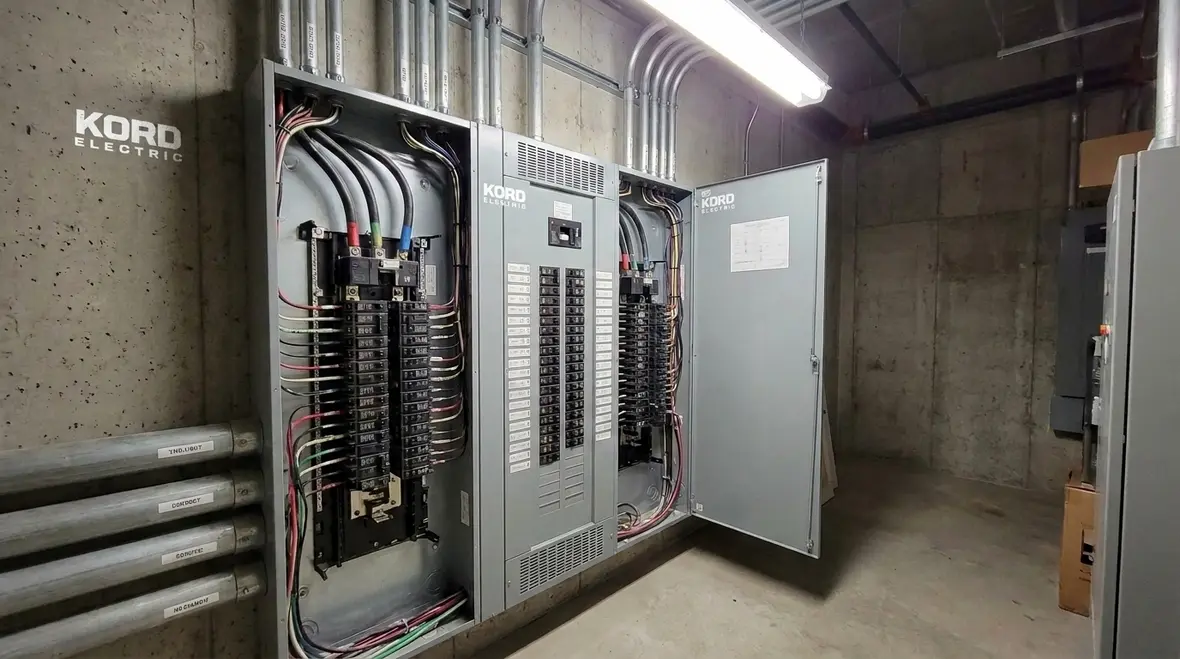
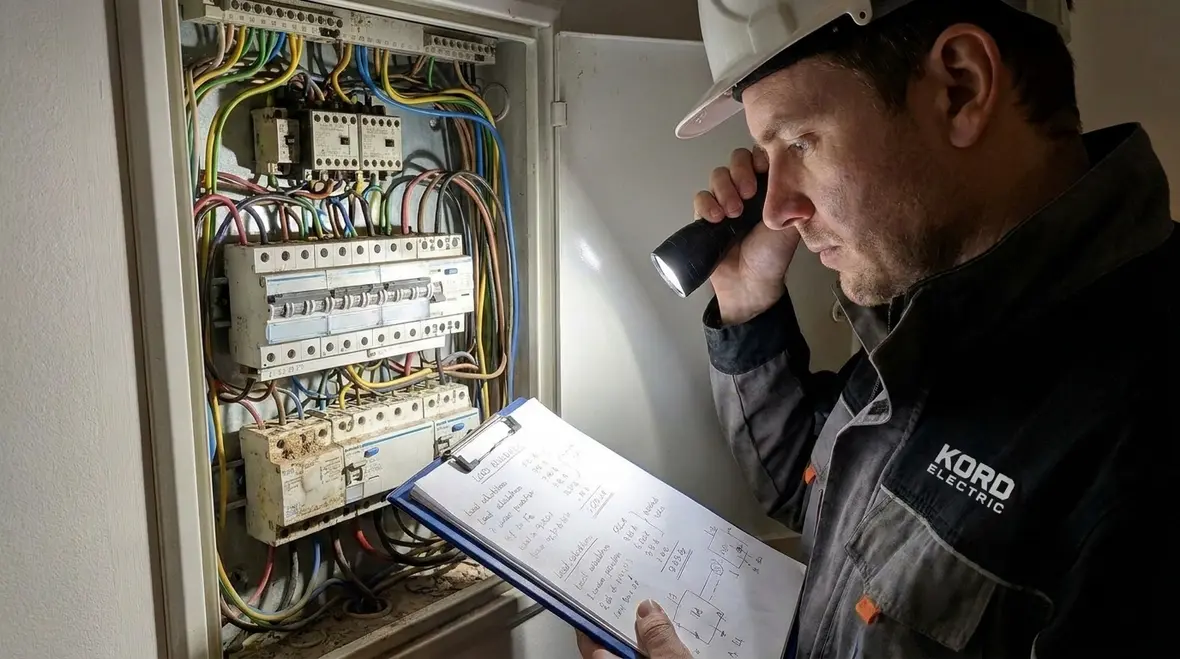
Commercial sites need panel systems that match their load patterns, space limits, and code requirements. At Kord Electric, we work with multiple options depending on the application. While the exact selection depends on the facility, we typically see these categories across major propertie buildings and industrial environments.
Main service panels that handle incoming distribution and provide primary protection.
Subpanels that split loads into manageable groups for specific areas like mechanical rooms, tenant suites, or production zones.
Distribution panels designed to support larger branching networks while keeping wiring runs practical.
Meter and service equipment setups where utility interface and distribution coordination matter for reliability.
We help teams pick the panel that fits the facility today and allows safe growth. In other words, we plan ahead instead of bolting on “one more breaker” until the panel looks like it went through a box of markers. Our technicians document circuit intent, label systems clearly, and recommend upgrades before failures force them.
How we size capacity for stable power and fewer shutdowns
Capacity sizing decides how well a panel can support actual demand without constant strain. We start by reviewing the facility’s load use: what equipment runs, when it runs, and what starts at the same time. Then we account for starting surges, HVAC cycles, and seasonal changes that commercial and industrial sites experience. After that, we check breaker ratings, bus capacity, and conductor suitability.
Here is the part many people get wrong. They only look at total amperage on paper. However, a building does not use power like a spreadsheet. It uses it in real time. Therefore, our team verifies load diversity and checks whether protective device coordination stays accurate across the full operating range.
When we explain capacity decisions, our technicians speak plainly. They tell you what happens when capacity falls short: heat builds inside components, insulation ages faster, contact points degrade, and you risk nuisance trips or worse. And if you are thinking, “We can just add more later,” we respond, sometimes gently, sometimes with the seriousness of a fire drill. We can plan expansion, but we cannot squeeze safe performance out of an overpacked design.

Maintenance that prevents faults, heat buildup, and surprise outages
Maintenance matters because electrical panels live in the real world. Dust accumulates, moisture tries to enter, connections loosen over time, and components age. Even when nothing “looks wrong,” invisible issues can form, like elevated resistance at connections. Over time, that turns into heat, and heat turns into failures.
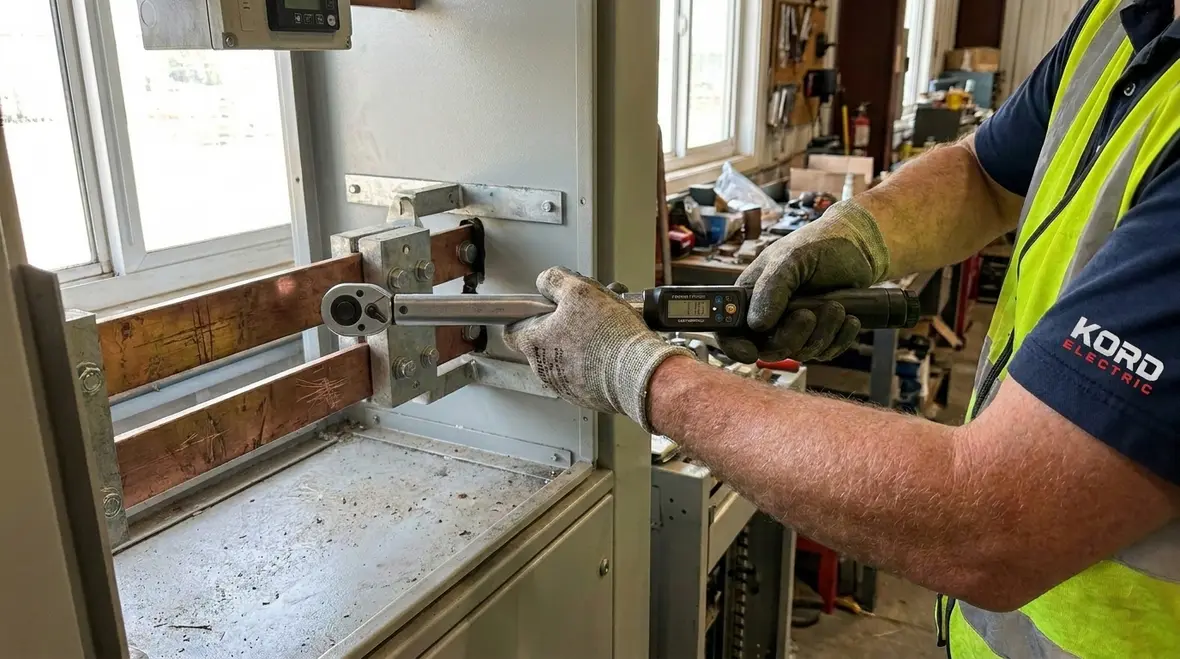
Our expert service staff uses a steady process focused on prevention. Depending on the facility schedule, we perform inspections and checks such as torque verification where appropriate, visual inspection for signs of overheating, checks for proper labeling, and evaluation of breaker conditions. We also look at cable routing and make sure panel clearances support airflow and safety.
Furthermore, we help teams set a practical maintenance timeline based on usage intensity and environmental conditions. A busy production floor and a quiet office suite do not require the same cadence. So we tailor the plan. As we do this, we keep the building running, because downtime is expensive and nobody wins when a panel outage hits peak production or business hours.
Upgrades and panel replacement: when to act early
Sometimes an upgrade solves issues without full replacement. Other times, replacement makes more sense for safety, long term cost, and system stability. We guide decisions by assessing panel condition, spare capacity, circuit requirements, and how well the protective devices still coordinate with the system design.
We also address a common problem we see in major propertie buildings and multi load facilities: teams add circuits over the years without fully tracking how those additions affect capacity and heat distribution. Later, someone tries to solve a nuisance trip with “more switching,” and the system just grows louder, not wiser. That is when we step in.
Our technicians evaluate the full setup, not just the symptom. Then we propose a path that fits your operation. That might include adding subpanels, upgrading protective devices, improving labeling and circuit organization, or replacing components that show wear. We keep you informed at each stage, so your leadership team can plan budgets and schedules with real data, not guessing.
Clear communication, safety practices, and the Kord Electric technician approach
Commercial and industrial electrical work demands clarity. We serve property owners, facility managers, and business leadership who need reliable power and clean documentation. Therefore, we explain what we find, what it means, and what we recommend next. Our expert service staff does not hide behind jargon. We speak in practical terms, and we match the level of detail to your needs.
On site, we also support safe work habits. We follow electrical safety steps, coordinate with your operations team, and treat the panel area like the critical point it is. If your team asks questions, we answer them. If your team wants schedules, we provide options. And if your team jokes that the panel should “just keep going until it breaks,” we smile and say, with respect, that is how you end up paying for lessons twice.
Because electrical panels live at the center of your power distribution, we often connect Commercial Electrical Panels: Types, Capacity & Maintenance planning with broader programs such as commercial and industrial electrical maintenance plans and de-energized preventive electrical maintenance. That way, your panel strategy supports everything from routine inspections to emergency readiness, instead of sitting off to the side as an afterthought.
FAQ
Bottom line: let us protect your power before problems escalate
At Kord Electric, we build and support electrical panel systems for commercial and industrial facilities, and for major propertie buildings that cannot afford downtime. If you want better reliability, safer protection, and a maintenance plan that actually fits your load, call us. Our technicians and expert service staff review your panel setup, then recommend the right upgrades and upkeep with clear communication. Reach out today to schedule an assessment and keep your power steady, calm, and ready for business.
If your facility is planning a larger renovation, capacity upgrade, or new build, our team can also help you coordinate Commercial Electrical Panels: Types, Capacity & Maintenance strategy with broader Los Angeles County electrical services. That way, your panelboard decisions line up with lighting, equipment feeds, emergency systems, and long term maintenance plans instead of becoming an isolated project that has to be reworked later.
For buildings that are already straining existing gear, it may be time to look at dedicated commercial electric panel services as part of a full evaluation. By aligning Commercial Electrical Panels: Types, Capacity & Maintenance with your current and future load, our technicians help you move from “hoping the panel holds” to knowing your system is ready for growth.