School Electrical Maintenance Checklist Guide
At Kord Electric, we treat the school electrical maintenance checklist like a calm bedtime routine for power. In the first 100 to 150 words, here is the core flow we follow with educational facilities: verify panels and breakers, inspect grounding and bonding, test emergency lighting, check GFCI protection, review signage and exit circuits, and confirm no heat or odor signals show up in wiring or switchgear. Then we document results, schedule fixes, and protect the next school day like it is sacred ground. Because in a building full of kids, clocks, and computers, “minor issues” have a habit of turning into major ones. And nobody wants that plot twist, unless it is in a movie we already paid for.
Why preventive electrical care matters in schools and classrooms
Third party and in house teams often think electrical problems arrive out of nowhere. However, most failures start as small changes: loose connections, worn insulation, moisture in enclosures, or dust buildup where airflow should be. Over time, those changes raise heat, reduce safety, and increase downtime. In other words, the building does not suddenly “break.” It gradually walks toward a problem, and the calendar keeps turning.
Because schools operate on tight timelines, any electrical downtime impacts learning, testing, and safety drills. Therefore, we plan maintenance around real building needs, not ideal lab conditions. At Kord Electric, our expert service staff explains what we find in clear language, so facility managers understand the why, not just the what. And yes, we know it sounds like we are promising miracles. We are not. We are simply consistent.
Electrical maintenance checklist for schools: our step by step approach
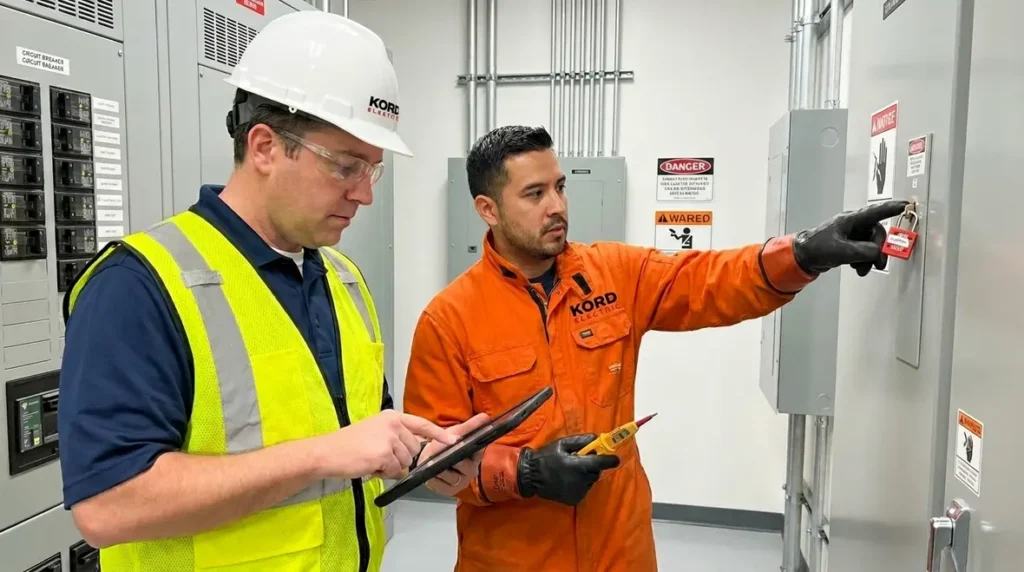
We use a practical sequence that lines up with how commercial and industrial buildings operate. First, we gather access information, one line drawings, and the history of prior faults. Next, we inspect and test the equipment that typically carries the highest risk: switchgear, distribution panels, feeders, ground fault protection, and life safety circuits. Then we document condition, label findings, and recommend actions based on risk and urgency.
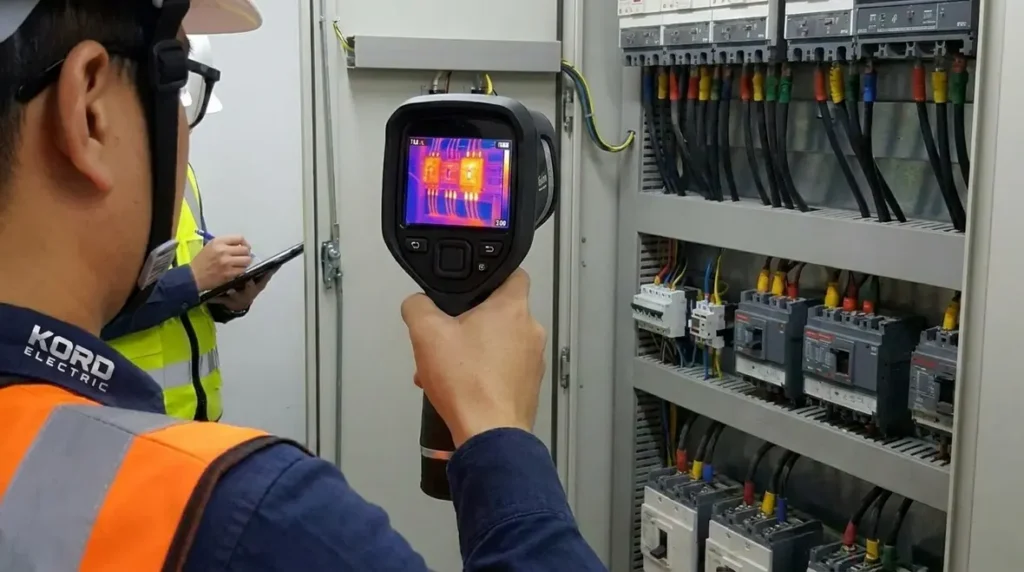
In the field, our technicians work through the school electrical maintenance checklist with discipline. We look for signs that heat is building up: discoloration, loose terminations, hot spots, and nuisance breaker trips that hint at deeper issues. We inspect cable routing, verify enclosure integrity, and confirm that protective devices match the load behavior. Finally, we verify emergency and egress related systems so the building can respond when it must.
If you want the exact structure behind our preventive work, we align with the method described in our electrical preventive maintenance page. You can review it at https://kordelectric.com/electrical-preventive-maintenance/. We also keep findings readable for decision makers, because paperwork should not feel like a riddle.
How we inspect panels, breakers, and connections safely
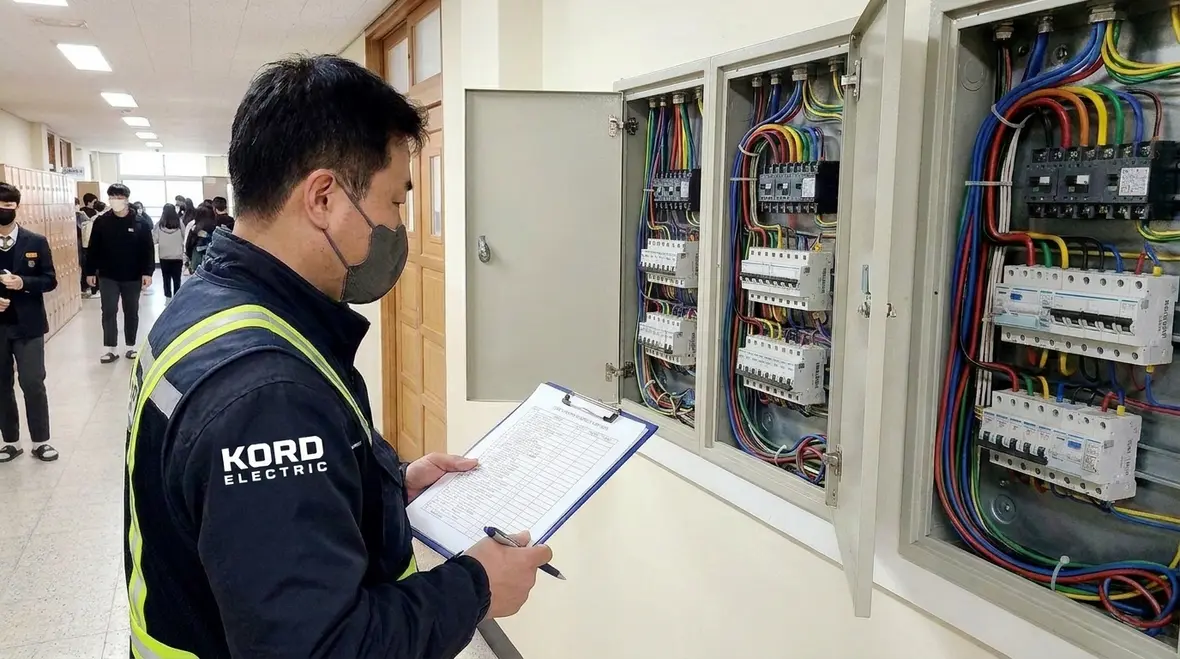
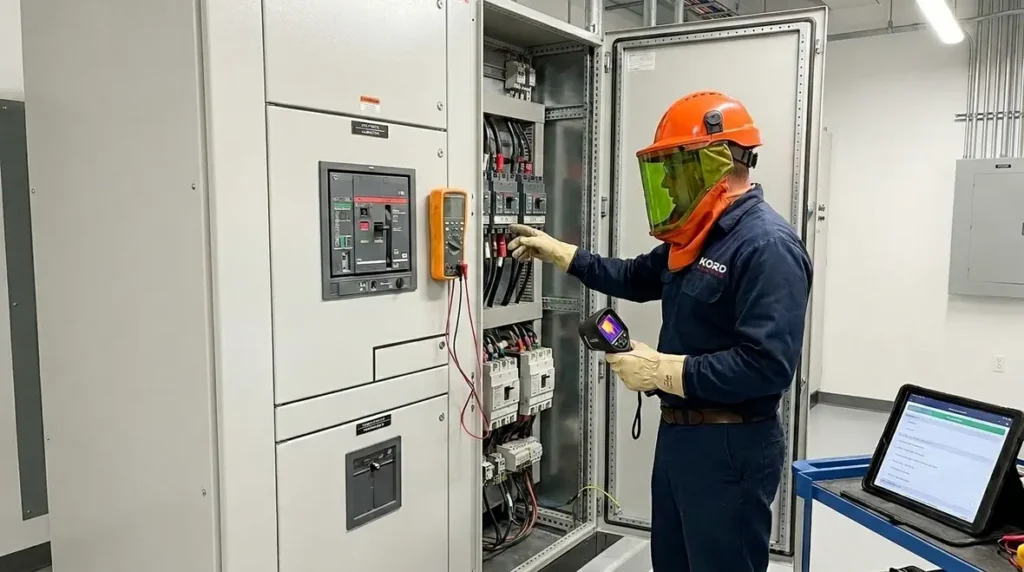
Our process for panels and breakers stays steady and repeatable. We first confirm the correct labeling, then verify torque condition where access allows and check for mechanical wear. After that, we inspect bus bars, breaker connections, and neutral and ground integrity. Because many school buildings run with frequent loads from HVAC, kitchens, computer labs, and lighting schedules, connections can loosen over time and stress cycle after cycle.
Next, we check the behavior of protective devices. For example, if a breaker trips at the same time every week, we do not just reset and move on. Instead, we track patterns, review harmonics or overload signals when relevant, and confirm that the device settings still match the load profile. This prevents repeat incidents that waste staff time and frustrate occupants.
And yes, sometimes the cause is obvious once we open the panel. Dust like powdered sugar near a term could become a problem when combined with heat. We catch that early, long before it becomes a fire alarm that ruins a principal’s whole week. Then, we re-secure connections and recommend upgrades only when the data supports it.
For school districts and campus-style properties, pairing this kind of panel and breaker work with a broader preventive strategy similar to a commercial electrical preventative maintenance checklist helps standardize what “good” looks like across every building and semester. That way, a small campus panel does not become the surprise reason testing day goes dark.
Grounding, bonding, and life safety circuits we verify
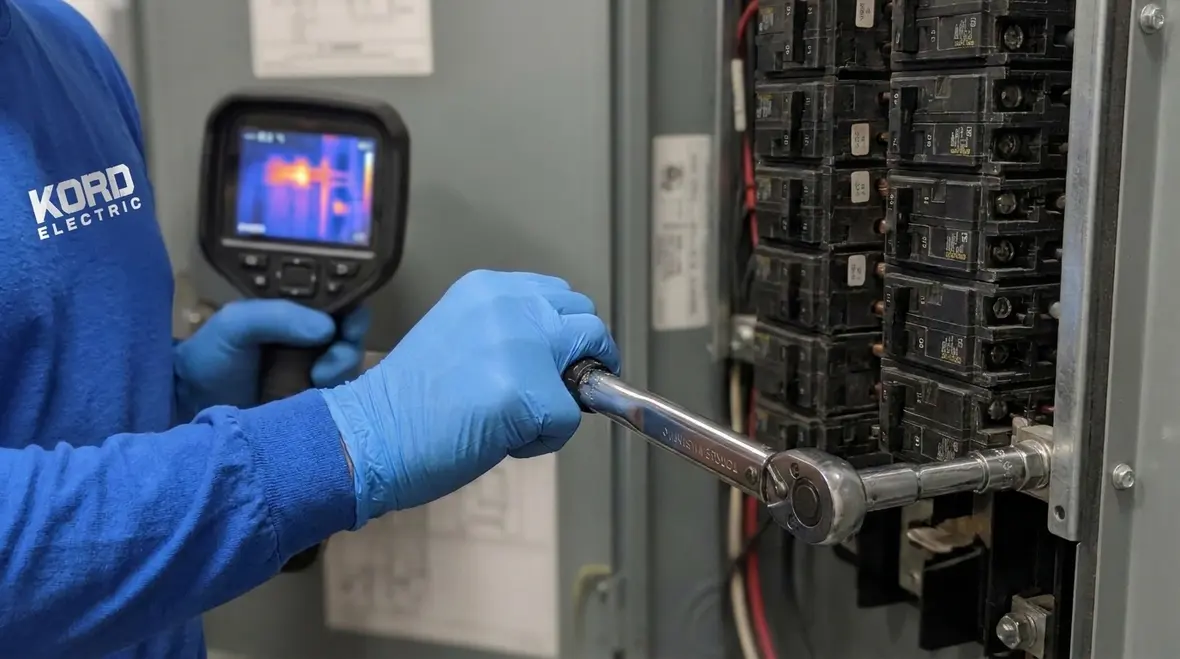
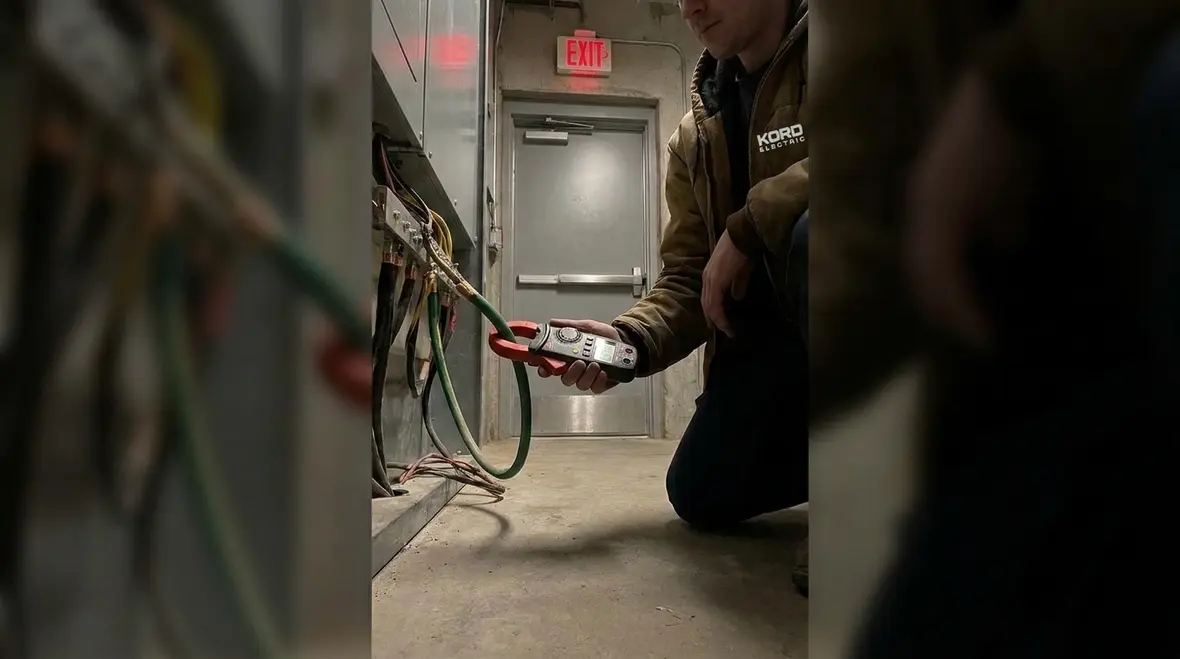
Safety starts at the basics, but basics fail when people skip them. Grounding and bonding influence fault current paths, protective device operation, and shock protection. Therefore, we inspect grounding conductors, check bonding points, and verify that connections remain solid and corrosion free. We also verify that ground fault protection does what it should in the real environment, not just on paper.
Then we move to life safety circuits. Emergency lighting, exit signs, and egress related power systems must stay reliable during transitions. So we check operation and continuity where applicable, and we confirm that emergency units and related wiring receive proper power states. If a school runs drills and inspections, we coordinate our work to avoid interfering with scheduled events, because continuity matters.
Our expert service staff also explains each finding. They do not talk like a textbook. They explain it like a building story: what failed, why it failed, what it risks next, and what the school can do to keep learning uninterrupted. That calm explanation makes the whole maintenance effort feel less like trouble and more like protection.
In many cases, schools also connect this grounding, bonding, and life safety work with a broader electrical safety audit mindset. Instead of only asking “Does it turn on?”, we ask “Does it protect people and keep the campus ready for the next emergency drill, storm, or power bump?” That shift keeps the school electrical maintenance checklist focused on real risk, not just boxes on a form.
Testing methods that catch hidden problems early
Many facilities only react after alarms or outages. Yet, we help schools and major properties catch hidden issues before they show up on a trouble ticket. We use testing and inspection methods that reveal condition, not just symptoms. That includes evaluating thermal behavior indicators, checking insulation condition where appropriate, and verifying protective response based on the equipment type.
Moisture and dust play a larger role than people expect. In educational buildings, humidity changes with seasons, and dust rises during construction, renovations, and routine cleaning. As a result, enclosures can trap heat and affect cable insulation. We check airflow paths, verify that covers and gasketing remain intact, and review locations where water intrusion could occur.
Also, schools often add devices over time: more cameras, access control upgrades, new lab equipment, and increased use of chargers. Therefore, even if the electrical system looked fine years ago, the current load profile may differ. We review load behavior and equipment compatibility so the building stays stable as it evolves.
We know this can sound like a lot. However, think of it like preventive sports training. Nobody loves the warm up, but everybody loves not getting injured in the first half. The same thinking powers our broader commercial and industrial electrical maintenance plans: steady, repeatable checks that keep surprises off the scoreboard and out of the classroom.
Scheduling preventive work around school operations
Timing decides whether maintenance helps or disrupts. Because schools run on schedules, we coordinate with administrators to plan work when the building can safely tolerate access needs. We also provide clear communication about what will happen, where access is required, and which systems may need to be temporarily isolated, where allowed by safety procedures.
We organize the work into phases. First, we handle critical inspections and life safety verification. Next, we address panel and feeder work. Then we move to corrective actions and any recommended upgrades. Finally, we verify performance and return the systems to normal operation with documented results.
Most importantly, we keep maintenance planning realistic for commercial and industrial facilities. We do not promise “one visit fixes everything.” Instead, we create a plan that aligns with budget, risk, and available downtime. That approach helps school teams maintain safety without turning maintenance into a recurring emergency.
For larger districts across Los Angeles County and Southern California, this often connects with broader service programs similar to what we deliver on our Los Angeles County electrical services projects. The goal is the same in every classroom and campus: keep lights on, tests running, and safety systems ready without turning every semester into a scramble.
What Kord Electric delivers after the inspection
Our job does not end when the technicians close the cover. We deliver documentation that helps facility leaders make decisions. You receive clear findings, risk notes, and recommended next steps. In addition, we explain the corrective path in plain language, so others in the organization can act without needing a translator or a late night internet search.
Because major properties deserve consistency, we also help define follow up timing. Some items require immediate action, while others can be scheduled as part of the next maintenance window. We prioritize what matters most: safety, reliability, and minimizing unplanned outages.
Furthermore, our expert service staff can discuss possible improvements for older systems where modernization may reduce recurring faults. We do not upsell. We advise, based on what we observe and what the building demands. That is how preventive care stays preventive.
If your school or campus wants to go deeper than a basic school electrical maintenance checklist, you can align this work with a more formal preventive maintenance program, including structured inspections, load testing, and electrical safety reviews. That kind of layered approach keeps today’s fixes connected to tomorrow’s upgrades, instead of starting from scratch each time something buzzes or trips.
FAQ for school electrical maintenance checklist
Conclusion: keep power safe, and keep the school running
When we handle preventive electrical maintenance, we help you reduce outages, improve safety, and keep critical systems dependable. Our technicians follow a disciplined process, document results clearly, and explain the “why” behind every recommendation. If you want a building plan that fits real school schedules and protects students, staff, and equipment, contact Kord Electric. Let us review your current condition and build a practical maintenance path that keeps power steady, not stressful.
If your facilities team is ready to move from one-off fixes to a structured approach, you can align your school electrical maintenance checklist with a broader preventive program that covers panels, breakers, grounding, testing, and targeted upgrades over time. That way, each inspection builds on the last one, and every new school year starts with electrical systems that are verified, documented, and ready for the next bell.
To explore how this looks across all your buildings, you can connect the work at a single campus with district-wide planning, tying preventive maintenance, safety audits, and project work into a single roadmap. That keeps classrooms lit, labs powered, and life safety systems ready without turning your calendar into a constant list of emergency calls.