
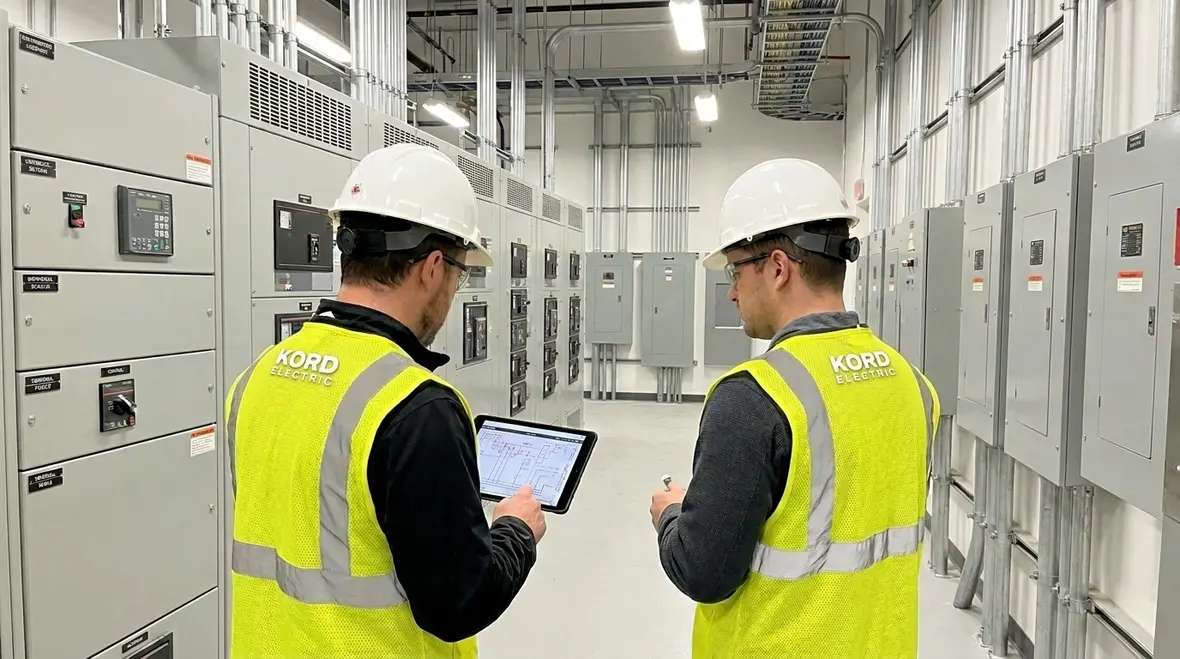
Smart Building Automation Electrical Upgrade Planning
Kord Electric helps commercial and industrial facilities upgrade the electrical backbone they need for modern Smart Building Automation Electrical Integration. In our approach, we coordinate power, controls, and data pathways so the building can “think” without overloading the system. Our technicians and expert service staff explain the plan in plain language, because nobody wants a surprise outage, and nobody wants to feel like they are reading a sci fi manual during an emergency repair.
So, in this article, we walk through how teams should plan electrical infrastructure for smart automation upgrades, step by step, with real-world focus for large properties. We keep it calm, practical, and a little humorous, because if you cannot laugh at a blinking panel label, you will lose your mind when the schedule slips.
First, align the upgrade plan with building needs
When others plan upgrades too fast, they often treat electrical work like a checkbox. However, commercial and industrial buildings need a long view. We start by mapping the facility’s automation goals to electrical capacity and code requirements. Then we identify where power reliability matters most, such as life safety systems, security, and critical process areas.
Our technicians review existing one line diagrams, panel schedules, and control wiring layouts. After that, they look at available capacity for new loads like lighting controls, HVAC optimization, access systems, and energy monitoring. If a facility uses multiple tenants, we also coordinate with property management and building operations so automation upgrades do not disrupt core services.
To keep the plan realistic, we estimate not just equipment size, but also installation impact. For example, a new control cabinet may require conduit routing, spare conductor availability, and careful segregation of power and low voltage. In other words, we plan for how the building behaves, not how the vendor brochure reads.

How do we assess power capacity and reliability?
Smart automation demands stable power. Therefore, our team checks whether existing feeders, distribution panels, and transformers can support additional loads. We look at voltage drop, fault current, harmonic risk, and thermal limits. Moreover, we verify whether surge protection and grounding are adequate for sensitive control electronics.
As we evaluate reliability, we focus on how the building can fail safely. In many facilities, automation systems rely on controllers that need clean, continuous power. So we may recommend UPS support for key control circuits, even when the main electrical system can handle the load on paper. This helps prevent controller resets during brief disturbances.
Our expert service staff then communicates the findings clearly to stakeholders. We explain tradeoffs in simple terms, such as how adding selective coordination can reduce nuisance trips, or how better labeling reduces troubleshooting time during a maintenance call. The building deserves fewer surprises, and our approach aims for fewer surprises.

If your team is also tracking long-term reliability and hidden issues behind the scenes, pairing your automation plan with structured electrical preventive maintenance can help keep those new systems running smoothly year after year.
Smart building control wiring needs clear design rules
Once capacity is addressed, we move to wiring architecture. Controls and automation do not just “plug in.” They require structured pathways for signals, power for field devices, and proper separation to reduce interference. Accordingly, we design the low voltage side with discipline: cable type, routing method, grounding approach, and termination standards.
In large buildings, we often see long runs and crowded trays. Therefore, we plan for segregation between line voltage and control wiring. We also consider noise sources like variable frequency drives, large motors, and welding power systems. If we ignore these realities, the system may behave fine for a while and then act weird during peak operations, like a coworker who is charming until they are under pressure.
For Smart Building Automation Electrical Integration, the wiring plan also supports future growth. We keep spare conductors where feasible, reserve pathway space, and coordinate connector and termination methods. This way, future upgrades do not require tearing apart what works today.
Our technicians document each decision so facilities teams can maintain the system without guessing. That means clear labeling, as built notes, and a straightforward path for service access.

Integrating power distribution with automation panels and IoT devices
Next, we connect automation requirements to real hardware: panels, controllers, sensors, and network devices. In commercial and industrial environments, this usually includes multiple control enclosures across floors or process zones. So we design a practical strategy for where each control cabinet lives, how it receives power, and how it communicates back to the building management layer.
We also consider expansion. If the building plans additional zones, we size enclosures and conductor routes to avoid cramped retrofits. While it is tempting to install the smallest panel possible, we often remind teams that small panels cost more later. The future always shows up, like taxes and that one blinking exit sign.
For critical systems, we confirm whether local control needs emergency power. For example, access control and life safety related components may need to stay functional even during generator transfer. We coordinate those requirements early so the electrical plan does not fight the automation plan.
In addition, we verify that automation device power supplies, relays, and contactors match the electrical environment. We validate wiring terminations, torque specs, and protective device sizing. Our expert service staff then tests commissioning readiness so the system comes online smoothly instead of doing that slow “maybe it works” dance.

In many modern facilities, that integration work goes hand in hand with targeted improvements to lighting controls and efficiency. When automation upgrades include smarter lighting strategies, pairing them with dedicated lighting installation services keeps the entire system aligned with code, comfort, and performance.
Commissioning, testing, and documentation that keep operations calm
After installation, the real work begins. We plan commissioning with a sequence that reduces risk and speeds acceptance. That means we test power quality, verify protective device operation, and confirm controller I O behavior. We also verify that grounding and bonding hold steady across panels and devices.
When the facility team does not have to chase intermittent issues, operations stay stable. Therefore, our technicians use structured testing for each subsystem, including lighting controls, HVAC coordination, and metering circuits. We validate signal integrity and confirm that each point maps correctly to the building management platform.
Documentation matters too. We provide electrical as built records, labeling standards, and test summaries that facility staff can use later. Moreover, we include clear guidance on what to check during routine maintenance. Because one day, someone will need to troubleshoot a sensor or replace a control card, and we want that person to spend time fixing, not guessing.
Example coordination snapshot
Phase
Pre design
Design and planning
Installation
Commissioning
What we do
We review load needs, one line data, existing pathways, and automation goals.
We define cabinet power, conduit routing, wiring segregation, and protection devices.
We run, terminate, label, and verify conductors with service access in mind.
We test power quality, control behavior, device mapping, and documentation.
Common planning mistakes we help clients avoid
Even good teams can stumble during automation upgrades. We often see mistakes that cause cost overruns and schedule delays. First, teams add automation devices without confirming available panel capacity and circuit protection. Then, they discover too late that the system draws power differently than expected.
Second, they route control wiring without considering interference. As a result, analog sensors drift, relays chatter, or network signals get unstable. Next, they discover that troubleshooting requires pulling cables they already installed. Nobody enjoys that moment, when the building looks at you like, “So this is where the problem lives?”
Third, teams underestimate commissioning and documentation needs. If the electrical design and automation design do not match, field devices may not calibrate properly. Also, if labels do not match the as built records, service teams waste time during maintenance calls.
We prevent these issues by using a planning process that connects electrical infrastructure, device requirements, and commissioning steps. Our technicians explain decisions early, and our expert service staff keeps stakeholders aligned on risks and solutions.
For organizations that want to stay ahead of those risks instead of reacting to them, aligning automation upgrades with broader commercial electrical systems for modern buildings strategy keeps everything moving in the same direction.
FAQ: Smart Building Automation Electrical Integration for commercial upgrades
Bring your upgrade online with Kord Electric
If your facility plans a smart building modernization, do not treat electrical infrastructure like an afterthought. Kord Electric helps commercial and industrial properties design, install, and commission the electrical foundation required for reliable automation. Our technicians and expert service staff explain each step in clear terms, so stakeholders stay informed and operations stay steady. Ready to upgrade without the surprises? Contact us today to plan your electrical and automation integration strategy, and move forward with confidence.
When you are ready to connect automation goals with power, controls, and lighting, their dedicated lighting installation services and broader industrial and commercial expertise give your project a solid foundation from the first drawing to final commissioning.


