Smart Lighting Control Scheduling for Commercial Buildings
Smart Lighting Control Scheduling: a calmer building, day to night
At Kord Electric, we implement Smart Lighting Control Scheduling for Commercial Buildings so the lighting plan runs like it has a well trained brain, even when people are busy. And yes, that means the lights do not behave like a confused toddler on a sugar rush. Instead, the system follows time based scenes that match how a facility actually works. Our technicians and expert service staff explain the setup in plain language, so teams know what changes to expect and when.
In this article, we cover why scheduling matters for commercial and industrial sites, how it reduces waste, how it supports comfort and safety, and how we roll it out without turning your building into a science fair. As we move forward, you will see how good scheduling connects to energy goals, operations, and long term maintenance.
What smart schedules do inside a building
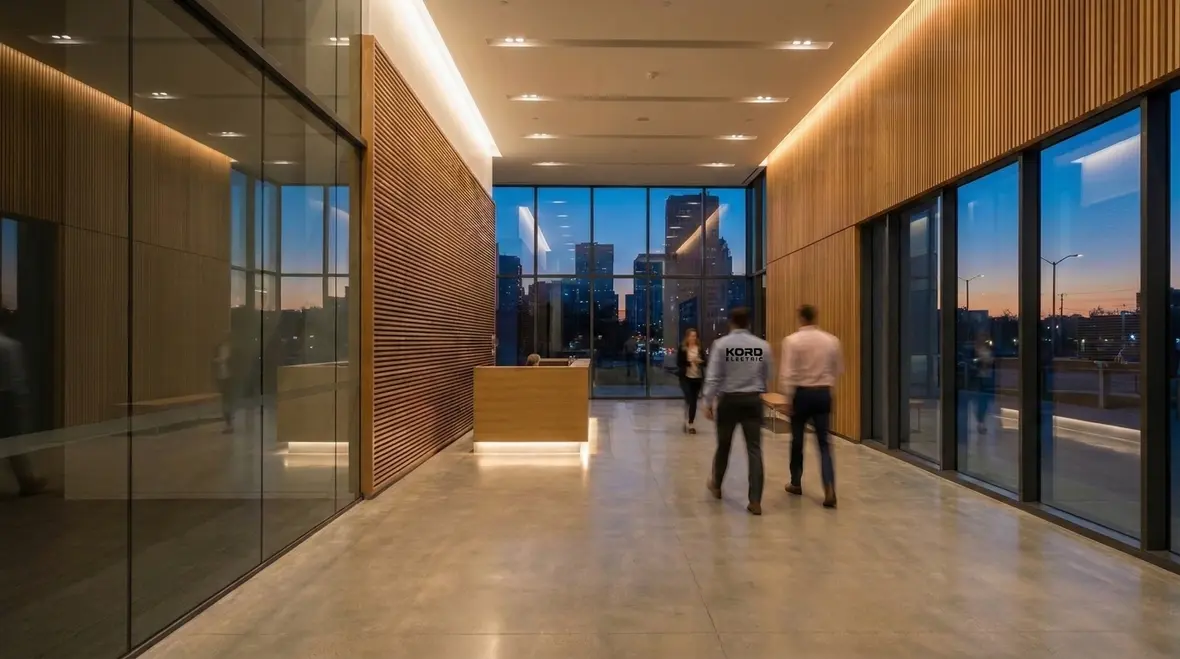
In a typical facility, lighting does not fail all at once. It slowly drifts out of alignment. Staff work starts early, tasks move around, and some zones stay lit longer than they should. Then the utility bill arrives, wearing a fake mustache and acting surprised.
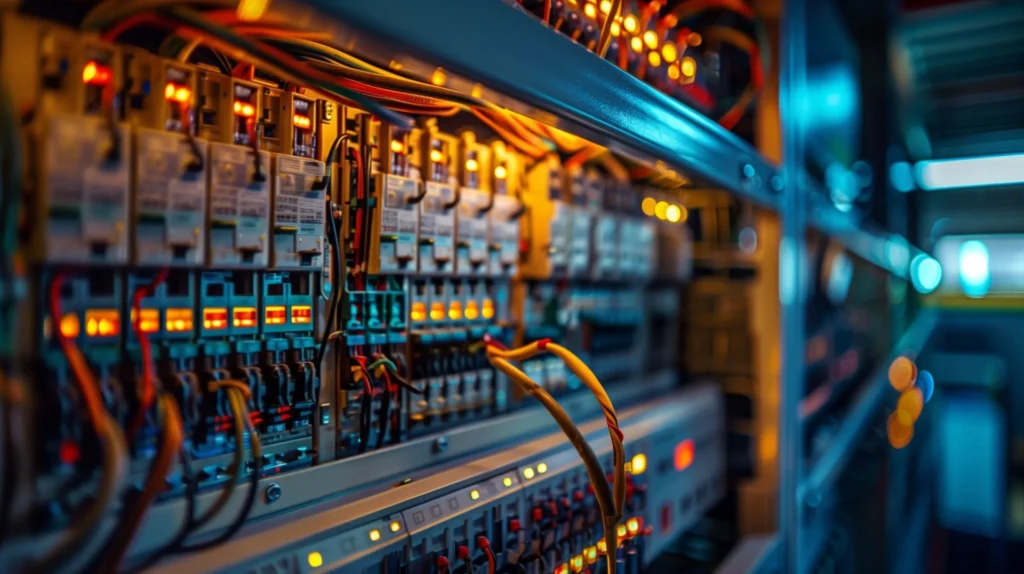
Smart schedules handle that drift. First, the control system sets lighting levels by time and day. Next, it groups spaces logically, like offices, corridors, docks, and restrooms. Then it applies scenes that match real use, such as bright task light during shifts and softer levels during breaks. Finally, it can adjust based on occupancy inputs so lights ramp down when people leave and ramp up when they return.
For commercial and industrial facilities, this approach improves consistency across floors and zones. Also, it protects equipment and spaces that need stable illumination for inspections, quality checks, or safe movement during operations.
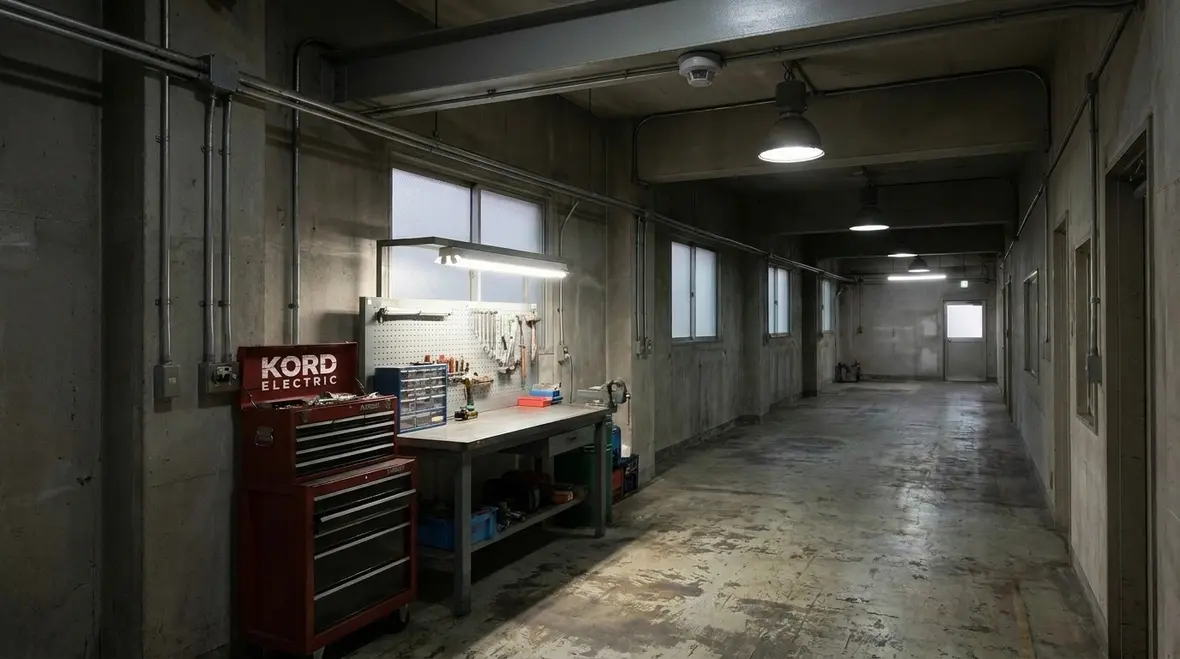
How we use zones, scenes, and time blocks for better results
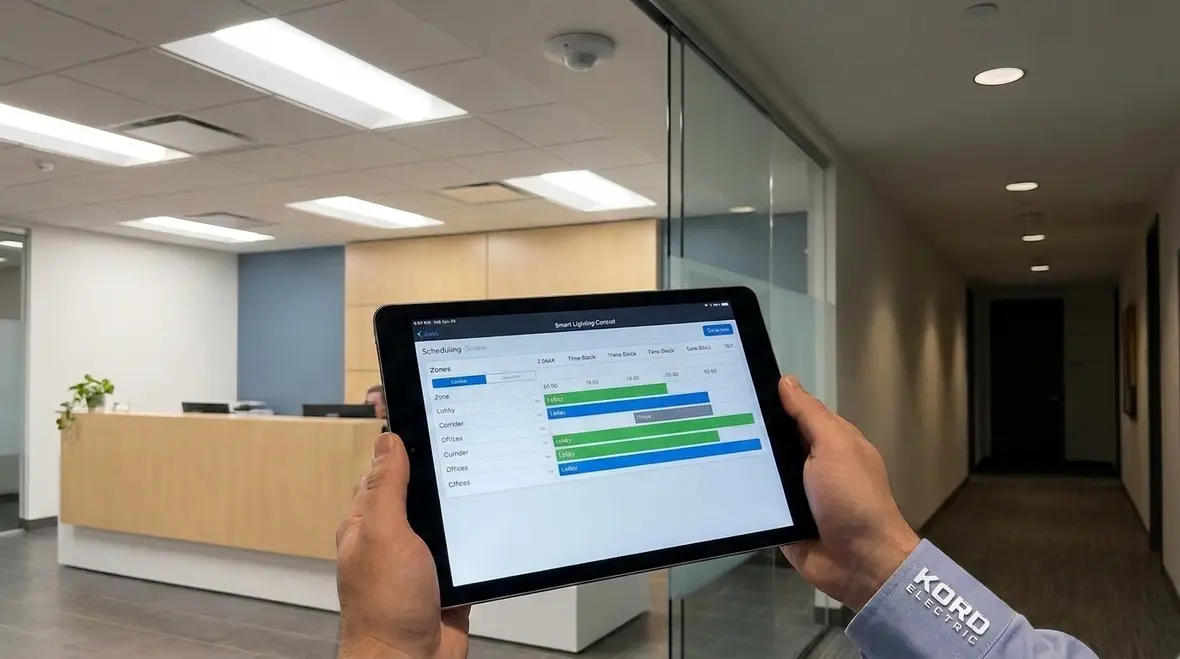
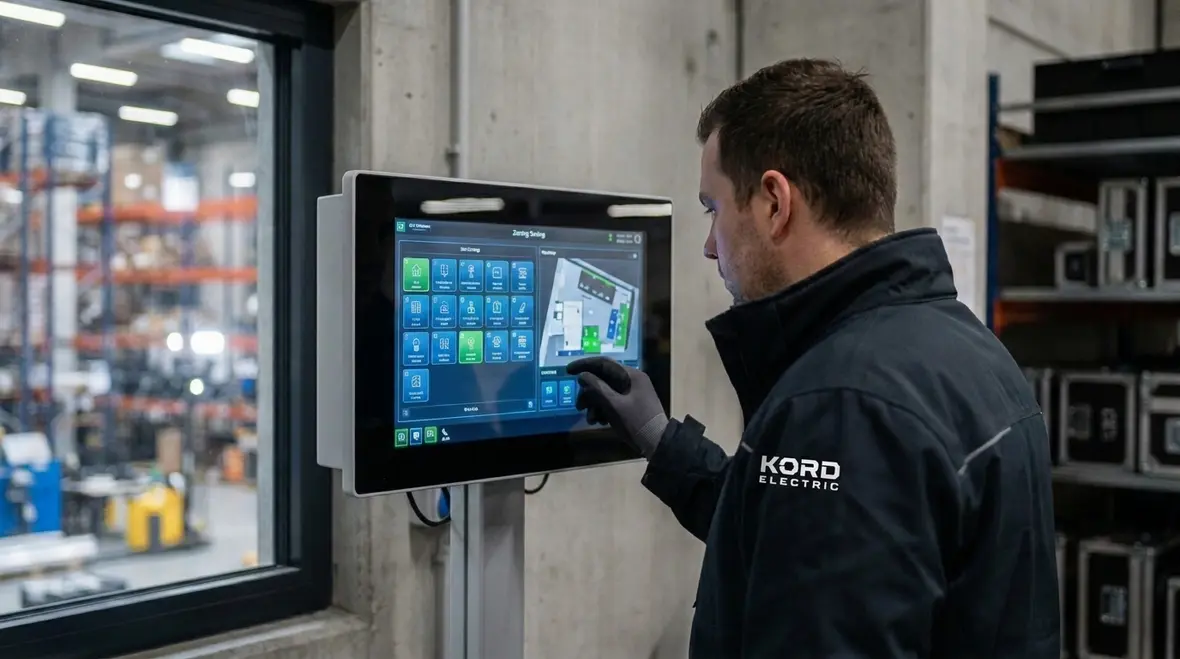
We design scheduling around how a building functions, not around a generic template. To do that, our team starts with zoning. That means mapping areas by use patterns, not just by electrical panels. For example, one factory bay may need steady light during production but dimmed conditions during cleaning. A lobby may require welcoming brightness during business hours, then safer, lower levels at night.
After zoning, we define scenes. A scene is a lighting setting that can include brightness and behavior across multiple fixtures. Then we build time blocks that match shifts, maintenance windows, and weekend hours. Because schedules change, we also plan for easy edits so your team can update settings without guessing.
At Kord Electric, our technicians walk stakeholders through the logic. We explain how scenes interact with sensors, and we show what happens when schedules and occupancy signals both want control. That way, no one is stuck asking, “Why did the lights change at 2:15?” when the answer is clearly written in the system.
Energy savings you can measure, not hope for
When scheduling fits real use, energy waste drops. However, the savings are not only about turning lights off. Smart control often reduces lighting to the right level, at the right time, across each zone. That is important for commercial spaces where people still need good visibility while you avoid 100 percent brightness all night.
Also, when buildings run multiple shifts, lighting schedules can prevent unnecessary overnight illumination. In industrial settings, dimming during low activity periods helps cut consumption while keeping enough light for safe movement. In office and common areas, scheduled ramp up supports comfort, which means fewer complaints and fewer manual overrides.
Our approach follows what we explain in our blog on automated lighting control benefits for facilities: smart systems align lighting output with occupancy and schedules, which improves efficiency and reduces spend. We help facilities move from “lights always on” to “lights just right.” And yes, that is as exciting as it sounds.
Comfort, safety, and compliance support that scheduling provides
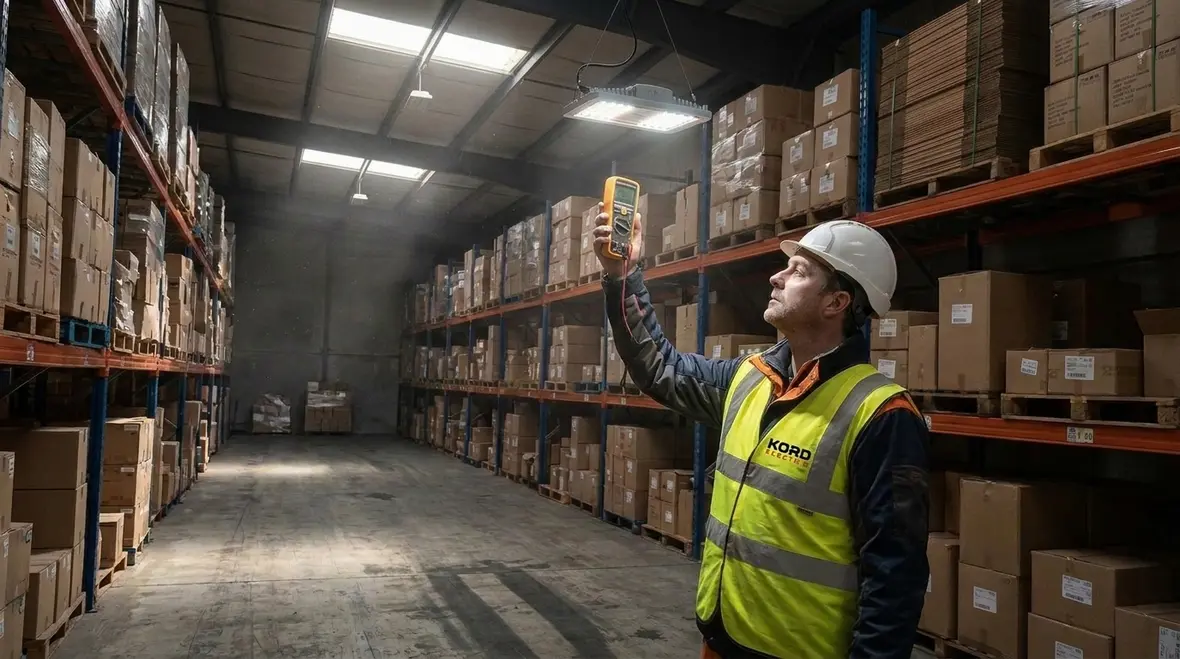
Lighting is not just power. It also shapes how people feel and how they work. With scheduling, facilities can keep consistent brightness during critical hours. This matters for safety in corridors, stairwells, and production areas. It also supports wayfinding in warehouses where traffic patterns shift throughout the day.
Furthermore, controlled lighting can improve the reliability of workplace conditions. When a schedule runs correctly, teams do not have to depend on someone remembering to switch zones manually. That reduces human error. It also lowers the chance of leaving emergency related areas under lit due to a routine mistake.
For facilities that also handle inspections and audits, steady lighting helps crews complete tasks accurately. If your process requires visual checks, stable illumination supports quality. In other words, scheduling helps your operations run with less friction.
Scheduling that adapts: occupancy inputs and daylight aware control
Time based scheduling provides the foundation. Then, when we add occupancy detection and daylight awareness, the system adapts to what is actually happening. Occupancy sensors can confirm when a space has people, which allows the system to keep brightness up only when needed. Daylight aware controls can reduce artificial light when sun levels rise, especially in offices, conference rooms, and warehouse skylight areas.
Because facilities change, we design these layers to work together. For instance, the schedule can set a baseline level for a zone, and occupancy can raise it when a space fills up. Conversely, if a zone remains empty for a set period, the system can step down. That keeps you from the classic scenario where lights stay bright because the clock says so, even though nobody is there. The clock is smart, but it is not psychic.
Our technicians explain these rules clearly during setup. We describe how delays work, how the system transitions between states, and what staff should expect. Then we document the approach so the facility can maintain it confidently.
Installation planning, testing, and training with Kord Electric
We do not treat scheduling like a quick add on. We treat it like a control upgrade that must protect uptime and keep spaces safe. First, our team evaluates the existing lighting layout, controls, and wiring paths across commercial and industrial environments. Then we define the pilot zones so you see results early without betting the entire building on one change.
Next, we test. That includes checking sensor coverage, verifying fixture response, and confirming that schedules match shift timing. We also check that the system behaves well when multiple signals occur at once. After that, we train your team. Our expert service staff explain how to adjust schedules, when to request changes, and how to interpret system status alerts.
Finally, we support the facility after go live. We help refine schedules after staff feedback, because real operations always teach you something. And if you think “after go live” means “we disappear,” that is not how we work. We stick around, like the helpful friend who shows up early, not the one who texts “on my way” two hours later.
How smart lighting schedules connect with broader facility planning
Smart Lighting Control Scheduling for Commercial Buildings rarely lives in a vacuum. The same logic that drives time blocks and occupancy layers often ties directly into larger facility strategies. When we help customers tune lighting schedules, we also look at how those schedules interact with panel capacity, emergency power, and ongoing maintenance plans so the control story does not fight the electrical story.
For many properties, that conversation lines up neatly with how we support commercial and industrial work across the region. Teams that begin by refining lighting schedules frequently move into broader planning, whether that is a focused lighting control retrofit, a deeper look at power quality, or a structured preventive maintenance plan. When that happens, our Los Angeles County electrical services for commercial buildings give facility leaders a single partner who understands both the control logic in the ceiling and the conductors feeding it from the electrical room.
That unified approach matters when buildings change use, new tenants arrive, or code requirements tighten. Instead of starting over with a new contractor for every project, you can build on schedules and control sequences that already work. From there, we help you extend the same “calmer building, day to night” mindset into new wings, new floors, or entirely new facilities without reinventing the playbook every time.
Smart Lighting Control Scheduling FAQ for commercial and industrial teams
Ready to schedule lighting that works like your operations
If your facility runs on shifts, changing tasks, and real foot traffic, scheduling should match that reality. Kord Electric helps commercial and industrial teams implement Smart Lighting Control Scheduling for Commercial Buildings that improves comfort, supports safety, and reduces energy waste. Our technicians and expert service staff plan the zones, test the system, and train your team so the solution stays stable and easy to manage. Contact us today to discuss your building’s layout and schedule goals, and we will map a clear path forward.
If you are planning a broader upgrade that combines smarter lighting with wider electrical improvements, you can connect scheduling work with the rest of your infrastructure planning through Kord Electric’s regional service capabilities. By coordinating controls with distribution, reliability, and future expansion, your building can grow without losing the calm, predictable lighting behavior that good scheduling delivers.
Our team can also align new scheduling projects with insights from related resources like our automated control guides and retrofit planning articles, so your facility gains a clear roadmap from first pilot zones to full building deployment. That way, you are not just installing another system. You are setting a standard for how lighting should support your operations day after day.
When you are ready to move from “we hope the lights are doing the right thing” to “we know the schedule supports every shift,” Kord Electric is ready to help you take the next step.