
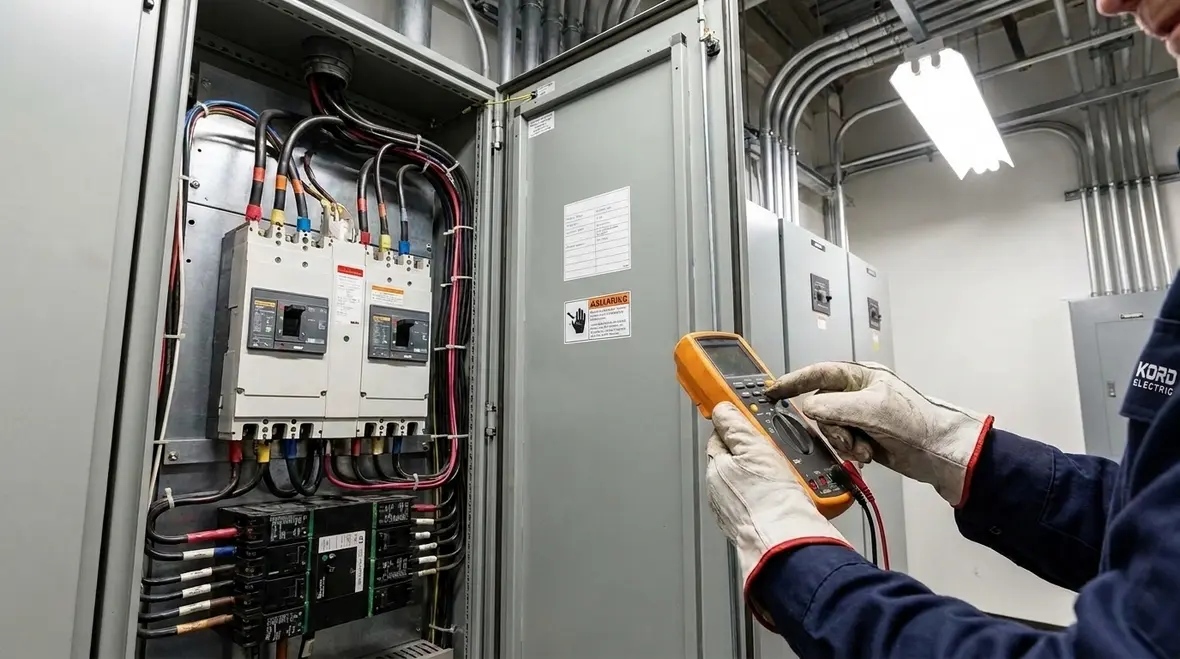
Commercial Panel Upgrades: Costs, Capacity & Electrical Requirements
Commercial Panel Upgrades: Costs, Capacity & Electrical Requirements sit at the center of almost every growth plan we see for commercial and industrial facilities. When power demand rises, an aging service panel often becomes the bottleneck, and nobody wants their equipment to run like it is tired. To help building owners make smart decisions, Kord Electric plans upgrades with clear electrical requirements, honest pricing factors, and the right capacity for the future. Our expert service staff walks clients through what they will gain, what they must watch out for, and why doing it correctly now prevents expensive downtime later. In other words, we help businesses keep the lights steady, the motors healthy, and the schedule intact.
When a commercial service panel stops keeping up
A panel that once handled the load may fail to support modern realities. We see this during tenant buildouts, HVAC replacements, new production lines, data room expansions, and even when a business adds “just a few” new devices. That is how the load creeps in, and then one day the breakers trip more often than an overconfident intern at a stand up open mic.
So, we start with the truth we can measure. Technicians from Kord Electric review available capacity, breaker sizes, conductor condition, and how the panel performs under real demand. Then we map where power is going today and what will come online next. This approach keeps upgrades from becoming guesswork. Also, it aligns with how commercial and industrial buildings must operate: reliably, safely, and with minimal disruption.
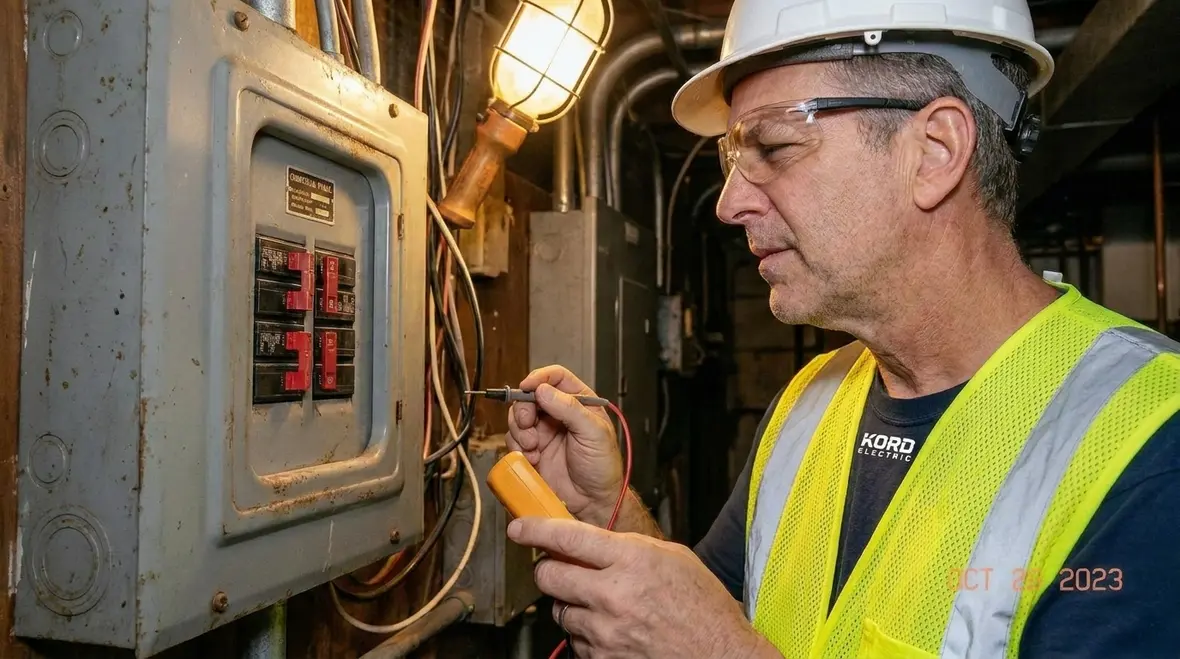
As we assess these conditions, we also look at how panel limitations connect to bigger reliability questions. If your facility is already juggling flickering lights, nuisance trips, or overloaded circuits, it is worth pairing Commercial Panel Upgrades: Costs, Capacity & Electrical Requirements with resources that dig into early warning signs, such as Kord Electric’s guide on signs your commercial electrical panel needs replacement and their detailed breakdown of when a commercial panel board becomes a real risk instead of a background detail. Those real-world checks make it easier to decide whether you are dealing with a minor annoyance or a system that has quietly fallen behind your growth.
How we assess capacity, load, and future electrical needs
Capacity planning does not mean we look at a label and call it a day. First, our team collects load information from equipment lists and operating schedules. Next, we evaluate diversity factors, startup surge, and how long loads run. That matters because a panel can handle “average” load and still struggle with startup surges from motors and compressors.
To keep the process calm and clear, our expert service staff explains the results in plain language. We tell building managers what the numbers mean for breaker space, service rating, and bus capacity. Then we recommend changes that support the building’s next phase of growth without forcing constant repeats of the same work.
We also check the hidden stuff. Corrosion, heat marks, loose connections, and aged components can reduce performance long before a panel reaches its theoretical limit. Meanwhile, code compliance and grounding requirements keep everything stable and safer for facilities and the people inside them.
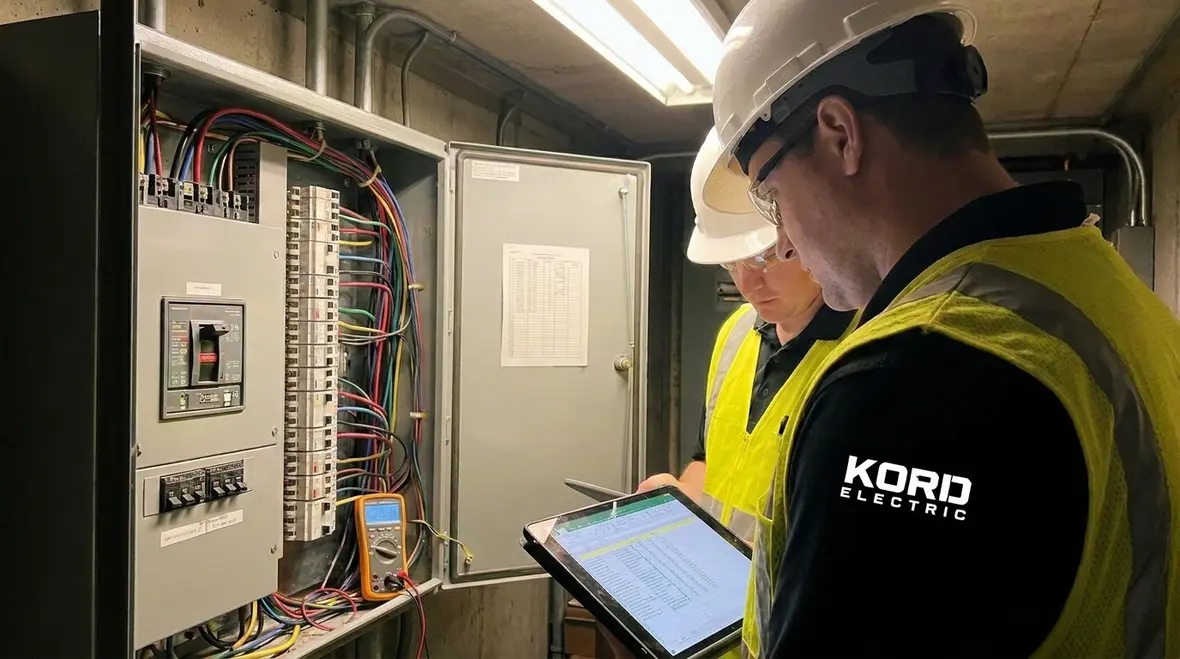
Load assessment is also where we connect panel upgrades to broader power quality and balancing work. If phases are heavily uneven, or if new equipment has pushed one leg to carry more than its share, a capacity upgrade on its own is not enough. That is why we often align Commercial Panel Upgrades: Costs, Capacity & Electrical Requirements with best practices from Kord Electric’s Commercial Electrical Panel Load Balancing Guide. Once the loads are distributed with intention instead of guesswork, the upgraded panel runs cooler, trips less often, and supports your equipment the way it was designed to.
What commercial panel upgrades really cost
Most owners want a single price quote. Unfortunately, commercial electrical work behaves like weather. It depends on conditions. However, we can explain the main cost drivers so you can plan with confidence.
- Scope of work: a partial panel replacement costs less than a full service upgrade.
- Service size and equipment: higher ratings and specialized components increase materials and labor.
- Electrical distribution changes: we may need feeder upgrades, new breakers, or updated labeling systems.
- Site conditions: access, equipment layout, and required shutdown windows affect labor time.
- Code and compliance updates: grounding, bonding, and working clearances often require adjustments.
When Kord Electric runs Commercial Panel Upgrades: Costs, Capacity & Electrical Requirements planning, we focus on the full picture, not just the panel box. Because if we underbuild the solution, the next upgrade arrives sooner than planned. In business terms, that means avoidable downtime, repeat labor, and more disruption than you want.
And yes, the “cheapest option” can end up being the most expensive, like buying a low grade cable and acting surprised when production pauses. We keep you away from that surprise party. To do that, we compare your growth plans, your existing feeder and subpanel network, and your maintenance history, then match the panel upgrade to that reality. If your facility is already exploring broader improvements, such as commercial electrical panel upgrades planned specifically for long-term growth, that context helps us recommend an investment level that does not leave you rebuilding the same system again in a few years.
Planning a safe upgrade without stopping the business
Commercial and industrial facilities cannot always pause operations. Therefore, we build the plan around your workflow. Technicians from Kord Electric coordinate scheduling, identify critical circuits, and plan for safe power transitions. Where possible, we stage work so your essential systems keep running.
We also follow strict safety practices during removal, installation, and testing. That includes verifying existing conductors, checking torque and connection integrity, and confirming insulation and grounding. Then we test to validate performance. This is not a quick “swap and hope” approach. We treat it like a system upgrade, because it is.
Finally, we make sure the building team can operate the upgraded panel confidently. Our expert service staff explains what changed, what breakers now feed, and how to spot warning signs later. Clear labeling and documentation reduce confusion for facility staff, electricians, and anyone who needs to respond fast.
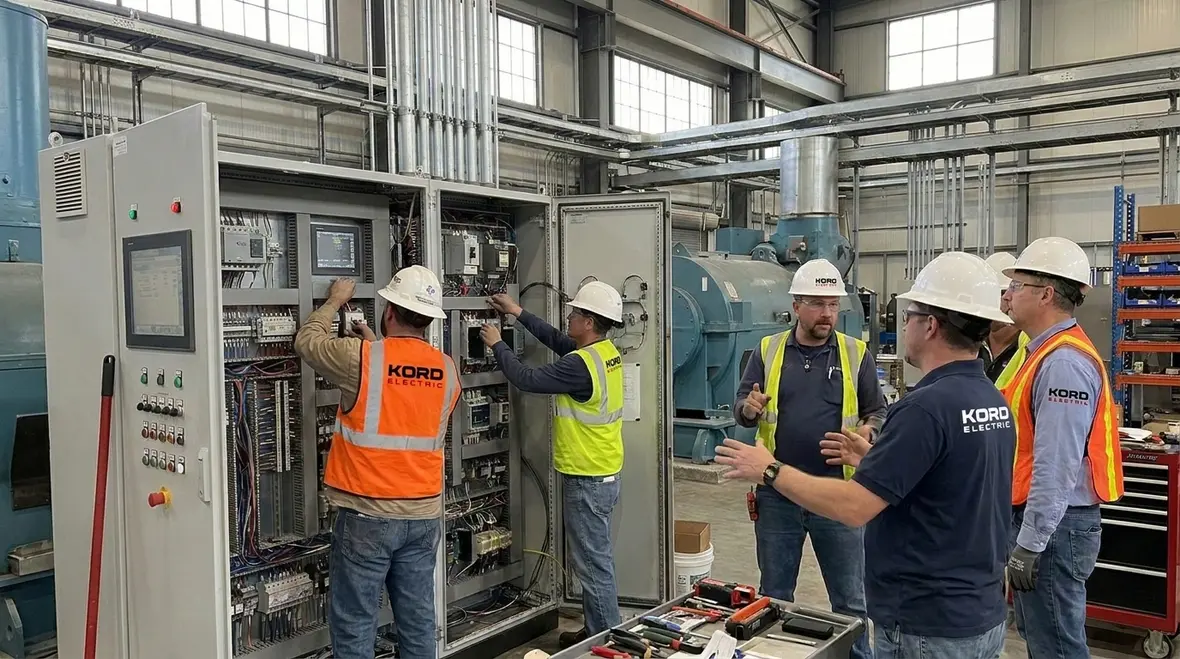
That same careful sequencing is why many facilities pair panel upgrades with structured diagnostics and maintenance. If your building is already juggling unexplained breaker trips or equipment resets, it can be helpful to blend Commercial Panel Upgrades: Costs, Capacity & Electrical Requirements with a methodical review like Kord Electric’s Troubleshooting Facility Power Problems: Common Causes & Solutions. By confirming the root causes before we energize a new panel, we reduce the odds that a lingering wiring issue or control fault will follow you into the upgraded system.
Choosing the right capacity and electrical configuration
Capacity decisions determine whether the panel handles tomorrow’s growth, or only today’s needs. In practice, we consider both demand and system behavior. For instance, a panel that looks “big enough” on paper may still experience voltage drop or breaker limits under heavy load cycles.
For Commercial Panel Upgrades: Costs, Capacity & Electrical Requirements, we focus on the right configuration, not just bigger ratings. We may recommend a service upgrade, changes to feeder paths, or an updated distribution layout that supports expansion with less future rework. We also consider the panel’s ability to manage load types, such as motor loads, variable frequency drives, and sensitive electronics in control areas.
In addition, we look at operational safety and maintainability. A well designed commercial panel upgrade supports future access, reduces thermal stress, and allows easier troubleshooting. That means fewer headaches for maintenance staff, and less time spent chasing intermittent issues that appear only during peak demand.
Sometimes the right configuration involves more than a single panel upgrade. Facilities that are adding new wings, major equipment clusters, or long feeder runs may benefit from targeted subpanel work as well. In those cases, we draw on checklists from resources like Kord Electric’s Commercial Subpanel Installation Success Checklist and their broader Commercial Subpanel Electrical Services Guide. By treating main panel, subpanels, and feeders as one system, the upgraded capacity does more than sit on a nameplate. It actually supports the way your building uses power.
Meeting code, testing, and long term reliability
We do not treat compliance as a checkbox. For commercial and industrial facilities, code alignment protects workers and equipment. It also supports safe operation during normal work and emergency responses.
Kord Electric verifies grounding and bonding, checks working clearances, and confirms that the installed equipment meets current electrical standards. Then we conduct testing to validate the system after the upgrade. This step matters because it turns the installation from a task into a verified improvement.
Long term reliability also depends on documentation and education. Therefore, our expert service staff provides clear notes on what was changed, how the new distribution functions, and what maintenance checks make sense. When the information lives in your facilities file, not only in our technician’s memory, you gain control.
And if you ever wonder why we emphasize this so much, picture a superhero team without a playbook. They can still fight bad guys, sure. But they will fight slower. The panel needs the playbook too.
That playbook mindset is the same one behind Kord Electric’s Commercial Electrical Preventative Maintenance Checklist and their data-focused guidance on data-driven electrical design for commercial and industrial facilities. When we add Commercial Panel Upgrades: Costs, Capacity & Electrical Requirements to that framework, your facility is not just “up to code” on paper. It is prepared for inspections, easier to service, and much better positioned to keep equipment running as expected.
Dual approach: upgrade now for stability, plan later for expansion
Smart projects balance immediate needs with future readiness. We often use a two step approach that supports both now and next. First, we stabilize the current system so operations run reliably. Then, we prepare the electrical configuration to support staged growth.
Now: stability and safety
- Correct capacity limits and breaker allocation
- Address aging components and heat issues
- Verify grounding, bonding, and safe clearances
- Test and document for confirmed performance
Later: expansion without repeated disruption
- Plan for added loads and future distribution
- Support staged tenant or production changes
- Make labeling and circuit mapping easier
- Reduce rework and additional shutdowns
This dual approach also helps align panel upgrades with broader infrastructure strategies. If you have multiple properties or a portfolio of high demand spaces, it can be helpful to coordinate Commercial Panel Upgrades: Costs, Capacity & Electrical Requirements with regional support like Kord Electric’s Los Angeles County electrical services for commercial and industrial facilities. That way, upgrades at one site fit into a larger plan for reliability, load growth, and code-driven projects across your entire operation.
FAQ: commercial panel upgrades for growth
Ready to upgrade for growth with Kord Electric
If your facility needs more power for new equipment, expansions, or modern operational demands, we help you upgrade with confidence. Kord Electric assesses capacity, electrical requirements, and code needs, then designs a plan that reduces disruption and supports reliable growth. Contact us for a consultation with our expert service staff and technicians, and we will walk you through next steps with clear explanations. Let’s keep your operations running smoothly, because your business does not need electrical surprises.
As you plan Commercial Panel Upgrades: Costs, Capacity & Electrical Requirements, it can also help to review how those changes connect to other electrical work across your portfolio. Kord Electric’s project teams can align panel upgrades with broader initiatives like tenant improvement wiring, lighting compliance, and long-term maintenance under their dedicated Los Angeles County electrical services program. That way, each upgrade supports a stronger, more predictable electrical strategy instead of becoming just another isolated project.


