Commercial Electrical Panel Load Balancing Guide
Commercial panel planning starts with electrical panel load balancing
In a commercial facility, every circuit you feed has a job, and sometimes the jobs stack up faster than expected. At Kord Electric, we focus on electrical panel load balancing so your distribution panel shares demand in a steady, planned way instead of letting one leg carry the whole neighborhood. Our expert service staff walks the building owners through what we find, what we recommend, and why it matters for uptime. And yes, we occasionally joke that a panel should not be “the hardworking intern” that does everyone else’s work. Yet that is exactly what happens when loads drift and management is left to luck.
Third party owners often think load balancing is just a power company thing. It is not. We manage it inside the panel, across phases, and within the distribution path that supports lights, HVAC, motors, receptacles, and critical loads. When we understand your usage patterns, we help reduce heat, prevent nuisance trips, and support safer operations for commercial and industrial spaces.
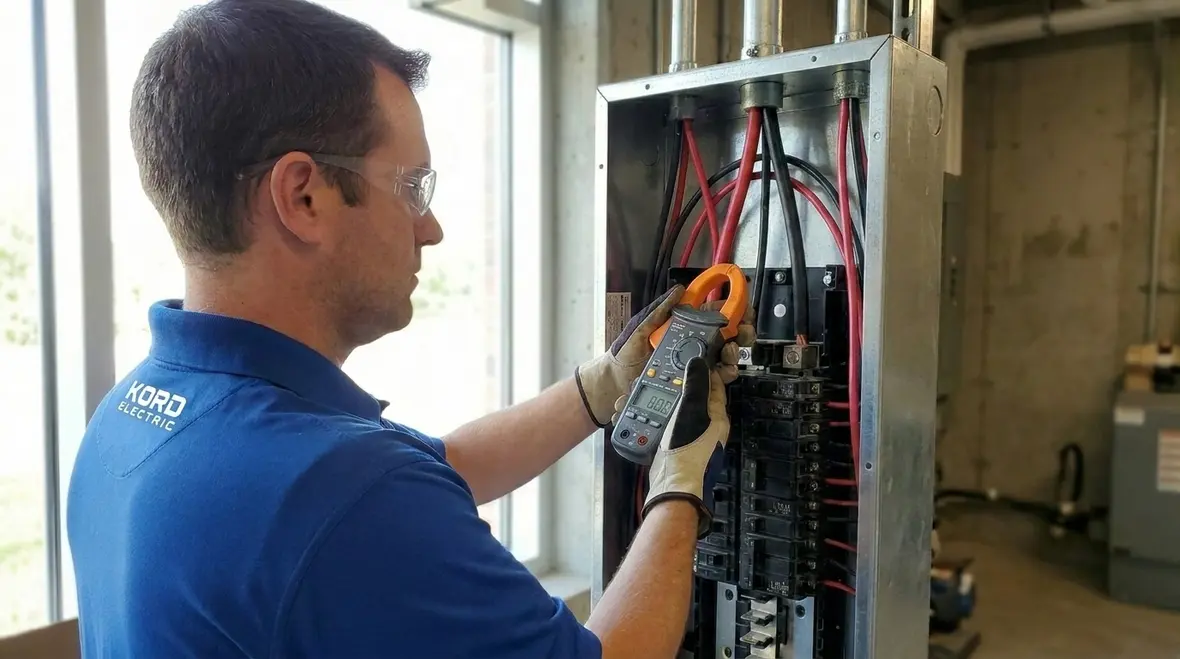
Why commercial electrical distribution panels get out of balance
Load imbalance usually does not arrive with a dramatic soundtrack. It grows quietly. First, offices add new tenant equipment. Then a kitchen upgrade boosts motor loads. Later, a remodel changes lighting and plug circuits. Meanwhile, seasonal HVAC demand swings, and the panel never gets a fresh look. As a result, one phase can run hotter while other phases sit underused.
We often see this in major property buildings where tenant turnover is normal and schedules keep changing. Additionally, some contractors install new breakers without reviewing phase distribution across the panel. Even if the installer did good work, the full system balance may still be off. Over time, electrical panel load balancing becomes necessary, not optional.
Here is what imbalance can trigger. Higher current on one phase increases conductor heat and can speed up insulation wear. It can also drive up voltage drop and cause equipment stress. And sometimes it shows up as nuisance trips that blame the wrong culprit. In truth, the culprit is often how the loads were placed long before.
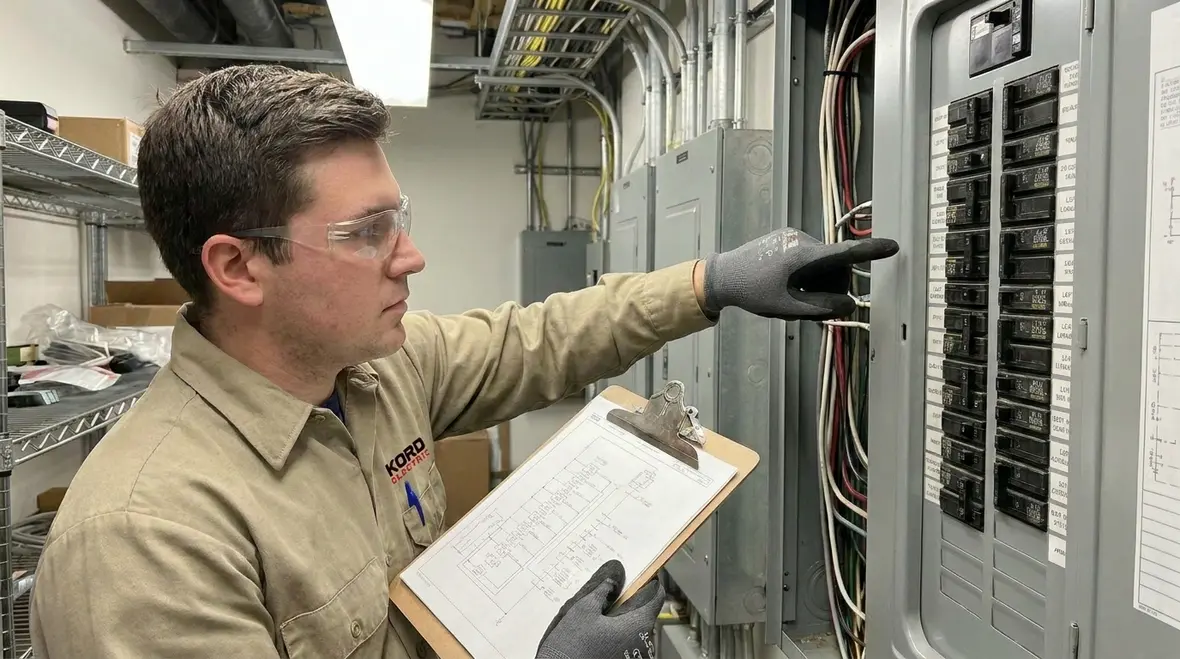
How our technicians read the panel like a story
When we handle a commercial or industrial panel, our technicians do not guess. They observe. They measure. Then they explain. Our expert service staff uses a clear process that helps the facility team understand what they are seeing and why each step matters. Instead of throwing a report at you like a fast food bag you will never open, we walk through the results in plain language.
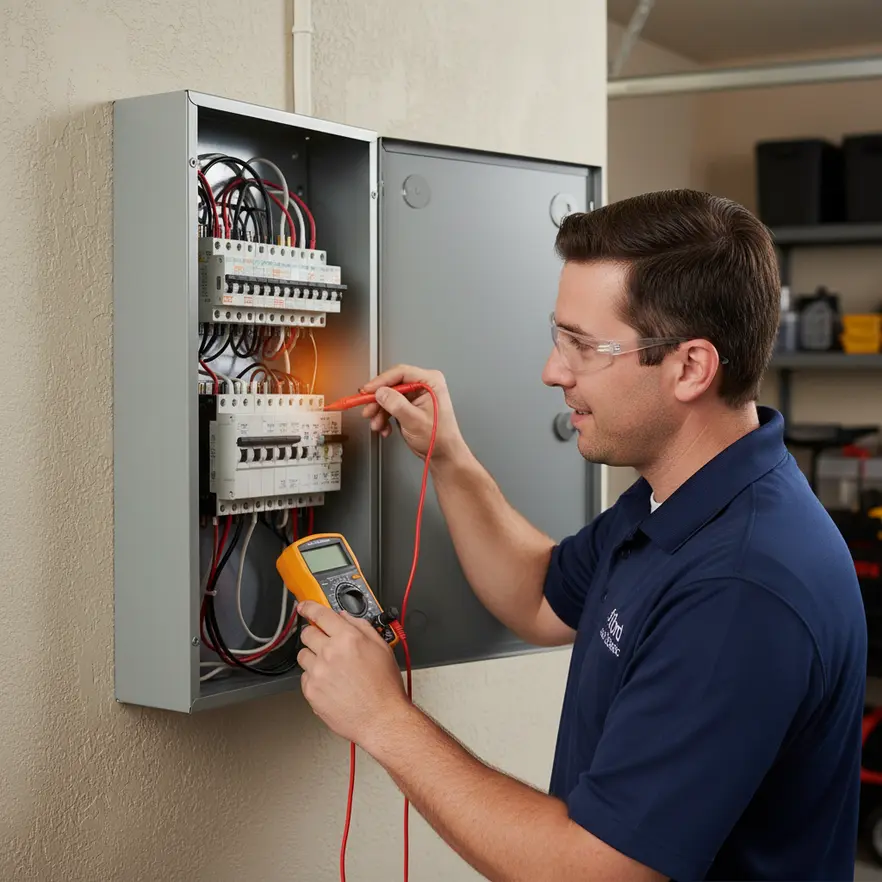
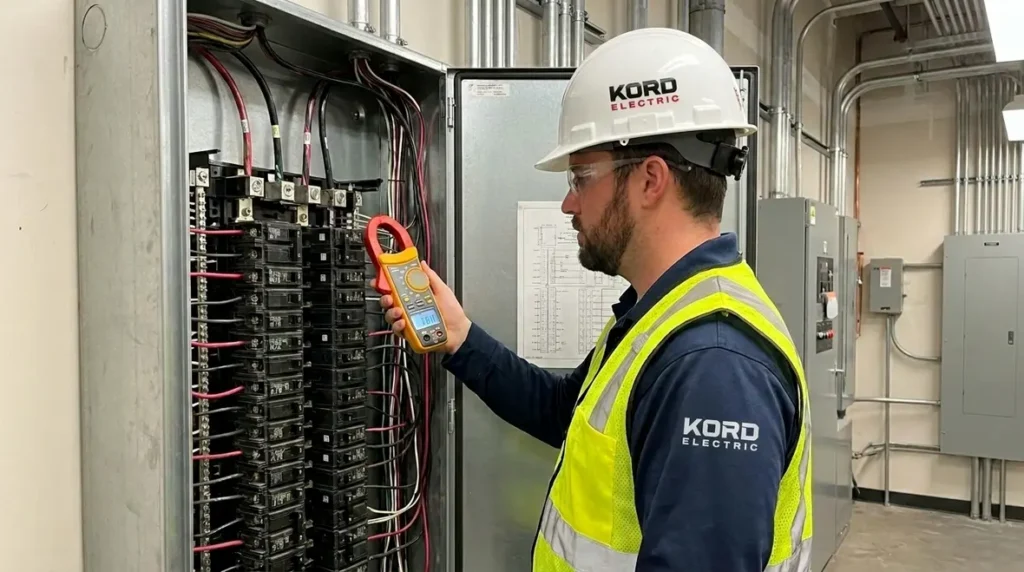
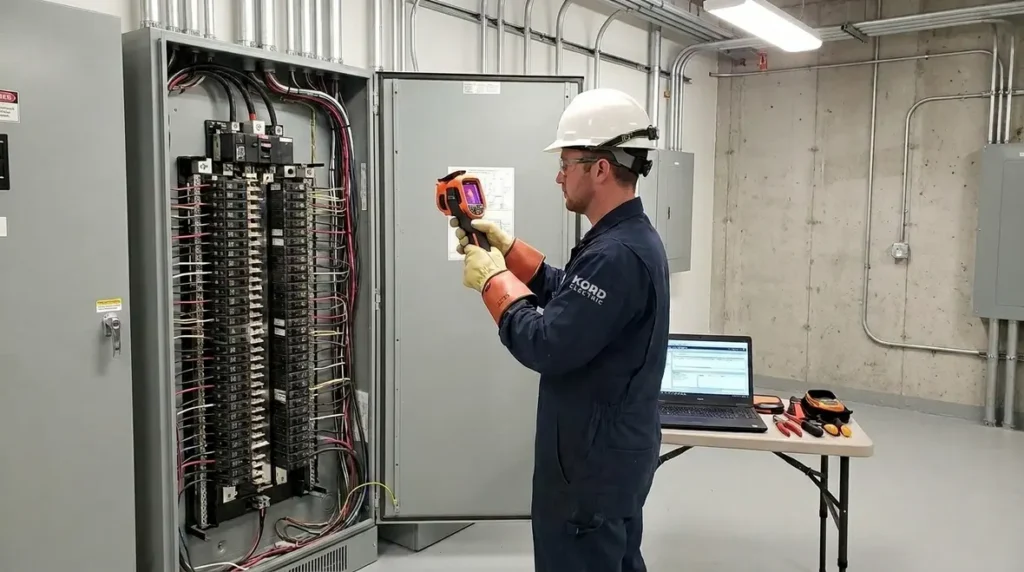
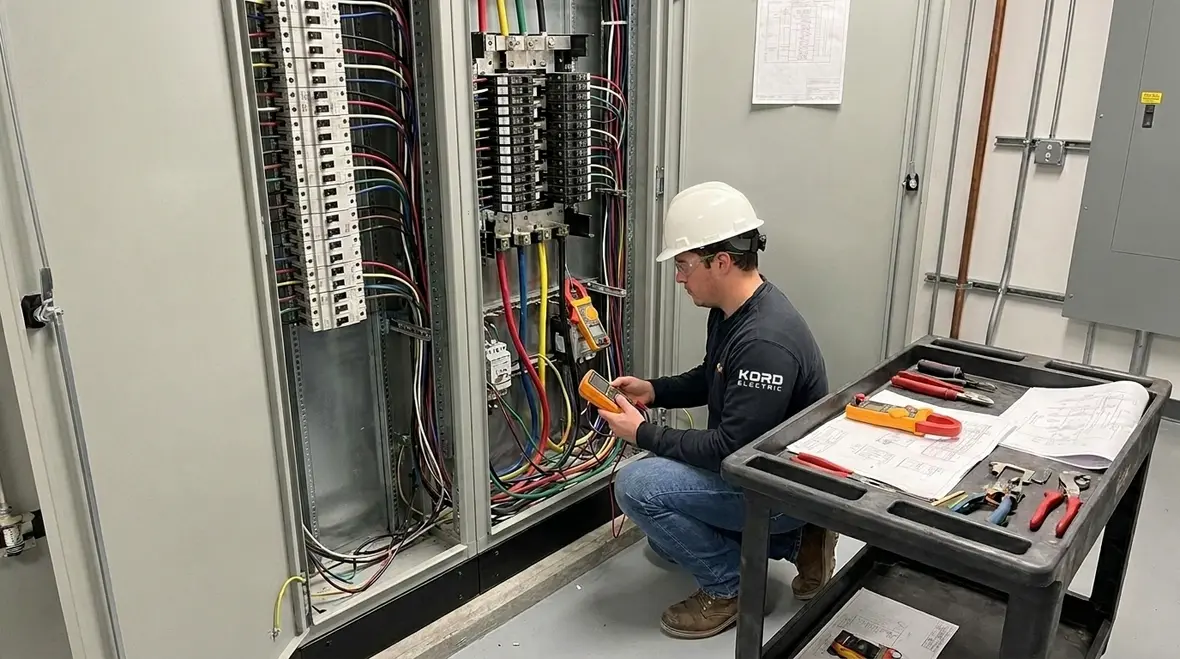
We start by collecting panel data and recent operating notes. Next, we confirm the breaker map, the phase assignments, and the feeder details. Then we inspect for signs that the panel is aging faster than it should. After that, we measure load current under real operating conditions and compare phase by phase. Finally, we build a practical plan to shift loads without disrupting operations.
We also look for patterns that “look balanced on paper” but fail in real life. For example, a schedule might tell you that a certain group runs only evenings, but in practice it runs longer when tenants are busy. Similarly, a motor load might be labeled as one item, while the actual starting behavior adds short bursts that heat conductors. That is why electrical panel load balancing works best when we measure during the conditions that matter most.
What we mean by phase, leg, and demand sharing
To make this easy, we break the idea into three parts. Phase is the electrical pathway that carries alternating current. A leg is the set of conductors and breakers tied to a specific phase in a distribution panel. Demand sharing is how much load each phase carries over time.
Commercial distribution panels usually have multiple branch circuits spread across phases. Ideally, those branch loads create similar current levels across phases. When they do not, we call it imbalance. Importantly, imbalance does not always mean the panel is overloaded overall. Sometimes total load is fine, but one leg is doing extra work.
As the load shifts, heat rises where the current is highest. That heat can degrade connections, loosen terminations, and reduce insulation life. Also, sensitive equipment may experience more voltage drop effects on the heavily loaded phase. Thus, managing electrical panel load balancing is about maintaining stable conditions, not just avoiding failure.
And if you want a pop culture comparison, think of a band. One guitarist cannot carry the whole song every time, even if they are talented. The rest of the band must share the rhythm. In a panel, the phases are the band members.
How we rebalance loads without breaking operations
Rebalancing sounds simple until you work around real life in a facility. People need lights. Equipment needs power. Production schedules do not pause because we want to move breakers. That is why our approach focuses on safe, staged changes that keep the building running.
First, we confirm which circuits can shift based on criticality and runtime schedules. Then we identify the best candidate loads to move, considering breaker size, conductor ratings, and the panel layout. After that, we coordinate the timing of changes to reduce downtime and avoid conflicts with planned work.
Next, we verify results with measurements after the changes. This step matters because the goal is not a pretty breaker chart. The goal is balanced current and stable performance under actual conditions. Also, we document everything so future maintenance does not undo the improvements.
We sometimes use what we learned from our commercial and industrial electrical maintenance plans to structure this work. If you already have a maintenance plan in place, we align rebalancing with inspection cadence, trending, and seasonal needs. If you do not, we help you build a plan that prevents imbalance from returning. Our team also keeps the facility team informed, because when people understand the “why,” they support the “what.”
If you would like to see how load balancing ties into broader preventive strategies, you can also review our detailed article on commercial and industrial electrical maintenance plans, which shows how structured inspections, load studies, and documentation keep large facilities running steadier for longer.
Preventing imbalance through planned maintenance for buildings
Here is the truth that nobody wants to hear: once you fix load balancing, you can still lose it later. New equipment, changed schedules, and tenant modifications can push demand off target again. Therefore, we recommend planned maintenance, especially for commercial and industrial facilities and major property buildings where change never really stops.
In our maintenance planning approach, we treat distribution panels like living systems. We review trends, inspect terminations, check breaker condition, and track load patterns over time. Then we schedule electrical panel load balancing checks before seasonal peaks and after major tenant work.
Our expert service staff also trains the facility manager on how to notice early warning signs. For example, if one area of the building reports frequent trips or equipment heating, we investigate the panel and circuits feeding that area. If the building adds a load, we coordinate circuit placement before it quietly creates another hot phase. This is how we avoid the “fix it every time it fails” cycle that costs more in the long run.
Also, we include safety checks that protect your people and your equipment. We do this because a distribution panel is not a “set it and forget it” device. It is more like a long term relationship. Ignore it, and it will eventually demand attention. Usually when you least want it.
For facilities that need a more structured roadmap, our dedicated electrical preventive maintenance services help formalize inspections, testing, and documentation so load balance and system health are protected year after year.
FAQ about commercial panel load balancing
Final thoughts and next step with Kord Electric
When your building runs on tight schedules, you cannot treat electrical distribution like a mystery. At Kord Electric, we help commercial and industrial facilities maintain stable performance by restoring correct demand sharing across phases and then protecting that improvement with planned maintenance. Our technicians measure, rework safely, and explain each step so your team stays in control. If you want your panels to run cooler, trip less, and last longer, reach out to us for a distribution panel review and a tailored maintenance plan.
If your facility is already juggling changing tenants, new equipment, or upcoming projects, this is also a good time to pair a load balancing review with broader electrical preventive maintenance so panels, switchgear, and critical circuits all move in the same reliable direction.