Smart Lighting ROI Analysis for Commercial Buildings
At Kord Electric, we often start with one simple question from property owners and facility managers: what does a smart lighting project truly return? To answer that, we use a smart lighting ROI analysis built for commercial and industrial facilities, not guesses. First, we measure baseline energy use, then we estimate savings from controls, LEDs, and occupancy logic. Next, we price the upgrade using real equipment and install ranges, and we include soft costs like commissioning and training. Finally, we compare the numbers against your utility rates, operating hours, and expected service life. And yes, we also factor in the “it will take forever” fear, because nobody wants a lighting rollout that feels like an unpaid waiting room appointment.
How Kord Electric builds a smart lighting ROI analysis for commercial buildings
Commercial spaces rarely fail to save energy when they modernize lighting. However, the ROI depends on how the upgrade fits the actual usage pattern. Kord Electric approaches this with a stepwise method our expert service staff explains in plain language.
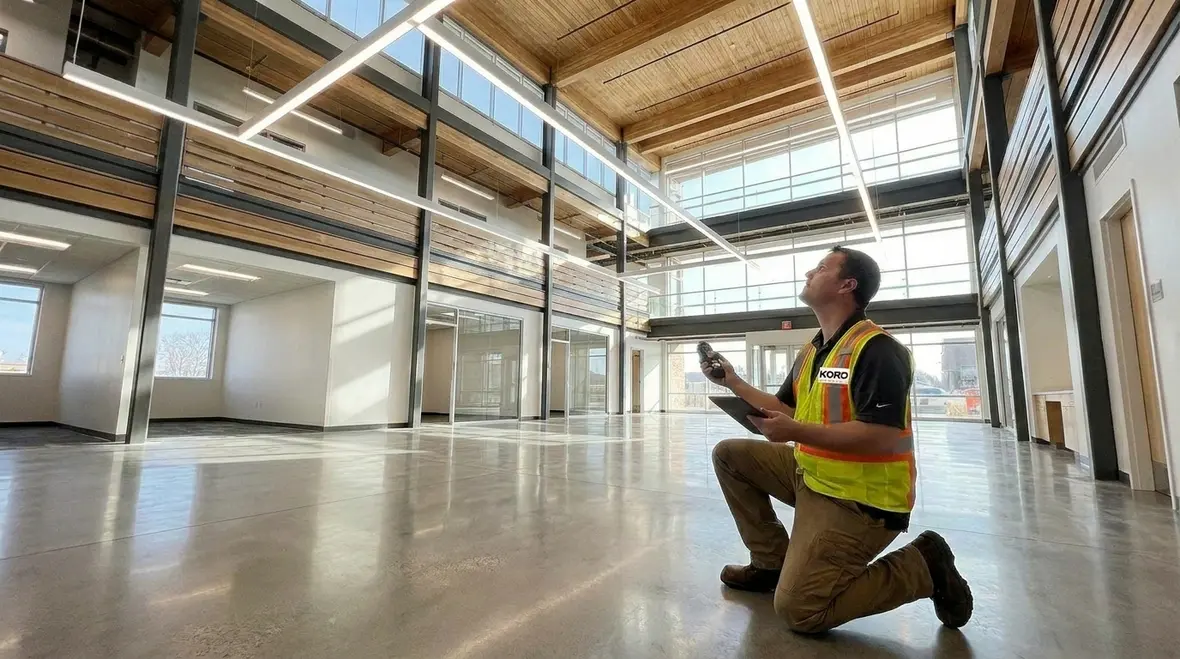
1) We verify the starting point
Others might talk about theoretical efficiency, but we verify it. We review lamp and fixture types, wattage, controls (if any), and the schedules across zones like offices, warehouses, corridors, and parking areas. Because your facility has its own rhythm, we treat each area differently rather than assuming “one schedule fits all.”
2) We map how lights get used
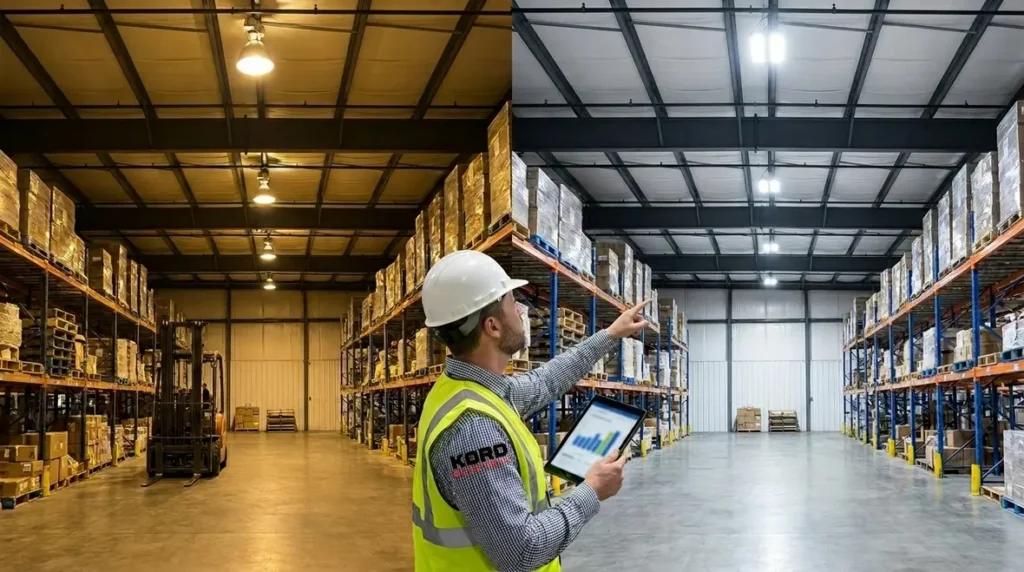
Then we look at occupancy patterns and daylight exposure. For example, a warehouse with forklifts and shifting shift schedules behaves very differently from a lobby with large windows. Even if the lighting is the same technology, the savings change dramatically once controls respond to real activity.
3) We forecast savings with conservative assumptions
Next, we estimate energy savings from LED replacement where needed, plus control gains from dimming, scheduling, and occupancy or vacancy sensors. If a zone stays lit “just in case,” controls may deliver more than expected. If you already use timers well, the ROI shifts to maintenance and comfort benefits.
4) We calculate payback, cash flow, and long term value
Finally, we evaluate payback period and ROI over a multi year horizon using your actual operating conditions. We also include the practical side: commissioning, labeling, and how staff will use controls. In short, we do the math, then we make sure the system works the way your team expects.
When it makes sense, we also connect the analysis to broader topics like commercial lighting upgrade cost so property teams can compare ROI against realistic budget ranges instead of isolated line items.
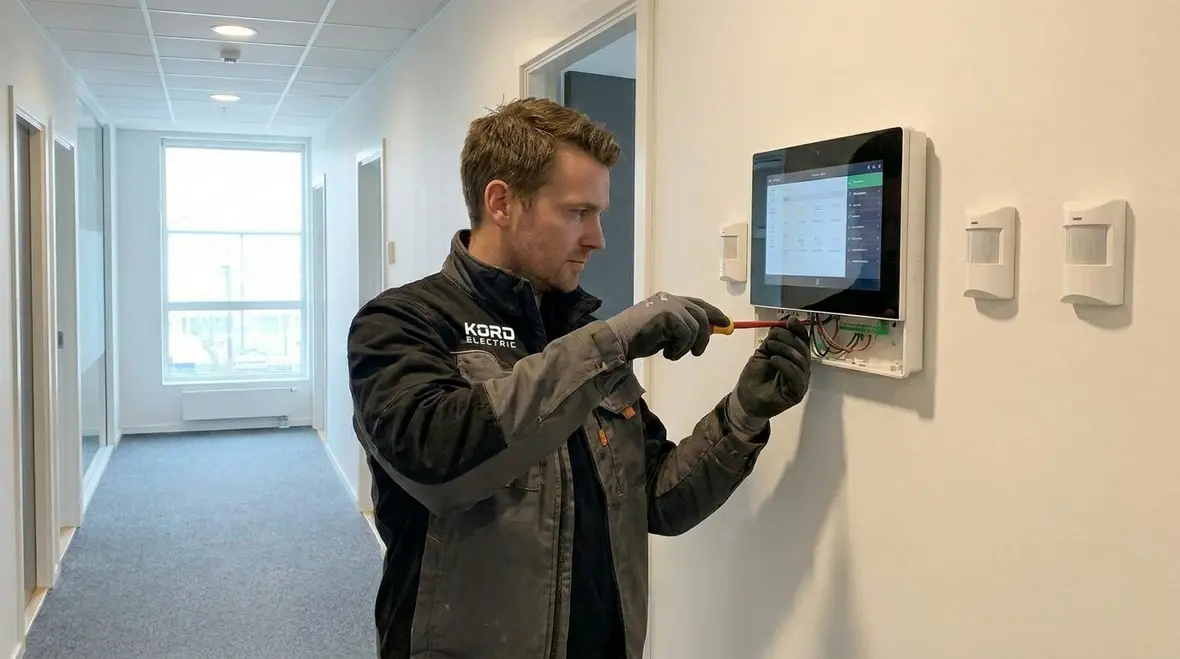
What costs matter when you replace lighting and add smart controls
Many people think ROI only depends on the monthly utility bill. However, in commercial and industrial facilities, costs come in layers. When Kord Electric prepares the smart lighting ROI analysis, we separate them so decision makers can see what drives the numbers.
Equipment and installation
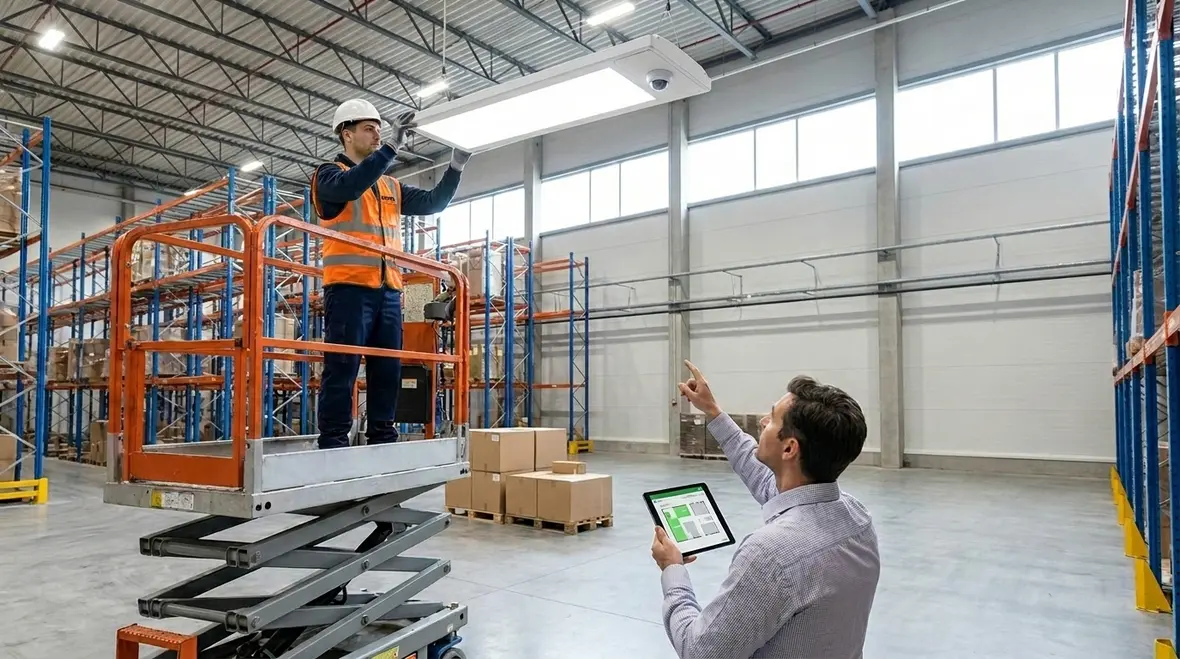
This includes fixtures, sensors, gateways, control panels, wiring work, and commissioning. We plan installation around operations so production and tenant activities stay stable.
Controls integration
Where buildings use building management systems, we estimate integration time and interface needs. Because every site uses its own standard, we avoid one size fits all assumptions.
Labor, testing, and commissioning
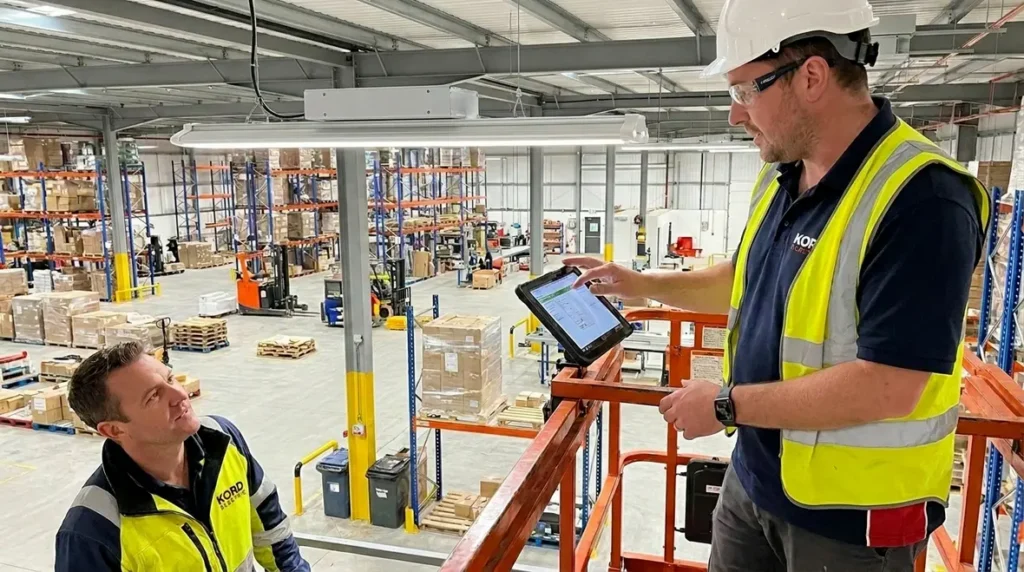
Smart lighting does not just get “installed.” It gets tuned. Our technicians calibrate schedules, verify sensor placement, and confirm dimming response so the system avoids annoying behavior like lights dropping too fast during inspections or walkthroughs.
Training and ongoing support
We explain how facility staff can adjust schedules or handle overrides. And if your team asks, we answer. The goal is simple: fewer calls, faster resolution, and better daily use.
Maintenance and lifecycle costs
LEDs reduce lamp replacement. Controls can reduce wear by preventing lights from running full output when spaces sit empty. Over time, these improvements support a healthier maintenance plan, especially in high ceiling or hard to access areas.
For some facilities, it also makes sense to connect lighting upgrades with broader lighting installation services, especially when the project includes new fixtures, new circuits, or layout changes alongside controls.

How to estimate energy savings without getting lost in spreadsheets
Energy savings estimates sound complex, yet we keep them straightforward for commercial and industrial property owners. In many projects, we start with a baseline, then apply realistic savings factors for each space type.
Step one: compute current lighting load
We total wattage per area, then multiply by operating hours. If you already have utility bills, we use them to cross check. Because lighting is only one part of site energy, we make sure our math aligns with actual consumption.
Step two: estimate reduction through controls
Smart lighting typically reduces output through dimming and time based control. If a sensor detects vacancy, it can dim to a lower level or switch off. If daylight exists, dimming can occur even when occupancy remains steady.
Step three: account for after hours and weekend patterns
Commercial facilities often have uneven schedules. For example, offices may run Monday through Friday, while warehouses may extend longer. We model those differences so the savings do not rely on perfect behavior that never happens.
Step four: apply your utility rate
Once we estimate the energy reduction, we convert it to dollars using your current rate structure. Then we adjust for expected rate changes where you prefer a cautious approach.
Yes, this part feels like accounting, but it matters. ROI without this step is like a parking ticket without a dashboard camera. It might still be true, but it is harder to prove.
For California properties, we can also align these savings estimates with requirements from resources like the California commercial lighting code guide and related Title 24 compliance needs, so the ROI model supports both energy performance and code obligations.
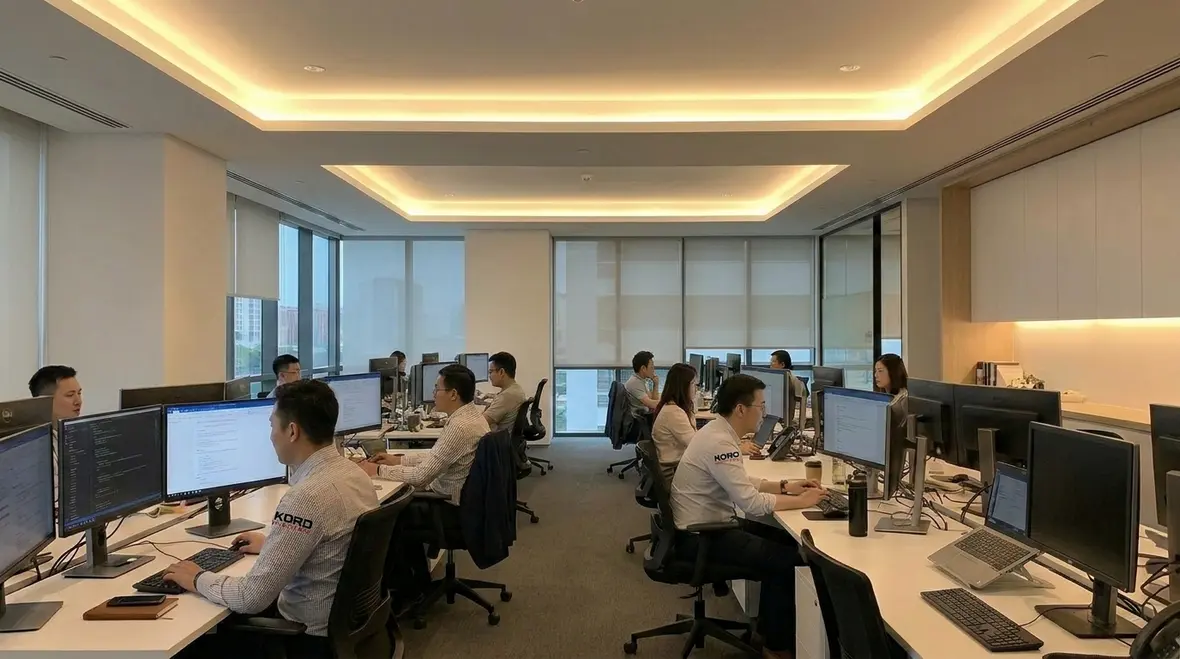
ROI beyond energy: comfort, safety, and maintenance gains that owners can feel
Lighting upgrades rarely deliver value only through energy. For large properties, smart controls can improve how spaces function, how people experience the building, and how teams maintain systems.
Better visual comfort
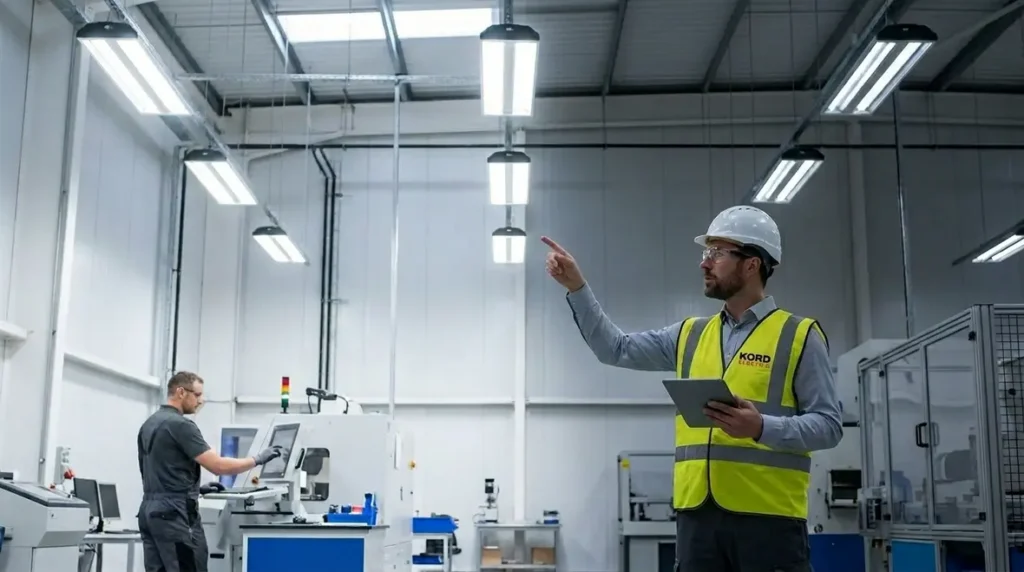
Dimming and stable brightness help reduce glare and sudden changes. In offices, this can support focus. In industrial areas, consistent illumination improves visibility for inspections and safe movement.
Reduced re-lamping and faster fault detection
LED lifecycles extend maintenance intervals. Meanwhile, modern systems can help identify issues sooner so teams avoid guesswork. As a result, maintenance budgets stay predictable.
Operational control for facility teams
Rather than manual overrides, facility staff can adjust schedules. They can also set scenes for training, cleaning, or emergency routines. Our technicians spend time walking teams through these adjustments so they do not feel like they are trying to program a microwave from the 90s.
Tenant satisfaction and building competitiveness
Major property buildings compete on reliability. If a space has consistent lighting and fewer outages, it shows. That matters in leasing decisions, renewals, and reputation.
In industrial environments, these comfort and control benefits often pair well with industrial lighting layout optimization for efficiency, where smarter layouts and zoning increase both ROI and day to day productivity.
Calculating payback period and ROI using real commercial assumptions
When others present a generic ROI chart, it rarely matches your facility. We treat every major property building like a real system with real schedules. That is how we calculate payback and ROI in a way your leadership team can defend.
Payback period
We estimate annual savings and then divide the installed cost by those savings. If payback looks long, we do not force optimism. Instead, we refine the assumptions. Often, we find that scheduling and control calibration can raise savings without expanding scope.
ROI formula used in projects
We evaluate ROI as the percentage return on the investment using projected net savings over the selected time frame. Then we compare scenarios like “LED only” versus “LED plus full controls.” Because budgets differ, property teams can choose the path that fits.
Risk handling
We include conservative ranges for hours of operation, dimming performance, and occupancy behavior. We also account for commissioning effort so the system performs as designed.
Scenario planning for industrial sites
In warehouses, we examine zones where forklifts operate and areas that stay empty for long periods. In manufacturing, we consider shift changes. As a result, the ROI calculation reflects how your site really operates, not how it looks on a brochure.
For teams in California, this smart lighting ROI analysis often connects directly to work like a Title 24 lighting retrofit ROI guide, where code driven controls and retrofit decisions depend heavily on realistic assumptions about hours, zones, and control strategies.
Overcoming common objections with expert explanations from Kord Electric technicians
Every upgrade has skeptics. And honestly, skepticism can be healthy when it leads to better decisions. Still, we often hear the same concerns at commercial and industrial sites. Our technicians and expert service staff address them clearly, then they show the numbers.
“We already have timers.”
Timers help, but they do not handle occupancy changes or daylight shifts. When spaces go empty unexpectedly, timers keep lights running. Smart controls adapt, and we measure what that means for your specific building.
“Sensors will cause unreliable behavior.”
Placement and tuning matter. We review coverage areas, mounting heights, and motion behavior. Then we commission the system so it behaves predictably during real operations.
“Will it disrupt our work?”
We plan installation sequences. We schedule work around operations so downtime stays limited. Additionally, our field team keeps the project organized and communicates progress so leadership does not feel like they are chasing updates like a distant Wi Fi signal.
“We are worried about ongoing service.”
That is where support matters. We explain what maintenance looks like, what adjustments are normal, and how response works when something needs attention. The goal is confidence, not surprises.
Smart lighting ROI analysis FAQ for commercial and industrial facilities
Ready to improve ROI in your commercial facility
If you manage a commercial or industrial building, you deserve an ROI view that matches reality. Kord Electric evaluates your lighting baseline, models energy and control savings, and explains the payback results in a way your team can confidently act on. Our technicians then help implement smart lighting with commissioning and clear training so it performs from day one. Take the first step and contact us to schedule a smart lighting ROI analysis for your site. We will bring the calm, and you bring the keys.
When you are ready to move from analysis into implementation, our lighting installation services for commercial and industrial facilities can handle the full scope: design, installation, controls, commissioning, and long term support. That way, the numbers in your smart lighting ROI analysis translate into real, measurable results on the floor and in your operating budget.
If your facility also needs broader electrical reliability support, you can pair smart lighting upgrades with electrical preventive maintenance services so critical systems, panels, and emergency lighting all work together as a coordinated, well maintained infrastructure instead of a collection of separate projects.
Smart lighting ROI analysis for commercial buildings works best when it is part of a long term plan, not a one off spreadsheet. Kord Electric helps you connect today’s project to tomorrow’s compliance, maintenance, and expansion plans so each upgrade moves the portfolio in the right direction.