Emergency Electrical Disaster Recovery Commercial Planning
Emergency recovery starts before the lights go out
When a storm hits or the grid acts like it forgot its own homework, our first job at Kord Electric is emergency electrical disaster recovery planning for commercial facilities and major property buildings. We know that recovery is not a lucky break, it is a process. And so, we build plans that help businesses keep power longer, restore critical loads faster, and protect people and equipment when the worst day arrives.
Others may call it “risk management,” but we call it being ready. After all, you do not want your backup generator to learn the hard way that it has not been exercised. In this article, our expert service staff explains how we help property teams prepare, respond, and rebuild with steady steps and clear communication.
Map the critical circuits and protect the right systems
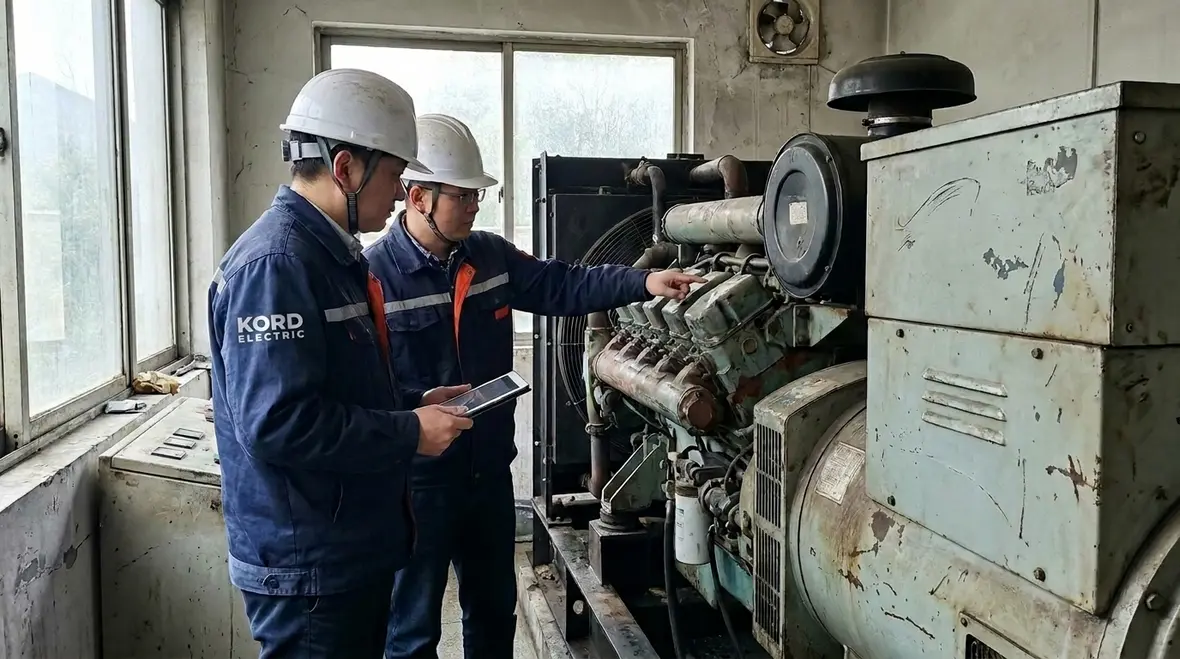
First, we identify what must stay alive during an outage. Then we rank those loads by business impact, safety needs, and code requirements. For example, life safety systems include fire alarms and emergency lighting. In addition, we often treat certain HVAC zones, access control, network equipment, and refrigeration as priority loads for commercial and industrial sites.
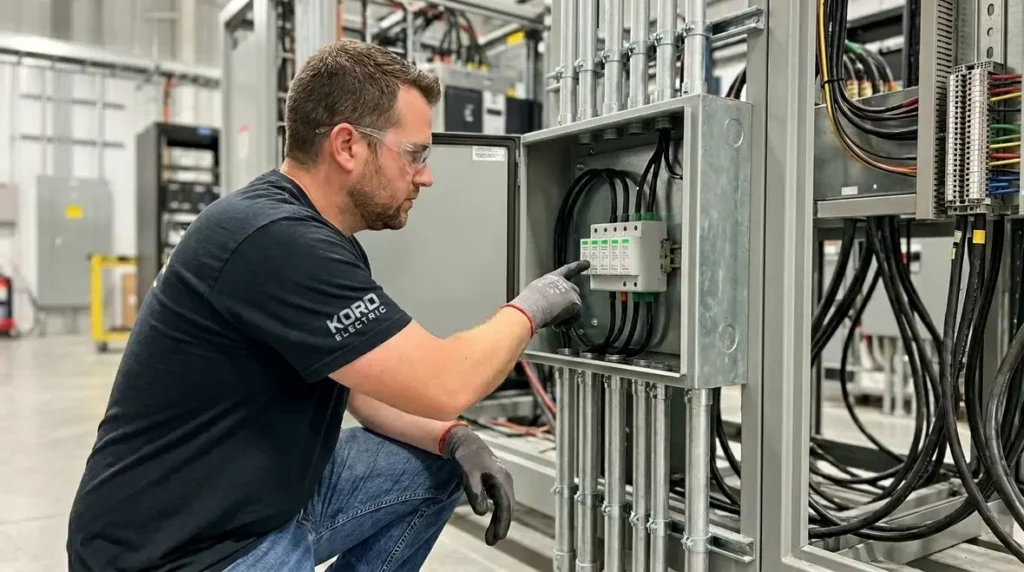
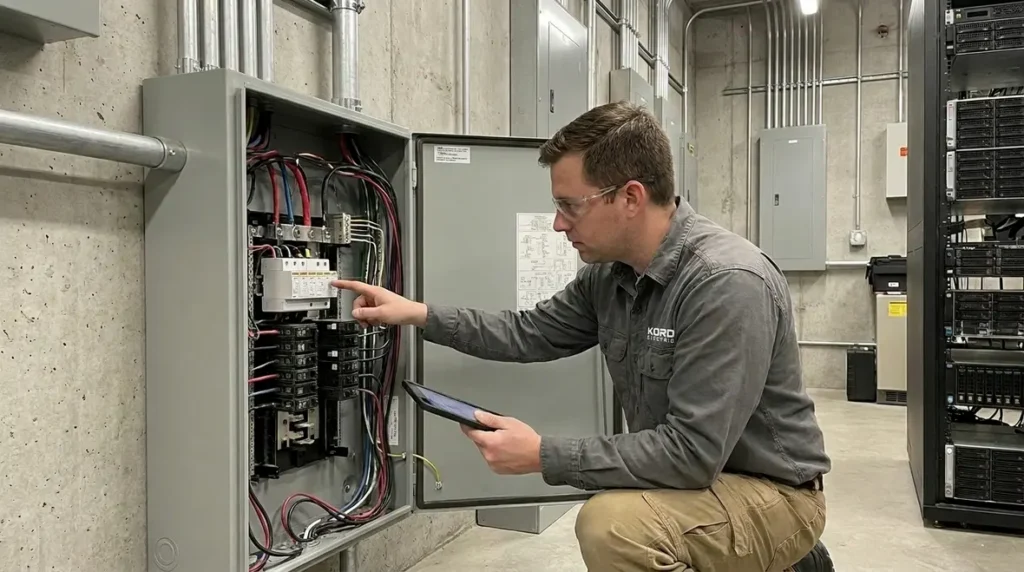
Next, our technicians help facility leaders document every critical circuit and panel location. We also verify whether those circuits belong on a generator transfer setup, an ATS path, or a UPS-backed branch. However, plans fail when the team only knows what should be critical, not what actually is critical in the field.
To keep this part practical, we use a simple approach that our expert staff repeats: label, test, and prove. As a result, when the pressure rises, staff can act without guesswork. It is the difference between “we think it’s Panel C” and “Panel C feeds the access system and that is verified.”
Voltage fluctuations can turn a disaster into a long outage
Power events rarely arrive as a perfect blackout. More often, voltage drops, surges, and unstable power follow the storm like an unwelcome sequel. In fact, our team has seen how voltage fluctuations in commercial and industrial facilities can stress sensitive loads, shorten equipment life, and trip protection devices. When that happens, recovery time grows, because repairs include both the obvious damage and the hidden failures that come later.
Therefore, we plan for both complete loss of power and poor power quality. We review where fluctuations hit first, then we decide how to keep critical systems safe. Options may include surge protection, properly sized transformers, correct grounding and bonding, and monitoring that alerts the team early.
Moreover, our technicians train teams to recognize early signs. If a process shuts down repeatedly, if motors overheat, or if control systems reset during minor events, the plan must treat those symptoms as disaster precursors. That is how emergency recovery becomes proactive instead of reactive. For facilities already wrestling with unstable power, it often makes sense to pair emergency planning with a dedicated stability review like Kord Electric’s service for voltage fluctuations in commercial and industrial facilities, so recovery steps start with cleaner, more predictable power paths.
Connect power quality to your broader recovery strategy
When we walk a commercial property, we do not just look at generators and panels. We follow the story of how power quality affects your entire operation. That may include refrigeration that quietly shuts down overnight, elevators that trip offline during minor sags, or production lines that reset when the weather looks sideways at the grid. By tying these real world symptoms to your emergency electrical disaster recovery roadmap, the plan stops being theoretical and starts reflecting how your building truly behaves.

In many cases, we also recommend deeper corrective work to resolve chronic instability. That might include load balancing, transformer upgrades, or power conditioning to protect sensitive electronics so they do not become the weak link on your hardest day. When voltage stability and emergency procedures support each other, recovery becomes both faster and less chaotic.
Build a response playbook with clear roles and calm steps
Next, we create a response playbook that works under stress. A good plan names who does what, in what order, and with what tools. We also define communication methods so decision makers do not rely on phone calls that disappear when the building loses power.
Our expert service staff typically sets roles for facility management, electrical operations, security, and outside contractors. Then we add decision points such as when to isolate damaged gear, when to switch to generator mode, and when to shut down non critical loads to preserve runtime.
To keep the playbook usable, we include short checklists that guide action. For example, the team should quickly confirm source power status, verify transfer equipment position, and check for protective device trips. And yes, we write it in plain language because “mysterious panel behavior” should not be a diagnostic method.
Finally, we include a safety flow that matches how our technicians work: de-energize when required, verify absence of voltage when testing, and follow lockout and tagout rules. In a real emergency, compliance keeps people alive and helps repairs move faster.
Why calm planning beats chaos every time
The difference between a building that stumbles through an outage and a building that handles it with control usually comes down to preparation. We have seen facilities where everyone knows their role, their checklist, and the limits of their systems. We have also seen sites where people start flipping breakers and hoping for the best. Our goal is to make sure your team lands firmly in that first category, with emergency electrical disaster recovery steps that feel rehearsed instead of improvised.

This is also where your relationship with outside partners matters. When Kord Electric develops your playbook, we not only define our role in that document, we sync it with how your property managers, security staff, and other vendors operate. That way, no one is surprised when the plan moves from the page to real life.
Coordinate generator, transfer, and backup power like a system, not a box
Commercial and industrial facilities often rely on generators, transfer switches, UPS systems, and sometimes battery backup. However, emergency electrical disaster recovery planning must treat these parts as one system. If you plan only for “having a generator,” you miss the real failure points: transfer timing, control logic, fuel supply, and load compatibility.
So, we review the transfer sequence and confirm that critical loads land correctly. We verify ATS configuration, test startup and transfer under realistic conditions, and make sure the plan includes what happens when a device fails to operate. Then we address runtime planning, because a generator with fuel for two hours will not protect a facility that needs eight.
Our technicians also help teams plan for parallel operations if the facility uses multiple generators. Additionally, we recommend load shedding strategies so the system does not overload when it first starts. That first minute matters. It is like the opening scene of a movie: if the timing is wrong, the whole plot breaks.
Think beyond “does it start?” to “does it carry you through?”
A surprising number of emergency systems technically work but do not truly support the business when tested against real conditions. Maybe the generator starts, but its load profile does not match actual demand. Maybe an ATS transfers flawlessly but leaves a critical panel stranded. We look at how all of these devices behave together under load so your plan reflects reality, not assumptions.
In some buildings, it also makes sense to revisit the underlying electrical infrastructure itself. When commercial and industrial property leaders reach the point of planning a major upgrade, they often explore full system rewiring strategies that address aging conductors, undersized panels, and chronic power quality problems. Thoughtful projects like that can dovetail naturally with your emergency electrical disaster recovery plan, giving your generator and transfer systems cleaner wiring to work with instead of asking them to rescue a fragile network of circuits every time the grid stumbles.
Test, drill, and document with real records your team can trust
A plan that never gets tested is just a document that collects dust. After all, paper cannot troubleshoot a tripped breaker. Therefore, we schedule drills that match your facility’s risk profile, such as storm season readiness, seasonal load changes, and equipment aging.
We also track outcomes. After each test or response event, our technicians update the drawings, the sequence of operations, and the circuit lists. In addition, we record what worked, what failed, and what required extra time. That creates a clear recovery timeline based on real data.
To support maintenance and training, we build a documentation package for facility managers and major property teams. It may include single line diagrams, panel schedules, generator data, contact lists, and operating procedures. Most importantly, we keep records where staff can access them during an emergency, even if normal building networks fail.
Meanwhile, we train internal staff on basics that prevent small mistakes from becoming big problems. For example, if a team repeatedly resets a breaker without checking upstream damage, it can worsen the issue. Our expert service staff helps them understand the logic behind safe steps.
Turn drills into steady confidence, not box-checking
Drills are not about catching people off guard just to prove a point. They are about turning theory into muscle memory. When we run emergency electrical disaster recovery exercises with commercial teams, we focus on realism: simulating voltage fluctuations, partial failures, and communication gaps that actually show up in real events. The goal is a team that knows how to respond when conditions change, not just when everything follows the script.
Establish procurement and contractor readiness before the event
During an outage, waiting for parts kills momentum. So, we help commercial property teams plan procurement for the items that fail first: breakers, breakers accessories, fuses, control boards, ATS parts, surge devices, and connectors. We also suggest stocking or securing lead times for critical spares based on the site’s equipment age and the history of similar faults.
Then we align contractor support. We coordinate expectations for onsite access, permits, and staging areas. We also plan how equipment gets safely unloaded and how cables get routed without creating new hazards. It is not glamorous, but it saves time and reduces confusion when everyone is stressed.
Additionally, we include a communication plan with property leadership and key tenants. If a tenant needs a specific system restored first, they deserve a clear path. And if the site must reduce power to protect life safety and protect equipment, the decision needs to be communicated fast and with documented reasoning.
Link disaster recovery with ongoing preventive maintenance
The same mindset that keeps your team ready for emergencies also keeps everyday risk lower. When procurement plans, inspection schedules, and contractor relationships connect to a structured preventive maintenance program, your building becomes less fragile overall. That way, when you do need true emergency electrical disaster recovery support, you are starting from a stronger baseline rather than trying to rebuild from years of deferred work in the middle of a storm.
FAQ about emergency electrical disaster recovery for commercial buildings
Lean on Kord Electric for recovery that stays calm under pressure
When the lights go out, we do not want your team guessing. Kord Electric builds emergency electrical disaster recovery plans for commercial and industrial facilities that protect people, reduce damage, and speed restoration. Our technicians explain the details in plain terms, then we verify the plan with testing, documentation, and realistic drills. If you are managing a major property building and want a recovery playbook that actually works, contact Kord Electric today. Let’s turn chaos into a controlled sequence of steps, fast.
If your facility is already seeing early warning signs like unexplained voltage swings, nuisance trips, or hidden electrical risks that keep showing up in inspections, this is the right moment to act. Pairing a proactive recovery strategy with targeted support for power quality and ongoing maintenance gives your building a smoother path through whatever the grid, the weather, or aging infrastructure delivers next.
Kord Electric’s dedicated emergency electrical services team supports commercial and industrial properties across the region with rapid response, code-compliant repair, and structured follow-up. When you combine that level of emergency readiness with a smart disaster recovery plan tailored to your building, outages become events you are prepared for instead of surprises you are chasing.
The best time to build that resilience is before the next storm warning, not during it. Start with a conversation about your facility, your critical systems, and your risk tolerance, and let the Kord Electric team guide you from vague “what if” concerns to a clear, documented, and tested sequence of steps you can trust.