Warehouse Lighting Electrical Systems Planning and Upgrades
Warehouse Lighting & Electrical Systems: Planning and Upgrades for Efficient, Safer Operations
At Kord Electric, we focus on commercial and industrial facilities, and major property buildings. That means when we plan Warehouse Lighting & Electrical Systems: Planning and Upgrades, we think beyond “turn on the lights.” We design systems that support safety, reduce downtime, and keep energy use under control. Then we back it up with technicians and expert service staff who explain what they see, what it means, and what we recommend next.
In this guide, our team walks through the practical work behind warehouse lighting and electrical improvements. We also connect the lighting side to the power side, because in the real world, they never act like they are separate. If you have ever watched a breaker trip at the worst possible time, you already understand why we treat electrical distribution like the backbone it is. And yes, we will say it out loud, calmly: “It is not magic. It is engineering.”
How warehouses behave when power demand changes
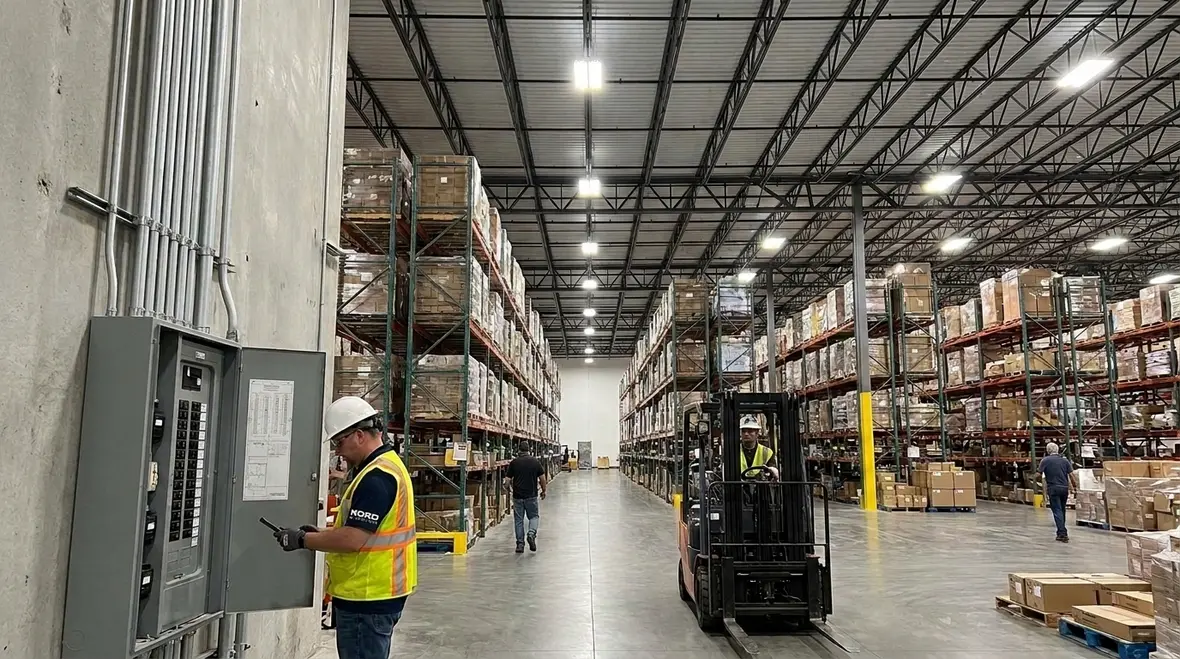
Warehouses operate like busy cities. Forklifts start and stop, conveyor motors cycle, dock doors open, and HVAC systems swing with outdoor weather. Because of that, the electrical load changes throughout the day and often throughout the week. If the power distribution and lighting design do not match those patterns, the result is usually predictable: flicker, hotspots, nuisance tripping, and short equipment life.
Therefore, our technicians review how power flows across the facility. Next, we compare that to how equipment actually runs. We also look for clues like uneven voltage, excessive neutral current, and signs of overheating at panels and connections. At the same time, we verify that lighting circuits align with occupancy patterns, work zones, and maintenance routines.
Here is the calmer, more useful truth: when we align distribution capacity, protection settings, and lighting layout, the warehouse feels steadier. Operations slow down less. Staff work in better visibility. And equipment lasts longer, because power stops behaving like a mischievous gremlin.
Power distribution upgrades that improve warehouse efficiency
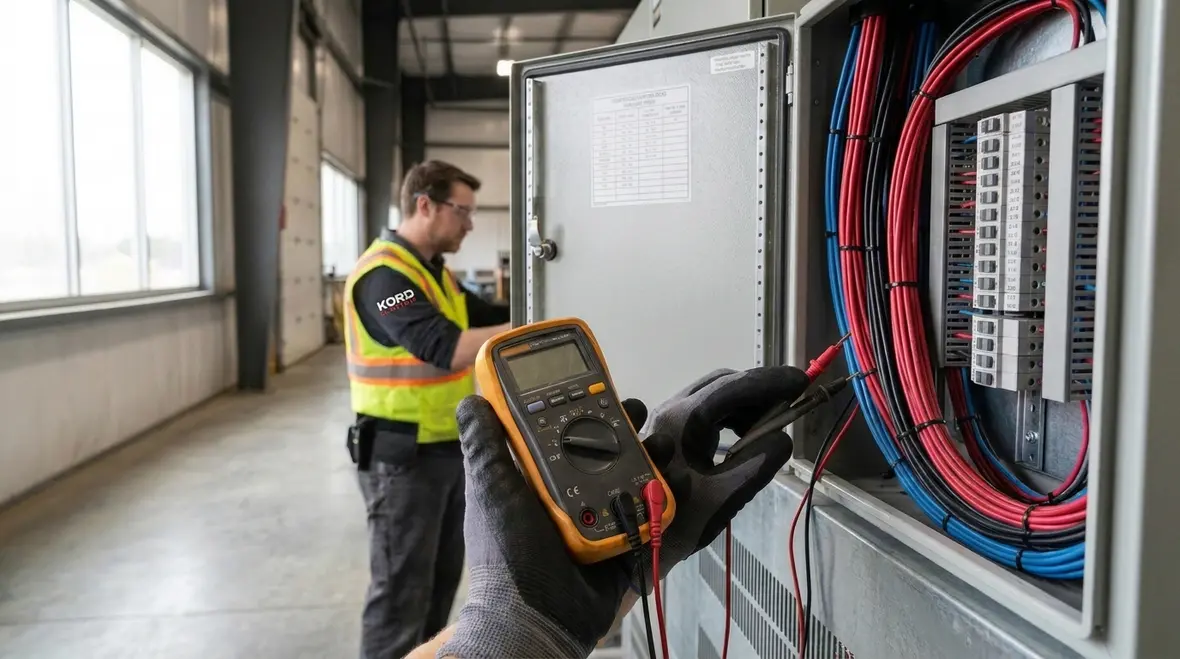
When we plan Warehouse Lighting & Electrical Systems: Planning and Upgrades, we treat distribution as more than wires and metal boxes. We align it with efficiency goals and with the reality of a warehouse load profile. If you want better performance, you need better power routing, proper protection, and clean, reliable supply.
In our Kord Electric blog, we discuss advanced power distribution for warehouse efficiency, and the themes match what we see on site: the right distribution strategy reduces losses, supports expansion, and helps prevent costly interruptions. So, we apply those principles when we do upgrades. For example, we assess transformer capacity, feeder sizing, panel loading, and the condition of terminations. Then we check how the system handles peak demand and whether it has room for future expansion.
Just as importantly, we verify the protection chain. Correct breakers and settings reduce nuisance trips. Correct coordination keeps faults localized. As a result, a problem in one zone does not turn into a facility wide blackout. That means fewer production delays and fewer late night calls that start with, “Hey, are you awake?”
Warehouse lighting design for visibility, safety, and maintenance
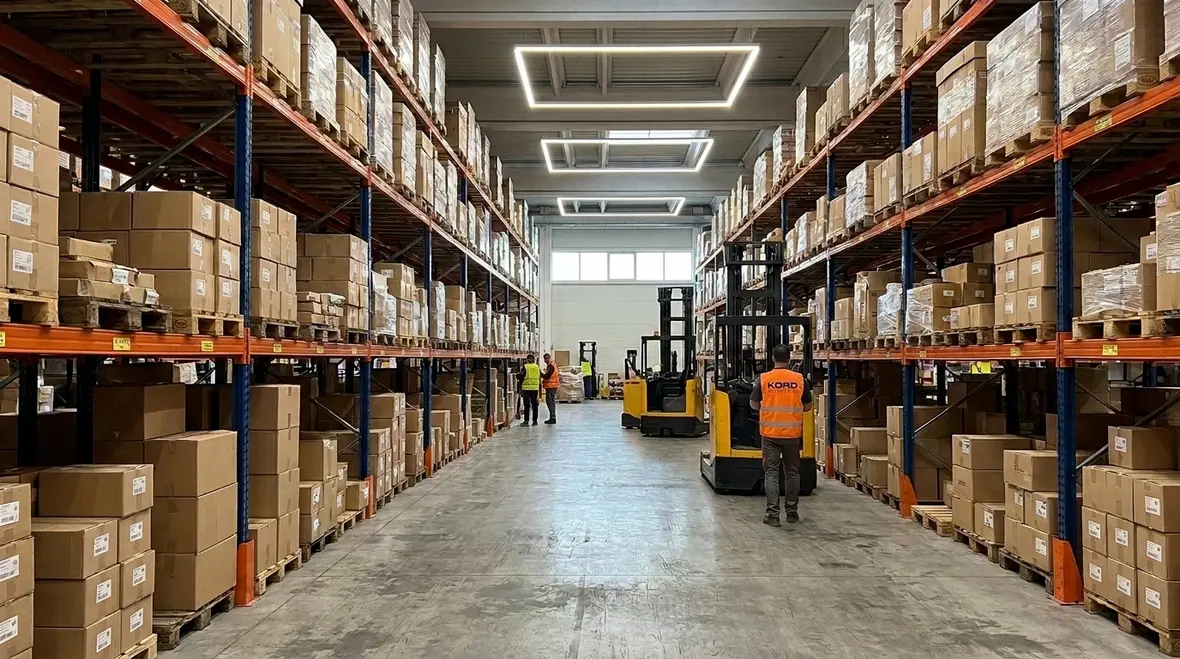
Lighting design for major buildings cannot rely on a “good enough” approach. Warehouses need consistent illumination so workers can move safely, read labels, inspect goods, and drive with confidence. In addition, uniformity matters because glare and dark pockets can create hazards even when average light levels look fine.
Our expert service staff typically starts with zone mapping. We then plan lighting by function: aisles, picking areas, staging zones, loading docks, and maintenance corners each deserve a different strategy. After that, we select fixtures and controls that match the environment, including dust, temperature, and vibration. We also consider how often each area stays occupied.
Energy savings come from smarter control, not only brighter fixtures. Therefore, we recommend occupancy or scheduling strategies where they fit, along with dimming methods that protect visibility. We also plan for realistic maintenance. If a layout makes access hard, bulb or driver replacement becomes a recurring problem. So, we design with maintenance routes in mind, so the system stays reliable long after installation.
Controls and monitoring that keep electrical systems predictable
Many warehouses upgrade lighting and stop there. Others upgrade power and leave lighting controls untouched. We do both, because controls and monitoring create predictability. When a system runs with clear visibility into performance, we catch issues earlier and reduce unplanned downtime.
In practice, we help facilities add or refine monitoring for key loads. For example, we review metering strategy, breaker level data, and how the electrical system responds to real demand. Next, we connect that to lighting operations, so building managers can see patterns, not just alarms. If one zone shows abnormal use or a control channel behaves oddly, the data helps us find the root cause faster.
Additionally, we look at how controls integrate with site schedules and occupancy changes. That matters because warehouses run on rhythms, not guesses. If the controls dim during active work, safety and productivity suffer. If they never dim, energy use climbs. So we tune systems to real schedules and real workflows.
And yes, the occasional joke helps here. We have seen warehouses run lights on one giant “all day, every day” switch like it is 1987. Meanwhile, the HVAC is trying to behave like it is in the year 2026. Our job is to bring harmony to the chaos.
Common upgrade gaps we find during warehouse walkthroughs
During audits, our technicians often find issues that look small until they turn into major downtime. First, we see outdated panels or overloaded feeders that struggle during peak cycles. Next, we see poor terminations and signs of heat at connections, which can raise resistance and create further heat. Then we see lighting layouts that ignore aisle uniformity and rely on inconsistent coverage.
Another common gap is mismatched components. A warehouse may install efficient fixtures, but electrical circuits and controls do not support smooth performance. As a result, drivers fail early, flicker appears, or output drops faster than expected. We also see facilities that plan for expansion poorly. When additional racks or new equipment arrive, the electrical system may not have capacity or routing flexibility.
Moreover, we often find that documentation is incomplete. If someone cannot trace a circuit or understand why a protection device exists, troubleshooting becomes slow. Therefore, we update labeling and provide clear system documentation so maintenance teams can work with confidence.
We also explain the “why” as we go. Our team does not hide behind vague language. We show what we measure, we connect it to how the warehouse operates, and we recommend fixes that align with budgets and timelines.
Planning the project timeline around real warehouse operations
Even the best upgrade plan fails if it ignores the flow of daily work. That is why we manage Warehouse Lighting & Electrical Systems: Planning and Upgrades as an operations project, not just an installation job. We coordinate with facility leadership, maintenance teams, and any production schedules that drive the building.
We start by defining the scope clearly. Then we map work zones and plan cutover windows. If a warehouse cannot stop, we phase the installation so critical areas keep running. Next, we verify new circuits and lighting output before shifting full operations. In addition, we test protection settings and confirm that the system behaves safely under normal load and during faults.
Furthermore, we consider staging. When crews need lifts, materials, and safe access routes, planning prevents bottlenecks. We also set expectations for downtime and provide communication checkpoints. In the end, the goal is simple: upgrades should reduce risk and disruption, not create a new chapter of operational stress.
Our expert service staff also stays for commissioning support, because the “last mile” is where performance either holds or slips.
For facilities planning multi-site or county-wide work, we can align warehouse upgrades with broader Los Angeles County electrical services for commercial and industrial facilities so power distribution, lighting, safety, and long-term maintenance move forward as one plan instead of separate projects.
FAQ
Conclusion: Let Kord Electric engineer the next upgrade
If your warehouse lighting and electrical systems feel inconsistent, expensive to maintain, or increasingly unpredictable, it is time to plan a real upgrade. Kord Electric brings expert technicians and service staff who explain findings clearly and deliver solutions built for commercial and industrial facilities. We connect distribution, protection, controls, and lighting layout so the entire system works together. Contact us to schedule an assessment and get a practical plan that fits your operations and timeline. Then you can run the building like a professional, not like a guess.
To extend the value of Warehouse Lighting & Electrical Systems: Planning and Upgrades, we can also connect your project with related commercial services such as panel health, preventive maintenance, and future expansion planning, so today’s upgrade becomes the foundation for tomorrow’s reliability.