Warehouse Lighting Energy Efficiency and Safety
Warehouse lighting energy efficiency is not just a line item on a budget sheet. It is how we keep operations steady, protect people, and reduce waste without hurting performance. At Kord Electric, we design and upgrade commercial and industrial warehouse lighting so it works harder, lasts longer, and stays safe in the real world. And yes, we do mean the real world, where forklifts roll by, dust hangs in the air, and “good enough” tends to become “why is this failing again?”
Why warehouse lighting design affects safety and uptime
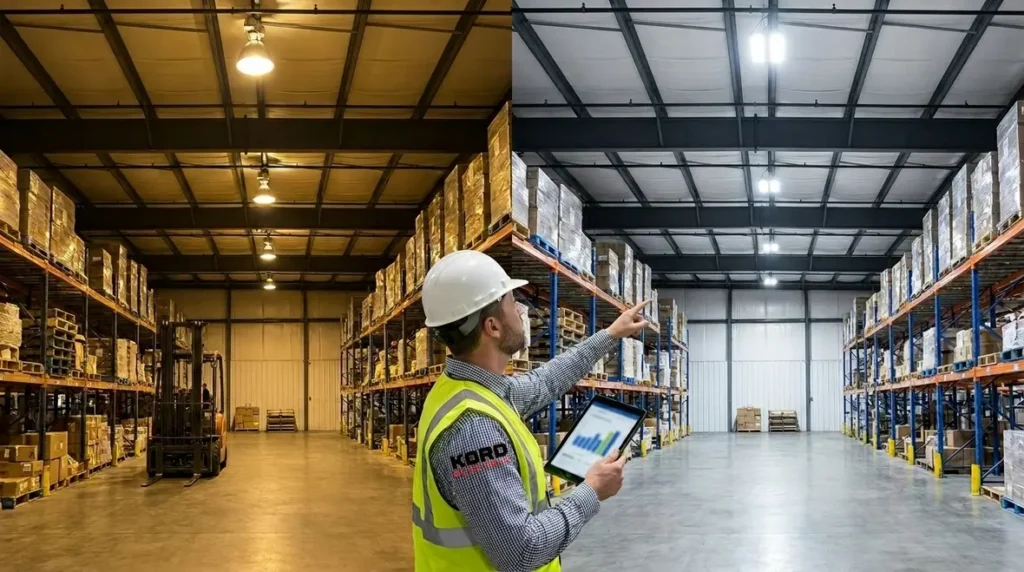
When others treat warehouse lighting like a simple swap, they often miss how light quality shapes safety. Poor visibility can hide floor markings, create glare near aisles, and make it harder for operators to spot hazards. Meanwhile, a weak lighting layout can lead to hotspots where fixtures overheat or fail faster than expected.
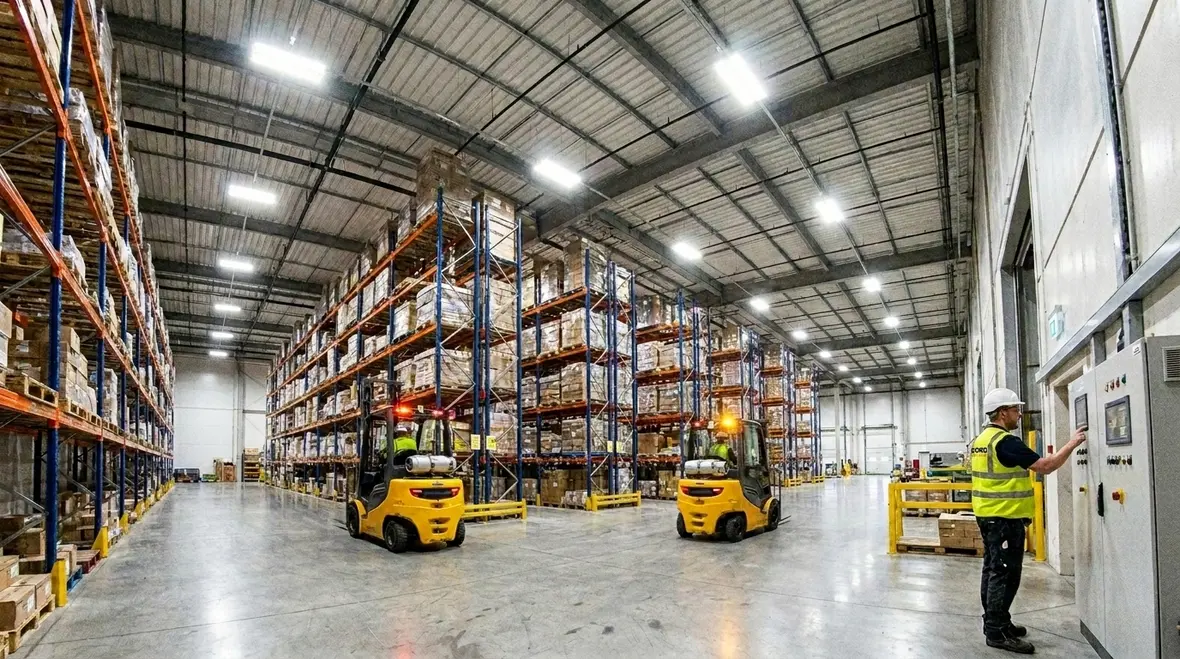
To avoid that, we start by thinking about how workers move and how materials travel. Then we match light levels to zones such as loading bays, pallet racking, picking areas, and corridors. This approach improves sight lines and supports safer motion. Also, it helps reduce errors during stacking and inspection tasks.
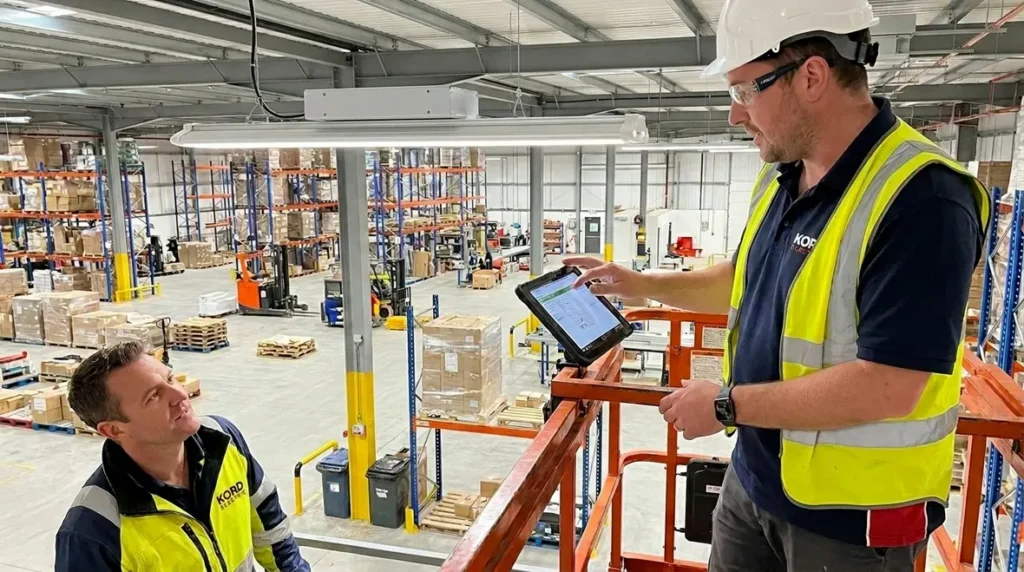
Our expert service staff does not just talk about theory. In the field, they explain what they see during site walkthroughs, including common issues like damaged lenses, failing drivers, and uneven illumination caused by misalignment. We then translate those findings into clear, practical design decisions.
How we plan energy savings without cutting corners
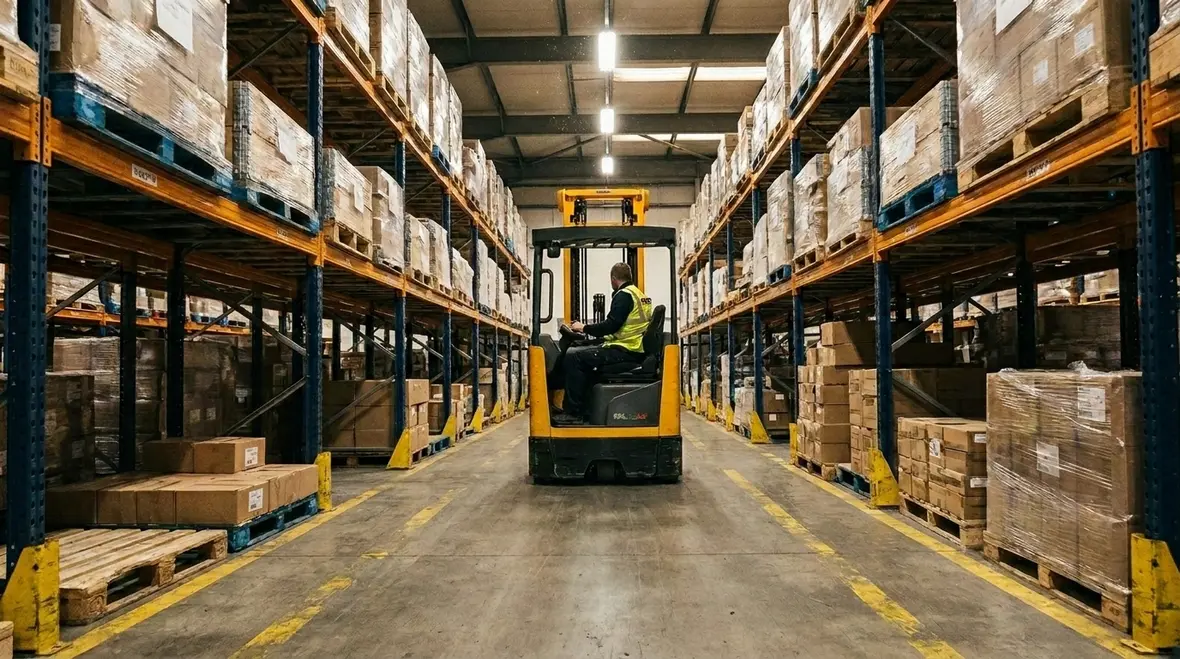
First, we measure the actual lighting needs, not the guesswork needs. We evaluate ceiling height, obstruction from racks, reflectivity of walls and floors, and the way shift patterns affect usage. After that, we choose controls and fixture types that support warehouse lighting energy efficiency across the day.
For instance, dimming strategies can reduce waste during low activity hours, while occupancy sensing can cut off unnecessary light in rarely used corridors. However, we still preserve safe minimum lighting so workers can operate with confidence. In other words, we do not chase savings so aggressively that visibility becomes a gamble.
We also consider glare control and uniformity. When light spreads evenly, workers waste less time adjusting their focus. This reduces “micro-stops” that slow workflows. That is not marketing fluff. It is the kind of operational realism we see at major properties we serve, where performance matters as much as power use.
For facilities planning major retrofits, this same mindset supports long-term return on investment. Many large warehouse projects blend energy savings, safety upgrades, and compliance work in one step, similar to how Title 24 lighting retrofits are evaluated for performance and payback across big commercial properties. That way, warehouse lighting energy efficiency becomes a measurable asset instead of just a hopeful promise.
Preventive maintenance improves results, not just reliability
Design matters, yet maintenance keeps the design honest. Over time, dust and grime reduce light output, and components degrade. So even an efficient system can drift downward unless we maintain it properly.
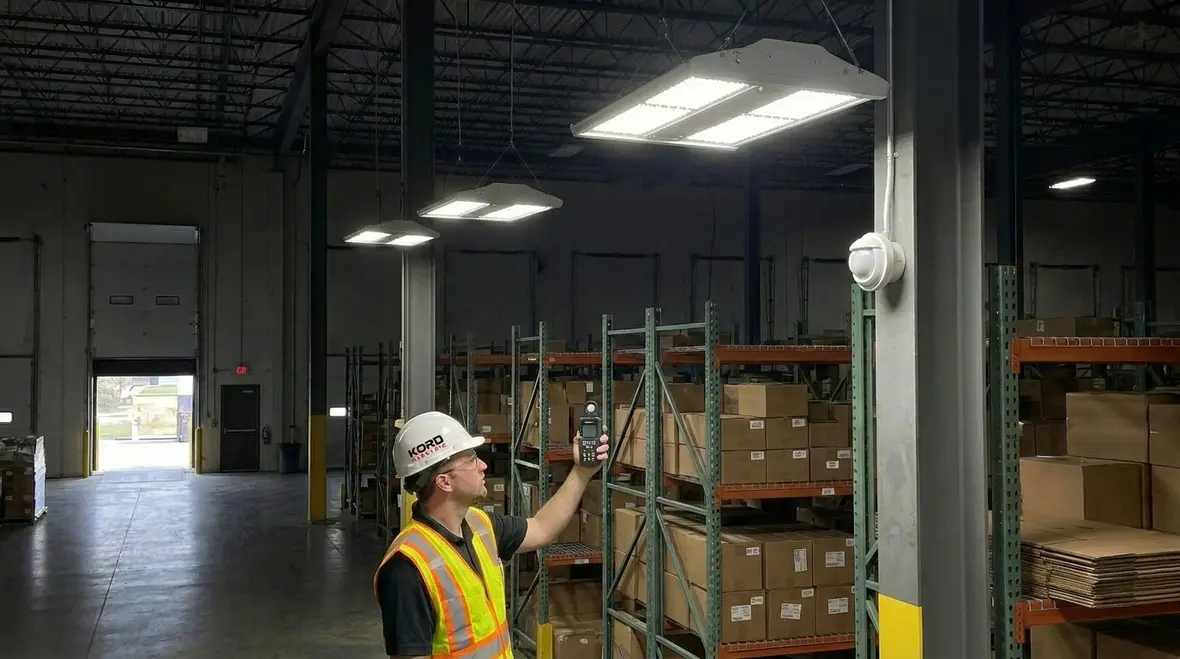
That is where our preventive service approach comes in. As outlined in our electrical preventive maintenance work at Kord Electric, we support commercial and industrial facilities with a structured plan that aims to catch issues early, before they become emergency repairs. Our technicians inspect, test, and verify key electrical elements so the lighting system performs as intended.
To keep this process clear, we follow a practical rhythm: we check connections, review protective devices, assess driver and control behavior, and confirm that circuits still operate within expected parameters. Then we address problems with a targeted repair, not a blind “replace everything” reaction.
And because warehouses are busy, we coordinate work around operations. We plan access times, reduce downtime, and explain what we will do before we do it. Others may show up and shrug. Our team shows up and explains.
In many large facilities, warehouse lighting checks plug directly into broader maintenance strategies. For example, when teams already schedule inspections for panels, feeders, and major equipment, it is simple to fold lighting drivers, emergency circuits, and control hardware into the same preventive checklist. The result is steadier performance, fewer surprises, and warehouse lighting energy efficiency that holds up over years, not just the first few months after a retrofit.
Controls, sensors, and zoning that actually fit a warehouse
Warehouse spaces are rarely one big, uniform environment. Therefore, we treat them as zones with different needs. We map lighting zones around dock doors, staging areas, high traffic aisles, and picking zones. Then we apply controls that fit each area instead of relying on a one size setup.
Consider how a loading bay behaves. It may run bright for short intervals while doors open and activity peaks. In contrast, long aisles and offices may need steady but lower output for hours. By using zone based control, we support warehouse lighting energy efficiency while keeping safe levels where people need them most.
We also account for controls that behave well in harsh environments. Dust, temperature swings, and vibration can affect sensor and control performance. So we select systems that maintain stable readings and avoid random flicker. If you have ever seen lights strobe like a club in a movie montage, you already understand why stable control matters.
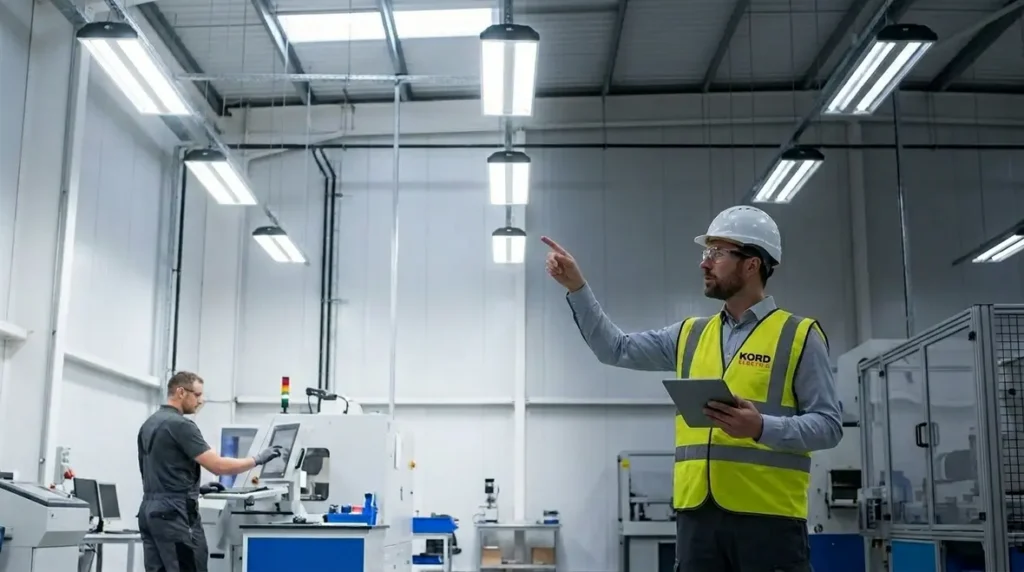
Our technicians walk customers through the setup as well. They explain what each control does, where it triggers, and why it meets safety needs. That way, building teams can trust the system instead of treating it like a mystery box.
For multi-building portfolios or large distribution campuses, this zoning strategy can be standardized, then repeated. Dock doors, high rack aisles, staging pads, mezzanines, and offices each receive control patterns that match how people actually use the space. When combined with smart scheduling and occupancy sensing, the result is a warehouse lighting energy efficiency profile that cuts waste without forcing anyone to squint their way through a shift.
Safety design: glare, emergency lighting, and protected circuits
Energy savings must never compromise safety. We prioritize safe lighting distribution, glare reduction, and consistent performance so operators can see clearly without visual strain. Additionally, we plan emergency lighting so exits, egress paths, and critical stations remain illuminated during power events.
We also think about the electrical side. In warehouses, lighting circuits can experience mechanical stress and environmental exposure. So we focus on proper wiring methods, protective devices, and secure connections. This reduces the risk of faults that can lead to outages or safety hazards.
Our expert service staff explains what we find during inspections, including wiring conditions, panel health, breaker behavior, and how lighting controls interact with the electrical distribution. When building owners and managers understand the system, they can make better decisions and respond faster when something changes.
And for a small joke, we tell people the goal is simple: we want your lighting to be boring in the best way. Boring means reliable. Boring means it does not surprise anyone at 2 AM on a night shift.
For facilities that want a broader safety net, this same philosophy extends past lighting. Clear panel labeling, structured inspections, and preventive electrical work all reinforce what your warehouse lighting design is trying to do: keep people safe while the building quietly does its job.
Quality checks during installation and after upgrades
Upgrades succeed only when we verify performance. So after we install or retrofit a lighting system, we do structured checks that confirm safe operation and consistent output. We validate control settings, ensure fixtures align with the intended layout, and verify that emergency functions work as required.
Then we document what we did and what it achieves. For commercial and industrial facilities and major property buildings, clear documentation supports maintenance planning and helps teams track improvements over time.
We also schedule the follow up checks we believe in, because early detection prevents repeat problems. For example, if a driver or control channel starts drifting, we want to know right away. This is the difference between a minor adjustment and a recurring failure cycle.
Most importantly, we keep communication open. Our approach includes direct explanation and practical guidance so the facility team knows how to maintain the system. That transparency builds trust, and trust builds uptime.
When warehouse managers tie these upgrades to a wider service plan, they often pair lighting work with structured commercial and industrial electrical maintenance plans. That combination means fewer guesswork repairs, better budgeting, and a clear roadmap for how the electrical system will support operations for years.
For organizations spread across multiple locations in Los Angeles County, Kord Electric can also coordinate lighting and electrical projects through our broader Los Angeles County electrical services support, so standards stay consistent from one warehouse to the next.
FAQ: Warehouse lighting, efficiency, and safety
Conclusion: Let’s upgrade safety and reduce waste
If you want safer aisles, stronger visibility, and dependable performance, we can help. At Kord Electric, we design and upgrade lighting for commercial and industrial warehouses and major property buildings, then we support the system with preventive maintenance planning. Our technicians explain what we find and why it matters, so your team stays informed and confident. Contact us to schedule an evaluation and put warehouse lighting energy efficiency to work for your operation, not just your spreadsheet.
When you are ready to go beyond one time fixes, we can align your warehouse lighting with a broader electrical strategy that covers panels, distribution equipment, and long term reliability. That way, every upgrade — from fixtures to controls to protective devices — pulls in the same direction: safer operations, less waste, and more predictable uptime.
Our team supports large properties, campuses, and industrial environments with the same steady approach: careful assessment, clear recommendations, and work that respects your schedule. Whether you are planning a new warehouse, retrofitting an existing facility, or expanding across multiple sites, we can help you build a lighting and electrical roadmap that is built to last.
If your facility also needs broader electrical support — from troubleshooting to structured maintenance programs — we can connect warehouse lighting upgrades to the rest of your electrical system so everything operates as one coordinated plan instead of a patchwork of past projects.