Warehouse Lighting Energy Efficiency That Cuts Costs
Warehouse lighting energy efficiency that actually cuts costs
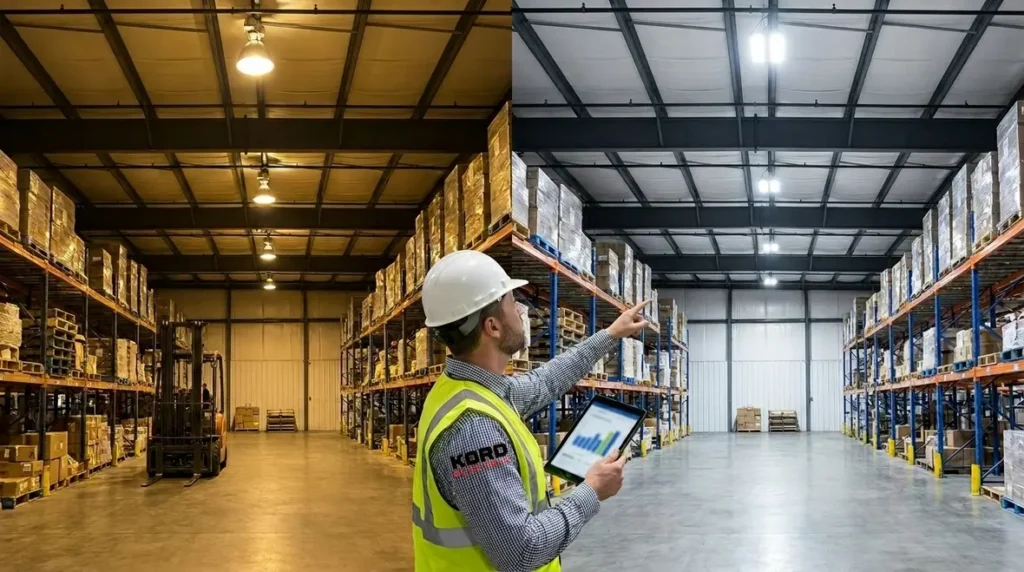
In large-scale warehouses, warehouse lighting energy efficiency is not a trendy phrase. It is the difference between steady overhead and a slow leak of electricity that nobody sees until the bill shows up. We at Kord Electric focus on commercial and industrial facilities and major property buildings, because that is where smart lighting design pays off fast. We plan systems that use less power, reduce heat, and keep crews safe without turning every aisle into a lighting “experiment.”
Below, we walk through how our engineers and technicians approach energy-efficient warehouse lighting designs, and why attention to hidden risks matters just as much as brightness. Then we connect the dots from design to commissioning, so the savings do not vanish after installation.
How commercial warehouse loads drive lighting design
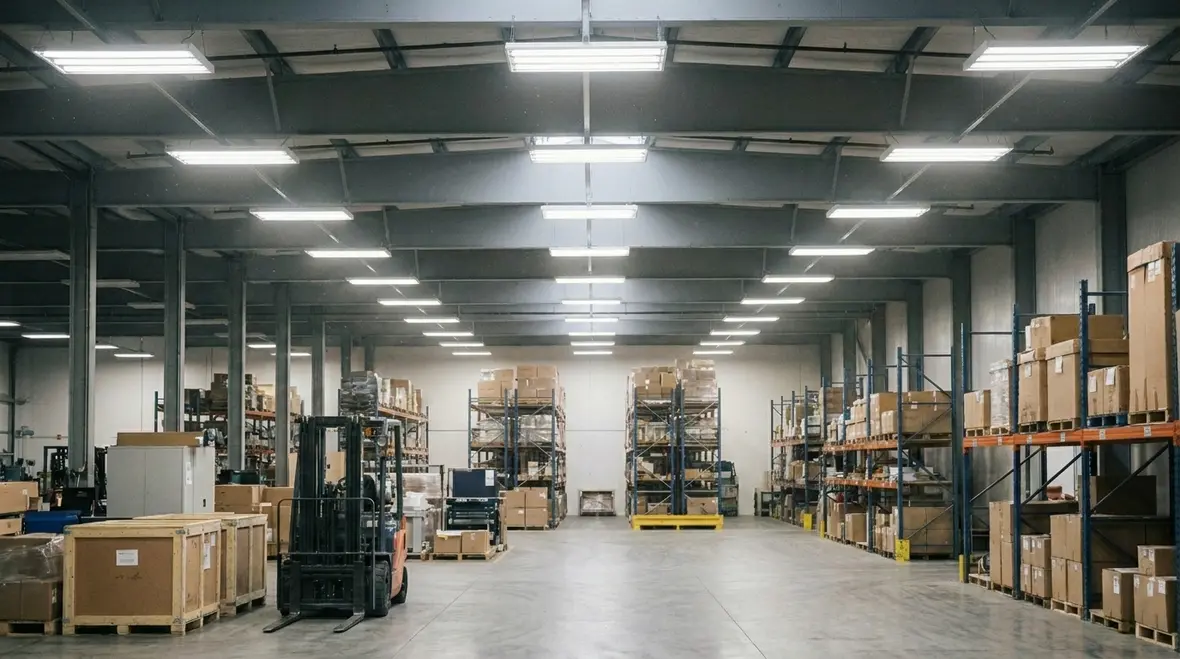
When we design for a big facility, we first treat lighting as part of a larger electrical story. The HVAC, dock doors, controls, and even vehicle traffic all affect what the lighting system should do. Therefore, we start with real-world load planning instead of guessing based on past projects.
Large warehouses often run for long hours, sometimes in shifts that stretch into the evening. As a result, the lighting system becomes a primary driver of total electrical demand. If the plan ignores this, facilities end up with fixtures that look fine but waste energy due to poor layout, mismatched controls, or bad spacing.
Then there is glare and uniformity. A warehouse needs consistent light at work height, not just “bright enough” in the center. If light falls off too quickly, staff compensate by raising demand elsewhere, like adding more fixtures or increasing runtime. We help others avoid that spiral by mapping the work zones and then aligning fixture output with the actual tasks in each zone.
Hidden electrical risks in commercial buildings that affect lighting performance
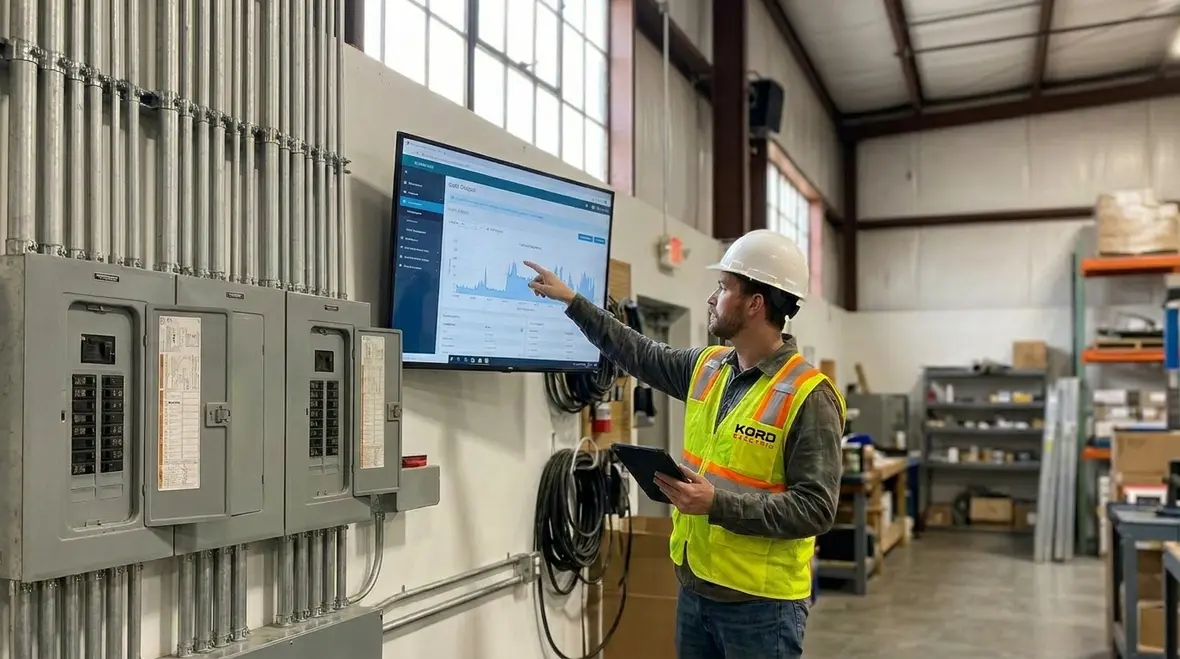
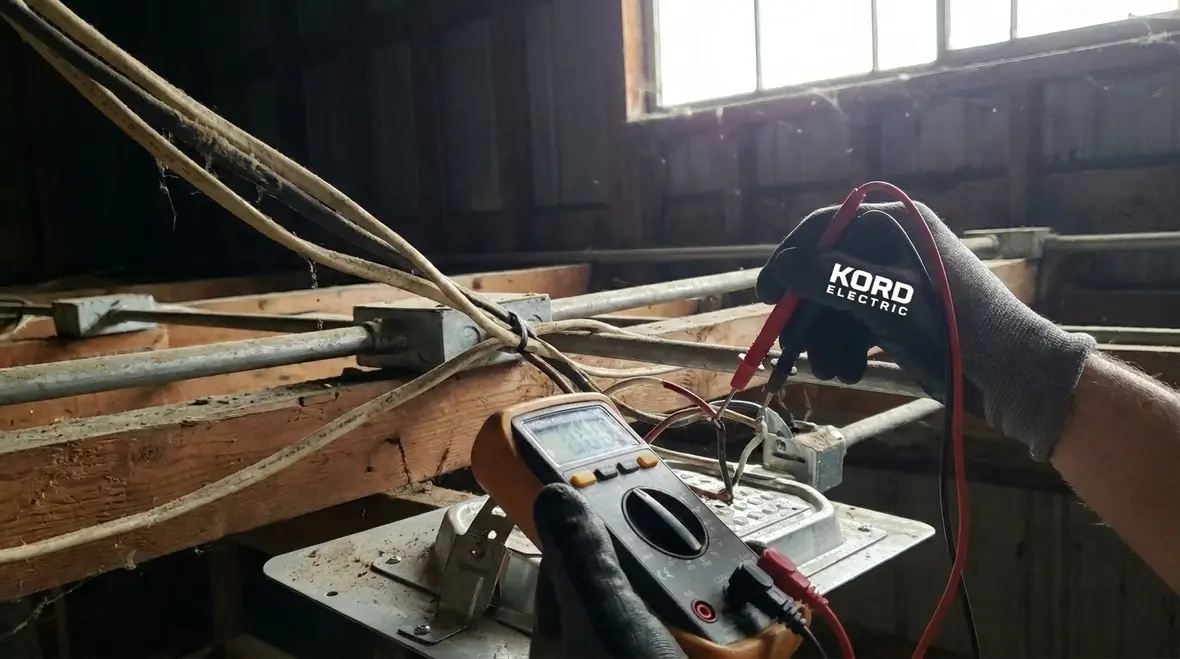
Even the best LED fixtures can underperform if the electrical system cannot support them. In our blog, we highlight hidden electrical risks in commercial buildings, and we see these issues show up in lighting projects more often than people expect. For example, loose connections, poor grounding, damaged conductors, and aging components create voltage swings and heat. And since lighting is sensitive to power quality, the outcome can be flicker, shortened lifespan, and higher energy use.
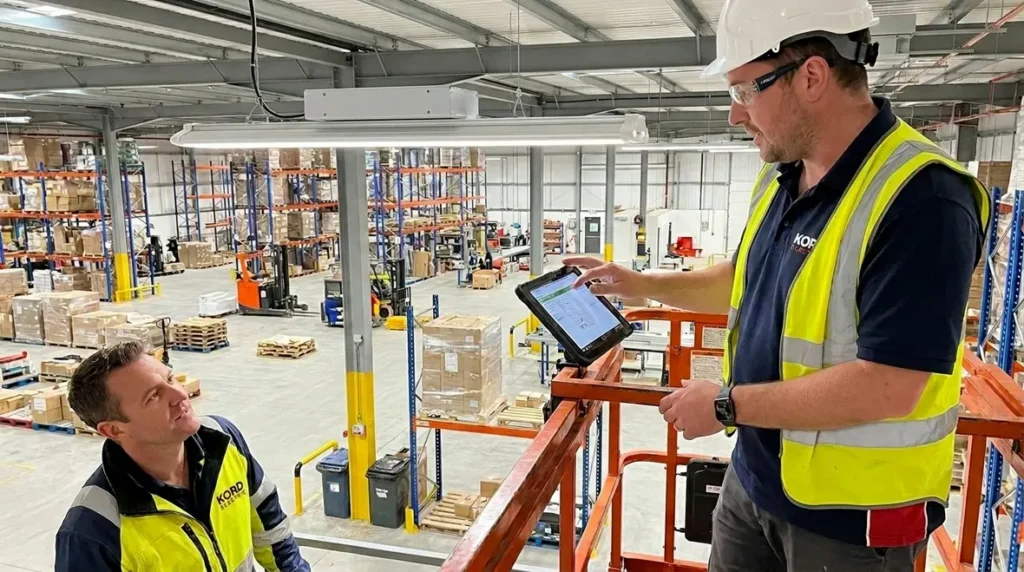
Our technicians explain these issues in plain terms during onsite reviews. They do not just point at a problem and walk away. Instead, they explain what causes it, how it shows up under load, and what fix prevents it. Think of it like a smoke alarm: it is not there for decoration. It helps the building avoid a bigger problem later.
When facilities ignore these risks, the lighting system can become an energy sink. So we check the electrical environment before final decisions, because cutting warehouse lighting energy efficiency on paper means nothing if power delivery is unstable in the field.
Site modeling: the quickest path to better efficiency
We do not treat lighting layout like a simple grid. Instead, we model it. We review ceiling height, beam obstructions, racking layout, shelf reflectance, and the path of traffic. Then we match fixture placement to the warehouse geometry.
Proper modeling reduces over-lighting, which is one of the most common causes of wasted energy. Many projects end up brighter than required because teams start with generic spacing charts and do not adjust for the environment. However, warehouses rarely follow “average” assumptions. Dust, reflective surfaces, and structural steel change how light travels.
Additionally, we plan for maintenance and aging. As surfaces darken over time, light output drops. So we include design margins that maintain required levels without flooding every area from day one. That is how we improve warehouse lighting energy efficiency while staying realistic about the building’s long-term use.
And yes, people sometimes ask if “brighter is always better.” We politely tell them that brighter can be useful, but only when it matches the work. Otherwise it becomes like bringing an extra hot sauce packet to every meal: sometimes you need it, but most of the time you are just making more mess.

Controls and zoning that match how warehouses actually operate
Once layout is set, we focus on controls. For large facilities, lighting control cannot be one-size-fits-all. Motion sensors, daylight harvesting, time schedules, and occupancy zones all need to match how the building runs.
For example, dock areas may need higher output during active loading windows, while office-adjacent zones may need different behavior during evenings. Cold storage areas may have separate requirements because maintenance schedules and access patterns differ. We build control logic around these zones so the lighting system uses power when work happens, not when the building is empty.
Moreover, we pay attention to how controls interact with power quality. If electrical risks exist, sensors may behave oddly, and dimming curves can become unstable. That is why we connect the lighting plan to the electrical review. We also ensure the system supports smooth dimming rather than abrupt step changes that can distract staff and cause callbacks.
In short, controls turn efficiency into a living system. They do not just reduce demand at night. They also reduce waste during lower occupancy hours, which improves the overall warehouse lighting energy efficiency profile across the year.
Fixture selection for long life and lower heat
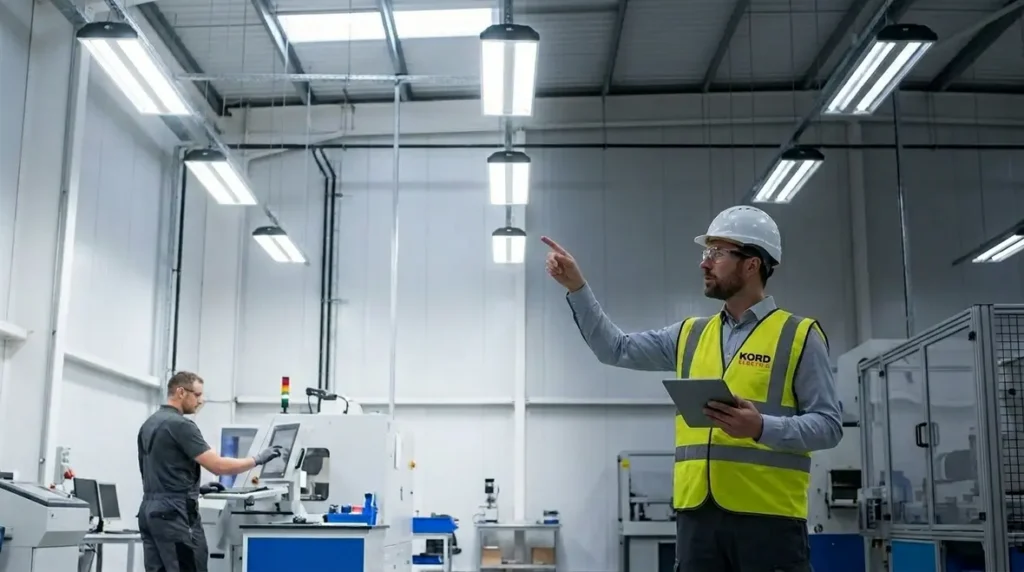
The fixture choice matters, but we treat it as part of an engineered system. We select LEDs and drivers that match the environment: high dust loads, vibration, temperature swings, and washdown or chemical exposure when needed. We also consider optical performance so light goes where it is useful, not where it is merely bright.
Heat impacts everything. When fixtures run too hot, their output drops faster and their lifespan shortens. In large warehouses, ambient conditions can push fixtures into harsher operating ranges. Therefore, we specify thermal management and we coordinate with the mounting approach to help fixtures stay stable over time.
Next, we look at lumen maintenance and replace plans. A facility manager does not want surprises. Our team helps others plan for performance over multiple years, so the lighting stays consistent and does not require frequent intervention.
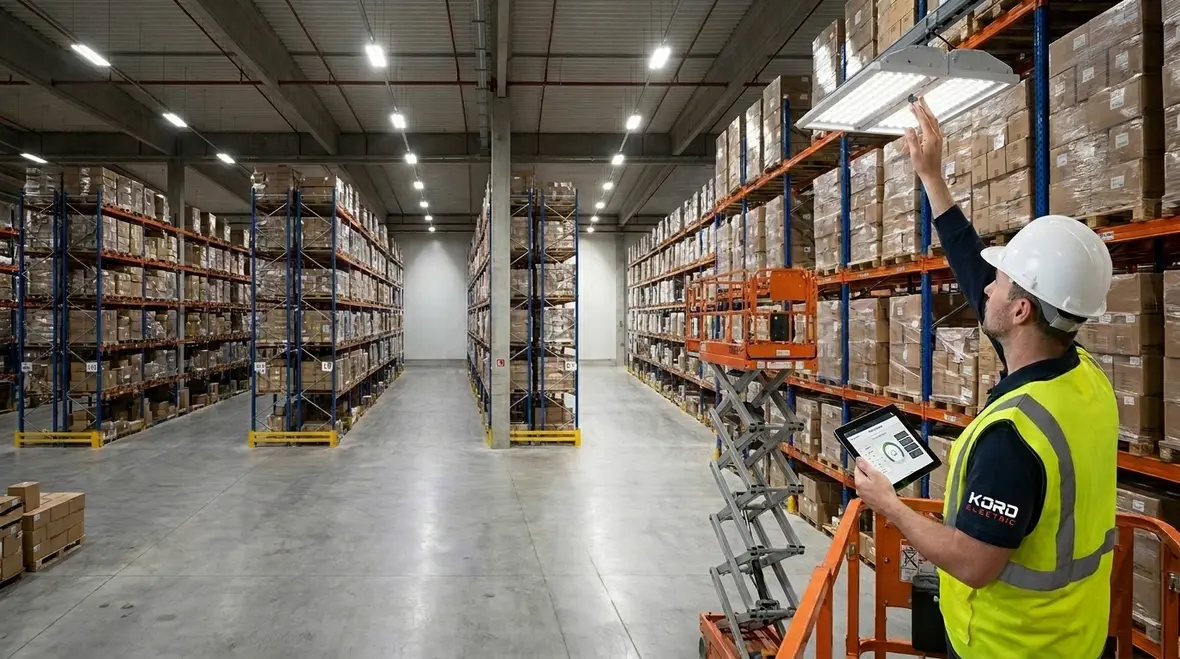
Finally, we keep the system easy to maintain. We choose components that technicians can service without turning the entire building into a construction zone. The goal stays simple: fewer outages, fewer callouts, and predictable energy performance. That is not only efficient, it is calm.
Commissioning and measurement: prove the savings, don’t guess
Energy efficiency sounds good until someone asks for proof. So we commission the system. We verify the photometric outcomes, confirm control behavior, and check the electrical side for stable operation under real load.
Then we measure and document. We use practical checks that align with commercial and industrial needs, such as ensuring dimming levels match the schedule and zones. We also confirm that lighting levels stay within required ranges across time and occupancy patterns.
This is where our expert service staff adds real value. They do not leave the site with a handshake and a vague promise. Instead, they review the system with facility teams and explain what they are seeing: why a zone dims sooner than another, how daylight affects output, and what normal behavior looks like during shift changes.
And when something does not behave, we troubleshoot quickly. The difference between a good installation and a great one is follow-through. With Kord Electric, we treat commissioning as part of the design, not a final paperwork step. That is how improvements in warehouse lighting energy efficiency become dependable results.
When safety, power quality, and efficiency must work together
Warehouses need safe lighting for pedestrians, drivers, and equipment operators. However, safety cannot come at the cost of electrical integrity. If power quality issues exist, the lighting system can flicker or fail early, creating both risk and extra energy use through repeated replacements and maintenance.
That is why we coordinate with facility stakeholders on operational needs while also addressing electrical stability. We help others avoid patchwork fixes that improve one part while leaving another vulnerable.
In the real world, efficiency is not just the fixture and not just the controls. It is the chain: electrical supply, wiring integrity, fixture performance, thermal behavior, and control logic. When one link breaks, the whole chain loosens.
We keep the process straightforward for major property buildings and commercial and industrial facilities. We explain what we find, why it matters, and what changes bring the most reliable results.
For facility teams interested in deeper electrical insights beyond lighting, our article on commercial electrical systems for modern buildings connects the dots between distribution design, controls, and long-term reliability across the entire site.
FAQ
Ready to lower costs and keep lighting dependable?
If your warehouse lighting feels like it is burning money in the background, Kord Electric can help. We design and install commercial and industrial lighting systems for major property buildings with a focus on warehouse lighting energy efficiency, electrical stability, and controls that match real operations. Our technicians explain findings clearly, and our team commissions the system so savings hold up in the field. For facilities that also want broader system reliability, our electrical preventive maintenance services keep panels, feeders, and critical equipment in step with your upgraded lighting so performance does not slip over time.
Contact us for an assessment and let us map the best path forward for your facility, from the first photometric model to long-term maintenance planning and documented energy savings.