Planning Commercial Electric Vehicle Charging Requirements
At Kord Electric, we help commercial sites plan commercial electric vehicle charging requirements with the kind of care that keeps buildings running and budgets intact. In the first planning step, our teams ask about power, parking patterns, dwell time, and how many vehicles you expect today versus next year. Then we align the charging setup with your electrical system, utility service, and site rules. Because without a solid plan, you do not just “add chargers.” You also risk slow charging, tripped breakers, and angry drivers who treat downtime like it is a personal insult. As we explain to facilities, the goal is simple: charge reliably, schedule intelligently, and stay compliant, all without turning your electrical room into a chaos museum.
How Kord Electric starts planning commercial charging for real businesses
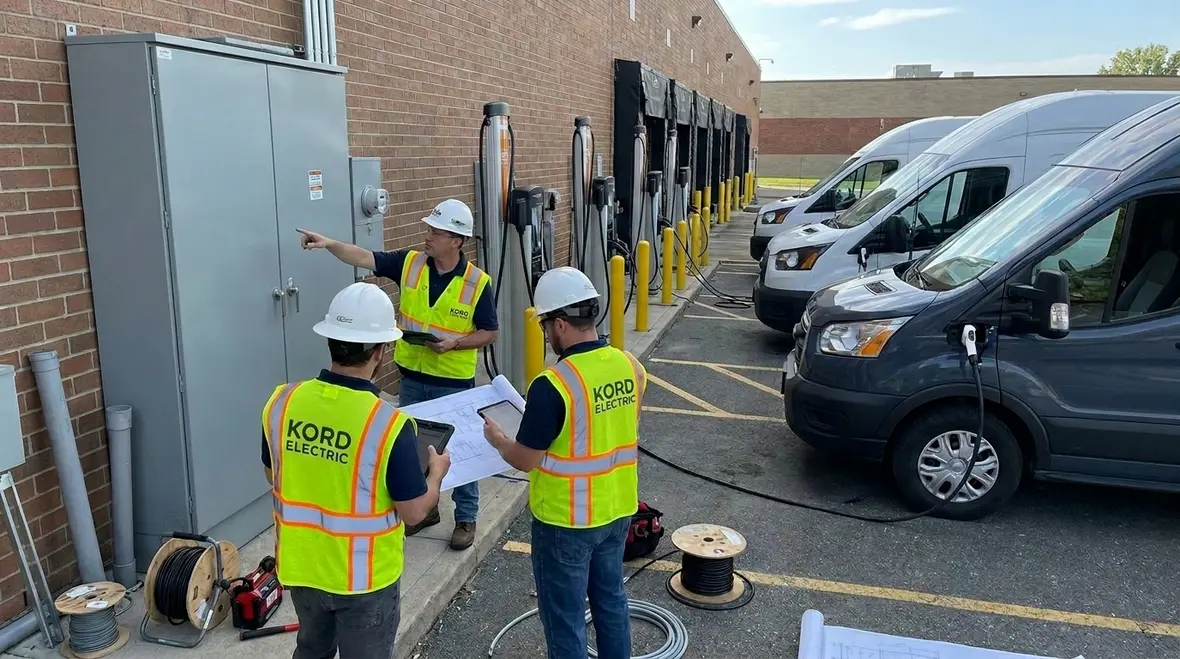
When Kord Electric works with commercial and industrial facilities, we do not rely on guesses. We start with the operating reality of the property. For example, our technicians ask who will use the chargers, when they will arrive, and how long they will stay. Since loading and unloading schedules vary, we treat your charging plan like a workflow, not like a retail gadget.
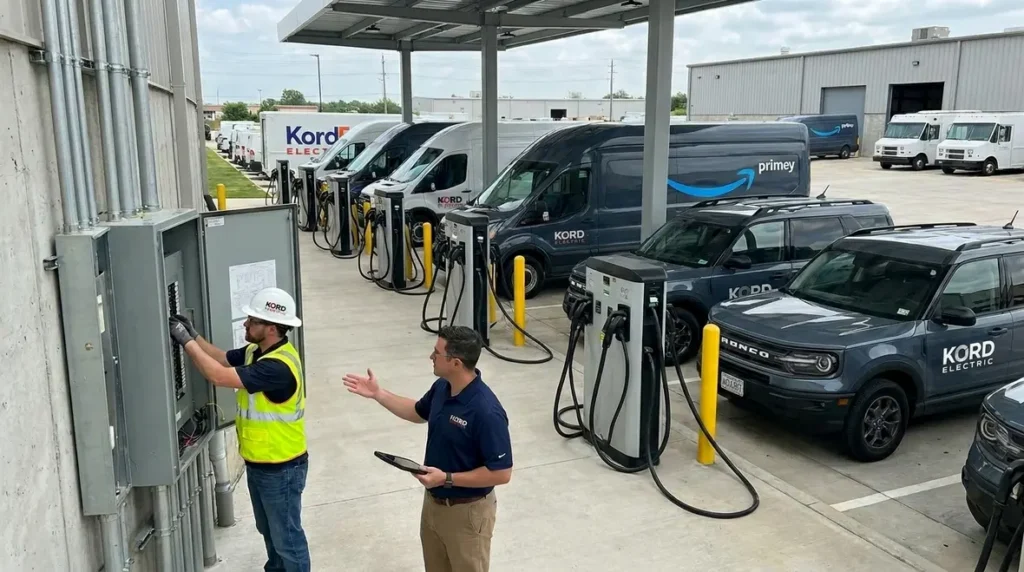
Next, we review your electrical capacity and infrastructure. We map your panels, feeders, transformers, and any existing load management. After that, we look at how your site behaves under peak demand. If your HVAC, lighting, and manufacturing or building operations already push the system, then charging needs thoughtful timing and smart power sharing.
To keep it calm, our expert service staff explains options in plain language. And yes, they also make sure you understand the difference between “it will probably work” and “it will work all summer, even on the hottest day that makes everyone sweat like they are auditioning for a sitcom.”
Assessing site power, space, and vehicle patterns
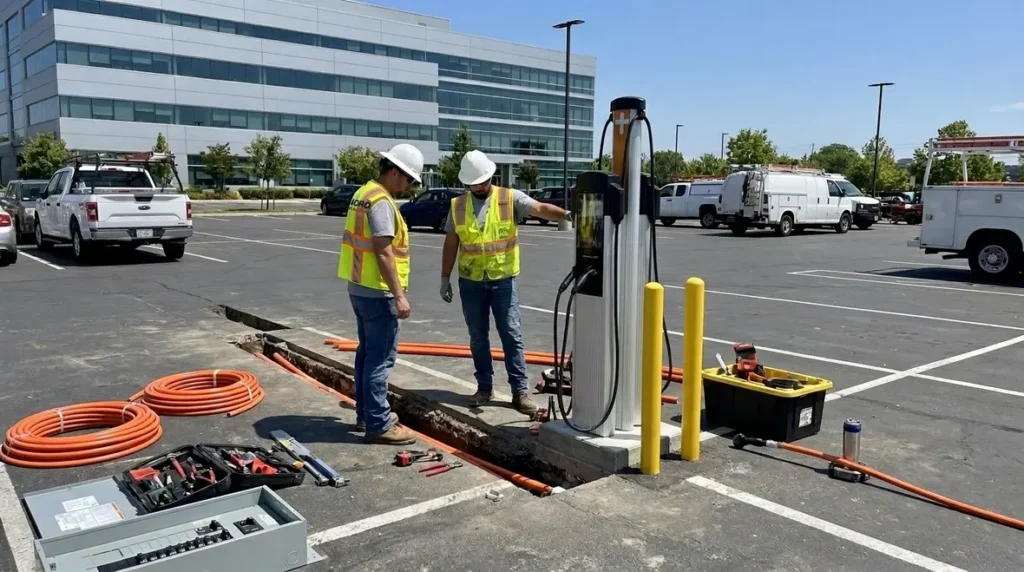
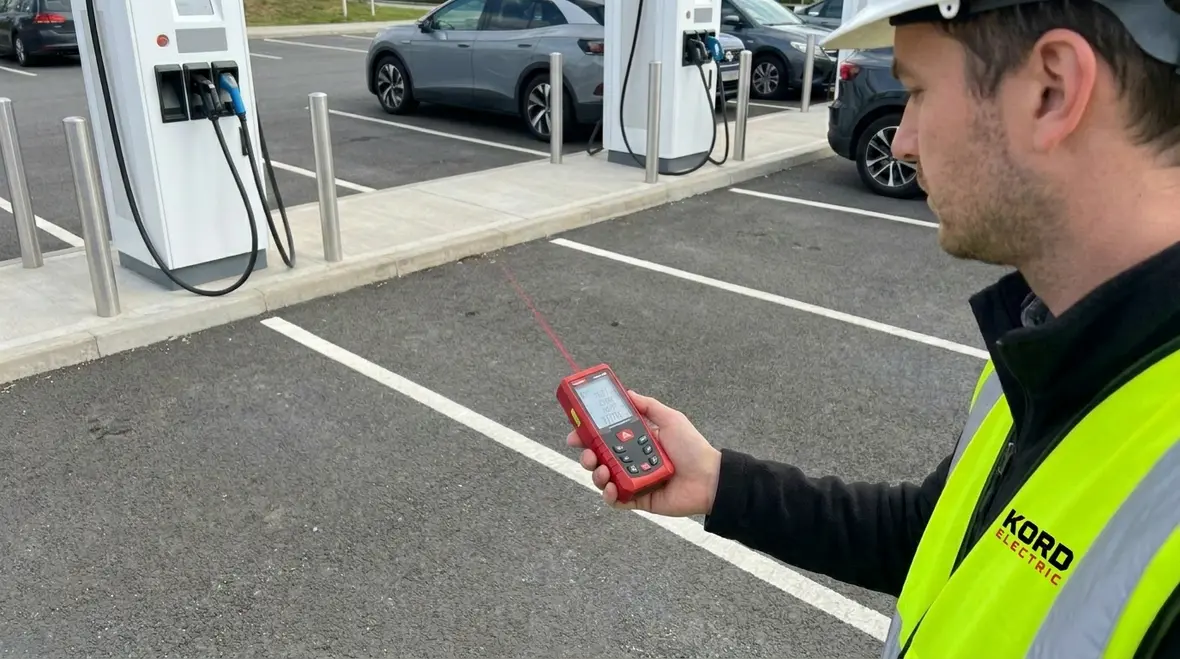
Every property has a different story, and we listen. First, we evaluate the physical layout: parking bays, electrical access points, cable routes, and whether trenching will disrupt operations. Then we examine how vehicles move on and off the site. A fleet depot with predictable routes behaves differently from a mixed-use building where drivers come and go at irregular times.
Because charging speed depends on power delivery and charging strategy, we also define the expected charging window. For instance, a vehicle that parks for hours needs a different approach than one that only stops briefly. Additionally, we consider whether vehicles use overnight charging, daytime charging, or both. As we plan, we also factor in future growth. Facilities often add trucks or cars after a budget cycle, so we design with expansion in mind.
At this stage, our team performs a load and capacity check. Then we develop a practical path to install equipment safely. If upgrades are needed, we outline them early so stakeholders can plan around cost and schedule.
Engineering for reliability: panels, transformers, and load control
Once we understand the site and vehicle patterns, we engineer for stability. Charging does not behave like normal plug-in use. It draws consistent power and can shift demand quickly. Therefore, our technicians plan how charging connects to the electrical system and how the system handles simultaneous use.
In many facilities, the biggest challenge is not “finding space for chargers.” Instead, it is managing electrical headroom. We may recommend panel additions, transformer upgrades, or distribution adjustments. Meanwhile, we consider load control systems that balance power across multiple charging ports. This approach can help avoid demand spikes and reduces the chance of tripping protection devices during peak building usage.
Importantly, we document the design so maintenance teams can support it later. And since nobody wants mystery wiring, we keep labeling clear and routes logical. If an electrician ever needs a treasure map, we did not do our job.

Designing systems that meet codes and reduce downtime
Compliance matters, especially for commercial and industrial facilities where inspections and downtime have real business impact. Kord Electric designs charging installations with code requirements in mind. We also consider safety practices that protect people, equipment, and building operations.
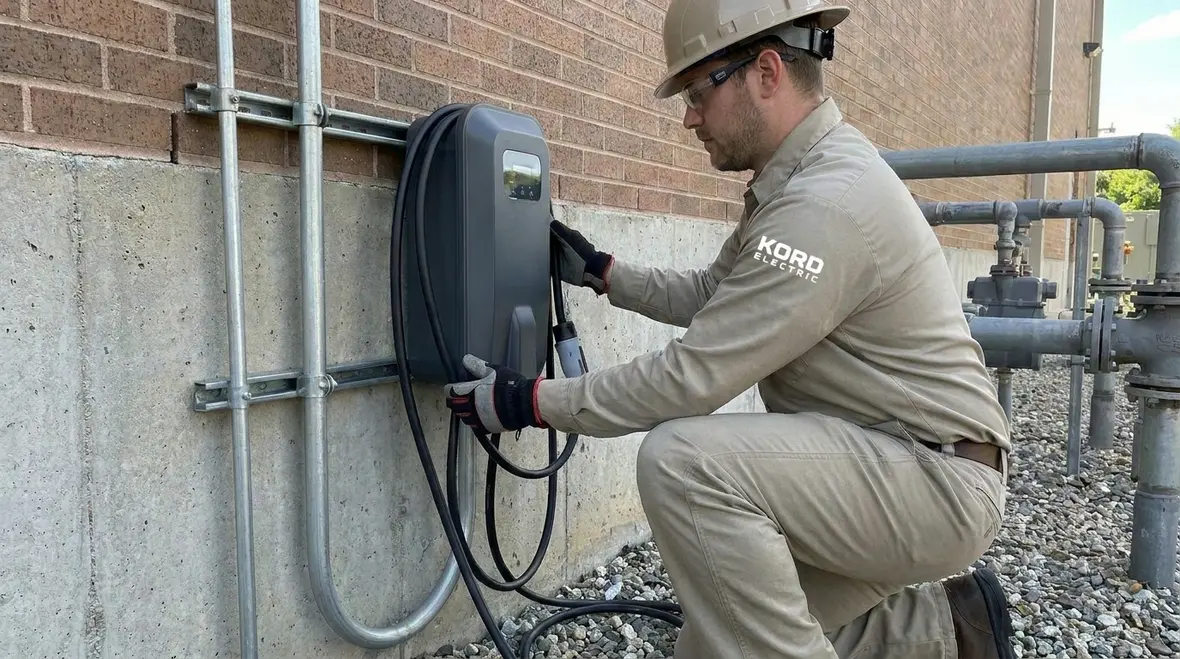
Then we plan for real-world service conditions. Charging equipment sits outdoors, experiences temperature swings, and faces water exposure and physical wear. Because of that, we select components suited for the environment and plan installation details that support long life.
To reduce downtime, we also think about how your site will operate during failures. If a charger faults, does the system keep working? Can staff isolate a unit without shutting down everything? Our team builds in practical controls so a single issue does not become a full-site emergency.

Using maintenance plans to protect your investment
Charging hardware needs more than a once-and-done install. That is where maintenance plans become a quiet superpower. If your facilities run on tight schedules, then predictable service helps keep vehicles moving and customers calm.
Kord Electric references the same planning mindset found in our commercial and industrial electrical maintenance plans approach. In those plans, we help clients reduce surprises by organizing inspections, prioritizing key systems, and aligning service timing with your operations. As a result, maintenance supports charging uptime and extends equipment life.
Our expert service staff also helps you build a routine around performance checks, connection inspections, and documentation updates. Therefore, when issues happen, your team spends less time guessing and more time resolving.
What we check during ongoing electrical and charging service
- Electrical connections and protective devices
- Signs of heat stress or insulation wear
- Charger performance and error logs
- Cable routing and weather-related protection
- Load control behavior during peak demand
How it helps your property run better
- Fewer unexpected shutdowns
- Faster troubleshooting when faults occur
- Better planning for upgrades
- More stable charging output for fleets and customers
- Clear records for stakeholders and inspections
How to budget for chargers without losing control of the timeline
Budgeting for charging can feel like planning a movie shoot where the lead actor is the utility company and the script keeps changing. Yet we help facilities make it manageable. First, we estimate not only equipment and installation costs, but also electrical upgrades and any required permitting steps.
Then we map the schedule to your operational needs. Since commercial and industrial sites cannot always shut down, we coordinate work windows and phasing. Additionally, we plan material lead times so the project does not stall. As deadlines approach, teams often feel stress, so we communicate early about what we need from your side.
We also help stakeholders understand future options. If you need more ports later, we design the system so growth does not require a full rebuild. That approach reduces rework and protects the original investment. In other words, we help you avoid “we’ll figure it out later” plans, because later always shows up with a bill.
FAQs about commercial electric vehicle charging requirements
Next steps with Kord Electric
If your commercial or industrial property is ready to add EV charging, Kord Electric will help you plan with confidence from first assessment to long-term service. Our technicians and expert service staff explain the options, validate electrical capacity, and design a system that supports reliable charging without surprises. Contact us for a consult and we will outline a clear plan, a realistic timeline, and a maintenance approach that keeps your equipment working like it should.
For properties that are ready to move from planning into implementation, our dedicated commercial EV charger installation services help you turn those commercial electric vehicle charging requirements into a built, tested, and maintainable system that supports daily operations.