2014 NEC Compliance Checks for Commercial Buildings
Quick ways to confirm 2014 NEC compliance in commercial and industrial buildings
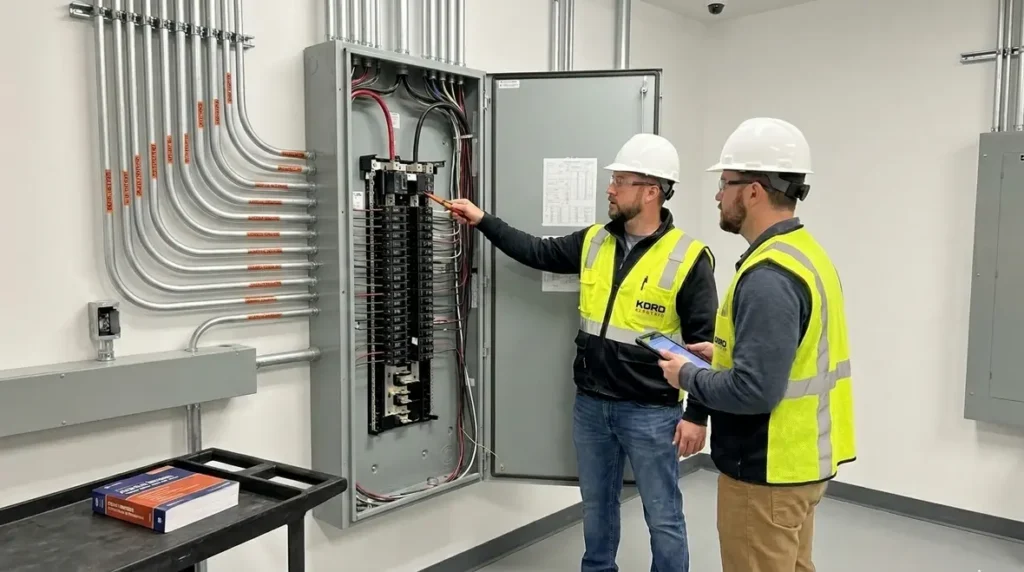
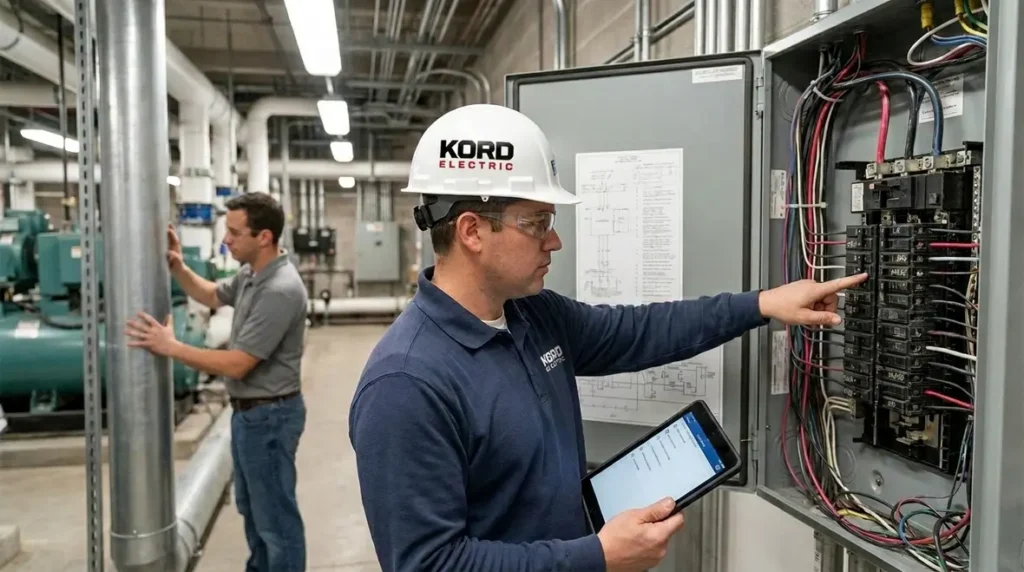
At Kord Electric, we regularly help owners and facility managers confirm 2014 NEC compliance for commercial and industrial sites, including major property buildings where electrical safety and code alignment cannot be guesswork. We also know the reality: nobody wakes up excited to “check electrical code.” Still, our job is to help others verify what they have, what it needs, and what to document before a small issue becomes an expensive one.
In this guide, our approach stays practical and clear. We explain what to look for, how to trace it through drawings and field conditions, and how our technicians and expert service staff walk customers through findings in plain language. That way, the process feels less like a pop quiz and more like a calm, step by step inspection.
Why buildings drift away from 2014 NEC compliance over time
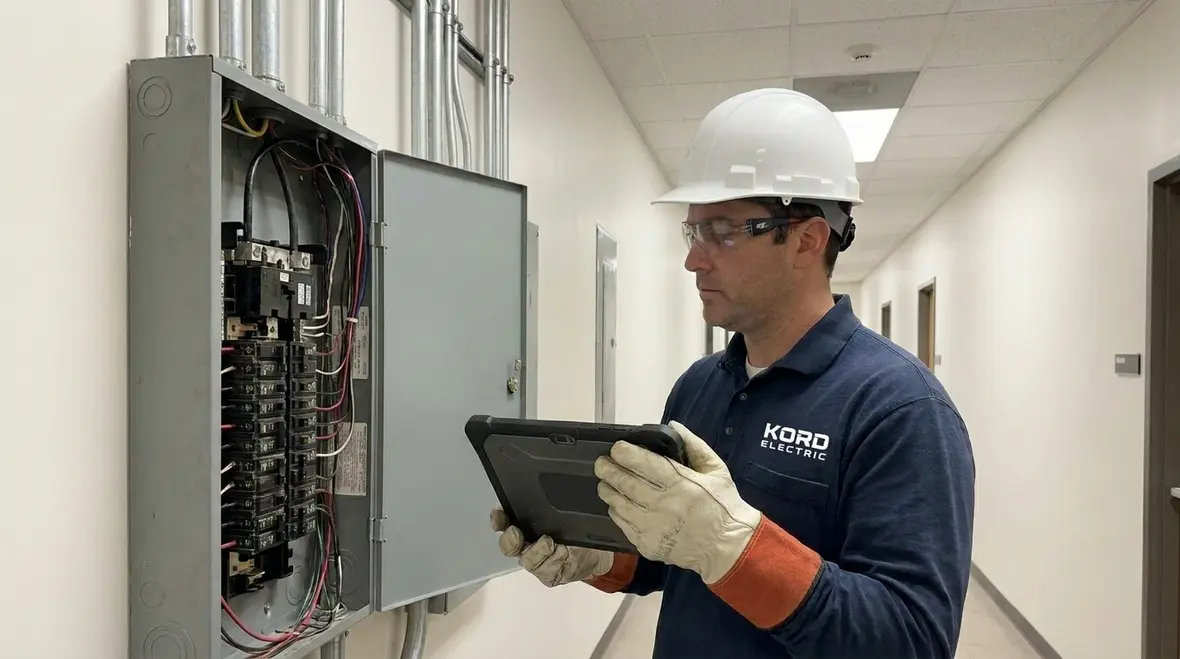
Even when a building started out aligned with the 2014 NEC compliance standard, real life can nudge it off track. For example, tenants change, equipment gets upgraded, and renovations introduce new loads without fully updating how the electrical system is documented. Meanwhile, maintenance work might replace parts that look similar but do not match the original listing, ratings, or required protection methods.
Furthermore, commercial and industrial facilities often add circuits for processes, charging stations, HVAC expansions, or new manufacturing lines. So, the electrical system evolves. And when it evolves, it can create mismatches such as improper conductor sizing, protective device settings that no longer match the new load, or grounding and bonding that does not keep up with current requirements.
Our experts see it often, and we explain it the same way each time: code compliance is not a one time checkbox. It is a living condition that must keep pace with changes in the building.
Start with records and field reality, then build a verification plan
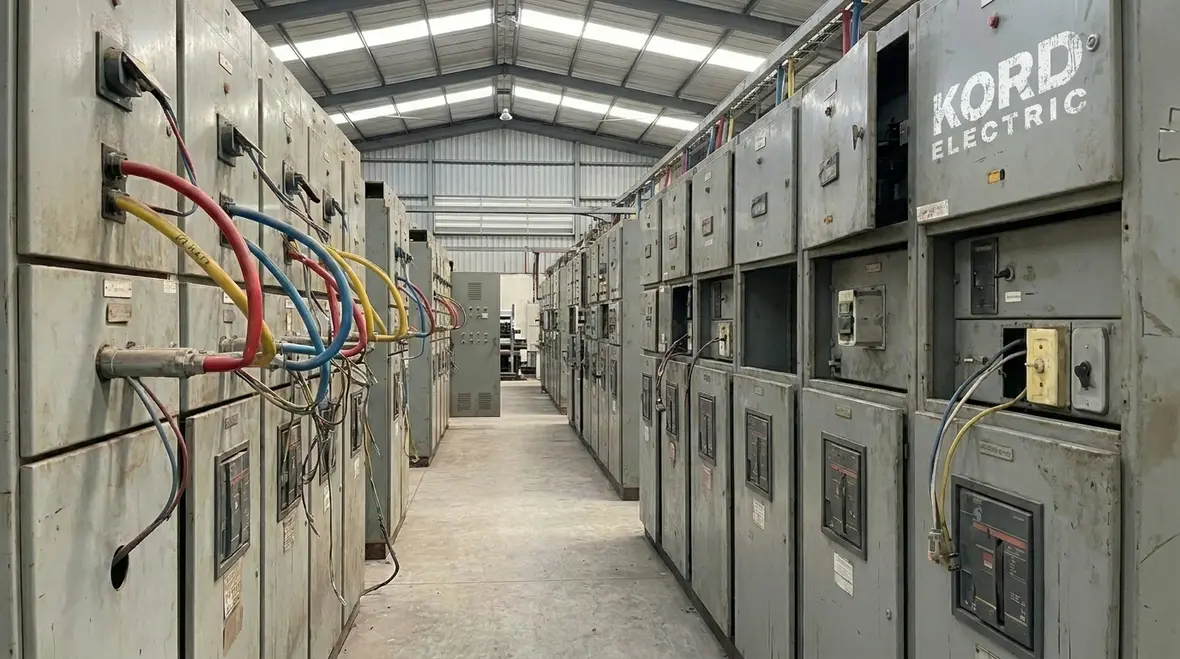
Before our technicians touch a single panel, we begin with the paperwork. That includes the electrical one line diagram, panel schedules, device cut sheets, past inspection reports, and any change orders from prior renovations. Then we compare those records to what others actually have in the field.
To keep the work efficient, we build a simple verification plan. First, we map the building areas and systems: service equipment, feeders, branch circuits, grounding and bonding, emergency and legally required standby systems, and any special systems like fire alarm power where applicable. Next, we define the likely risk areas based on history and facility usage.
Finally, we schedule field checks around operational needs. That matters for commercial and industrial facilities because shutting down equipment can disrupt production. We keep the process coordinated, and we communicate clearly about what we verify, what we test, and what we document.
For facilities that want compliance checks built into their long-term planning, pairing this kind of review with a structured electrical preventive maintenance program keeps NEC alignment and reliability moving together over time.
What to inspect first on service, feeders, and branch circuits
If a building no longer matches the expectations of the 2014 code cycle, the mismatch usually shows up early in the system chain. So, we start at the source.
Service equipment: where system conditions begin
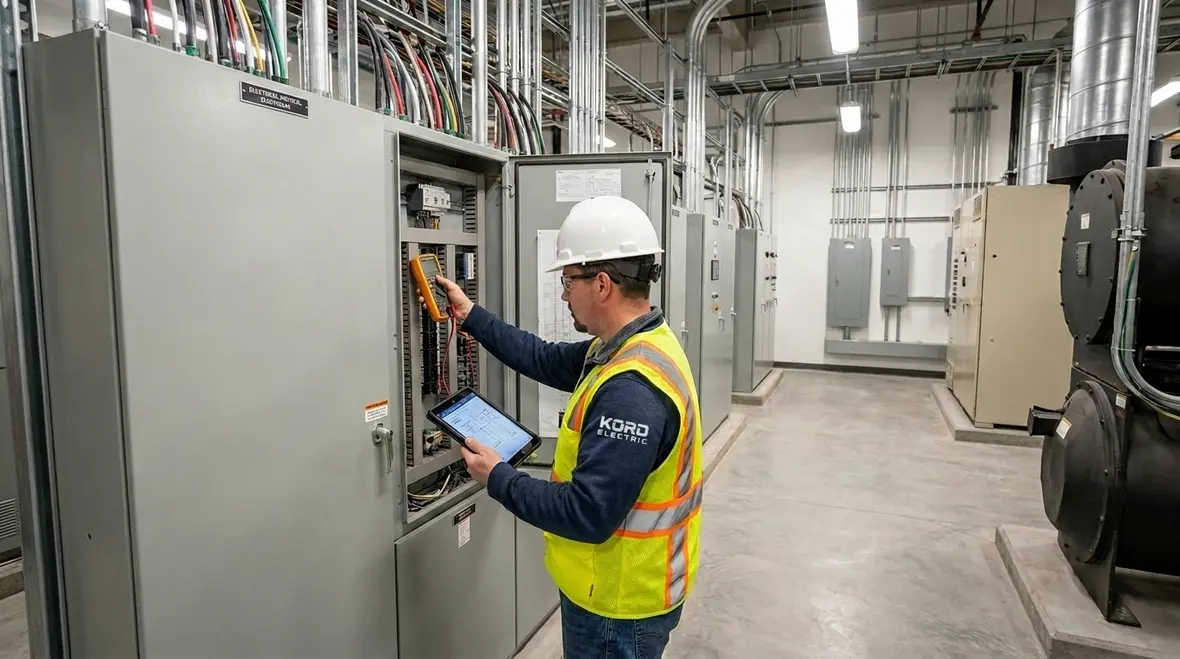
Service equipment: Our team checks the service rating, conductor type, termination quality, and labeling. We also confirm that service disconnecting means and required working clearances match current safety practices.
Feeder paths: everything between service and panels
Feeder paths: We verify feeder sizing, route protection, and how conductors enter and leave enclosures. We look for signs of poor mechanical protection, improper support, and conditions that suggest prior modifications without updated coordination.
Branch circuits: where most day to day issues appear
Branch circuits: We check circuit protection, conductor ampacity compatibility, and whether the number and rating of devices align with the panel schedules. Then we verify that overcurrent protection still makes sense for the equipment connected today, not just for what was installed years ago.
Now, here is the part people often skip. After we observe, we trace. So, we do not stop at “it looks right.” We match circuits to drawings, verify labeling, and compare ratings. That is where the surprises show up, and yes, sometimes the surprise is that the building has been living on borrowed assumptions like a sitcom character using duct tape to fix a spaceship. It works until it does not.
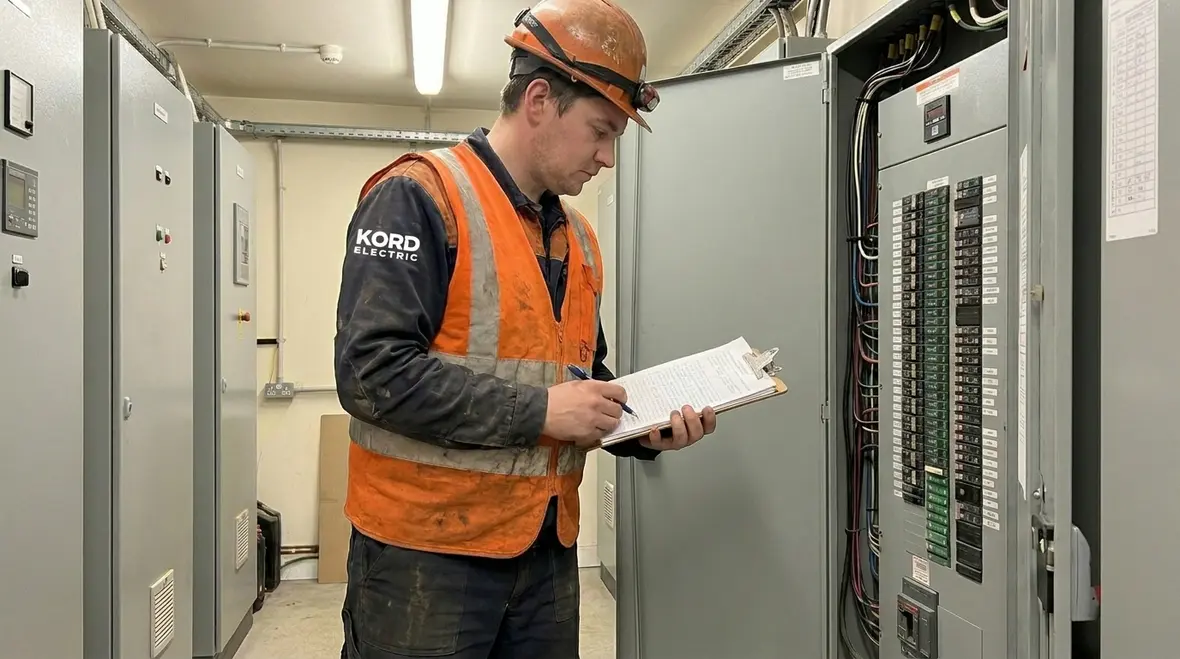
When early inspections reveal aging distribution equipment or undersized conductors, leaders sometimes decide that targeted NEC corrections should sit alongside broader upgrades. In those cases, insights from cost focused planning—like the kind explored in Kord Electric’s rewiring cost guide for commercial electrical systems—can help frame whether it is time for selective repair or a more comprehensive redesign.
How to verify grounding, bonding, and equipment bonding pathways
Grounding and bonding are where safety depends on details. They are also where “close enough” can create risk.
Our technicians check bonding jumpers and conductors, verify the continuity pathways, and confirm that equipment is bonded as intended. In industrial and major property buildings, multiple systems interconnect, including metallic raceways, structural steel where applicable, and system grounding conductors. If any of those pathways are modified during renovations, the building can drift away from the requirements that govern safe fault current return paths.
We also evaluate how grounding electrodes connect and how grounding electrode conductors route through the building. Then we confirm that the bonding of service and separately derived systems follows the same logic across all relevant equipment.
Additionally, we pay attention to labeling and separation between grounded and bonding conductors. Even minor confusion can create major problems during fault events. So, our approach stays methodical. We verify, we test where appropriate, and we explain findings in a calm, straightforward way so customers can act with confidence.
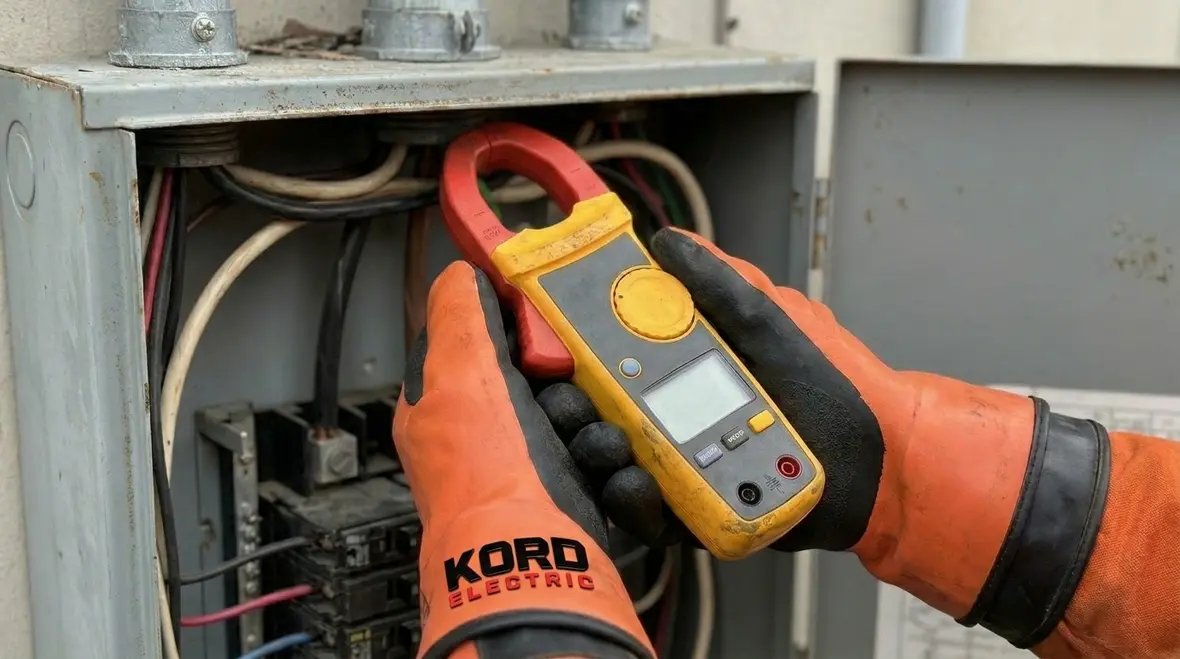
In many facilities, this grounding and bonding work ties directly into other reliability efforts. For example, when Kord Electric resolves voltage fluctuations in commercial and industrial facilities, grounding quality, bonding continuity, and conductor routing all factor into both power quality and code alignment.
Emergency systems and life safety power: where most surprises hide
Commercial and industrial buildings often include emergency power and legally required standby circuits. These systems must support life safety functions. Yet, they are also the areas that see the most renovation activity, because new occupancy needs and equipment expansions change power demand.
Our expert service staff verify transfer equipment, emergency distribution paths, and labeling that guides facility staff during an actual event. We also check that the emergency circuits remain correctly identified and that the emergency system components still align with the intent of the code cycle used at installation and later upgrades.
Furthermore, we evaluate how equipment interfaces with emergency power, including panelboard feeds and disconnects. We confirm that the system design still protects against faults and that required monitoring and control methods operate as expected.
Here is the calming truth: when emergency systems fail, they do so with a kind of dramatic timing. The lights go out right when you need them most, and nobody laughs. That is why we keep this part of the verification process detailed and documentation heavy.
For many commercial and industrial properties, bringing emergency systems into alignment with 2014 NEC compliance goes hand in hand with broader lighting and backup power work. Coordinating these upgrades with services like commercial and industrial lighting installation or generator and ATS inspections under an electrical preventive maintenance plan can reduce downtime while improving both safety and clarity.
Document findings and turn them into a practical action list
Once our team finishes field verification, we compile results in a way that facility leaders can use. Then we transform observations into a practical action plan. That matters because buildings do not need vague recommendations. They need clear next steps.
Our reports include what we saw, what the record suggested, and what needs attention. We also provide guidance on priority, so others can address urgent safety items first. In many cases, we separate items into categories like immediate hazard corrections, near term updates, and items that require design review before change.
We also help customers understand what documentation should be updated after repairs. That way, the next time someone asks, “Are we still aligned with the 2014 cycle?”, the answer does not come from memory. It comes from records that match reality.
And yes, we explain each category in plain language. Our technicians do not talk like a brochure. They talk like professionals who have to stand behind the work.
When leaders want ongoing assurance rather than one time checks, folding these 2014 NEC compliance findings into a recurring electrical preventive maintenance schedule keeps issues from quietly rebuilding in the background.
FAQ for 2014 NEC compliance checks in major property buildings
Choose Kord Electric for a clear, documented verification
When a commercial or industrial building needs confirmation of 2014 NEC compliance, we give you more than a quick look. Kord Electric sends technicians and our expert service staff to verify service, feeders, grounding and bonding, and life safety power in a way that matches records to reality. Then we deliver a clear action list you can use for planning, budgeting, and documentation updates. Contact us today to schedule an inspection and keep your electrical system safe, current, and understood.
If your facility is already planning upgrades such as lighting retrofits, EV charging infrastructure, or panel replacements, aligning that work with a structured code review reduces rework and surprises. Kord Electric’s electrical preventive maintenance services and project based offerings—like commercial EV charger installation and lighting installation for commercial and industrial facilities—can be coordinated around the same NEC compliance strategy so improvements support both operations and safety.
Whether you manage a single major property or an entire portfolio of commercial and industrial sites, treating 2014 NEC compliance as an ongoing condition—not a one time event—keeps your electrical system ready for inspections, expansions, and real world stresses alike.