2017 NEC Code Updates for Commercial Electrical
In 2017, the NEC brought important changes that affect commercial and industrial electrical systems, including major property buildings and the everyday realities inside them. At Kord Electric, we review those updates with our people in mind: the electricians on the floor, the service techs in the field, and the engineers who need dependable power to keep facilities running. And yes, our technicians explain things in plain language, because nobody wants a “mystery trip” to become a business plan. In this article, we walk through the practical meaning of the 2017 NEC Code updates for commercial electrical work, so others can make smarter decisions before issues turn into expensive downtime.
2017 NEC highlights that change how commercial jobs get built
When the 2017 NEC arrives, it does not just reshuffle text and move commas around. It changes how contractors design, install, inspect, and maintain systems in commercial and industrial facilities. More specifically, we see updates that raise expectations for protection, grounding, conductor safety, and how power and data pathways get treated. Consequently, the work becomes more consistent, and the risk of system faults drops.
Our expert service staff often tells clients the same story: many compliance issues show up during commissioning, even when people followed old habits. So, we treat these updates like a roadmap. We review the facility use, the electrical rooms, the distribution layout, and the service entrance conditions, then we plan the next steps based on what the 2017 NEC requires today.
And before anyone jokes that “the code just wants more paperwork,” we remind them: paperwork is cheaper than replacing a burned component after hours. The goal is reliability, not drama.
Branch circuits, feeders, and demand loads: real world impacts

Commercial buildings live in motion. After-hours cleaning, HVAC cycling, kitchen loads, elevators, process equipment, and temporary tenant improvements all push demand. Therefore, the 2017 NEC updates that influence overcurrent protection and circuit behavior matter to how the facility handles peaks without nuisance trips or unsafe conditions.
In practice, we help project teams verify that conductor sizing, overcurrent devices, and equipment ratings match the load profile. We do not just check boxes. Instead, we look at the schedule, the operating hours, and the likely future changes that major property buildings often face. Then we make sure the design protects conductors and connected equipment in the way inspectors expect. When we review projects that involve major system changes or rewiring, we also encourage teams to think beyond immediate loads and consider long-term reliability, much like the planning that goes into a full rewiring cost guide for commercial electrical systems.
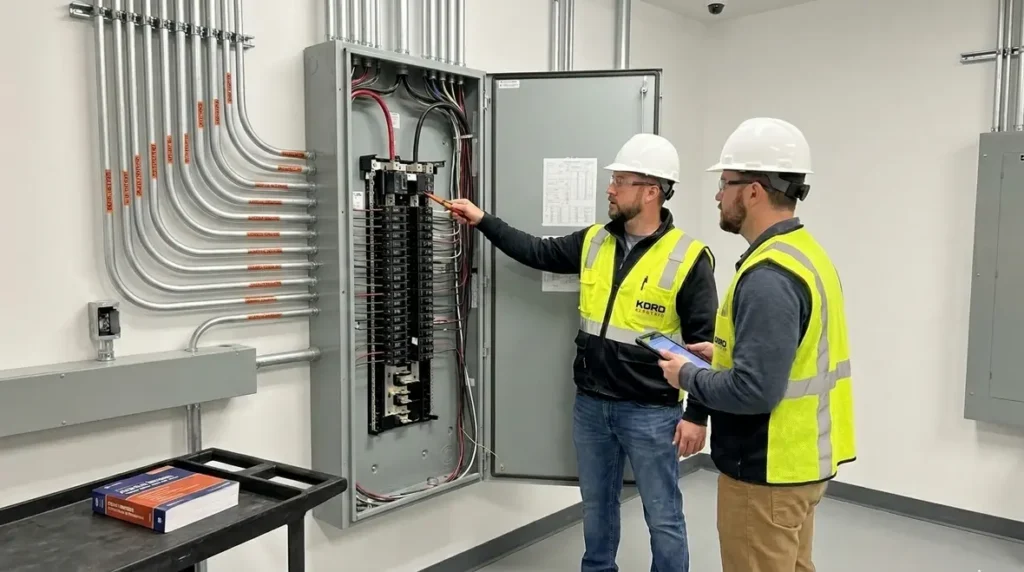
Our technicians also explain how these decisions show up at the panel level. If you ever stood in front of a service disconnect and wondered why someone keeps swapping breakers, you already know the difference between a designed system and a “hope it holds” system. Kord Electric builds for the first one.

Grounding and bonding updates that keep faults from spreading
Fault current does not politely stay in one spot. If grounding and bonding get treated casually, the results can spread through metal enclosures, raceways, and equipment frames. Consequently, the 2017 NEC Code updates that affect grounding and bonding practices help commercial systems limit shock risk and improve fault clearing performance.
At Kord Electric, we focus on details that matter during inspection and during real faults. We confirm the continuity of bonding paths. We check connections in junction and pull boxes. We verify that bonding methods suit the environment and the types of equipment a facility uses. Then we document everything so our customers can maintain compliance over time. For many facility teams, this ties directly into electrical preventive maintenance strategies that keep issues from ever reaching the failure point, especially when paired with a structured electrical preventive maintenance program.
When our expert service staff walks a client through these steps, they use a calm, straightforward tone. People ask, “Why does it matter if the metal box feels grounded?” Our answer is simple: feeling grounded does not equal meeting code requirements. If the system does not clear a fault the way it should, then “it seems fine” becomes a costly lesson, like learning a TV is actually muted after a whole dramatic season reveal.

Wiring methods and equipment spaces: safety where people work
Commercial and industrial buildings often have dense layouts. There are mechanical rooms, electrical closets, panel corridors, and equipment bays. As a result, wiring methods must protect conductors, maintain clearances, and support safe installation practices. The 2017 NEC changes influence how teams think about physical protection, routing, and the integrity of raceways and cable assemblies.
We advise property managers and electrical contractors to plan for access. If equipment needs service, people must be able to reach it without cutting corners. Therefore, Kord Electric coordinates design review and field verification so the wiring method choices support both code compliance and safe maintenance. This is especially critical during upgrades like lighting retrofits or panel changes, where access, working clearances, and code-compliant routes can determine whether future service work is smooth or frustrating.
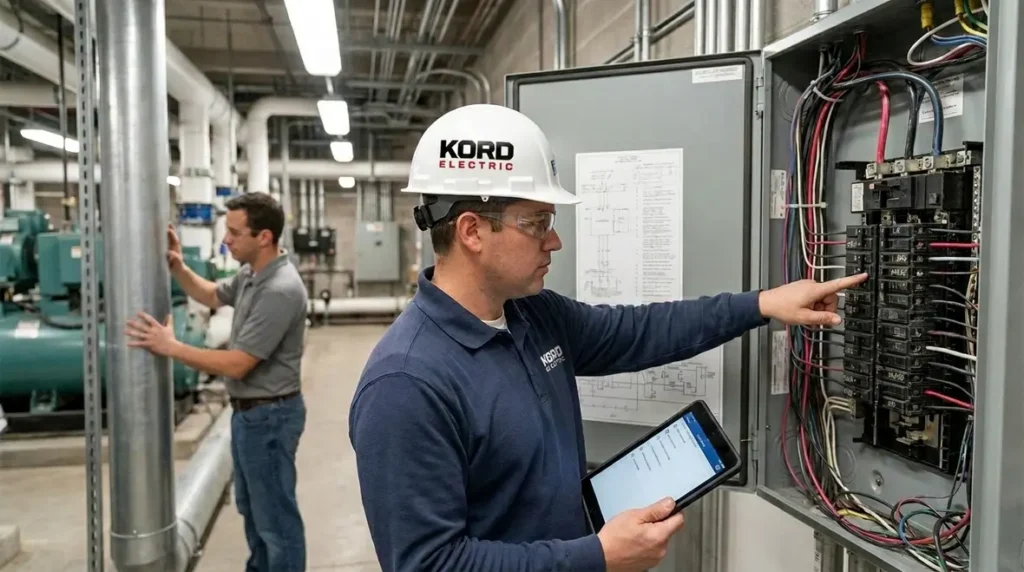
Our technicians explain the “why” behind spacing and protection requirements. They point out how vibration, heat, moisture, and mechanical impacts can degrade insulation. Then they connect those risks to what the 2017 NEC requires for the specific environment. The punchline is always the same: the electrical system should look good and also behave correctly when something goes wrong.
Arc flash, labeling, and maintenance planning
Electrical safety does not end at installation. It continues during operation, troubleshooting, and panel maintenance. Therefore, the 2017 NEC Code direction around safety practices pushes facilities to manage risk through proper protective strategies and clear documentation. While each site has its own rules and engineering approach, we treat arc flash awareness as a practical part of day to day operations.
At Kord Electric, we help commercial and industrial clients plan maintenance workflows that reduce surprises. We support labeling and documentation practices that help technicians identify equipment quickly and safely. We also train internal staff when needed, because the best safety program fails if people do not use it. In many facilities, this planning naturally overlaps with broader electrical preventive maintenance commitments that keep inspections, testing, and documentation aligned under one program rather than a patchwork of one-off visits.
Our expert service staff sometimes says it like this: “A good label is a reminder, not a suggestion.” We keep the message business friendly, but the intent is serious. When teams can work safely, downtime shrinks, and production stays on track. That is the kind of profit margin nobody argues about during payroll week.
Dual compliance for power and data pathways
Commercial and major property buildings often mix power and communications systems. Elevators, access control, fire alarm interfaces, building automation, and security devices all rely on well organized wiring. Meanwhile, electrical power systems must meet code expectations for routing, protection, and separation where required. So, we coordinate both pathways to prevent interference issues and reduce installation errors.
Here is where we use our process in a dual view. We do not treat power and data as two separate universes that only collide at inspection time. Instead, we approach them with consistent planning, so teams install what they designed. That mindset also fits facilities that coordinate closely with life safety systems, where power quality, circuit separation, and signal integrity matter for both NEC requirements and fire alarm standards.
Power pathway focus
|
Data and control pathway focus
|
That dual approach supports commercial and industrial facilities that cannot afford repeated call backs. And it helps major property buildings keep tenant improvements moving without turning every new project into a science experiment.
How Kord Electric supports facility teams during code transitions
Code updates can feel like a moving target when people just want the lights on and the equipment running. However, we make the transition manageable for commercial and industrial clients. We start by listening to the facility goals, then we review how the electrical system operates today. From there, we map what needs change and what needs verification.
Our technicians bring practical site experience. They look for real installation conditions, like existing equipment constraints, future expansions, and the physical access crews will face. Meanwhile, our expert service staff explains the options and tradeoffs in plain terms, so others can make decisions without guesswork.
Then we execute. We perform inspections, support upgrades, and address issues that could affect safety or reliability. In short, we help facilities align with the 2017 NEC expectations without slowing critical operations. If the facility is already under pressure, we plan work windows and prioritize system stability first. For some clients, that may mean pairing code-driven improvements with broader projects like voltage correction, panel upgrades, or EV charger infrastructure, all under one coordinated plan.
How 2017 NEC thinking shapes long-term electrical strategy
When teams hear “code update,” they sometimes picture a one-time checklist. In practice, the 2017 NEC encourages a mindset shift. It nudges facilities toward better documentation, more intentional load planning, and stronger coordination between disciplines. Viewed through that lens, code compliance supports larger business goals instead of simply satisfying an inspector for a single project.
For example, a facility planning a phased rewiring effort can use 2017 NEC guidance to rethink how panels are grouped, how critical loads are backed up, and how data and control circuits ride alongside power. Instead of patching problems one breaker at a time, teams can redesign segments of the system to support future expansions, new equipment types, or specialty loads that were not on the radar when the building first opened. Our technicians often tie those conversations to earlier findings from hidden risk assessments, thermal scans, or power quality studies, so the system evolves in a deliberate way instead of reacting to the latest failure.
FAQ
Ready to align your facility with the 2017 NEC?
If you are planning an electrical upgrade, managing a tenant improvement, or trying to avoid repeat issues during commissioning, Kord Electric is ready to help. We send our technicians and expert service staff to review your current systems, explain the 2017 NEC updates in clear terms, and map the safest path forward. Our team also supports long-term programs like electrical preventive maintenance so code compliance and reliability improve together instead of in separate projects.
For facilities adding new equipment or modernizing infrastructure, we coordinate services like commercial EV charger installation, lighting upgrades, and panel work with 2017 NEC expectations in mind. Call us today to schedule a site assessment for your commercial or industrial facility and move forward with confidence.