2014 NEC Electrical Code for Older Buildings
2014 NEC Electrical Code changes that still matter in older buildings
In the 2014 NEC electrical code, several changes were made with real-world safety in mind, and they still ripple through commercial and industrial facilities today. Even if a building was built under earlier editions, we often encounter systems that were never updated to match the newer intent. At Kord Electric, we keep this in focus because older wiring, panels, feeders, and grounding setups can age like a good sitcom rerun: it still looks familiar, but the safety gaps show up when you least expect them. Our technicians and expert service staff explain what changed, what stayed the same, and where the risk tends to hide, so building owners and facility managers can make clear decisions without guesswork.
Now, let’s walk through the specific areas where the 2014 NEC still affects older buildings, and how we approach upgrades in commercial and industrial environments where downtime costs real money.
Where older commercial systems commonly fall behind

First, we look at the jobsite reality. Older buildings usually have a patchwork history: renovations happened in phases, equipment was replaced over time, and standards evolved. As a result, a facility can have newer breakers next to older cable, and modern automation tied into an aged power distribution backbone. Furthermore, the way people use the building changes, too. Warehouses get higher loads, offices add more servers, and manufacturing lines upgrade motor drives. Therefore, even if the electrical system “worked” for years, it can become stressed as demand grows.
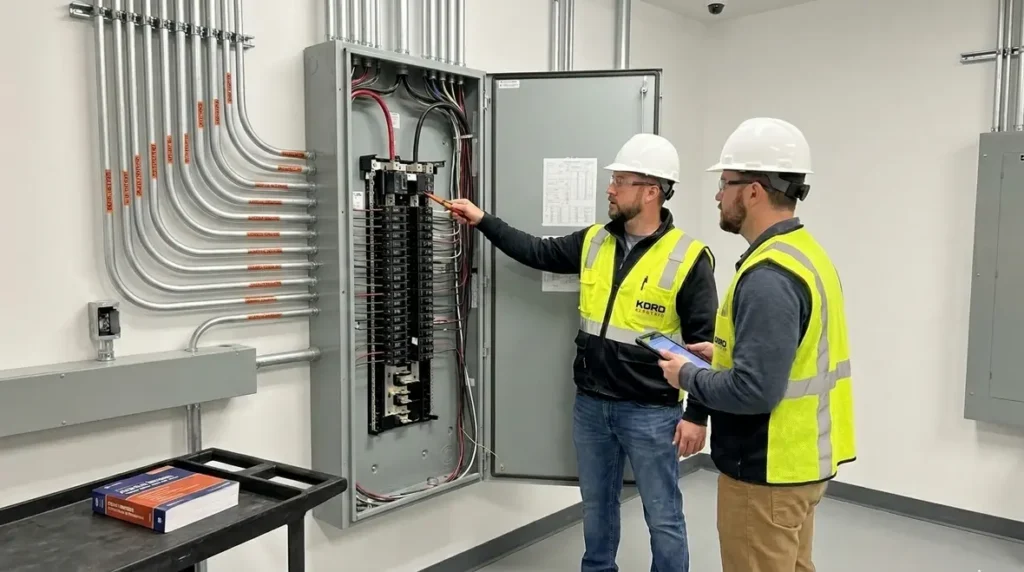
When our team walks a site, we do not just chase visible defects. We compare the installed design against the intent behind the 2014 NEC electrical code provisions. Then, we check how the system behaves under load, during faults, and when breakers trip. In many cases, we find issues in three themes: protection timing, equipment grounding and bonding, and cable or conduit fill rules that were applied differently in older eras.
And yes, sometimes the problem is as simple as a label that never got updated. But the danger is never simple.

Service equipment and feeders: protection and load demands
One major way the 2014 NEC still affects older buildings is through protection strategy. Older facilities may use equipment that did not account for modern load profiles or updated requirements around fault current and selective coordination. Moreover, some systems lack the right level of arc fault or ground fault protection in locations where it matters. Even when breakers exist, the coordination can be off, so a short circuit that should clear quickly instead sends the fault upstream.
In practical terms, we see two common outcomes. First, nuisance trips disrupt operations. Second, a more severe fault may not clear fast enough, which can increase heat and damage. Consequently, when our expert service staff explains the situation, we make the logic clear: protection is not just a code checkbox. It is a business continuity tool.
For commercial and industrial facilities, we also consider how feeders are routed and supported. Over the years, vibration, thermal cycling, and mechanical stress can affect terminations. Meanwhile, corrosion can creep into exposed connections in some environments. Therefore, our technicians verify connections, inspect torque practices where feasible, and evaluate whether the overcurrent protective devices match the conductors and installation method.
Think of it like this: if the breaker trips too late, the circuit acts like it is trying to hold a door shut during a fire drill. Not ideal.

Grounding, bonding, and the subtle ways faults spread
Next, we address grounding and bonding. Older buildings often have grounding systems that were installed with older assumptions. And while a system may show continuity during a simple test, bonding gaps and corrosion can create resistance paths that change under fault conditions. As a result, the equipment you trust to stay safe can become the path that carries fault energy.
The 2014 NEC electrical code emphasizes the importance of proper bonding and equipment grounding to reduce shock risk and stabilize fault currents. For older commercial and industrial facilities, this can mean attention to:
- Bonding jumpers and metal raceway continuity
- Grounding electrode conductor paths and terminations
- Correct bonding of service and separately derived systems where applicable
- Inspection of connections in panels, junction boxes, and distribution gear
We also explain how grounding impacts more than “shock.” It affects overcurrent device operation, too. When fault current cannot return effectively, protective devices may not trip within the intended time. That is why we keep our process systematic and calm. Our technicians do not rush; they measure, document, and then recommend changes that match your facility’s risk profile.
Meanwhile, we make sure our guidance fits commercial and industrial needs, not residential rules of thumb. We are dealing with motor loads, variable frequency drives, and long run feeders. So we treat the whole electrical ecosystem as one connected system.

Branch circuits, wiring methods, and where older installations crack
Another reason the 2014 NEC still matters in older buildings involves branch circuits and wiring methods. We regularly find older conduit routes, cable types, and installation practices that do not align with current expectations for capacity, derating, or protection. Sometimes the wiring is technically intact, but it was installed in a way that becomes problematic when new loads are added.
For example, a facility might add equipment in an area that already runs hot during peak production. Even if the cable size looks fine on paper, the actual thermal conditions can push conductors beyond the safe margin over time. Then, insulation aging accelerates. Over time, that aging turns into heat, discoloration, and higher resistance at terminations.
Also, we see failures related to physical support. Older conduit and cable trays might not have been braced to handle present vibration levels. As maintenance activities increased, someone might have rerouted cables without matching the original method. Therefore, we verify cable routing, proper support, and condition of enclosures.
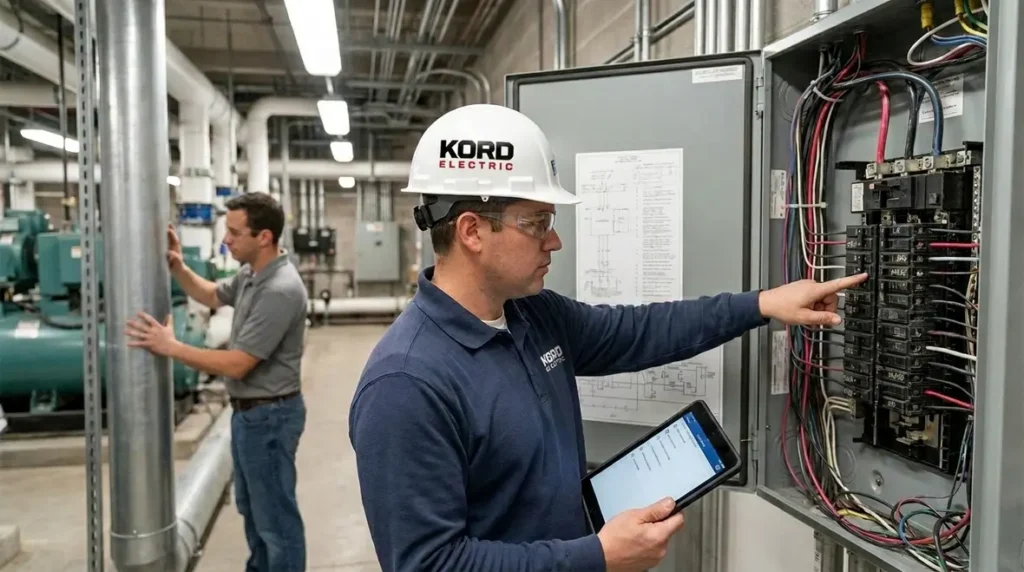
Our expert service staff also helps clients understand what to look for during routine walk-throughs. However, we do not stop at visuals. We confirm conductor condition, check termination integrity, and verify labeling and circuit identification. A “mystery breaker” is funny until it is your facility manager at 2 a.m.
For deeper examples of how hidden wiring and distribution issues show up in real facilities, you can also review our breakdown of hidden electrical risks in commercial buildings, where we walk through how overloaded circuits, loose connections, and aging panels quietly increase risk over time.
Arc energy, equipment protection, and practical upgrade paths
Now let’s talk about the energy that shows up when things go wrong. Older switchboards, panelboards, and distribution gear can expose people to arc flash hazards if protective strategies are not aligned with modern expectations. The 2014 NEC electrical code highlights the need to manage arc flash risk through appropriate protective equipment and system coordination, and older installations sometimes lack the updated elements or documentation to prove the safety strategy.
When our team evaluates arc energy risk, we focus on outcomes that protect people and keep production running. First, we determine what exists today. Then, we analyze how faults clear. Next, we recommend upgrade paths that match available shutdown windows. Finally, we help teams document the changes so safety programs stay current.
We often recommend a staged approach for commercial and industrial facilities. In other words, we do not ask you to “rip and replace everything” just because a new code edition exists. Instead, we prioritize where the hazard is highest and where repairs deliver the most safety benefit per outage hour. And yes, we have heard the classic joke that electrical upgrades happen only when something breaks. We agree on one thing: it is brave. It is also expensive.
Our technicians explain options clearly, and we keep the conversation grounded in what the building needs, not generic checklists.
What Kord Electric recommends for older facilities
At Kord Electric, we serve commercial and industrial facilities and major property buildings, and we treat code compliance as a living program, not a one-time event. Therefore, our process begins with a thorough review, then moves to field verification, and ends with a plan that you can execute.
Here is how we typically structure recommendations:
Step
1. Walk-through and documentation review of service, feeders, panels, and grounding
2. Field testing and inspection of terminations, supports, and raceway continuity
3. Protection and coordination analysis to understand fault clearing behavior
4. Arc flash and equipment protection evaluation based on actual system characteristics
Step
5. Clear recommendations in phases tied to downtime realities
6. Implementation with quality checks at each milestone
7. Updated labeling, documentation, and safety training support
8. Follow-up verification so the system stays aligned after changes
As you can see, we focus on the details that prevent future problems. And just like a good conductor, our job is to make sure every part of the system plays together, not just loudly.
If you are considering broader upgrades such as panel changes, feeder improvements, or a more extensive modernization of older distribution, you may also find it helpful to review our rewiring cost guide for commercial electrical systems, which breaks down how scope, downtime, and code requirements shape an electrical upgrade budget.
FAQ: 2014 NEC impact on older commercial and industrial buildings
Take the next step with Kord Electric
If your older commercial or industrial facility has grown more demanding over time, it is smart to review how your electrical system performs under today’s safety expectations. At Kord Electric, our technicians and expert service staff explain the findings clearly, then recommend practical upgrades that fit your downtime limits. Contact us for an assessment and a phased plan that strengthens protection, improves reliability, and supports compliance goals. Let us help you reduce risk before it becomes the headline you never wanted.
For facilities planning lighting, power distribution, or system modernization work, our recessed lighting installation services show how we approach code-compliant commercial installations that align with NEC requirements and real-world operating conditions.
If your building also needs coordinated life safety coverage alongside electrical upgrades, our sister company Kord Fire Protection offers full fire protection services for sprinklers, alarms, extinguishers, and more, keeping both your power systems and fire protection strategy aligned with today’s codes.