2014 NEC Grounding and Bonding Requirements Guide
In commercial and industrial facilities, the rules for how electricity returns to safety matter, and the 2014 NEC grounding and bonding requirements set a clear path. At Kord Electric, our team helps property owners and facility managers apply those standards the right way, and we do it with practical field experience, not guesswork. Earlier, we have seen systems installed “good enough,” only to face nuisance trips, corrosion, and in worst cases, a shock risk that no one wants to explain to the insurance company. So, in this guide, our expert service staff walks through what the 2014 code expects, why it matters, and how we verify compliance on real buildings. And yes, we promise to keep it calm, not like a breaker box that just got thrown in a pool.
While the NEC reads like a technical novel, we break it down so you can make confident decisions. In addition, our technicians explain the “why” behind each requirement, because understanding prevents expensive rework later.
What the 2014 NEC grounding and bonding requirements aim to protect
At a high level, grounding and bonding work together to control voltage and keep fault current moving the way it should. Therefore, the system can trip protective devices quickly instead of letting dangerous conditions linger. In commercial and industrial settings, where you often have long cable runs, metal enclosures, large motors, and complex panels, this protection becomes even more important.
When grounding and bonding do not work properly, a facility can experience symptoms that look unrelated at first. For example, you might see flickering lighting, interference with controls, or corrosion on equipment cabinets. Then, eventually, you may find that the fault path did not meet code intent. In other words, the electrical system can start acting like it is haunted. Most of the time, it is just bad bonding.
Our technicians also emphasize that this is not only about meeting a checklist. It is about safety, reliability, and keeping operations running. After all, shutting down a critical process line to chase a grounding issue is a cost nobody budgets for.
Grounding vs bonding in real building wiring
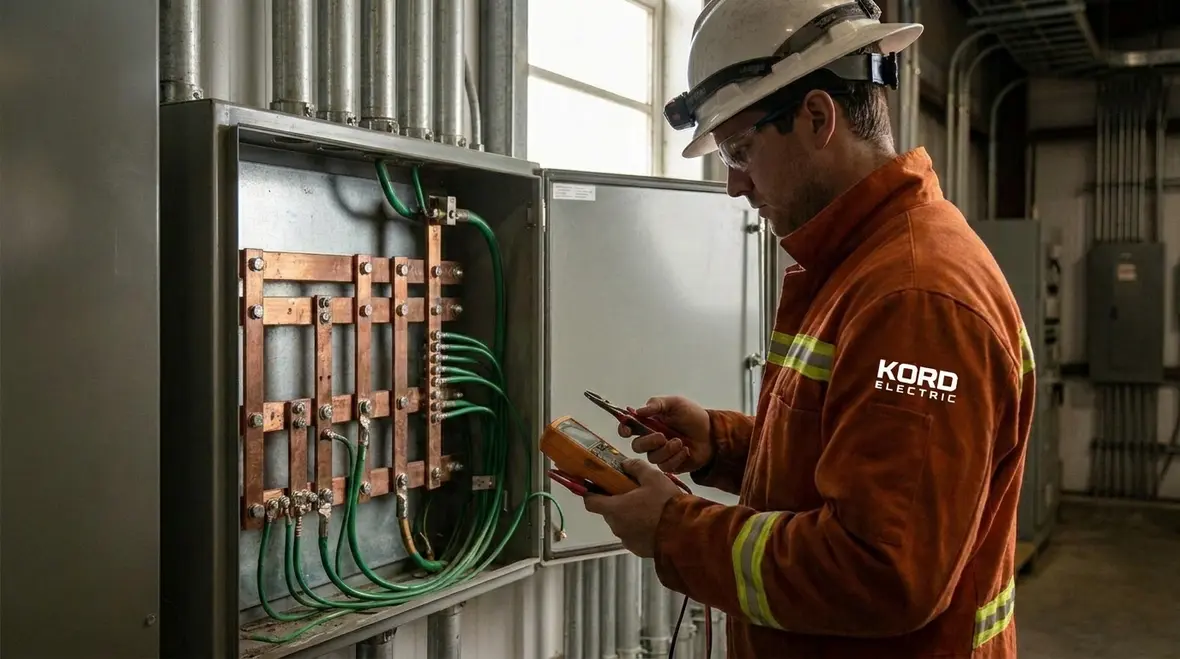
Because these terms get mixed up often, we keep the definitions grounded in field reality. Grounding connects an electrical system or equipment to the earth or to a reference point that keeps voltages in check. Bonding connects conductive parts together so they share the same electrical potential. As a result, the fault path stays low impedance and protective devices clear faults faster.
In commercial and industrial facilities, metal parts show up everywhere: conduit, cable trays, frames, transformer cases, and raceways. If these elements are not bonded, they can sit at different potentials. Then, a person touching two surfaces could experience a shock, particularly during a fault.
Our expert service staff often finds that the issue is not missing grounding entirely. Instead, it is loose bonding at joints, skipped connections at equipment anchors, or corrosion at terminations. Consequently, the system may measure “okay” under one test but fail under fault conditions.
To make it practical, our approach focuses on continuity, connection quality, and correct connection points, not just where the earth reference exists.
Service equipment grounding and bonding for commercial panels
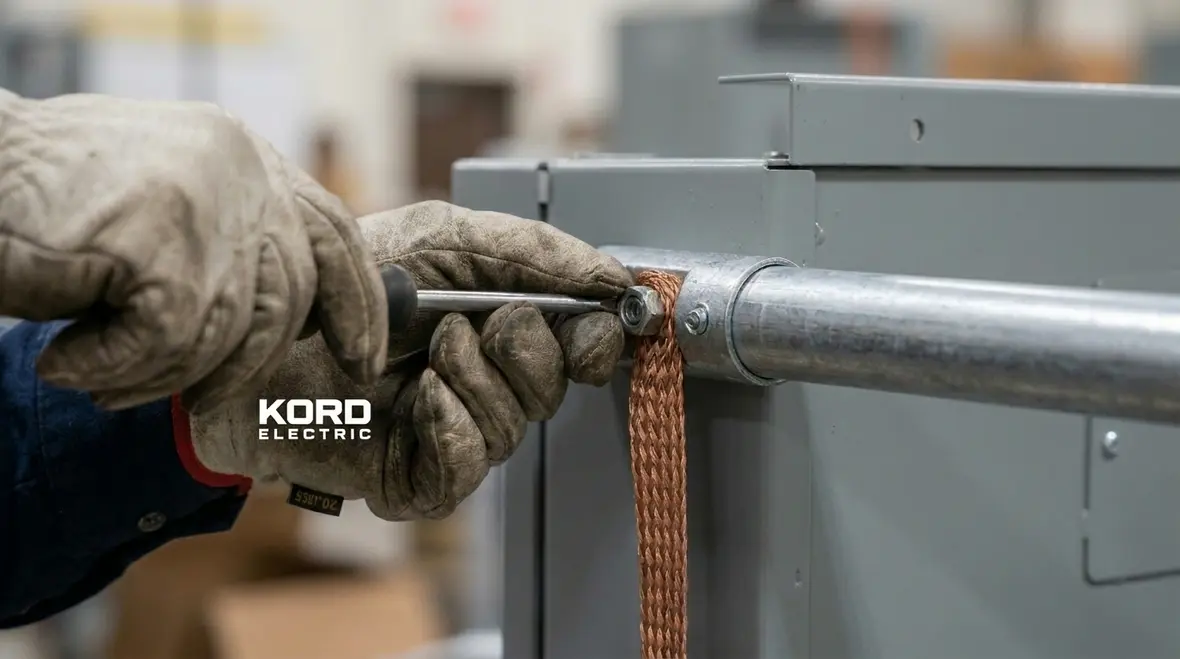
Service equipment sits at the center of the system, so the 2014 NEC grounding and bonding requirements give it special attention. At the service, the goal is to create a dependable path for fault current and to prevent objectionable voltage on non current carrying metal parts. Moreover, a solid system reduces the chance of stray voltage and supports proper operation of overcurrent devices.
We commonly see service-related problems tied to bonding jumpers, neutral handling, and termination practices. Even if components exist, they may not be connected the way the code expects. Therefore, our technicians review the service setup carefully, including bonding connections between service raceways, enclosures, and metallic parts.
In many commercial installations, you also have parallel systems or multiple disconnects feeding different areas. As facilities expand, contractors sometimes add new sections without fully integrating the bonding scheme. Then, continuity breaks in subtle places. Our staff plans for growth up front, so your next renovation does not create a hidden risk.
We also verify that labels, connectors, and conductor sizes align with the design intent. In the real world, the “right part” installed loosely becomes the wrong part at the worst time.

Grounding electrode system and common installation pitfalls
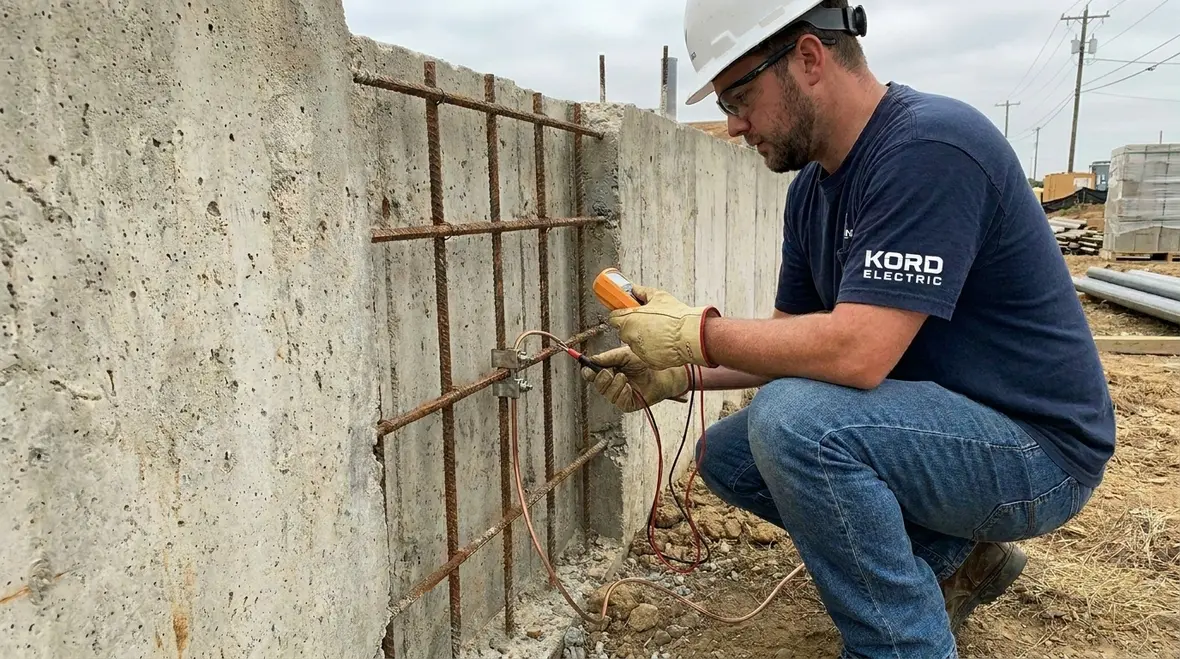
Earth connections form the backbone of grounding performance. The 2014 NEC grounding and bonding requirements address the grounding electrode system to ensure it can handle fault currents safely and maintain effectiveness. For large facilities, that may include building steel, concrete-encased electrodes, ground rings, and supplementary electrodes where needed.
However, electrodes only work if they are installed and connected correctly. In practice, our technicians see repeated failure points: inadequate bonding between structural elements, missing exothermic connections where required, or poor contact due to paint, scale, or corrosion. Additionally, improper layout can increase resistance and reduce fault clearing reliability.
Our expert service staff also pays attention to the physical realities of construction. Construction crews move fast, and grounding continuity can get lost under schedule pressure. So, we create verification steps that fit commercial and industrial job rhythms, and we document results so maintenance teams can trust the system over time.
If you run a facility with sensitive equipment, grounding performance matters even more. Stable grounding supports surge protection systems and improves control system noise immunity. In short, good electrode practices protect both people and equipment.
Bonding of raceways, cables, and metal parts throughout the facility
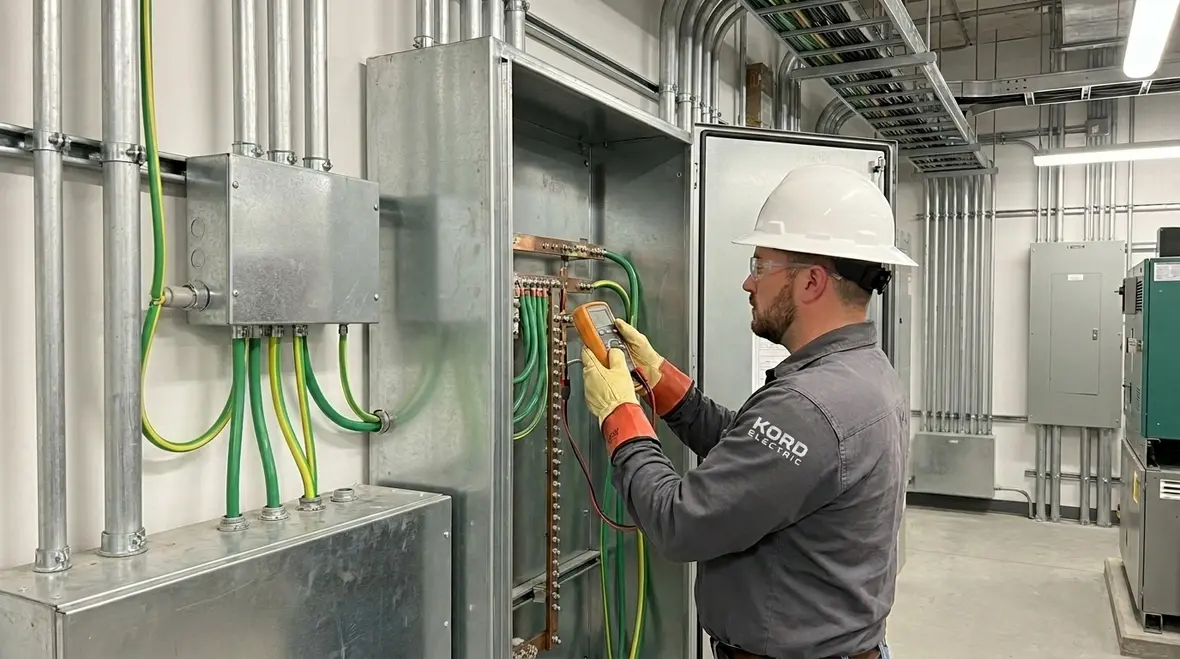
Once service and electrodes are correct, bonding must carry through the rest of the building. That includes raceways and cable sheaths, metallic cable trays, and enclosures for devices and equipment. The code intent remains the same: keep conductive parts at the same potential and ensure a low impedance fault path.
In commercial and industrial facilities, this becomes a larger coordination task. You might have multiple trades involved, including electricians, mechanical contractors, and integrators for automation systems. Therefore, our technicians focus on bonding continuity at transitions and terminations, including where conduit enters boxes, where trays join, and where equipment enclosures connect to raceway systems.
We also treat removable covers and equipment doors with care. Bonding jumpers or connections that allow safe removal yet maintain continuity often get overlooked. Then, someone opens a panel later and the bonding link gets changed, damaged, or left out. It is like leaving a stage prop in the spotlight: you forget it until it ruins the scene.
In addition, we consider environmental factors. Areas with moisture, chemical exposure, or coastal air can accelerate corrosion. So, we select and verify connections that hold up long term, because a future failure is still a failure.
Surge, fault clearing, and why bonding affects uptime
Many facility teams think grounding and bonding only matter during a fault. Yet, in modern commercial and industrial buildings, they also affect surge behavior, equipment protection, and system stability. When bonding does not control impedance and potential differences, transients can stress electronics and create unexpected behavior in control systems.
Therefore, our approach connects grounding and bonding to operational outcomes. We coordinate bonding with surge protective devices and ensure enclosures and equipment frames integrate properly. Then, we help reduce the “mystery resets” that show up after storms or switching events.
At the same time, proper bonding supports faster fault clearing. Overcurrent devices work best when fault current flows along an intended path. If the impedance is too high, the device may not clear quickly enough. That can increase heat and damage, and it raises safety concerns.
Our technicians use testing methods that match the facility’s wiring style and equipment needs. We then compare findings with code intent and the electrical one line. As a result, owners and facility managers get clarity that supports both compliance and uptime.
If your facility has already seen voltage swings, nuisance trips, or unexplained equipment behavior, those symptoms often overlap with what our team addresses when resolving voltage fluctuations in commercial and industrial facilities. Grounding and bonding performance are part of the same reliability story.
Maintenance checks that prevent slow failure
Grounding and bonding are not “install once and forget.” Over time, connections loosen, corrosion builds, and modifications introduce new paths or missing links. For commercial and industrial facilities, we recommend planned inspection and maintenance as part of lifecycle electrical management.
Our expert service staff builds maintenance routines around real risk points. We check bonding at key terminations, verify continuity across raceway transitions, inspect grounding connections that face moisture, and review any changes after renovations or equipment replacements. Also, we confirm that any added metallic structures integrate with the existing bonding network.
In many buildings, the biggest risk comes after the fact. A project ends, punch list items get handled, and someone assumes bonding stayed correct because the job “went smoothly.” Then months later, the facility adds devices, racks, or conduit runs. Suddenly, you have new conductive paths without the bonding that keeps everything equal.
So, we document baseline conditions and then revisit after changes. That way, when something goes wrong, we do not start from zero. We already know what “good” looked like.
For many clients, those inspections fold naturally into broader electrical preventive maintenance programs. Grounding and bonding checks become part of a structured, data-driven plan to keep critical systems running.
2014 NEC grounding and bonding FAQ
Final take: get your system verified before the next outage
If you want reliable performance, safe fault clearing, and fewer surprise disruptions, we help you verify 2014 NEC grounding and bonding requirements in the real environment your facility runs in. Kord Electric brings experienced technicians and a calm, no-drama process that checks service equipment, electrodes, raceways, and bonding continuity. Contact us to schedule an assessment for your commercial or industrial building. Let us find issues early, document what we see, and help you stay ahead of the next storm, renovation, or mystery trip. That is how you protect people and keep uptime.
If your facility is already planning upgrades or has experienced unexplained electrical symptoms, pairing a grounding and bonding review with broader electrical preventive maintenance is one of the most effective ways to reduce risk and extend the life of your infrastructure.
For properties where sensitive loads, EV charging infrastructure, or continuous operations are in play, coordinating grounding and bonding with dedicated services such as EV charger installation and other commercial upgrades keeps everything aligned with code and with your long term operating strategy.