

2017 NEC Compliance for Commercial Buildings
When a commercial or industrial building is operating safely, we rarely notice it, like the hum of a well sized transformer. Yet we all know what happens when electrical systems drift out of sync with code. That is why this guide highlights 2017 NEC compliance for building owners and contractors, especially when they plan projects, manage tenants, or handle inspections. Kord Electric supports these teams with practical, jobsite ready guidance and our expert service staff explains what matters in plain language. So instead of guessing what the inspector wants, we help you document, design, install, and maintain electrical work to match real expectations.
2017 NEC compliance: what building teams must verify first
Before anyone touches conduit, a solid compliance plan keeps timelines calmer and reduces rework. First, the owner and contractor team should confirm the building’s intended occupancy, voltage levels, service type, and how the load will change over time. Then they should map those facts to the electrical plan set, equipment submittals, and inspection milestones. In practice, we see teams lose time when they treat compliance as paperwork at the end, when it should be a live checklist during design and installation.
Next, Kord Electric technicians often step in early, because they can spot mismatches that designers might overlook, like a disconnect location that does not match operational needs or a labeling scheme that will confuse facility staff later. And yes, confusing labels can turn a routine maintenance visit into an accidental scavenger hunt. Our experts show the team how to align documentation so operations, contractors, and inspectors work from the same truth.
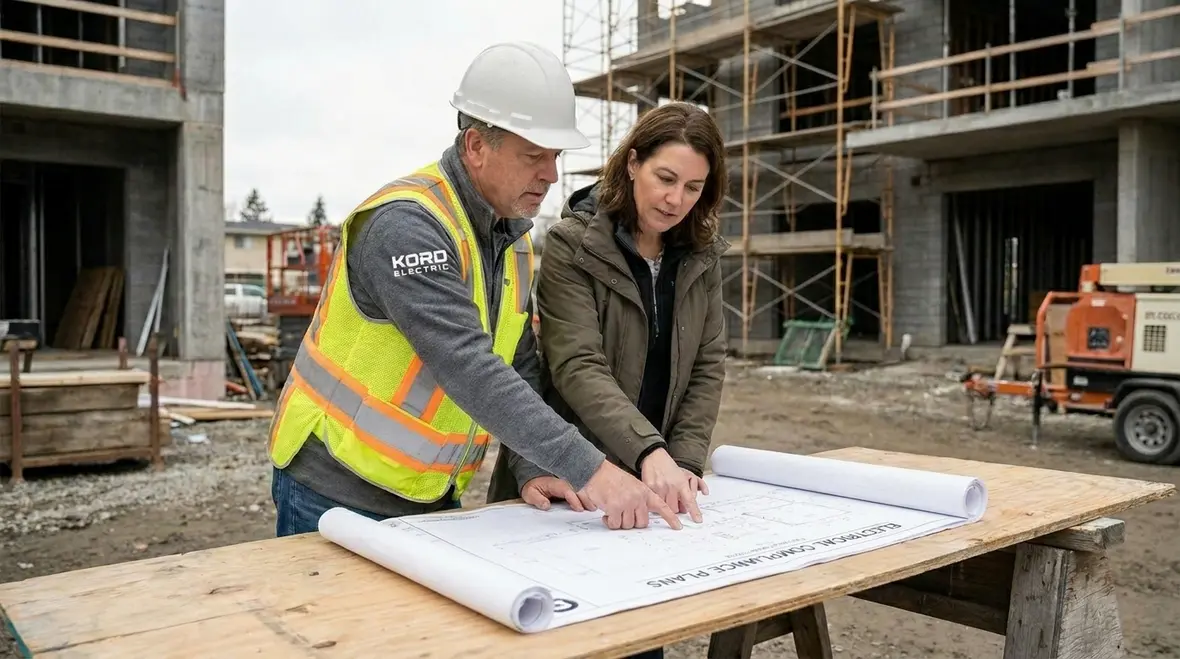
How inspectors read electrical plans during commercial review
Inspectors do not just look for “code words.” They look for systems that are built to perform safely under fault conditions, load changes, and normal maintenance. Therefore, plan review often focuses on clear pathways for conductors, correct equipment ratings, protection methods, and grounding and bonding details. Additionally, the reviewer expects that the design matches the field installation, including conductor sizes, device types, and how enclosures are rated for the environment.
When our service staff explains the rationale behind these checks, teams tend to move faster. For example, they learn why certain burial depths, raceway types, or sealing methods exist, and they can then select materials that actually fit the job conditions. As a result, the field installation avoids the classic “it works on paper” problem that causes last minute changes. And nobody wants that, unless they secretly enjoy rewriting procurement emails like it is a hobby.
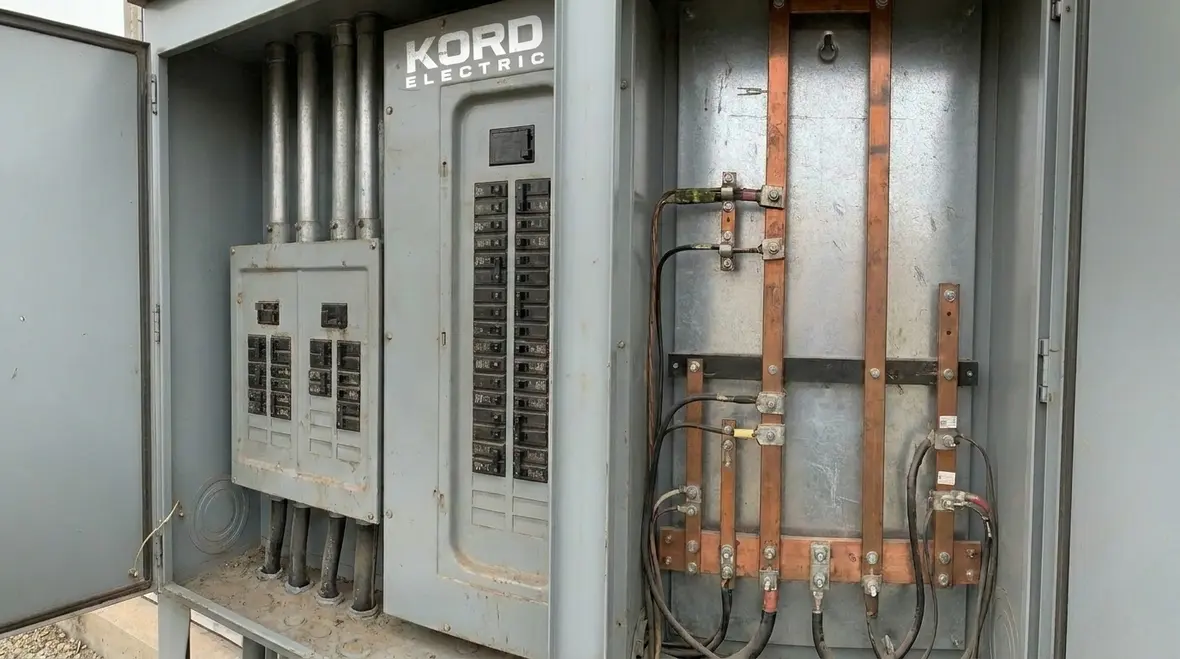
Panelboards, feeders, and grounding systems that hold up in the field
Commercial and industrial facilities often run into problems at the backbone of the electrical distribution, including panelboards, feeders, and grounding systems. To keep systems compliant and dependable, teams should confirm that panelboards are suitable for the environment, that they include proper bus ratings, and that feeder conductors match the design load calculations. Similarly, they should verify that torque practices and termination methods meet manufacturer requirements, because loose connections can create heat, and heat can create failures. Then everyone ends up paying for the same mistake twice, which is a terrible deal even by “business casual” standards.
Grounding and bonding demand equal attention. We encourage teams to check bonding jumpers, grounding electrode connections, and how metallic parts are bonded so that fault currents travel the intended paths. Also, the building’s grounding system should integrate with lightning protection when required by the project scope. Our technicians document these items so facility owners can maintain the system long after the project closes. That means fewer surprises when operations tries to troubleshoot a nuisance trip or a recurring breaker issue.
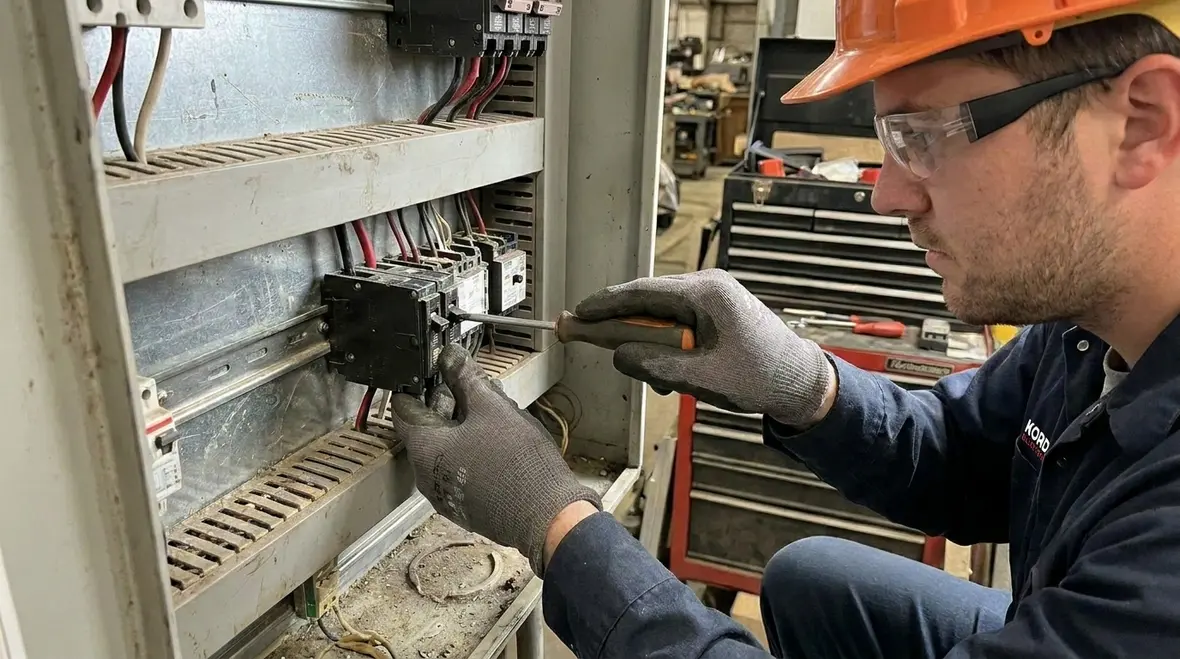
Branch circuits and overcurrent protection for real facility use
Next comes the branch circuit layer, where daily operations meet electrical design decisions. In many commercial and industrial buildings, the challenge is not only meeting requirements but handling growth, tenant fit outs, and maintenance access. For 2017 NEC compliance to stay meaningful, teams should verify overcurrent protection coordination, proper conductor ampacity, and correct device ratings for the load type.
For instance, motor circuits often need proper conductor sizing and disconnecting means that match the motor and operating conditions. Likewise, power circuits serving sensitive loads should consider how equipment tolerance interacts with breaker performance. Our expert service staff helps teams translate these requirements into installation habits. They explain how to prevent issues like oversized conductors paired with mismatched protection, or correct wires used but incorrectly terminated. And while that last one sounds small, it can cascade into failure during commissioning.
Code friendly labeling, documentation, and maintenance readiness
Even when the electrical system is technically correct, owners still need clarity for operations. Therefore, documentation and labeling should include directory accuracy, circuit identification, as built updates, and maintenance notes for key equipment. In commercial and industrial environments, operations teams often handle multiple tenants and changing loads. Consequently, confusing directories and missing labels create downtime, because maintenance staff cannot isolate problems quickly.
Kord Electric focuses on maintenance readiness. We help teams plan labeling methods that survive real life: paint changes, enclosure swaps, and upgrades. Also, we recommend creating a record trail that ties design intent to field conditions, including final equipment schedules, test results, and key installation photos when appropriate. Then the building team can handle future additions without starting from scratch. Because nothing says “welcome to the future” like a neat as built set that actually matches the gear.
For facilities that want a structured, long term way to keep systems aligned with code and real world usage, Kord Electric’s commercial and industrial electrical maintenance plans and electrical preventive maintenance programs help owners stay ahead of hidden issues instead of waiting for failures to appear during an inspection or outage.
These preventive maintenance services support 2017 NEC compliance by catching problems with labeling, panel condition, and documentation before they impact uptime. They also create a clear history of inspections, torque checks, infrared scans, and corrective work, which makes every future code cycle easier to navigate.
Where dual column guidance helps teams: common compliance checkpoints
To keep decision making simple, Kord Electric organizes common checkpoints so contractors can review quickly before submitting. The goal is not to replace engineering review, but to reduce misses that cause rework. Below is a practical two column snapshot used by our field teams during commercial and industrial projects.
| Checkpoint | Why it matters in 2017 NEC compliance |
| Conductor and raceway matching | It supports correct ampacity, routing, and protection so the system can handle fault and load conditions safely. |
| Equipment ratings and enclosure use | It ensures enclosures and protective devices fit the environment, such as wet or dusty areas common in industrial sites. |
| Grounding and bonding continuity | It directs fault current and improves safety for personnel and equipment. |
| Overcurrent device sizing and coordination | It prevents nuisance trips when possible and helps protect conductors and connected equipment. |
| Circuit identification and directories | It reduces downtime and supports safe troubleshooting during maintenance and tenant changes. |
Commissioning and test steps that prevent surprise failures
Once installation finishes, commissioning is where many projects either stay on track or start slipping. Therefore, Kord Electric emphasizes test steps that confirm both functionality and safety. Teams should verify continuity where required, check insulation resistance as applicable, and confirm operational sequencing for equipment that includes control components. They also should verify that protective devices function correctly under safe conditions and that labeling aligns with installed circuits.
Then they document results so the owner does not rely on “it seemed fine” memories. Also, our technicians explain findings in a way that helps contractors fix the right issue instead of chasing symptoms. And yes, sometimes the symptom is a bad termination, not a mystery component. When we remove the mystery, we reduce delays and keep the facility ready for operations.
For facilities that have already experienced unexplained trips, dimming, or sensitive equipment misbehavior, pairing commissioning and testing with targeted voltage fluctuation diagnostics helps stabilize performance. Kord Electric’s experience with voltage fluctuations in commercial and industrial facilities means they can align field measurements, protective device settings, and 2017 NEC compliance for a stronger overall system.
How 2017 NEC compliance connects with broader code requirements
While this guide focuses on 2017 NEC compliance, commercial and industrial facilities also operate under a broader safety umbrella that includes NFPA 70 requirements, local amendments, and often insurance driven standards. In practice, that means every project touches more than one rulebook, even when the conversation sounds like “just an NEC update.”
Kord Electric’s team monitors how updates to NFPA 70 impact design choices, equipment specifications, and field practices. When owners plan renovations, rewiring projects, or new construction, understanding how the latest national electrical code interacts with 2017 NEC enforcement in their jurisdiction helps avoid surprises during plan review or inspection. Instead of discovering conflicts late in the project, they can align with current expectations from the start.
For example, when commercial data centers, production facilities, or complex campuses evaluate their distribution systems, Kord Electric uses lessons from recent projects and NFPA guidance to shape decisions about feeder layouts, protective device coordination, and maintenance access. That mindset keeps systems safer, more resilient, and easier to service throughout their life cycle.
Planning upgrades with 2017 NEC compliance in mind
Many facility teams first think about 2017 NEC compliance when they face obvious projects like rewiring, panel replacements, or new tenant build outs. However, code alignment should guide early decisions long before the first demolition or installation step. That is especially true when buildings have aged infrastructure, patchwork additions, or long deferred maintenance.
When commercial facilities outgrow their original electrical systems, Kord Electric helps owners weigh the cost and benefit of strategic rewiring, panelboard upgrades, and service modifications. These conversations go beyond copper and conduit. They address uptime, expansion plans, and how to reduce hidden risks that could become code violations during an inspection or, worse, during an outage.
Coordinating 2017 NEC compliance with broader upgrade plans allows teams to improve safety and capacity in one motion. For instance, when planning commercial kitchen electrical upgrades, data center improvements, or major lighting retrofits, early code focused design review keeps branch circuits, feeders, and protective devices aligned with both equipment needs and inspection requirements.
FAQ for commercial owners and contractors
Conclusion: get compliance support before the inspection clock starts
Commercial and industrial electrical projects move fast, and inspections move faster. That is why Kord Electric helps owners and contractors plan for 2017 NEC compliance with field based checks, clear documentation, and expert service staff who explain what matters. When we are involved early, we reduce rework, improve commissioning outcomes, and give facility teams the records they need for long term maintenance. If you are preparing a build, tenant change, or upgrade, contact Kord Electric now and let us help you keep your electrical system safe, organized, and inspection ready.
For facilities that want structured support beyond a single project, Kord Electric’s electrical preventive maintenance services and commercial electrical maintenance plans help keep systems code aligned and reliable year after year. Those programs are especially valuable for properties with complex operations, where even minor electrical issues can turn into downtime, missed production targets, or safety concerns.
If your facility is planning a lighting retrofit, a new commercial build out, or a targeted upgrade such as recessed lighting installation or specialized power for data centers and commercial kitchens, partnering with a team that treats 2017 NEC compliance as a design tool rather than a last minute hurdle will keep your project on schedule and inspection ready.


