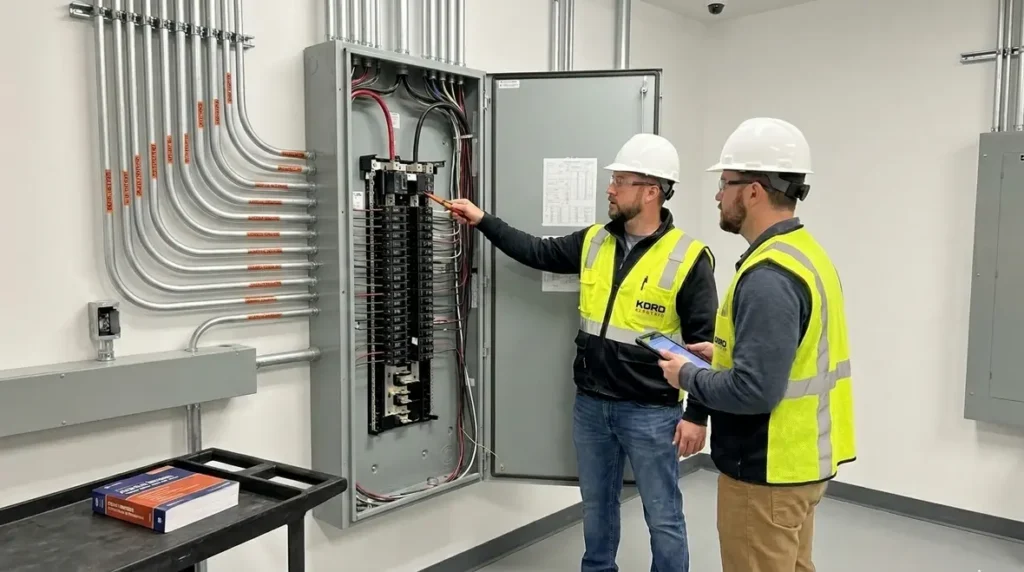
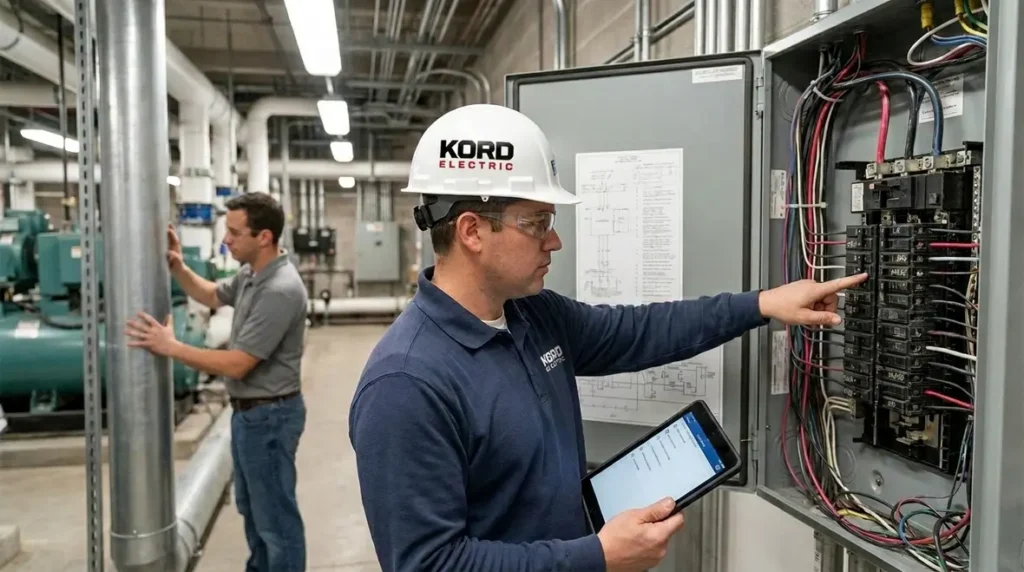
2020 NEC Compliance for Commercial Electrical
Kord Electric starts every commercial and industrial job by aligning the site with 2020 NEC compliance expectations, long before the first panel cover comes off. In other words, we treat the electrical code like a road map, not like a mysterious treasure hunt. Our team uses the 2020 NEC rules to guide design, installation, testing, and documentation so owners, architects, and contractors do not get surprised later, when budgets are already stressed and timelines feel like they are running out of oxygen.
And yes, the code can feel as thrilling as watching paint dry. However, our technicians and expert service staff explain what matters in plain language, and we help others avoid the kind of mistakes that trigger costly rework, inspection delays, and safety issues. Then we move forward with a calm, disciplined plan that keeps facilities operating, not guessing.
Commercial projects need code-ready design
To hit 2020 NEC compliance on commercial electrical projects, Kord Electric begins with design review and preconstruction coordination. We do not treat the NEC like a checklist we glance at once. Instead, we review drawings, one-lines, equipment schedules, and panelboard labeling so the system is built the way it was intended.
First, we confirm the electrical system scope matches the facility use. A hospital corridor, a warehouse with high-bay lighting, and a multi-tenant office all carry different risk profiles. Next, we verify that the design supports load calculations, feeder routing, and grounding plans that align with the project’s operating needs. Then we focus on how the system will be maintained, because a facility is only as safe as its ability to troubleshoot without chaos.
Our technicians often explain this to others in simple terms: if the design is unclear, the installer becomes the translator, and nobody wants to become the translator during a deadline. So we translate first, while there is still time to adjust.
How we manage raceways, conductors, and physical protection
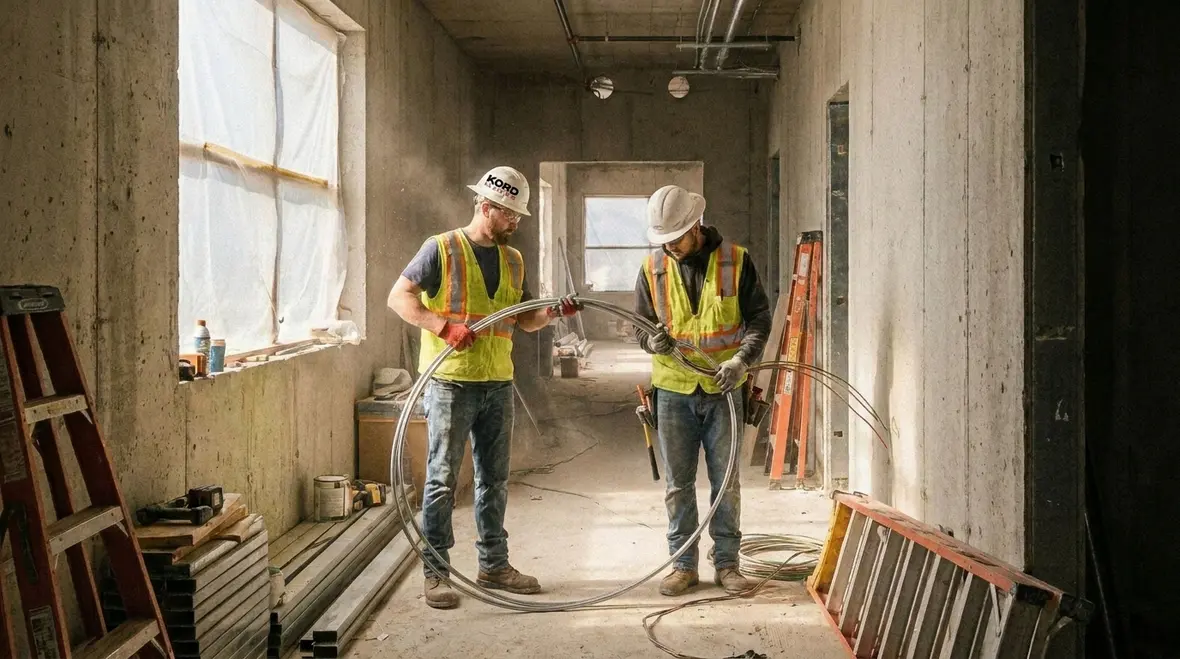
Electrical safety depends on more than wire size. It depends on how conductors move through the building, how they are protected, and how they get terminated. Kord Electric builds that discipline into the workflow.
We coordinate with other trades to plan routing so cables do not get crushed by construction movement. Additionally, we specify conduit fill, conductor insulation requirements, and support spacing so the installation stays secure over time. Because in the real world, vibration, temperature shifts, and routine maintenance happen whether anyone admits it or not.
When our expert service staff walks through the site, they pay attention to details like sharp edges on boxes, missing bushings, and sloppy pull practices that can damage insulation. They explain the “why” behind each requirement, so others do not just install the part, they understand it. That understanding reduces the chance that similar issues reappear later during commissioning or troubleshooting.
Grounding, bonding, and the path for fault current
Commercial and industrial sites need predictable performance during faults. When a system faults, it must do so safely and in a controlled way. That is where grounding and bonding matter, and it is also where many projects lose time when the details get overlooked early.
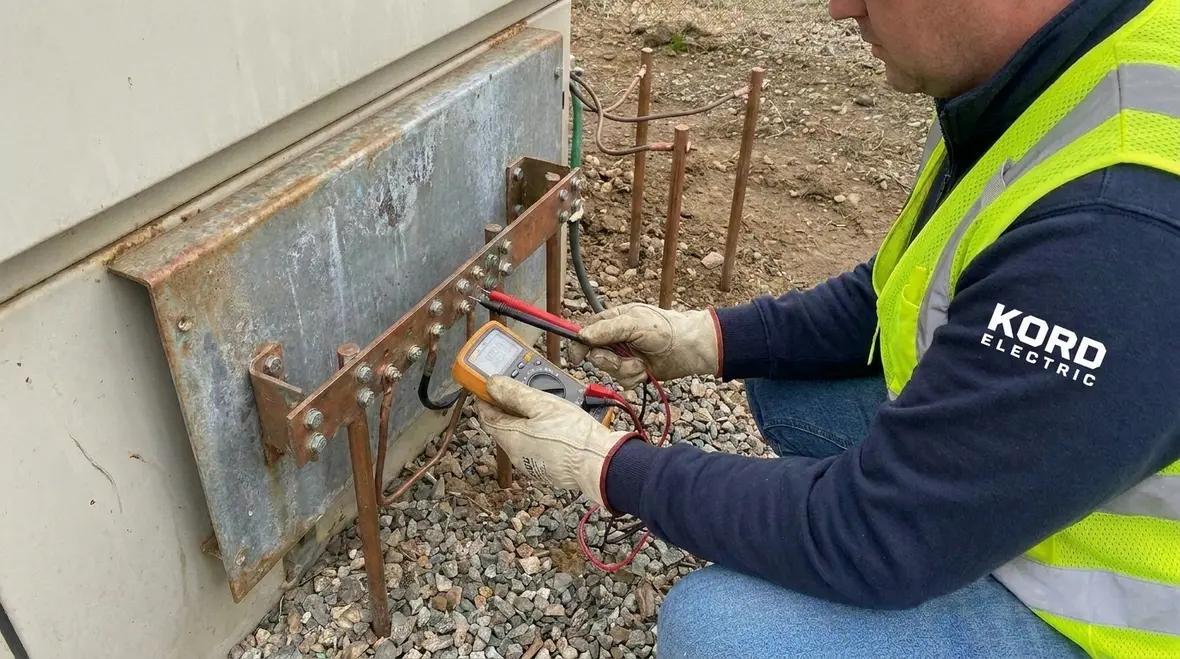
Kord Electric verifies the grounding electrode system, bonding jumpers, and the continuity of metal pathways. We also confirm that equipment grounding conductors terminate correctly and that bonding supports proper fault clearing. In practical terms, we help the system protect people and equipment, and we help other stakeholders avoid blame games that begin with, “That should have worked.”
Our approach includes field checks during installation, not just end-of-job testing. Therefore, if a connection looks uncertain, we address it immediately. We do not wait for an inspector to point it out, because inspectors usually do not throw parties when they find problems. They just document them.
Overcurrent protection and coordination that actually holds up
Overcurrent protection is not a single device decision. It is a system decision. Kord Electric evaluates protective device placement, ratings, and coordination so the facility experiences faster fault clearing with less collateral damage.
We review protective device types, interrupting capacity, and where protective devices feed downstream equipment. Then we check coordination so selective tripping happens when it should. This matters in commercial buildings where power interruptions can shut down critical processes, upset operations, or create downtime costs that make everyone very unhappy.
Our technicians explain coordination in plain language: protective devices should “agree” on who stops the fault first. If they do not, one device trips while another continues carrying stress. Then the building pays the price later, like a rerun of a bad TV season you did not ask to watch.
Lighting, emergency systems, and life safety readiness
Lighting design affects comfort, productivity, and safety, while emergency systems affect survival and code compliance during failures. Kord Electric treats these areas with special care on commercial and industrial facilities and major property buildings.
For lighting, we confirm that circuits, controls, and disconnects support safe operation and maintenance. For emergency and egress-related systems, we verify proper power source behavior, transfer arrangements, and correct installation of components. Additionally, we ensure that the labeling and accessibility requirements are met so maintenance staff can service systems without guesswork.
Our expert service staff also trains others on what to check during inspections. They show how to document conditions, what to verify during functional tests, and how to spot early signs of issues that could reduce reliability. This proactive support helps reduce the chance that a critical system fails when the lights should stay on, even if someone tries to treat it like a magic trick.
On many projects, lighting and emergency systems also connect directly to broader reliability planning. For example, facilities concerned about voltage quality or nuisance trips often pair 2020 NEC compliance work with deeper assessments like those described in Kord Electric’s guidance on hidden electrical risks in commercial buildings and voltage fluctuations in commercial and industrial facilities. Linking preventive planning with code alignment keeps life safety systems from becoming the weak link when loads shift or infrastructure ages.
Panel schedules, labeling, and documentation that inspectors trust
Even a well-installed system can face delays if documentation is weak. Kord Electric builds strong records and labeling so others can understand the system quickly during turnover, commissioning, and future troubleshooting.
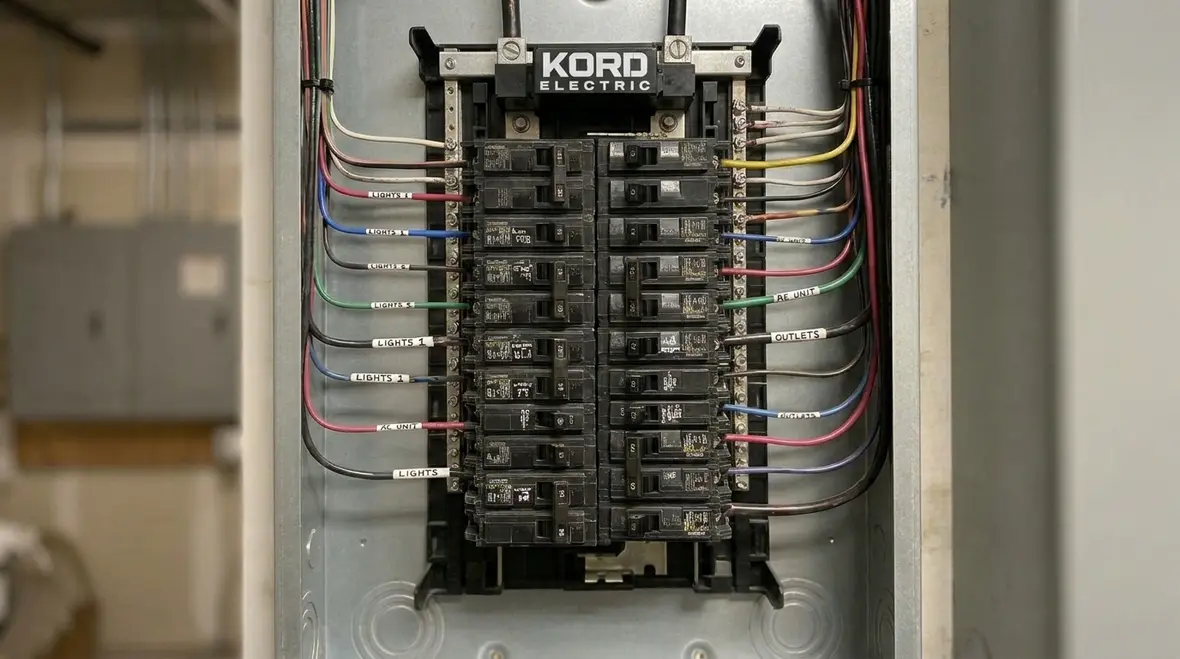
We verify panel schedules, directory accuracy, and circuit identification so maintenance staff can trace loads without opening every cover. We also confirm that as-built documentation matches what the field actually installed. Furthermore, we organize test results and commissioning notes so owners and contractors can review them clearly.
Our technicians explain labeling and documentation benefits with a simple message: nobody wants to play electrical detective in a ceiling full of dust. So we make it easy to find the correct breaker, verify performance, and maintain the system safely.
This disciplined approach to records also supports long-term planning. When owners later evaluate upgrades like commercial EV charger installation or large-scale rewiring, accurate panel schedules and load documentation give engineers a reliable starting point. That means future projects can move faster, stay aligned with 2020 NEC compliance, and avoid the surprise discoveries that show up when “as-built” drawings do not match reality.
Commissioning, testing, and field verification steps
Compliance is not just paperwork. It is performance. Kord Electric uses structured commissioning steps to verify that systems work as designed and operate safely under real conditions.
We perform acceptance testing that supports the facility’s operational goals. Then we verify protective device behavior, grounding integrity, and emergency functionality where applicable. After that, we walk through the results with owners and other stakeholders so expectations match the evidence. Transition matters here, and we ensure each step feeds the next, so the team does not stall at the end.
Our expert service staff also supports ongoing care. They teach facility teams what normal conditions look like and what signals a need for follow-up. That reduces nuisance outages and helps prevent minor issues from turning into major repairs that interrupt operations.
Many commercial and industrial facilities roll these activities into broader electrical preventive maintenance programs. By pairing 2020 NEC compliance checks with scheduled inspections, infrared scanning, and system reporting, building owners can turn code requirements into a predictable maintenance rhythm instead of a last-minute scramble before inspections.
FAQ about 2020 NEC compliance for commercial electrical projects
Get a code-aligned plan from Kord Electric
Commercial and industrial owners do not need guesswork. They need safe systems, clear documentation, and predictable commissioning. Kord Electric brings disciplined process, experienced technicians, and expert service staff who explain requirements and verify performance so projects move forward with less risk. If you are planning new construction or upgrading a major facility, contact us to review your scope and build a compliance-ready approach. Let us help you avoid delays, reduce rework, and keep the power reliable when it matters most.
If your facility is also due for a structured electrical preventive maintenance program or you are exploring upgrades such as commercial EV charger installation, our team can align those efforts with 2020 NEC compliance from day one. That way, every project — from routine testing to major retrofits — follows the same code-first roadmap and supports long-term reliability across your entire electrical system.
For property leaders who manage multiple sites or complex operations, pairing code-focused electrical work with coordinated fire protection planning can further strengthen life safety readiness. Kord Fire Protection provides full fire sprinkler, alarm, and extinguisher services designed to keep buildings inspection-ready and aligned with current codes, giving owners one cohesive strategy for both electrical and fire safety across their portfolios.