2026 Title 24 Warehouse Lighting Compliance Guide
Warehouse lighting decisions in 2026 feel a little like trying to read a thermostat in the dark. You know something is off, but you cannot see it clearly. That is why we start with the Title 24 warehouse lighting compliance guide right away, within the first stretch of planning. At Kord Electric, our approach is simple: we help warehouse managers and building owners align lighting with new expectations, then we keep it running safely and efficiently. This article shares essential tips our team uses in the real world, and we explain the why behind every step. Meanwhile, we will keep the process calm, steady, and business casual, because nobody wants a lighting audit that feels like a pop quiz from a villain.
What 2026 lighting rule changes mean for warehouse operations
Third party guidance and local enforcement continue to push warehouses toward better energy control, clearer performance, and documented compliance. In other words, the rules do not only care what the lights look like. They care how the system behaves across hours, seasons, and usage patterns. Therefore, warehouse managers should expect more focus on lighting controls, demand savings, and how occupants experience uniformity and glare.
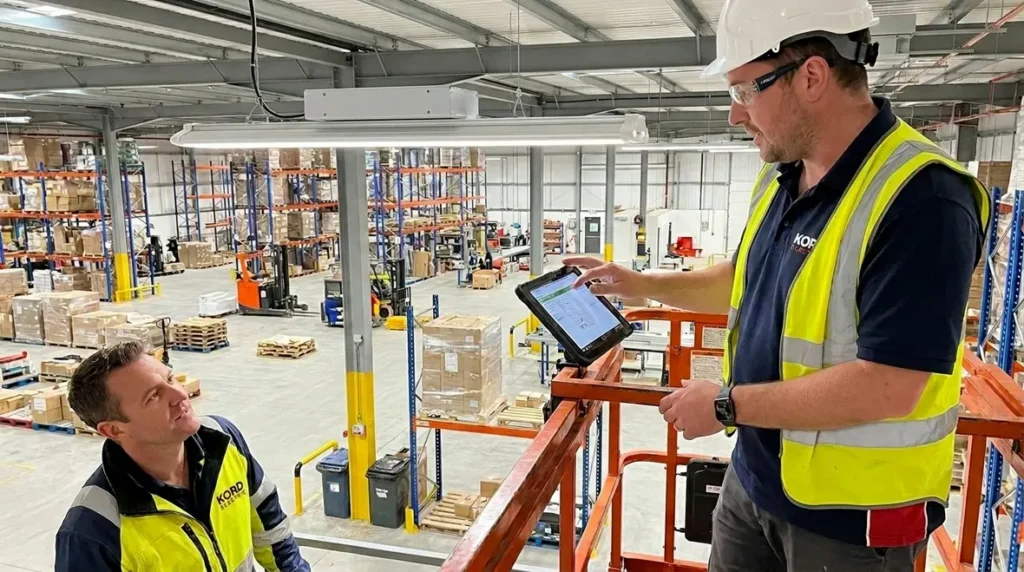
At Kord Electric, our technicians and expert service staff often hear the same concern: “We have fixtures already, so why does anything change?” Then we walk them through it. Even when hardware exists, controls, wiring paths, and maintenance history can cause the system to drift out of spec. And when that happens, the warehouse can pay the price in higher energy bills, weaker visibility, and documentation gaps during inspections.
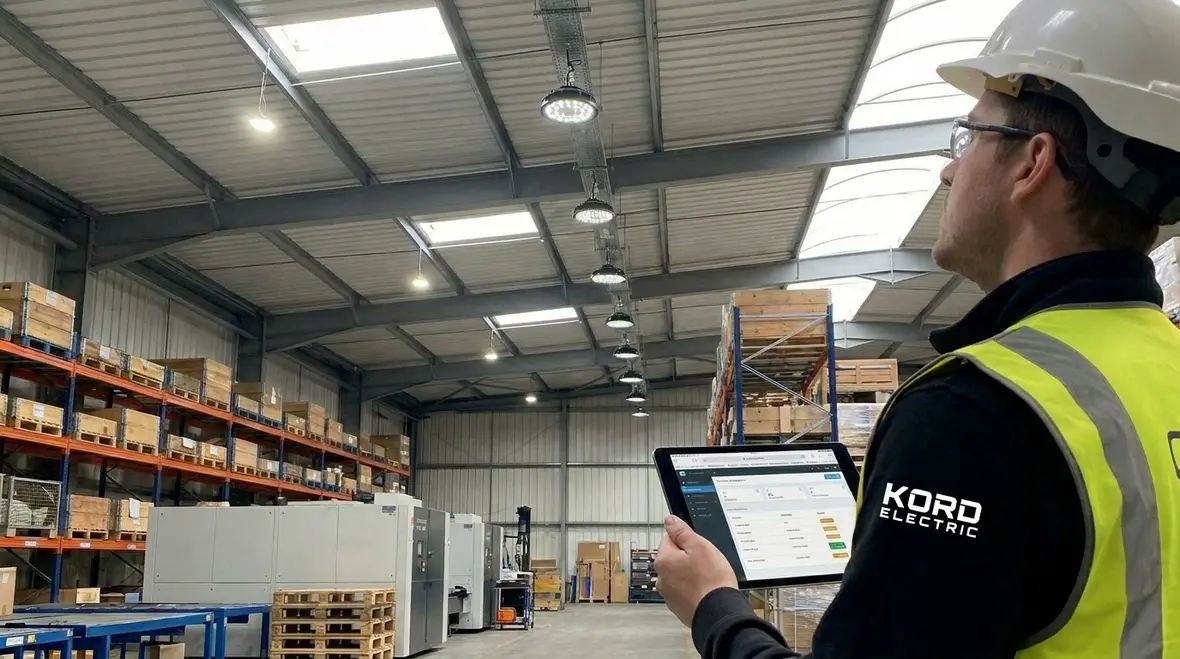
When these rule updates land on a busy facility manager’s desk, they do not arrive with a pause button. Operations keep moving. That is why having a repeatable path to compliance matters just as much as understanding the rulebook. Warehouses that treat code changes as part of ongoing system planning, not a one-time scramble, stay ahead of enforcement while protecting productivity.
How to use the Title 24 warehouse lighting compliance guide in planning

Third person teams in the field often skip early coordination and then try to fix everything at the end. That is where projects go to suffer. Instead, teams should use the Title 24 warehouse lighting compliance guide as a planning tool, not a last minute checklist. First, gather the site details: fixture layout, power density targets, mounting heights, and the intended use areas. Next, confirm the control strategy: switching zones, dimming steps, scheduling, and any daylight response.
Then we recommend a practical workflow. Compare as built conditions to design intent. If the warehouse was renovated, confirm whether someone added racks, changed aisle widths, or relocated workstations. After that, document the control settings and test results so compliance does not rest on guesses. Our technicians explain this in plain terms during walkthroughs, because a manager should never have to “trust the vibes” when the lights are on.
For larger or multi-tenant facilities, the planning phase should also reference broader guidance like the California Commercial Lighting Code Guide for 2026, which outlines how Title 24 interacts with other energy and electrical requirements across commercial properties. Aligning warehouse decisions with those statewide expectations keeps everyone—from owners to inspectors—on the same page from day one.
Warehouse lighting compliance guide basics that actually matter on site
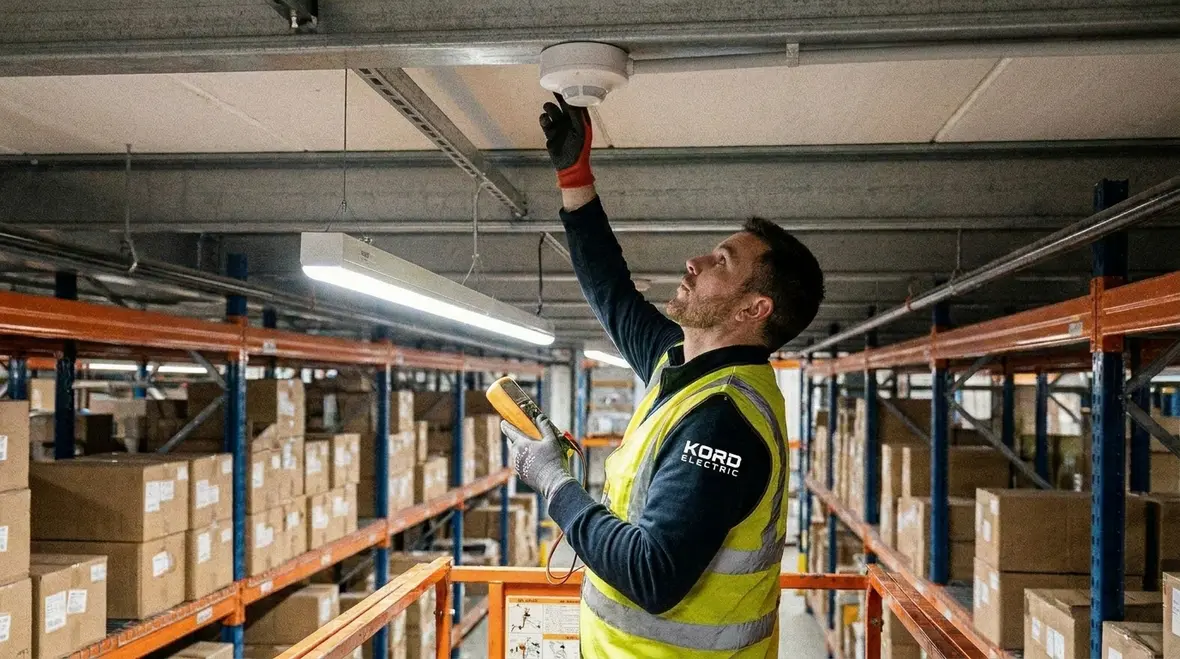
Many teams can quote the rules, but they struggle when asked to prove performance. Therefore, the practical basics should stay at the center of the work. First, confirm lamp or LED efficacy and verify the installed components match the submittals. Second, review controls for correct sequencing. For example, motion sensors and time schedules should align with how the warehouse runs at shift change. Third, verify that dimming settings do not conflict with safety needs near loading docks or picking lines.
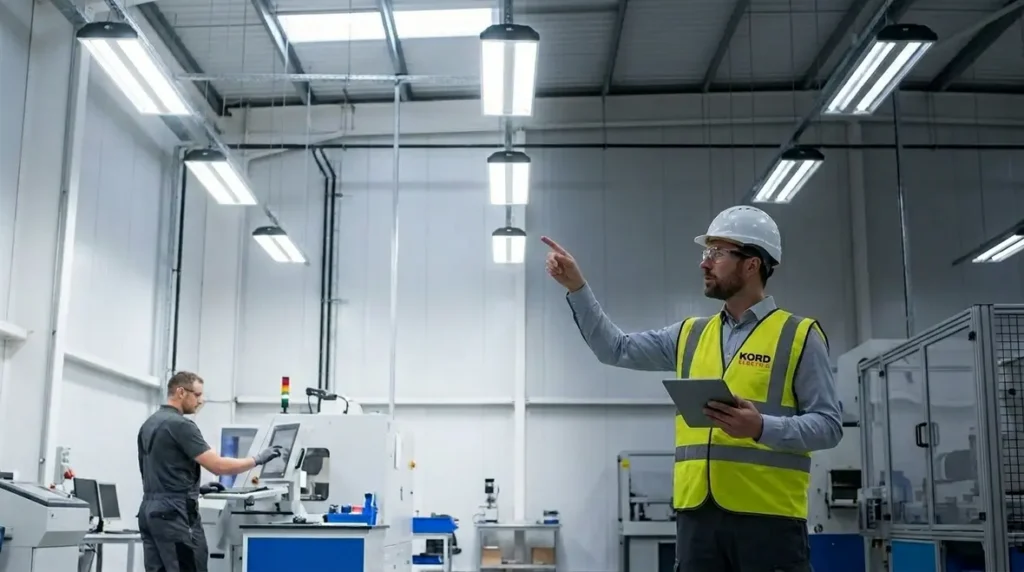
Also, pay attention to uniformity and glare. Even if energy targets look fine, poor distribution can cause higher error rates and fatigue. Meanwhile, glare from improper aiming can lead to complaints that escalate fast. Kord Electric service staff help teams address this with field checks, adjustments, and a maintenance plan that supports long term compliance.
On active warehouse floors, these basics show up in the little moments: an operator backing a forklift into a brighter dock, a picker reading labels without squinting, or a supervisor walking the mezzanine without stepping from a bright zone into a visual cave. When the system is tuned correctly, nobody has to think about the lighting. They simply see what they need to see, and the energy savings happen quietly in the background.
Audits, documentation, and what inspectors expect in 2026
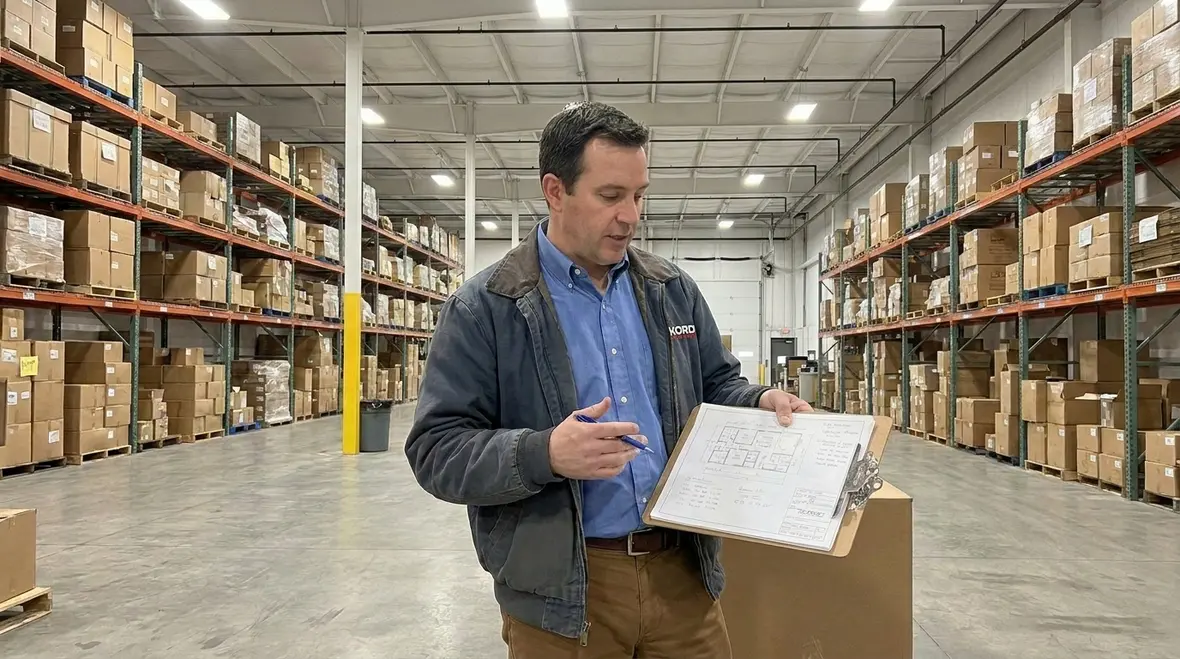
Inspections rarely fail because a warehouse has lights. They fail because records are incomplete, assumptions are not backed by test data, or changes occurred after the original compliance paperwork. So we advise warehouse managers to treat documentation like safety documentation: it should be current, clear, and easy to find.
Typically, inspectors look for the installed system details, control evidence, and whether the building meets the required performance path. Therefore, store key items in a single place: fixture schedules, control diagrams, commissioning notes, and any measured results. If someone adjusted settings later, capture that update too. This avoids the awkward moment when a manager says, “We think the dimming is set the same,” and the inspector says, “Prove it.”
We also help teams build a simple audit calendar. A short review before high traffic seasons prevents surprises. Our technicians walk facilities through the most common gaps and show how to fix them without shutting down operations more than necessary.
For facilities that want a broader playbook, pairing warehouse-specific documentation with resources like the California Commercial Lighting Code Guide for 2026 and the Lighting Installation Code Compliance Guide creates a stronger backbone for audits. When your warehouse lighting story lines up neatly with your overall commercial code strategy, inspectors see consistency, not confusion.
Preventive maintenance to keep performance from drifting
Lighting systems do not stay perfect by accident. Dust buildup, driver aging, sensor misalignment, and routine building changes can all reduce system performance over time. That is why preventive maintenance becomes the quiet superhero of warehouse compliance. If a system drifts, energy savings and control behavior can fade. Then suddenly, compliance looks harder than it used to.
Kord Electric supports this with our electrical preventive maintenance approach. You can review details at https://kordelectric.com/electrical-preventive-maintenance/. In our work, we focus on practical actions: verifying connections, checking control operation, inspecting for signs of wear, and confirming that devices respond as intended. Furthermore, we build a routine that fits commercial and industrial facilities, because warehouses need service that respects uptime.
And here is a small joke that is still true. Preventive maintenance is like changing filters in your HVAC. Nobody throws a party for it, but everyone thanks it when the air stays clean and the system keeps working.
For warehouses juggling aging infrastructure or frequent layout changes, a structured maintenance plan tied to a broader commercial and industrial maintenance strategy can make the difference between constant fire drills and calm, predictable operations. That is why many facility teams connect their warehouse lighting compliance work directly to commercial and industrial electrical maintenance plans that look at the entire system, not just the fixtures overhead.
Controls, sensors, and energy savings without sacrificing safety
Warehouse lighting in 2026 increasingly relies on controls that manage energy while supporting safe visibility. This means dimming, zoning, scheduling, and occupancy sensing must work together. Therefore, the main goal is not “turn lights off as fast as possible.” The goal is to match lighting levels to real usage while keeping safety consistent where it matters most.
Our expert service staff commonly advise managers to map zones to traffic patterns. If a corridor is used only during inbound receiving, a tailored schedule can reduce wasted output. On the other hand, areas like packing stations, high rack aisles, and staging zones often need steadier levels. Sensors also need correct mounting height and field of view. If motion detection is blocked by stored goods or equipment, it will behave like a comedian bombing on stage. It will not work when it needs to.
When teams set controls, they should test outcomes after any storage layout change. Even small shifts can change what the sensors “see.” Kord Electric helps facilities validate settings so the system saves energy and keeps the workplace clear.
In some cases, the smartest move is pairing updated controls with targeted lighting installation services, especially when older fixtures or layouts limit what sensors can do. When new high-bay or task lighting is designed with Title 24 controls in mind from the start, warehouses gain a smoother path to both compliance and long term energy performance.
Next steps for warehouse managers ready for 2026
First, we suggest an equipment and control review. Then, we recommend verifying the compliance path using current site conditions rather than outdated drawings. Next, teams should plan preventive maintenance early, so the system stays stable and documented. After that, train internal staff on what settings matter, and where the documentation lives. This reduces confusion and keeps the warehouse ready for audits.
Finally, if a facility needs new installations or upgrades, Kord Electric supports commercial and industrial sites with expert technicians who explain each step in a calm and clear way. The goal is compliance that does not slow operations, because nobody should have to choose between safe lighting and business continuity.
For teams that want to go further, this is a good time to align warehouse lighting strategy with other electrical priorities. That might mean coordinating with voltage fluctuation mitigation efforts, planning for future equipment loads, or reviewing how emergency and egress lighting will behave under new control schemes. When everything plays well together, 2026 code updates look less like an obstacle and more like an opportunity to modernize.
FAQ
Work with Kord Electric for a smooth 2026 lighting path
If a 2026 lighting update feels like a heavy box nobody wants to lift, we can help you carry it. Kord Electric supports commercial and industrial facilities with expert technicians, clear explanations, and preventive maintenance that helps keep performance steady. Contact us to review your current lighting controls, confirm alignment with the Title 24 warehouse lighting compliance guide, and build a plan that protects safety, uptime, and compliance. Let us turn the process from stressful into handled, the way it should be.
When a warehouse needs more than adjustments and paperwork, our dedicated commercial and industrial lighting installation services provide a clear path from outdated systems to code aligned, high performance lighting. From initial design and Title 24 coordination to commissioning and documentation, we focus on keeping your operations moving while we handle the technical details.
Whether you are refining controls, planning a retrofit, or building a new facility, our team can help you connect this 2026 Title 24 warehouse lighting compliance guide to real world decisions on your floor. The result is simple: better visibility, stronger compliance, and a lighting system that quietly supports the work your warehouse does every day.