NEC Electrical Code Requirements for Facilities
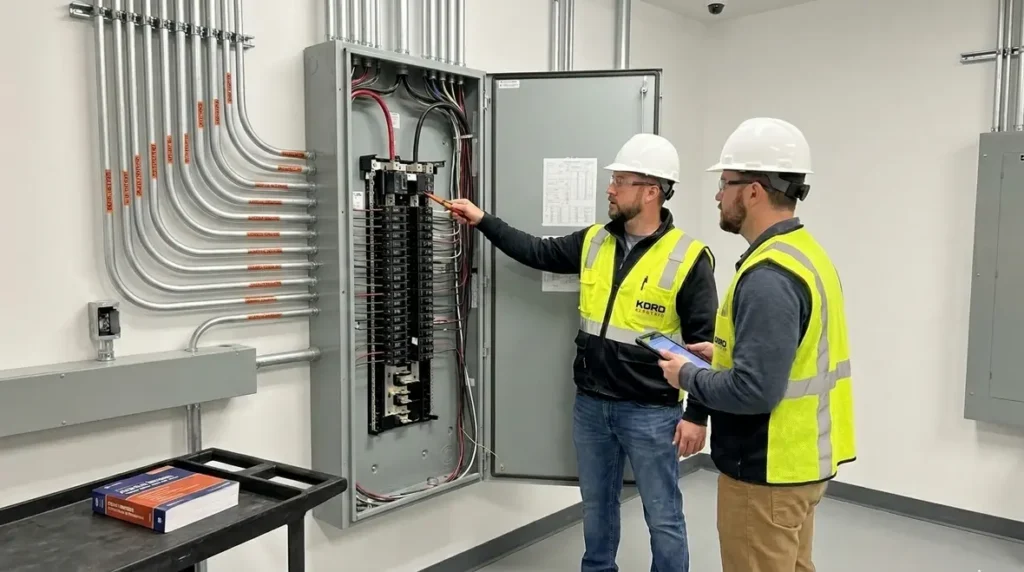
Kord Electric often gets called when something feels off in a facility, like power is acting “mysterious.” That is usually when building owners wish they had reviewed the NEC electrical code requirements before a problem turned into a project. In the first look, the NEC Electrical Code covers topics such as wiring methods, overcurrent protection, grounding and bonding, equipment labeling, panel schedules, and electrical room rules. Additionally, it sets expectations for safe installation, clearances, and how systems must be maintained. However, code compliance is not just a checkbox. It protects people, reduces downtime, and helps a building perform as designed.
Now, while other companies might rush through a checklist, our technicians and expert service staff at Kord Electric take the time to explain what the requirements mean in real life, step by step. We translate code language into decisions your team can understand, because nobody wants to find out the hard way that electrical work does not forgive guesses. If the building is commercial, industrial, or a major property, then the stakes go up, and so does the need for dependable compliance.
Building safety starts with NEC electrical code requirements
When a facility owner asks what to prioritize, we tell them the same thing: treat the NEC as your safety map, not your threat detector. First, NEC Electrical Code requirements guide how wiring and equipment get installed and protected. Then they set rules that reduce the risk of shock, fire, and equipment damage. Even better, the rules create consistency so inspectors, electricians, and facility teams can speak the same language.

To keep this practical, our expert service staff walks clients through how code impacts day to day operations. For example, they review how feeders and branch circuits get sized, where overcurrent protection belongs, and why grounding and bonding cannot be “close enough.” After that, they explain how documentation supports audits and helps maintenance move faster.
And yes, electrical safety is one of those boring grown up topics that can feel like an episode of a sitcom. But unlike sitcoms, you cannot pause mid crisis. You need systems that comply before something goes wrong.
How we review electrical distribution in commercial and industrial buildings
In commercial and industrial facilities, distribution systems often carry the weight of everything from production lines to HVAC systems to life safety loads. Therefore, we approach plan review and field verification with a clear method. First, we identify the single line diagram, equipment ratings, and how power flows from utility service to switchboards, panelboards, and final circuits. Next, we confirm the physical installation matches the design intent and meets NEC electrical code requirements for wiring methods and protection.
Our team then checks the details people commonly overlook. For example, they verify proper conductor identification, conductor ampacity considerations, and where derating rules apply. After that, they evaluate how circuits get grouped, how panelboards get arranged, and whether load labeling stays accurate when tenants move equipment around.

Also, facilities do not stay still. Load growth, equipment upgrades, and remodels change the electrical picture over time. So we recommend periodic reviews. Transitioning from “install once” to “maintain with code discipline” helps your operations avoid slow drift into unsafe or non compliant conditions.
If you are interested in how national standards evolve, you can also explore topics like NFPA 70 and its role in shaping NEC expectations across modern facilities by visiting the main Kord Electric Blog for related code and compliance articles.
Grounding and bonding: where failures hide
Many owners assume grounding is only about meeting an inspection checklist. In reality, grounding and bonding protect equipment, stabilize system voltage, and reduce fault risk. Therefore, our technicians evaluate grounding paths and bonding connections with a focus on continuity, corrosion resistance, and correct termination practices.
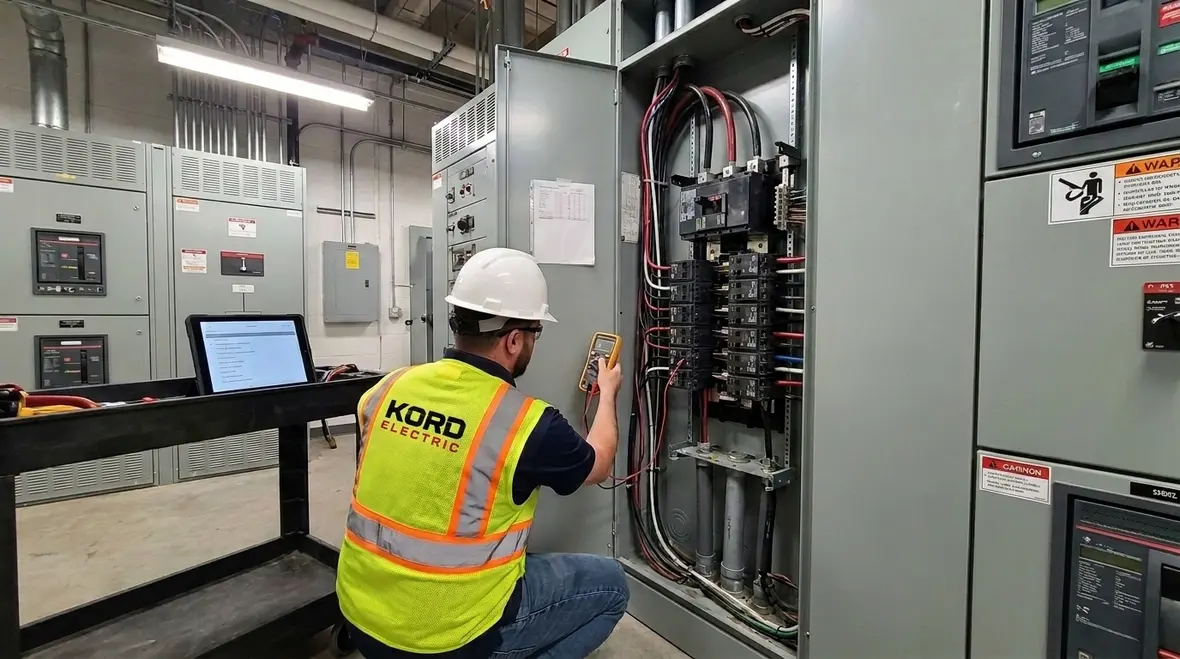
First, we verify that metallic components that need bonding are actually bonded. Then we confirm that enclosures and raceways follow NEC Electrical Code principles. After that, we test the system where possible and compare results to the facility’s equipment requirements and documentation.

When grounding practices are weak, symptoms show up in annoying ways. You might see nuisance tripping, erratic controls, stray current corrosion, or voltage issues that technicians chase for weeks. Meanwhile, the real cause stays buried in a connection that should have been solid from day one.
And to be honest, nobody enjoys that kind of scavenger hunt. It is like searching for a missing remote control in a home theater, except the lights never come back on when you find it.
Overcurrent protection and conductor rules for long-term reliability
Overcurrent protection is where the NEC wants you to be exact, and we help owners stay exact. In a commercial or industrial facility, circuits can draw more current than expected during normal startup, motor loads, or short fault events. That is why breakers and fuses must match the design and protect conductors and equipment.
Our service staff reviews each layer of protection, from service disconnects down to branch circuit devices. We confirm the rating and type, and we check that the device protects the correct conductor size and application. Next, we verify that conductor sizing follows the NEC rules for ampacity and temperature rating, including conditions like more than three current-carrying conductors where applicable.
We also pay attention to the installation environment. For instance, conduit fill and wiring method details can affect performance, and a small mistake can create heat buildup. Heat, of course, is not your friend. It speeds aging, reduces insulation life, and increases the chance of failures when you least need them.
As we go through these checks, our technicians explain why the rule exists. When owners understand the purpose, they make better decisions about future upgrades, spares, and maintenance schedules.
Electrical rooms, clearances, and accessibility for operations
Even the best electrical system fails if it cannot be safely accessed. That is why we focus on electrical room safety and practical access requirements. Clearances around electrical equipment help technicians work safely during inspections, troubleshooting, and repairs.
First, we confirm the physical layout supports safe working space. Then we evaluate cable routing, the condition of enclosures, and whether doors and access panels open as intended. Next, we review labeling and signage so facility teams can identify equipment quickly and prevent wrong-circuit work.
Accessibility also affects uptime. When a panel or switchboard cannot be reached without moving equipment or violating safety rules, maintenance slows down and risk rises. Therefore, Kord Electric helps owners build an access plan that supports both compliance and operational speed.
In our experience, this is where “future us” thanks “present us.” You only feel it when you avoid an emergency that disrupts a production schedule, a tenant operation, or a critical service window.
Documentation, labeling, and compliance readiness during change
Facilities change. New tenants add loads, maintenance upgrades controls, and production equipment gets swapped. When that happens, documentation must keep up. NEC Electrical Code requirements connect safety to traceability, and we help owners maintain that traceability.
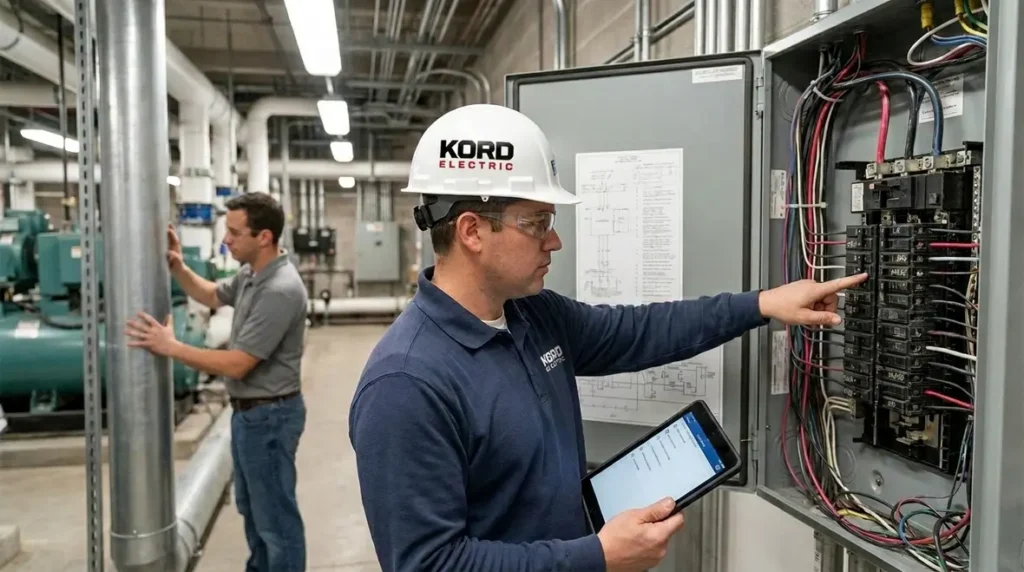
We support clients with practical verification methods. For example, our technicians review panel schedules, circuit directories, and equipment identification. Then they compare what the drawings say to what is installed. After that, they help align labels and documentation with actual conditions, especially where circuits were modified in the past.
We also recommend a controlled process for electrical change. Instead of letting updates happen informally, owners benefit from a review routine. That routine can include pre work checks, post work verification, and updates to single line diagrams and as built information. When the facility keeps accurate records, compliance efforts become smoother and faster.
And for those who think paperwork is optional, we say this politely: try operating a facility where no one can identify circuits. It is like running a warehouse with no inventory system. You can do it, sure. Then you wonder why orders disappear.
For facilities that want a structured way to stay ahead of problems, services like Electrical Preventive Maintenance can reinforce NEC electrical code requirements with regular inspections, testing, and documentation support.
Dual column best practices for NEC readiness
What we check
- Wiring method fit for use and installation conditions
- Conductor sizing, derating, and ampacity consistency
- Correct overcurrent protection coordination
- Grounding and bonding continuity and termination quality
- Accessible working clearances and safe equipment access
- Accurate labeling, panel schedules, and identification
Why it matters
- Reduces fire and shock risk in the building
- Prevents heat damage and premature failures
- Protects conductors during fault events
- Stabilizes systems and improves equipment safety
- Speeds maintenance and supports safe troubleshooting
- Improves compliance readiness during inspections
FAQ for building owners and facility managers
Conclusion: get ahead of compliance with Kord Electric
Electrical safety and code discipline should not wait for an inspection calendar or an equipment failure. Kord Electric helps commercial and industrial facility owners verify critical details, align documentation with reality, and keep systems reliable as loads and layouts change. Our technicians and expert service staff explain findings clearly so your team can act with confidence.
If you want a calmer maintenance season and fewer surprise issues, contact Kord Electric today and schedule an electrical compliance readiness review. For facilities facing specific reliability concerns, services such as comprehensive Electrical Preventive Maintenance create a proactive layer of protection around NEC electrical code requirements and long-term system performance.