24 7 Electrical Emergency Response Planning
Building 24/7 Readiness With Critical Infrastructure Electrical Emergency Response Planning
When commercial and industrial facilities face power problems, timing matters. That is why Kord Electric develops a 24/7 electrical emergency response plan for critical infrastructure, so operations do not grind to a halt when the lights flicker or the supply drops. In the first moments, decisions shape outcomes. Therefore, our approach focuses on fast reporting, clear roles, and safe field actions that protect people, equipment, and uptime. We also explain the “why” in plain terms through our technicians and expert service staff, because confusion during an outage is like searching for a flashlight while the generator is already running. And yes, we have all seen that movie.
Emergency readiness starts with risk mapping and clear triggers
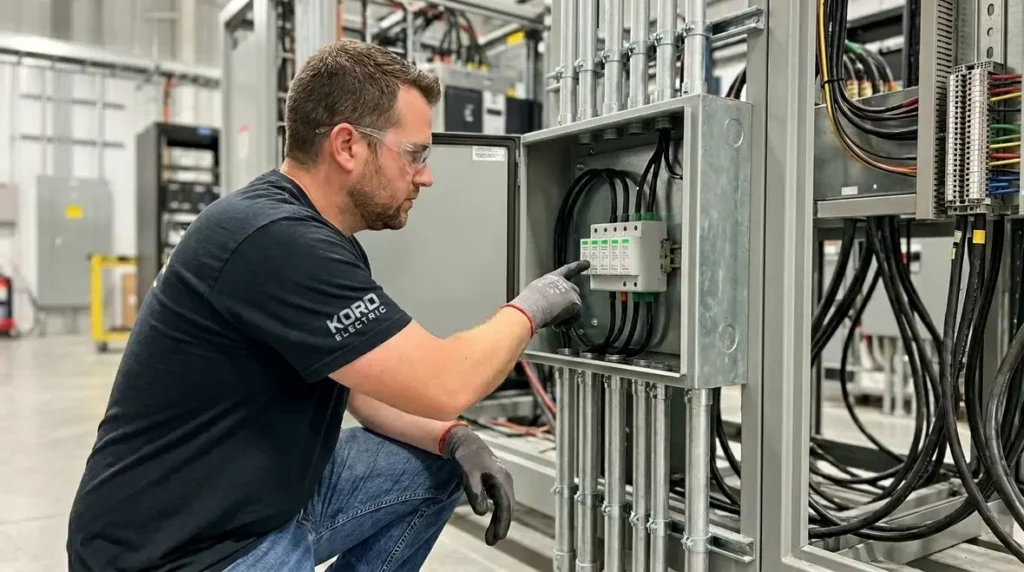
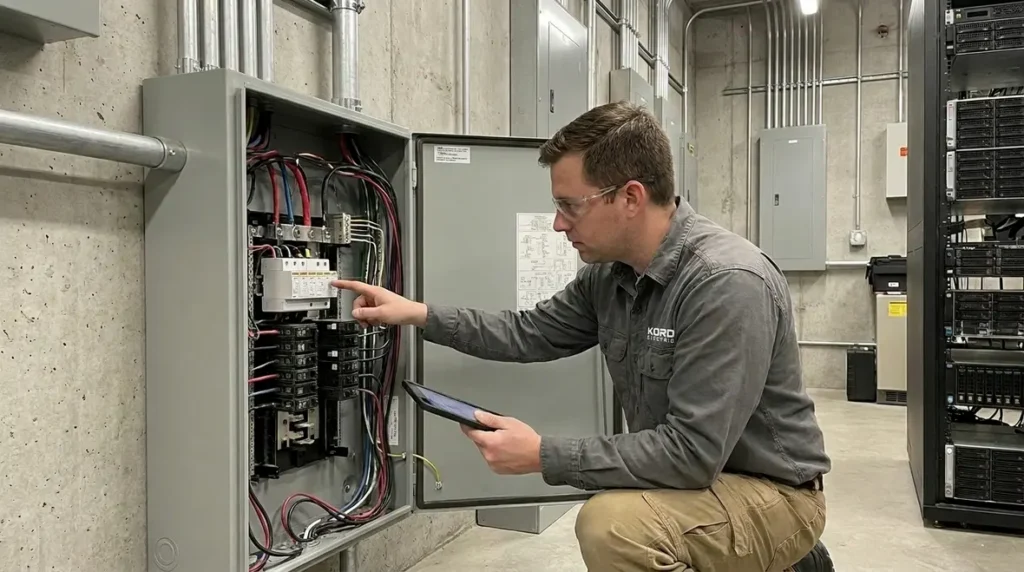
First, we help others identify what can fail, what matters most, and what should get attention first. We do this with a site review that considers main switchgear, feeders, critical loads, controls, and any systems that cannot wait. Then we connect that to decision triggers. For example, the plan defines what counts as a voltage sag, a sustained interruption, a harmonic issue, or a fuel or transfer failure, based on what the facility actually experiences.
Next, we set response levels. If voltage fluctuates enough to cause drive faults or nuisance trips, our plan guides the team to stabilize the system quickly. If a transformer or switchgear fault interrupts critical circuits, the response steps become more urgent and more controlled. And because every facility is different, our technicians tailor the actions to the gear and the operating rules already in place, instead of forcing a generic checklist onto a real world panel schedule.
To keep teams aligned, we also document communication paths. After all, someone has to call, someone has to decide, and someone has to verify field conditions. Our expert service staff then cross checks that the plan matches the facility’s staffing, access controls, and after hours responsibilities.
Designing a 24/7 call, dispatch, and field action flow
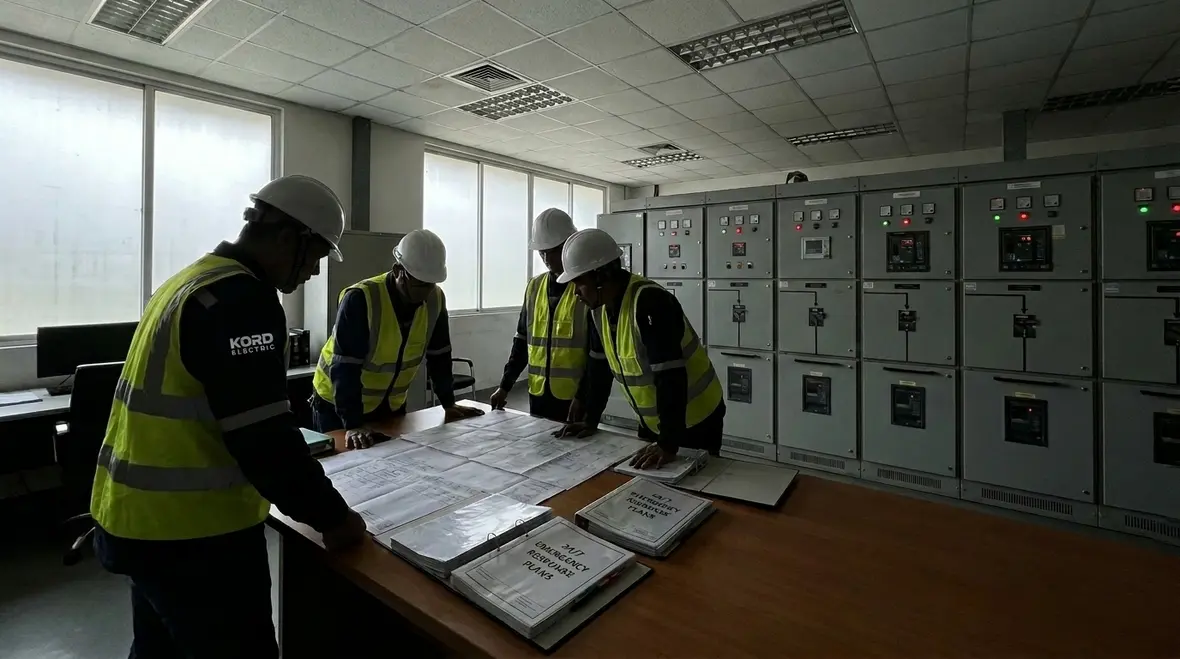
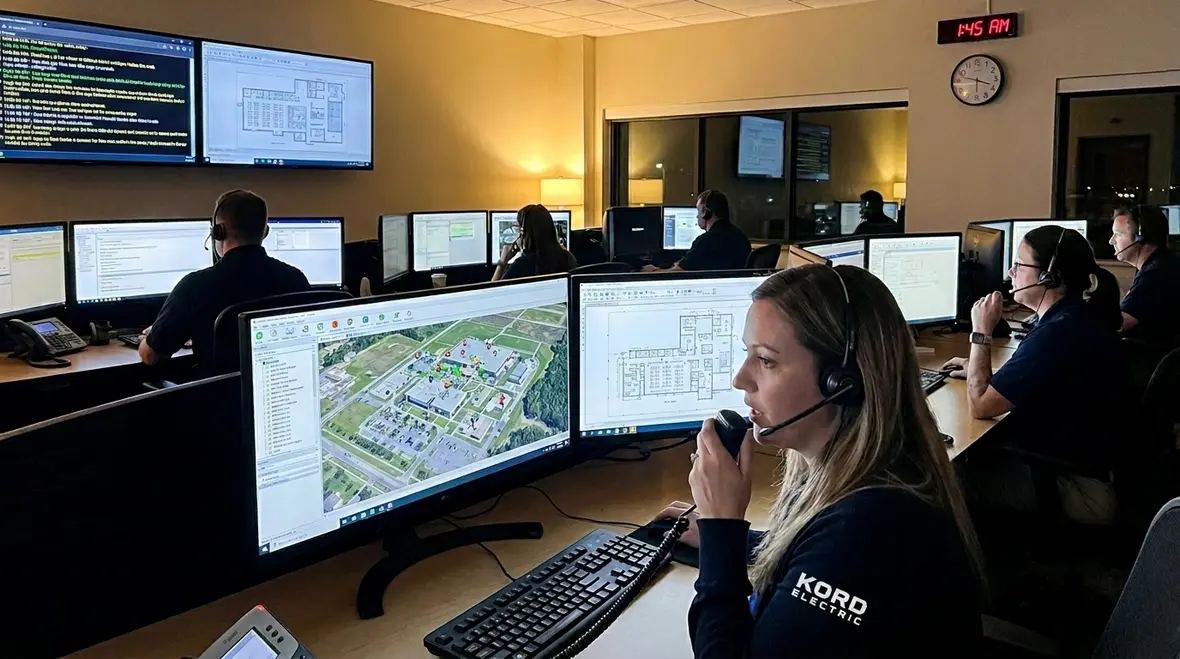
Now we move from paper to people. Our emergency plan builds a call flow that works at 2:00 a.m., when nobody feels like being calm, including the person on the radio. Therefore, Kord Electric defines who receives the initial report, what information they must collect, and how they dispatch the right technician based on the event type and the facility layout.
Then we define field action steps with safety first rules. Our plan specifies what to verify before energizing or re-energizing circuits. That includes lockout and tagout steps, safe test methods, and boundaries for remote operations. Also, it spells out when technicians should stop, escalate, and bring in additional support from manufacturer specialists.
Because the plan supports commercial and industrial facilities, it also accounts for operational constraints like production schedules, cleanroom limits, food safety windows, data center uptime needs, and hospital style criticality without drifting into unrelated sectors. In other words, we plan for the assets that your business depends on, and we do it with procedures that help you keep running while still staying safe.
Voltage events: how the plan handles fluctuations and protects assets
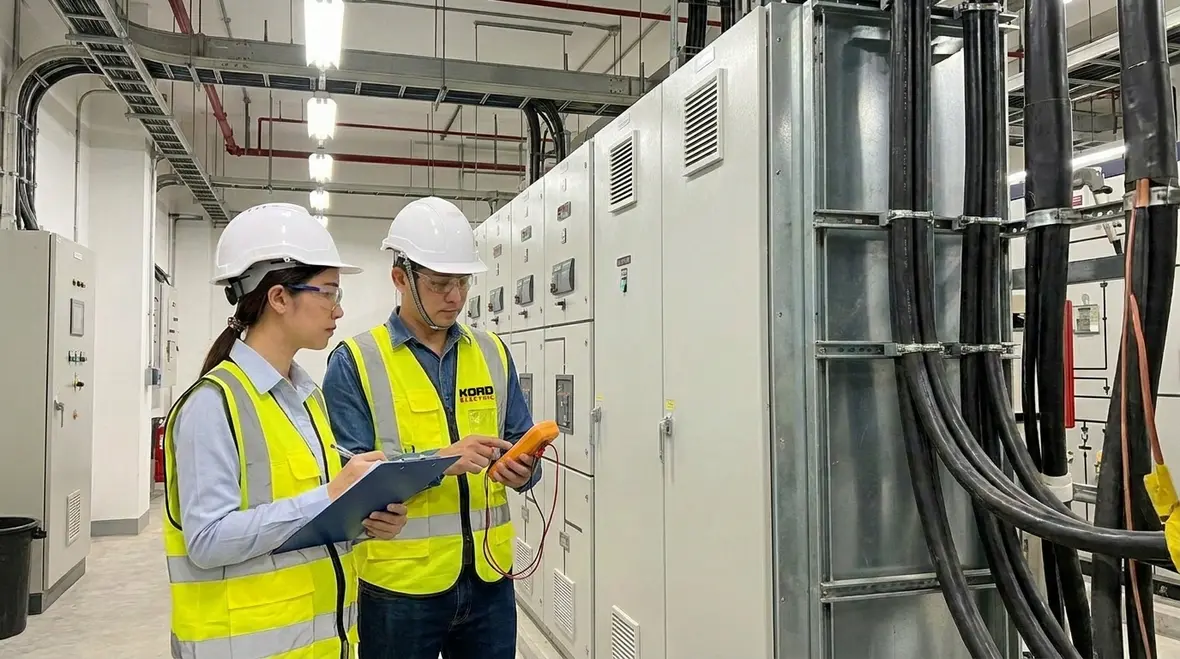
Many outages start as something smaller, like voltage fluctuations. When commercial and industrial systems face unstable voltage, equipment can suffer hidden damage over time. Therefore, our emergency plan includes immediate checks and a decision tree for fluctuation events, so teams do not treat every symptom like a full blackout.
For example, when the facility experiences repeated sags or surges, our technicians use the event data and on site measurements to narrow down likely causes such as loose connections, load switching effects, failing regulators, or system imbalances. Then they select actions that reduce stress on sensitive equipment like variable frequency drives, PLC systems, and power supplies.
Our planning also aligns with our guidance on voltage fluctuations in commercial and industrial facilities, which focuses on how problems show up in real systems and what to check first. In practice, that means we do not just chase the alarm. Instead, we confirm the root behavior, stabilize loads where possible, and route the team toward corrective work without leaving critical areas exposed.
And if you are thinking, “Great, but how do you keep it from turning into chaos?” The answer is process. We make sure the emergency response team follows consistent steps, logs findings, and communicates clearly with operations leadership so the business can decide next moves with facts, not guesses.
Coordination with facility teams, utilities, and vendors
After that, we strengthen the plan with coordination. A solid emergency response is not a one team event. It involves facility management, security, operations, maintenance, and sometimes utility providers and key vendors. Therefore, our critical infrastructure electrical emergency response planning includes defined responsibilities for each role and the timing for updates.
For example, security might control access to switchgear areas, operations may manage load shedding, and maintenance may coordinate planned restarts. Meanwhile, our technicians communicate status updates, recommended next steps, and risk notes. Also, we ensure there is a process for sharing event timelines so leadership understands what happened, when it happened, and why the system responded the way it did.
In addition, we plan for vendor support when equipment requires specialized knowledge, such as medium voltage switchgear or advanced protection relays. And because downtime can become expensive fast, we include escalation steps that keep decisions moving while still staying within safety boundaries.
Yes, the plan can feel structured. But structure is not boring when the alternative is improvising under stress. It is like having a playbook in football instead of just yelling “GO” and hoping for the best. Businesses deserve better than hope.
Training, drills, and documentation that stays useful
Next, we make sure the plan works in real conditions. Therefore, Kord Electric helps commercial and industrial teams train on the emergency roles, the safety steps, and the escalation path. We also encourage short drills that reflect likely events, such as a feeder fault, a transfer switch failure, or an instability caused by fluctuating supply.
Then we improve the documentation based on what technicians learn during drills and actual incidents. Our expert service staff uses the lessons to refine the response sequence, adjust the call flow, update access procedures, and confirm that the right schematics and single line diagrams are available in the field.
Most importantly, we review how the plan ties back to business needs. That includes priority loads, restart sequencing, and how to handle temporary operating modes without damaging critical equipment. When the plan stays tied to operations, it becomes more than a compliance binder. It becomes a practical tool.
Measuring performance and closing the loop after every event
Once an emergency ends, the real work begins. Therefore, our approach includes post event review. We capture what happened, confirm measured outcomes, compare them to expected response actions, and identify what helped and what slowed down decisions.
Then we document corrective recommendations, such as tightening connections, replacing aging components, improving protective settings, or upgrading monitoring for earlier detection. We also verify that communication worked across the team. If someone did not have the right info quickly enough, we fix that. If a step took too long, we adjust the plan.
Also, we track patterns. Many sites repeat similar voltage behaviors or recurring equipment faults. When we see patterns, we recommend targeted improvements that reduce the chance of the same incident repeating, instead of treating each outage like a brand new problem. It is not just about getting through the event. It is about getting better after it.
When teams feel confident that the plan evolves, they trust it. And trust is what keeps people calm when the lights start acting dramatic.
FAQ
Call Kord Electric for a plan that works when it matters
Commercial and industrial facilities do not need an emergency plan that looks good in a folder. They need one that works in the first minutes of an event. Kord Electric builds 24/7 readiness with clear triggers, safe field actions, and coordination that protects your critical loads. If voltage fluctuations, switchgear faults, or interruptions threaten uptime, we can review your site and help you implement critical infrastructure electrical emergency response planning that is practical and measurable. Reach out today, and let us help you stay steady when the power does not.
If your facility is ready to go beyond emergencies and strengthen long term resilience, you can also explore our dedicated electrical preventive maintenance services. Pairing a 24/7 response plan with structured maintenance creates a stronger safety net for critical infrastructure.
For properties planning upgrades or expansions that put more demand on existing equipment, our team can coordinate your emergency strategy with project specific work such as lighting installation services or other large scale improvements. When everyday projects and emergency readiness stay connected, your infrastructure can support both routine operations and the unexpected.