
Commercial Electrical Load Balancing for Growth
Commercial Electrical Load Balancing: the silent hero of growth
As our clients expand, power needs rise quietly, like a bill you only notice after the due date. Commercial Electrical Load Balancing keeps the electrical system steady while your business grows, protects equipment, and helps prevent costly downtime. We at Kord Electric see it every day: one new tenant, one added production line, one bigger HVAC schedule, and suddenly the electrical room starts acting like it heard a rumor and panicked. So, we build practical strategies that distribute demand across phases and panels, and we do it with care. After all, electrical performance should not feel like a suspense movie.
Why uneven demand causes real costs in commercial buildings

In commercial and industrial facilities, the electrical load rarely stays perfectly balanced. One floor adds servers, another adds lighting, and a third adds refrigeration. Commercial Electrical Load Balancing matters because uneven phases can push current higher on one side while another side loafs. As a result, breakers may trip early, motors can run hotter, and thermal stress builds in switchgear and bus bars. Even worse, power quality can drop, which can lead to nuisance shutdowns that feel random, until you look at the data.
And let’s be honest, if your staff has to restart equipment because a phase is overloaded, that is not just an electrical issue. It is a business issue. It affects schedules, morale, and the kind of “we will handle it later” that turns into “why did it fail now?”
So, our technicians focus on the root problem. They evaluate how power moves through panels, feeders, and major branch circuits, then they match capacity to how the building actually operates.
What we check before we balance loads across phases
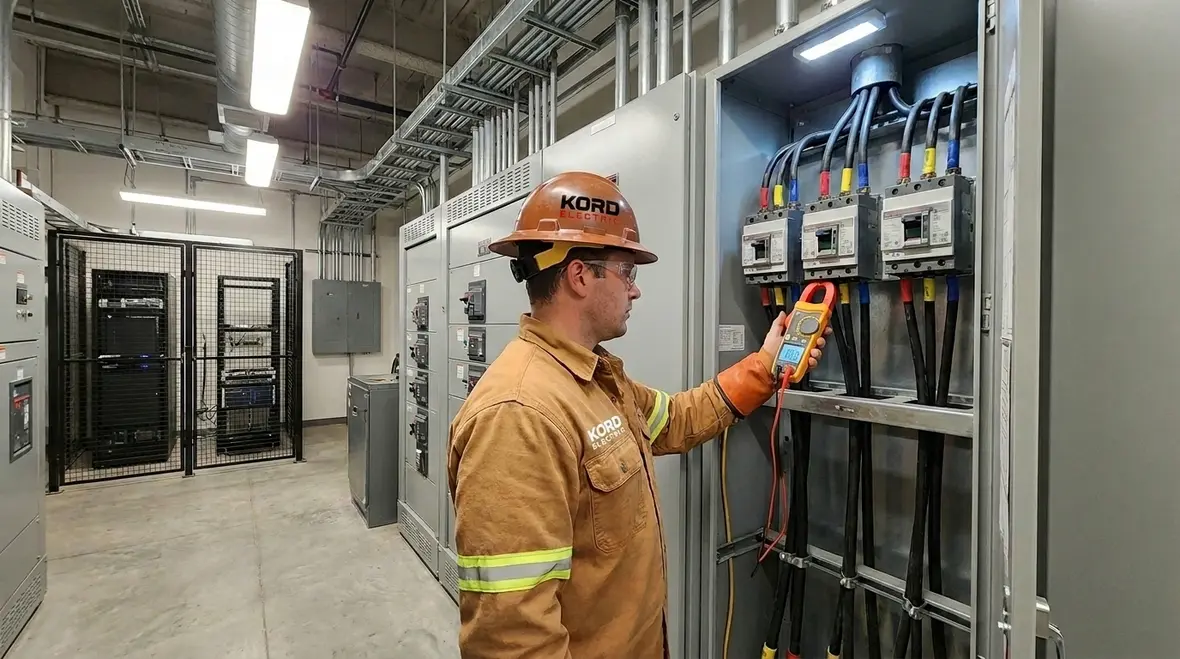
When our expert service staff steps into a facility, we start with reality, not guesswork. First, we gather load information from electrical panels and key circuits, especially where demand changes during the day. Then we review branch circuit distribution, transformer capacity, and historical utility data when it is available.
Next, we look for the usual suspects in commercial and industrial spaces. We check for circuits that sit on the same phase too often, oversized single circuits that dominate demand, and panel arrangements that do not reflect how work has grown. We also watch for wiring issues or past “quick fixes” that left the system uneven.
Then we apply a method that keeps the facility safe and compliant. Our team maps the loads by phase, confirms conductor sizing and breaker ratings, and evaluates how the system behaves during peak operation. In short, we do not just measure. We interpret. We turn numbers into actions that prevent problems.
How preventive maintenance and load planning work together
Load balancing does not live in isolation. It performs best when it is paired with disciplined electrical preventive maintenance. If the system drifts over time, even good balancing plans can lose their edge. That is why we connect our approach to the kind of preventive work you can rely on.
Our preventive maintenance program helps us catch issues before they become failures. If a connection loosens, if a component heats up, or if insulation weakens, we want to see it early. You can review how we approach this process on our page at our Electrical Preventive Maintenance services. Then we align it with load distribution so the building does not simply run today, but stays ready for tomorrow.
As operations change, we also update the plan. For example, when a facility adds a shift schedule, we re-check how HVAC motors and process equipment affect phase currents. Therefore, balancing stays accurate, and maintenance stays targeted.
Also, here is a small joke to keep the lights on. If preventive maintenance is the seatbelt, load balancing is the driver who refuses to speed. Both matter. One without the other still gets you in trouble.
Signs that a facility needs load balancing now
Commercial and industrial teams often notice problems first, then search for the cause. We encourage that instinct, but we also guide it with clear indicators. When these signs appear, the building likely needs a phase check and load redistribution plan.
- Breakers trip more often than expected during normal peak hours
- Elevated temperature in panels, switchgear, or motor control areas
- Equipment shows shortened life, including motors that wear out sooner
- Flicker or power quality issues that show up in sensitive loads
- Audits reveal one phase carrying significantly more current than others
- New equipment additions make the system feel “fine” at first, then unstable
Once these patterns appear, the fix is rarely just “reset and move on.” Instead, we evaluate the distribution and adjust where power needs to go. We also coordinate any changes with how the facility operates so we do not disrupt critical production or tenant activities.
Real world balancing strategies our technicians apply
In a real commercial setting, balancing often means more than swapping a circuit from Phase A to Phase B. We use practical strategies that match how the facility runs.
First, we redistribute major loads where it makes sense, including HVAC and process circuits. If certain equipment dominates demand, we place it to reduce phase imbalance while keeping safety margins intact. Next, we balance smaller loads across panels and feeders so the overall effect stays stable during the day.
Then we address panel and bus routing. If the building uses multiple panels that feed different areas, we coordinate the load transfer so no single section becomes the bottleneck. We also consider future growth, because the goal is not to balance once. The goal is to balance for the next expansion, the next remodel, and the next added line of business.
Our technicians explain each step in plain terms. We do not hide behind technical jargon. When a client asks “why,” we answer with real reasons, real data, and a clear plan. That is the part people remember, even years later, when the electrical room stays calm during peak operations.
Keeping power quality steady as business changes
Growth changes power in more ways than most people expect. Demand peaks shift. Motors cycle more frequently. Lighting schedules evolve. In addition, new computers, drives, and control systems can make the electrical system feel more sensitive. So even if total kW demand looks manageable, imbalance can still create heat and stress.
Therefore, we treat Commercial Electrical Load Balancing as a living part of your facility management. We align it with operational schedules, maintenance plans, and any upcoming project work. As we adjust distribution, we also watch for power quality signals that can impact equipment reliability.
And when something changes, we respond. We do not wait for the next shutdown to confirm that balance is needed. We track performance, recommend adjustments, and help maintain safe temperatures and stable power flow. That is how commercial and industrial facilities avoid the “it was fine yesterday” trap.
FAQ
Conclusion: let us balance your loads before problems show up
If your commercial or industrial facility is growing, your electrical system should grow with confidence, not chaos. Kord Electric helps keep power stable by balancing loads across phases, coordinating with preventive maintenance, and guiding your team with clear explanations. When you plan new equipment, added shifts, or major updates, we can review your electrical distribution and recommend practical changes that protect uptime. Contact us today to schedule an assessment. Let’s keep your electrical room boring. Boring is good.
If you are planning deeper infrastructure changes, you can pair Commercial Electrical Load Balancing with a strategic upgrade such as a full rewiring project. Our team walks through real-world costs and benefits in our Rewiring Cost Guide for Commercial Electrical Systems, helping you connect day-to-day load management with long-term system reliability.
For facilities focused on steady performance as they add new loads, we also help diagnose and correct power variations that show up as flicker, nuisance trips, or equipment misbehavior. You can explore how targeted repairs and system upgrades work together with load balancing on our service page for Voltage Fluctuations in Commercial & Industrial Facilities, then connect with our team to design a plan that fits your building.
When you are ready to move from “we hope the system can handle it” to “we know it is ready,” Kord Electric is here to help with Commercial Electrical Load Balancing, preventive maintenance, and targeted upgrades that protect your operation from unnecessary risk.
To get started with a focused service visit, request a quote for our dedicated commercial and industrial maintenance offerings, including Electrical Preventive Maintenance, so your next round of growth comes with power you can trust, not power you have to worry about.


