Scalable Electric Vehicle Charging Infrastructure
Electric Vehicle Charging Infrastructure Commercial for scalable planning
Kord Electric helps commercial and industrial property managers build Electric Vehicle Charging Infrastructure Commercial that can grow without chaos. In the early planning stage, we guide owners and facilities teams to choose the right mix of chargers, electrical upgrades, and layout so they do not end up with a system that looks great in a brochure and performs like a dim flashlight on a stormy night. And yes, we have seen that movie before.
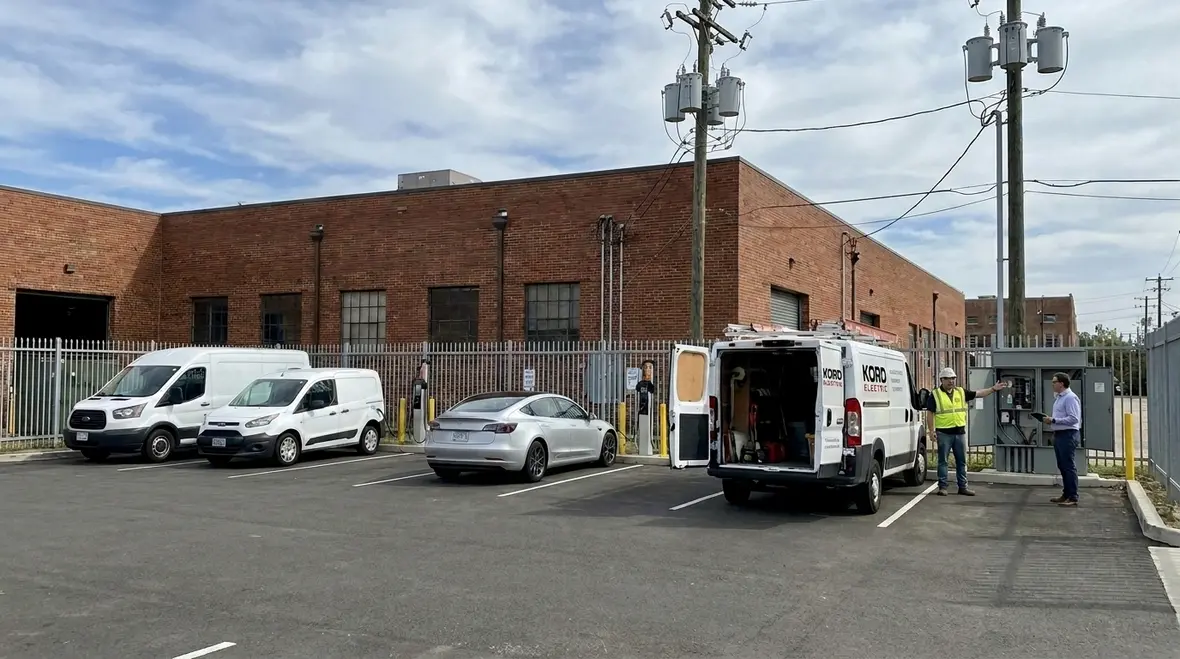
Our approach stays steady: we plan for power capacity, manage voltage stability, and design access that works during real operations. Meanwhile, our technicians and expert service staff explain what is happening and why, in plain language. So the team responsible for the property can make decisions with confidence, not guesses. Next, we break down how scalable EV charging planning works for large sites.

Commercial sites need a rollout plan, not a wish list
Property managers usually start with enthusiasm, then the questions arrive. How many vehicles will show up in two years? Which tenants will plug in first? What happens if usage changes season to season? Therefore, Kord Electric starts by building a rollout plan that matches the property’s operational reality.
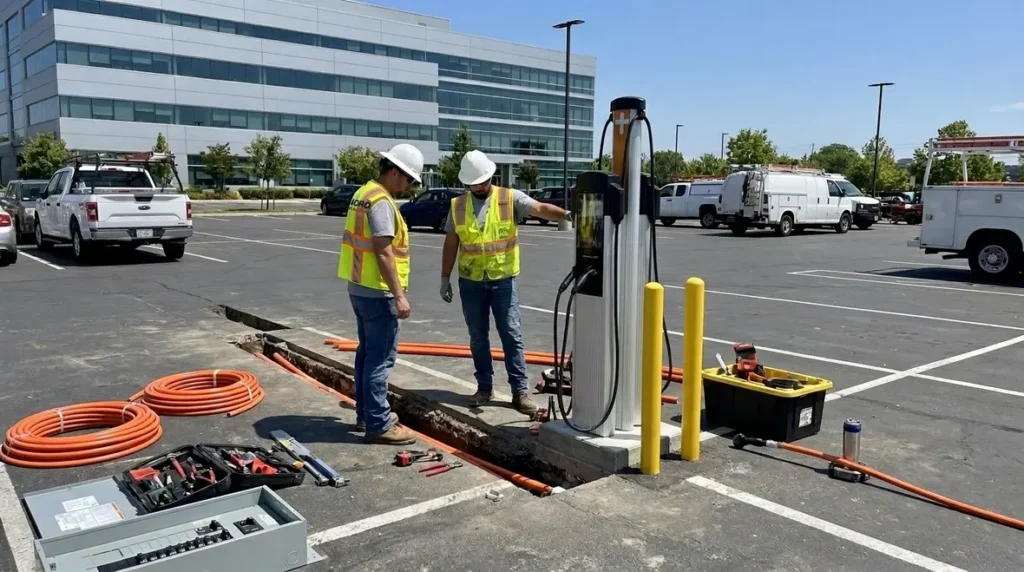
First, our team inventories the site: parking areas, vehicle flow, transformer capacity, and future expansion zones. After that, we help set a phasing strategy. For example, we often recommend installing a capable “base layer” that supports near term demand, while also leaving room for electrical and conduit growth. In other words, we plan so the next upgrade does not require digging up the entire property like it is a new golf course.
Next, we align the charging plan with property goals. Some buildings want tenant convenience. Others need fleet access, predictable uptime, and billing control. Because commercial and industrial facilities run on schedules, we design for reliability and service access. Our expert staff then walks the property team through the plan so they understand tradeoffs, timelines, and what to expect during installation.
How we design for power capacity and load control
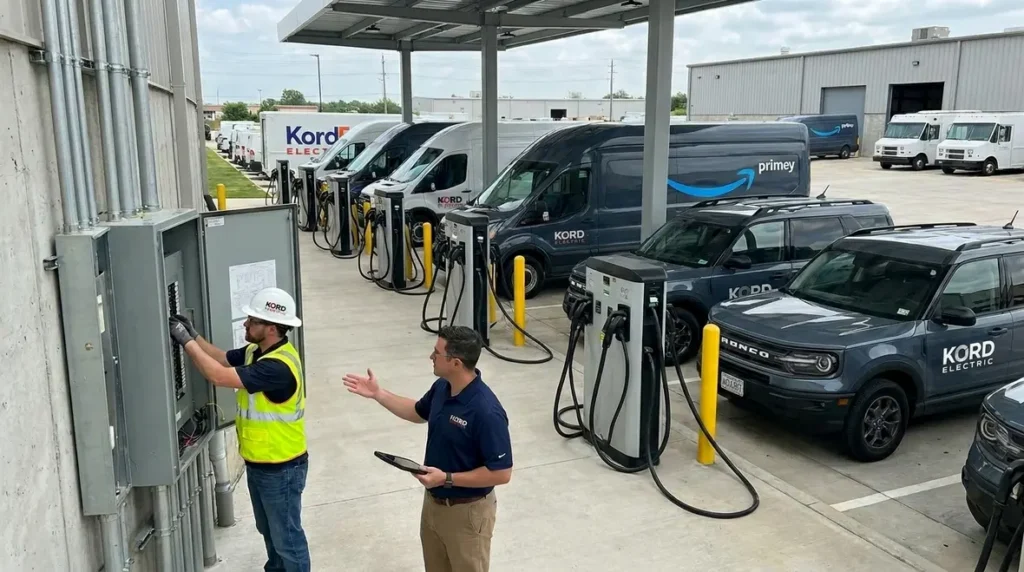
Even a well designed parking layout can fail if power capacity is ignored. So we treat electrical planning as the backbone of any scalable system. To do that, Kord Electric reviews existing electrical infrastructure, evaluates available capacity, and models how charging load changes over time.
Then we design load control so chargers do not “stack” demand in a way that trips breakers or causes dimming across the building. For example, many sites benefit from smart load management that schedules charging during off peak windows. However, the goal is not just to avoid issues. The goal is to keep charging consistent for users while protecting other building equipment.
Additionally, commercial properties often run sensitive loads, from HVAC systems to industrial processes. Therefore, our engineering considers how charging affects overall electrical stability, not just whether a charger will turn on. At this point, our technicians explain the reasoning step by step, because the best systems feel predictable to the people who run the facility.

Voltage stability matters more than people think
One reason EV charging planning fails is voltage fluctuation. When loads change quickly, voltage can sag or spike, and that can affect chargers and other equipment. Kord Electric addresses this with careful design and monitoring, especially on commercial and industrial sites where power quality matters.
If voltage issues already exist, EV charging can make the problem more obvious. That is why we do not treat charging as a standalone add on. Instead, we connect the charging plan to the building’s electrical behavior. In our service work, we reference guidance and best practices from our voltage fluctuations in commercial and industrial facilities resource, including how commercial and industrial environments react to changing loads. The point is simple: steady power leads to steady performance.
So, our team helps property managers understand what to look for and how to reduce risk. We also discuss how proper equipment sizing, electrical upgrades, and thoughtful charger placement can lower the chance of problems. And yes, we will say it plainly: ignoring voltage stability is like ignoring weather before a road trip. Technically you can still drive, but you are not in control of where you end up.
Layout and access planning that works during business hours
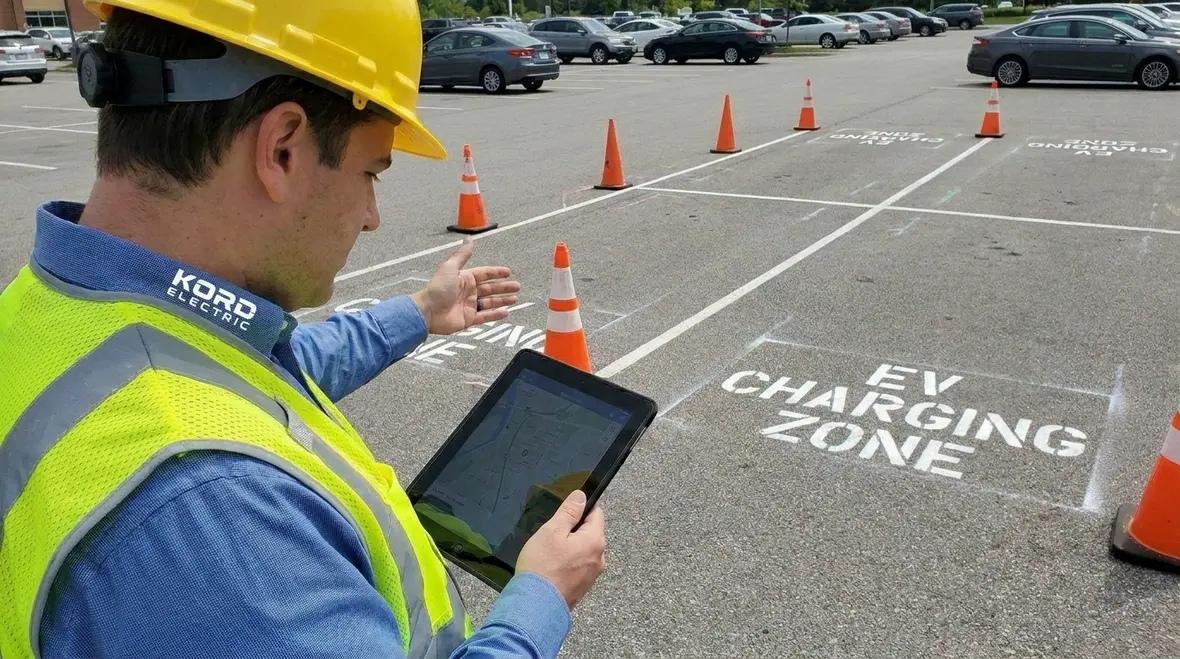
Scalability is not only electrical. It is also operational. A commercial site can have limited space, changing traffic patterns, and areas that remain active throughout the day. Therefore, Kord Electric designs charger placement for safe access and smooth flow.
We consider how people enter the lot, where they stop, and how long they stay. Then we evaluate cable routing, bollard placement, and protection against vehicle impact. After that, we plan signage and wayfinding so drivers find chargers without asking a guard who is already answering thirty other questions.
Furthermore, we design for service access. Chargers need maintenance, and electrical gear needs clearances. So we build layouts that allow our technicians to work efficiently and safely, without turning the parking lot into a construction zone for weeks. Meanwhile, our expert service staff explains maintenance schedules and what the property team can expect during service visits.
Tenant communication, billing options, and operational clarity
Commercial and industrial owners often manage multiple stakeholders: tenants, fleets, contractors, and sometimes leasing teams who need clear answers. For that reason, Kord Electric plans not just for hardware, but for how the property will run the charging program.
We help define user roles and billing approaches based on site needs. Some properties prefer tenant managed charging. Others want centralized reporting for management teams. Additionally, we consider whether the building uses a property management platform that needs integrations, or if a simpler approach is better during the rollout phase.
Then we prepare clear communication materials so the property team can explain charging rules without sounding like they memorized them from a user manual. Our technicians and expert staff make it easier by walking teams through system behavior, monitoring, and how to handle common questions. The calmer the onboarding, the fewer surprise calls during peak usage.
Phased upgrades that keep budgets and schedules under control
A scalable plan reduces reinvestment risk. Therefore, Kord Electric uses a staged approach that protects budgets and keeps schedules predictable. Instead of building everything at once, we identify what must happen first, what can wait, and what should be prepared so future expansion stays straightforward.
For example, early phases often focus on conduit readiness, electrical capacity planning, and commissioning of the initial charger set. Later phases add capacity and chargers as usage grows. That method helps facilities avoid disruptive rework. Also, it allows property managers to align spending with occupancy and fleet adoption.
To support this, we document the design and provide guidance so future upgrades do not require guesswork. Our expert service team can also assist with ongoing monitoring, so the property sees how the system performs and can adjust without surprises. Because in commercial real estate, “surprise” is a word nobody wants to hear when budgets are already tight.
Electric Vehicle Charging Infrastructure Commercial in real-world operations
On paper, Electric Vehicle Charging Infrastructure Commercial can look simple: pick a few chargers, find an empty wall, and start plugging cars in. In reality, large properties have to think about transformer loading, panel schedules, traffic peaks, staffing, and long-term tenant expectations. That is why scalable planning matters more than any single hardware choice.
We work with facilities teams to map out how Electric Vehicle Charging Infrastructure Commercial fits into loading docks, visitor parking, employee areas, and fleet staging zones. This includes planning for ADA access, clearances for trucks and delivery vehicles, and safe walking paths so drivers are not dragging charging cables across active traffic lanes.
In many cases, the best first step is not installing the highest number of chargers. It is building a solid electrical and conduit backbone that anticipates future Electric Vehicle Charging Infrastructure Commercial needs. That way, when usage patterns change or tenants add EV fleets, the site can respond with targeted upgrades instead of starting over.
Because EV adoption is still evolving, we also help commercial properties consider policy questions: Will certain spaces be reserved for EVs? How long can a vehicle remain parked after charging is complete? Will fleet vehicles receive priority access during overnight windows? Answering these questions alongside infrastructure design keeps operations from getting tangled once chargers go live.
Integrating charging with maintenance and long-term reliability
EV charging is not a one-time project. It becomes another part of the facility’s electrical ecosystem. That means it needs to be folded into preventive maintenance, system inspections, and long-term asset planning, not treated as a bolt-on gadget that only gets attention when something fails.
Kord Electric helps commercial and industrial properties align EV charging with their broader electrical preventive maintenance programs so breakers, feeders, transformers, and charging equipment are all evaluated together. When the same team that understands your panels and distribution gear also understands your chargers, issues are found earlier and downtime drops.
We also recommend building clear inspection and testing routines into the maintenance calendar. That can include checking torque on terminations, verifying software updates for networked chargers, cleaning enclosures, and confirming that labeling and safety signage remain visible and accurate over time. Small tasks now prevent bigger failures when the lot is full and vehicles need to leave on schedule.
For properties that run critical operations, EV charging reliability is about more than driver convenience. If fleet vehicles cannot charge as planned, deliveries slip. Service windows shrink. Operations that depend on those vehicles feel the impact quickly. Integrating charging infrastructure into long-term reliability planning keeps those impacts from becoming weekly headaches.
Aligning charging strategy with business priorities
Every commercial site has its own priorities. Some want charging to support sustainability goals and tenant marketing. Others care most about supporting a growing EV fleet with predictable uptime. Still others view Electric Vehicle Charging Infrastructure Commercial as a way to future-proof their property for upcoming code changes, incentives, or tenant requests.
Our planning process starts with those priorities and works backward. If resiliency is the focus, we look closely at backup power options, load shedding strategies, and how charging interacts with other critical systems. If tenant experience is the driver, we pay extra attention to space allocation, signage, and billing transparency.
We also help properties keep an eye on incentive programs, infrastructure funding, and changing regulations. While we do not control the policies, we design systems that are flexible enough to adapt—whether that means adding submeters, enabling more granular reporting, or preparing space for higher-powered equipment when budgets or incentives line up.
The result is a charging strategy that feels like part of the property’s business plan, not an isolated line item. When charging infrastructure supports revenue, uptime, and tenant satisfaction, it becomes much easier to justify the next round of upgrades when demand grows.
Featured FAQ
Need a charging plan built for commercial and industrial reality?
Kord Electric builds EV charging systems that scale for commercial and industrial facilities, not one off experiments. We plan electrical capacity, protect voltage stability, design safe layouts, and support rollout decisions with clear guidance from our technicians and expert service staff. If your property manager team is ready to move from speculation to execution, contact Kord Electric for an assessment and a phased plan that fits your schedule and budget. Let us help your site power up with confidence, not guesswork.
If you are evaluating options for Electric Vehicle Charging Infrastructure Commercial and want a partner who understands large sites, complex power systems, and real-world operations, our commercial and industrial EV charger installation services are built for exactly that. From the first site walk to final commissioning, we focus on reliability, safety, and long-term scalability.