Advanced Lighting Controls for Warehouses
When commercial and industrial warehouses lose light quality, they also lose time, comfort, and safety. At Kord Electric, we install advanced lighting controls for warehouses that help teams see better, work faster, and waste less power. And because we do not believe in “set it and forget it” myths, our approach includes planning, commissioning, and training so the system performs the way it was designed. In other words, we bring order to the ceiling. Because even the brightest warehouse can feel like a cave if the controls are wrong.
Why lighting controls change warehouse productivity
Warehouse productivity is not only about forklifts and staffing. It also depends on how well people can locate inventory, read labels, and navigate aisles. When lighting stays either too dim or too bright, workers waste time adjusting their eyes or equipment settings. However, with modern lighting controls, the lighting matches the task and the activity level. As a result, employees spend less time hunting and more time moving product.
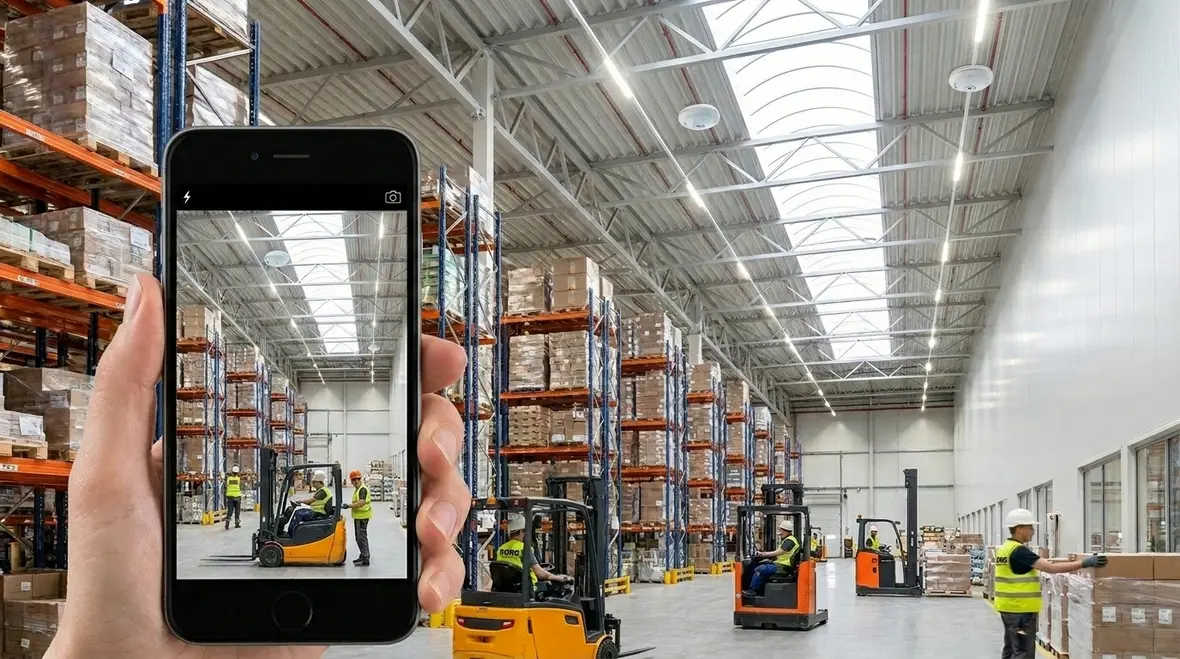
In addition, good controls support safer operations. For example, motion based dimming can keep aisles bright when activity happens, while reducing glare during quieter periods. Meanwhile, daylight harvesting uses sunlight entering skylights to keep illumination stable. Consequently, the warehouse avoids the “spotlight effect” and the constant need for manual switches.
We often hear managers say, “We already have good lights.” That may be true for one moment during one season. Yet lighting needs to stay consistent across shift changes, weather, and different storage zones. This is where controls stop being a fancy add on and start acting like a quiet productivity system.
How occupancy sensing keeps work areas efficient
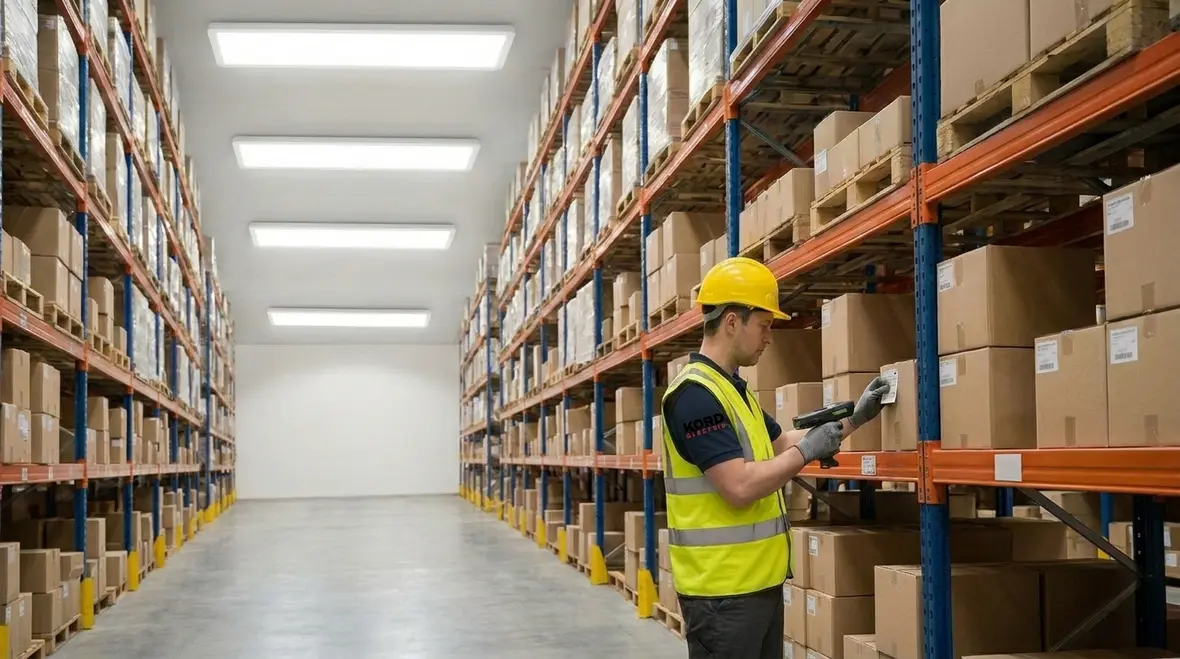
Occupancy sensing is the control layer that responds to real movement. When a person enters a zone, the lights ramp up quickly enough to feel natural, not annoying. Then, as the space empties, the lights step down based on a chosen timeline. That timeline matters. Too aggressive, and workers complain about lights fading while they scan pallets. Too slow, and energy waste sneaks back in like a pop song stuck in your head. We tune it to your workflow.
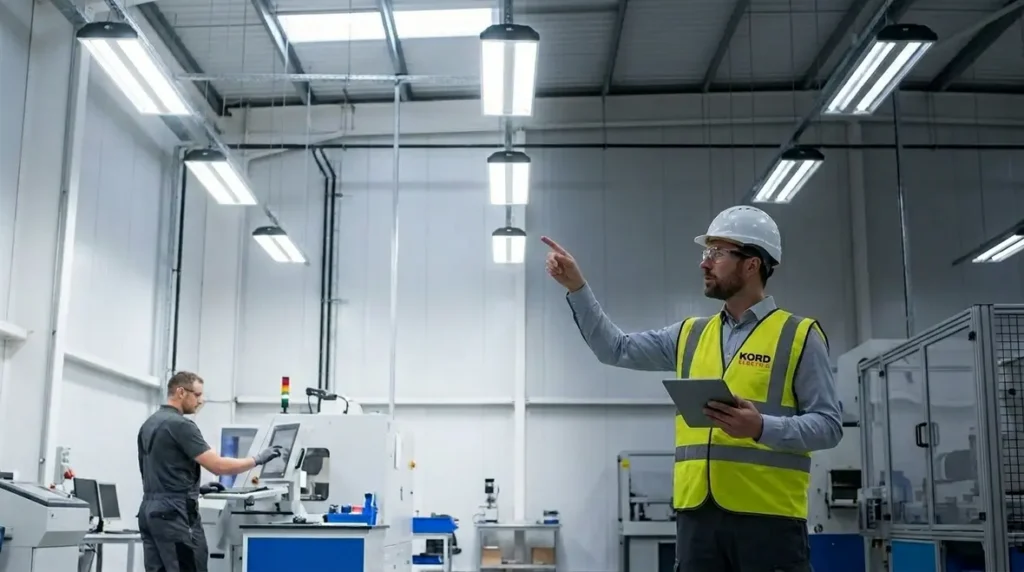
At Kord Electric, our technicians assess traffic patterns. We look at loading bays, pack stations, cold storage approaches, and high rack aisles where reflections and shadows can affect visibility. Then we map sensor coverage so each area gets the right response. We also consider mounting height and beam angles so sensors detect people, not just moving shadows from high traffic doors.
Next, we help teams understand what “occupancy” means in your environment. For instance, a door opening can trigger one behavior, while a worker walking in triggers another. With proper settings, the system becomes predictable. People trust it because it behaves like a reliable teammate, not like a prankster.
Daylight harvesting and zoning for stable visibility
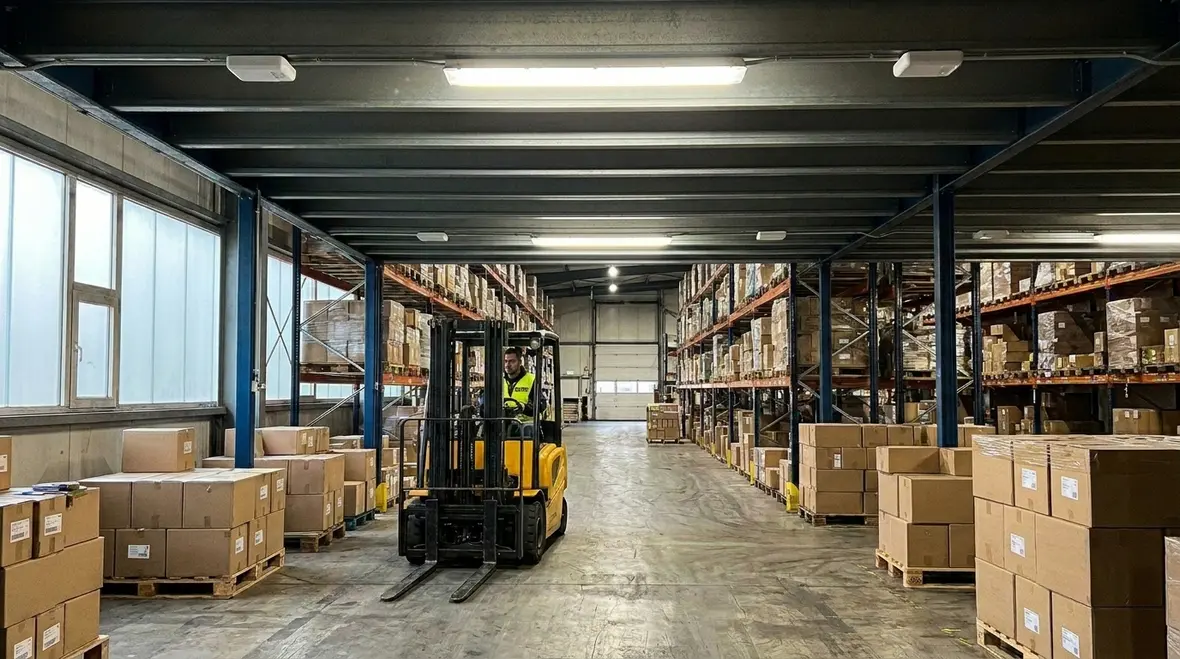
Warehouses with skylights, high windows, or partially open roofs benefit from daylight harvesting. Instead of forcing artificial light to fight the sun all day, the system measures light levels and adjusts output to maintain target brightness. As a result, workers get steady visibility and fewer visual distractions.
Zoning plays a major role here. If the entire facility changes brightness together, one sunny lane may become bright while an interior aisle stays dim. Therefore, we design zones by function, not just by electrical circuits. We separate areas like receiving, mezzanines, picking routes, and warehouse offices. Then the lighting follows the real conditions on each zone.
Our expert service staff walks facility teams through the logic during commissioning. They explain the difference between a “brightness setpoint” and a “dimming limit,” and they show how the sensor readings translate into light output. This matters, because when stakeholders understand the system, they manage it better and ask better questions.
In short, stable light improves task performance. When a worker can trust what they see, they make fewer mistakes and move with less hesitation.

Scheduling and shift based control that actually fits operations
Many warehouses run on schedules that change with seasons and inventory cycles. So scheduling should not be a rigid calendar that ignores reality. With advanced control platforms, facility teams can create shift based schedules and tailor lighting behaviors to different hours and days.
For example, we can keep dock areas brighter during trailer movement windows, then reduce them during quiet gaps. Meanwhile, high rack aisles can run at a baseline level when activity stays low, with occupancy events boosting brightness as needed. This avoids the “full on all night” habit that energy audits love to find, like a detective who never sleeps.
Also, scheduling can align with cleaning and maintenance. If your staff performs floor sweeps or equipment checks during late shifts, the system can increase light to support safe work and then return to reduced levels afterward. Consequently, employees feel more comfortable, and supervisors can reduce reliance on manual overrides.
Our team documents the final settings in plain language. We show what changes at what time, and we provide a simple way to adjust schedules for future growth. Because if your warehouse expands, the controls should expand too.
Remote monitoring, reporting, and maintenance planning
Energy savings are important. Still, the bigger long term win is operational visibility. Remote monitoring lets managers see performance without standing in a dark aisle with a flashlight like it is the 1800s. If a fixture group drifts out of spec, the system can send an alert so technicians can address it fast.
We also help you plan maintenance using control system data. When controls track usage patterns, teams can prioritize relamping or driver checks where they will matter most. Therefore, you reduce downtime and keep safety standards consistent.
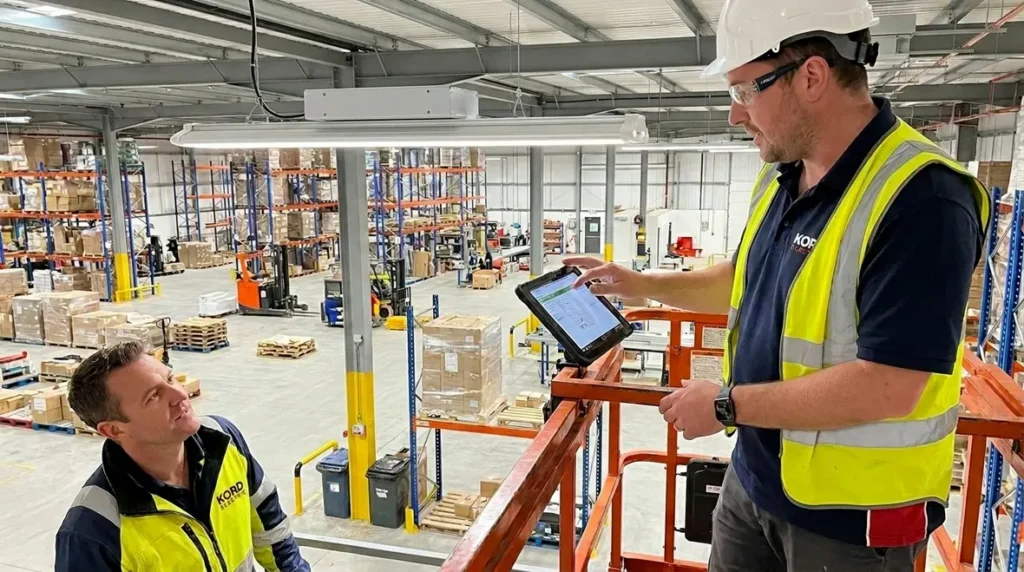
Our service staff explains the monitoring dashboards step by step. They teach what the alarms mean, how to interpret trend data, and how to respond. This training is not a “good luck” email. It is a hands on process designed for busy commercial and industrial facilities, where time is tight and shutdown windows are costly.
And because major property buildings often include multiple tenants or departments, we support clear access roles. That way, operations staff can view energy and status, while electrical specialists handle commissioning changes. Everyone stays in their lane, which is a rare miracle in facility management.
Commissioning and training for a smooth rollout
Installing advanced controls is only half the work. The other half is commissioning and training, so the system performs as designed on day one, day ninety, and beyond. At Kord Electric, we commission with attention to performance and human behavior. We verify sensor coverage, confirm dimming response times, and test transitions across zones.
We also coordinate with on site teams so the rollout supports operations. That means we plan wiring and panel work with minimal disruption, and we set the system so it does not interrupt normal workflows. Then, we bring our expert technicians on site to review settings and ensure everyone understands how controls behave during real activity.
During training, we show practical examples: how a motion event boosts illumination, how daylight harvesting stabilizes brightness, and how scheduling changes with shift patterns. We even cover how to handle temporary changes, such as an expanded receiving schedule during peak season. When people know what will happen, they stop fighting the system.
In this way, advanced lighting controls for warehouses become a tool your staff trusts, not a project that gets buried under “we will deal with it later.”
How advanced controls support broader warehouse lighting upgrades
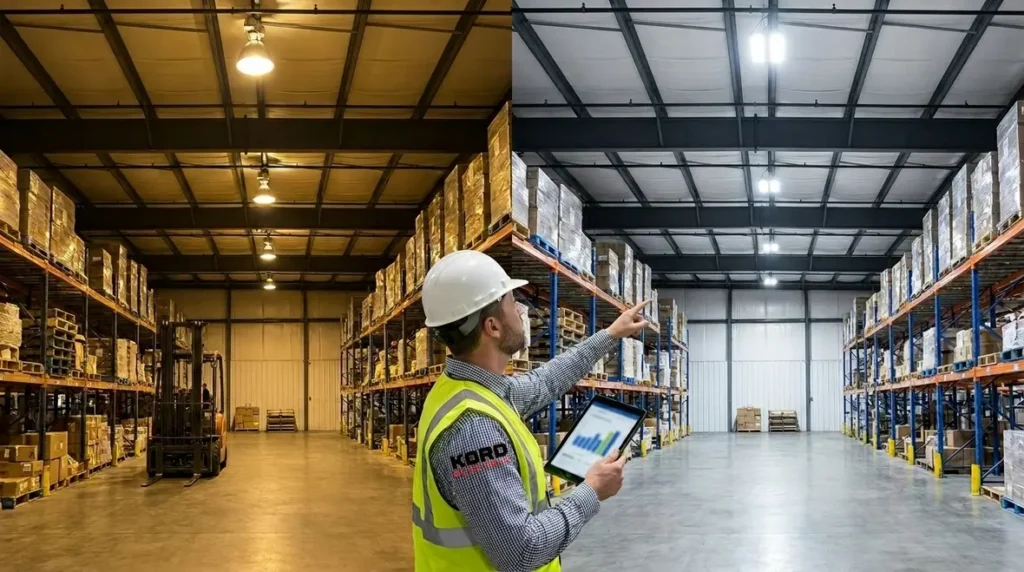
Controls work best when they ride on top of a solid lighting infrastructure. Many warehouses in California and beyond pair control upgrades with LED retrofits or Title 24 oriented projects so that fixtures, layouts, and control logic all pull in the same direction. When high bay fixtures deliver even illumination and the controls respond to occupancy, schedules, and daylight, the warehouse avoids the “bright in one corner, gloomy in another” problem that drags down productivity.
For example, during a lighting retrofit focused on compliance and ROI, teams often discover that the biggest gains come from smarter control strategies, not just swapping fixtures. Occupancy sensing in inactive aisles, scheduled dimming for off peak shifts, and daylight harvesting near skylights can help a large warehouse move from constantly over lit to precisely lit. That transition protects safety while turning lighting into a controllable cost instead of a fixed burden.
Because Kord Electric regularly designs lighting installation services for warehouses, campuses, and industrial facilities, our technicians can integrate advanced lighting controls for warehouses into a bigger plan. That plan can include layout optimization, code compliance, and preventive maintenance practices so the system stays reliable long after commissioning day.
When you view controls as part of a broader warehouse lighting strategy, your team gets better visibility for safety and quality checks, your finance team sees clearer payback, and your operators get a ceiling that finally behaves like part of the equipment—not an unpredictable background character.
FAQ
Next steps with Kord Electric
If your warehouse needs better visibility, smoother shift operations, and measurable energy improvement, Kord Electric can help. Our technicians and expert service staff evaluate your zones, traffic patterns, and schedule needs, then install and commission advanced control solutions built for commercial and industrial facilities. Once the system is live, we train your team so they trust it and manage it confidently. Contact us today to plan a site review and receive a clear roadmap for a lighting system that works like a well run warehouse, not like a guessing game.
For facilities planning broader upgrades, our lighting installation services help align fixtures, layouts, and advanced lighting controls for warehouses into one coordinated project. That way, you can address safety, code requirements, and long term efficiency together instead of piecing them together over multiple disruptive phases. If your operations extend across Los Angeles County, you can also explore Kord Electric’s comprehensive Los Angeles County electrical services to support additional distribution centers, logistics hubs, or related sites under the same strategic plan.
Whether you are modernizing a single facility or coordinating multiple buildings, the right controls strategy turns your warehouse lighting from a fixed cost into a flexible asset—one that supports safety, productivity, and future growth every time someone flips a switch or a sensor sees movement.