Commercial Circuit Breaker Troubleshooting Guide
At Kord Electric, we handle commercial circuit breaker troubleshooting the way a good mechanic handles engine noise: calmly, methodically, and with respect for the fact that electricity does not care about our schedules. When a breaker trips, fails to reset, or shows signs of overheating, we guide our team to find the real cause instead of swapping parts like we are changing out socks. In this article, our expert service staff explains the most common commercial breaker problems, what they usually mean, and the steps we use to fix them safely in commercial and industrial facilities and major property buildings.
Common symptoms in commercial panels and what they signal
When a breaker acts up, the building often sends a clear message before anyone hears the alarm phone call. For example, one of the most frequent issues is nuisance tripping, where the breaker trips repeatedly without an obvious overload. At that point, we do not just hit reset and hope. Instead, we check the likely culprits: loose connections, aging components, moisture, and selective coordination issues that can cause the wrong breaker to trip.
Another common sign is a breaker that will not reset after a trip. Sometimes this points to a persistent fault, yet other times it signals a mechanical problem or internal damage. Meanwhile, discoloration, a burning smell, or heat at the panel usually means a connection problem. In commercial environments, those early signals matter, because a small electrical weakness can grow into a shutdown that interrupts tenants, operations, and revenue.
And yes, we have heard the classic line from others on site: “It tripped last week, so it should be fine now.” Electricity does not run on optimism. We run on testing.
How our technicians diagnose safely in real facilities
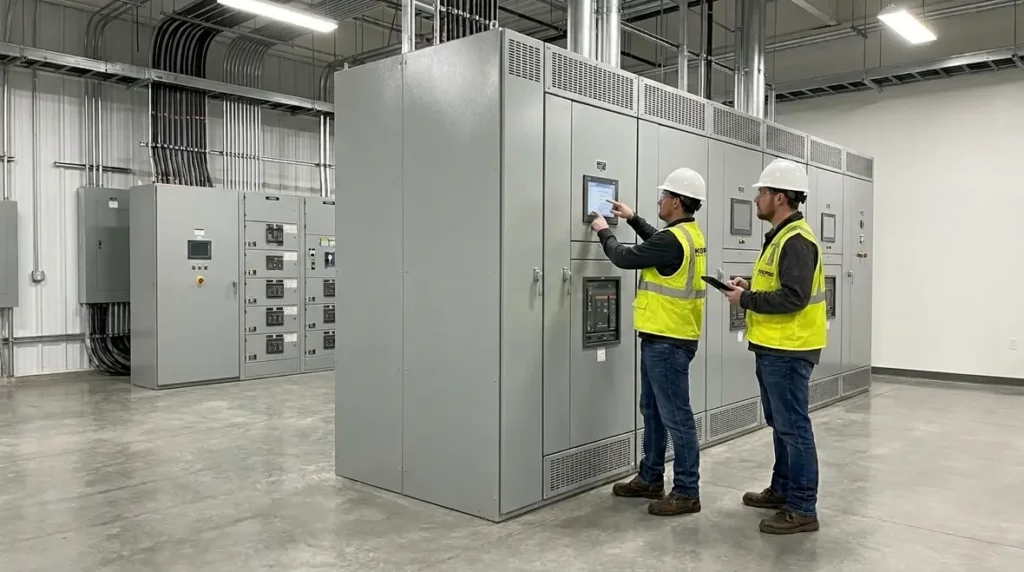
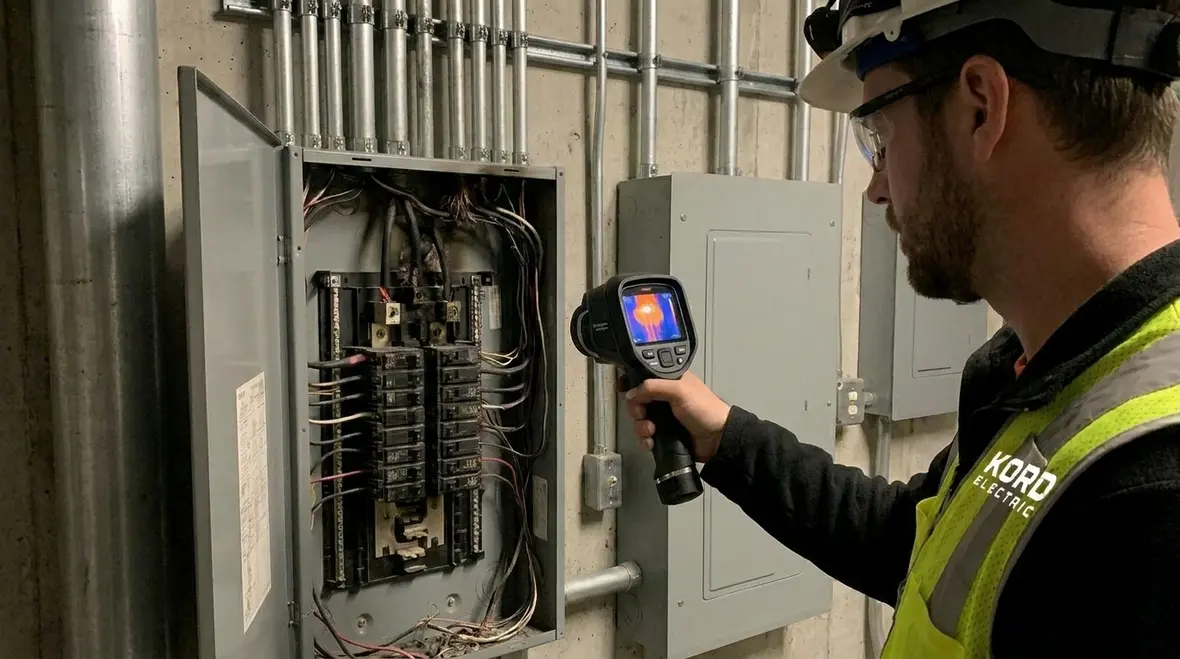
In the field, we treat every commercial panel like it has a story to tell, and we start by listening. First, our technicians confirm which circuit tripped and when, then they gather details such as load changes, recent repairs, water intrusion events, and any equipment added to the system. After that, we check the breaker’s condition visually and we look for clues around the termination points.
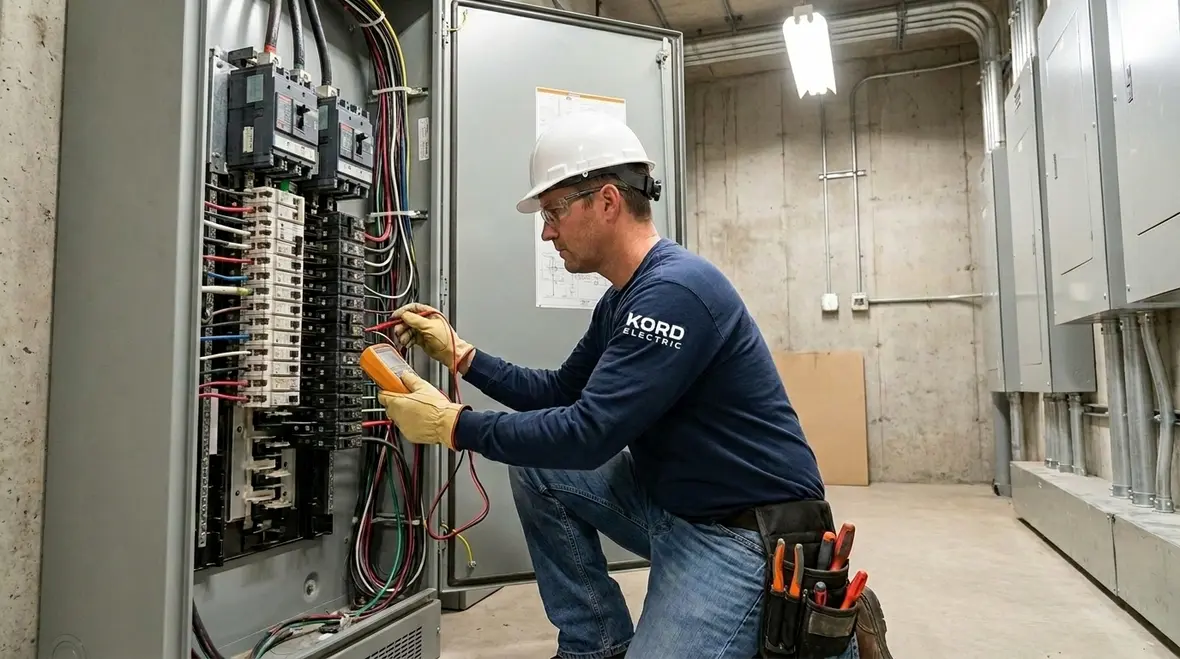
Next, we measure and verify before we replace. We use procedures that help us determine whether the issue is overcurrent, short circuit, ground fault, or something mechanical. Then, we correlate the readings with the panel labeling and the load schedule. This is how we avoid the “shot in the dark” approach that other teams sometimes use, where they replace parts and call it troubleshooting. We do not do that in major property buildings or industrial settings, because those places need dependable power, not guesswork.
Finally, we test the fix under normal operating conditions. In other words, we confirm that the breaker stays stable after we correct the underlying cause.
Step by step commercial circuit breaker troubleshooting when a breaker trips
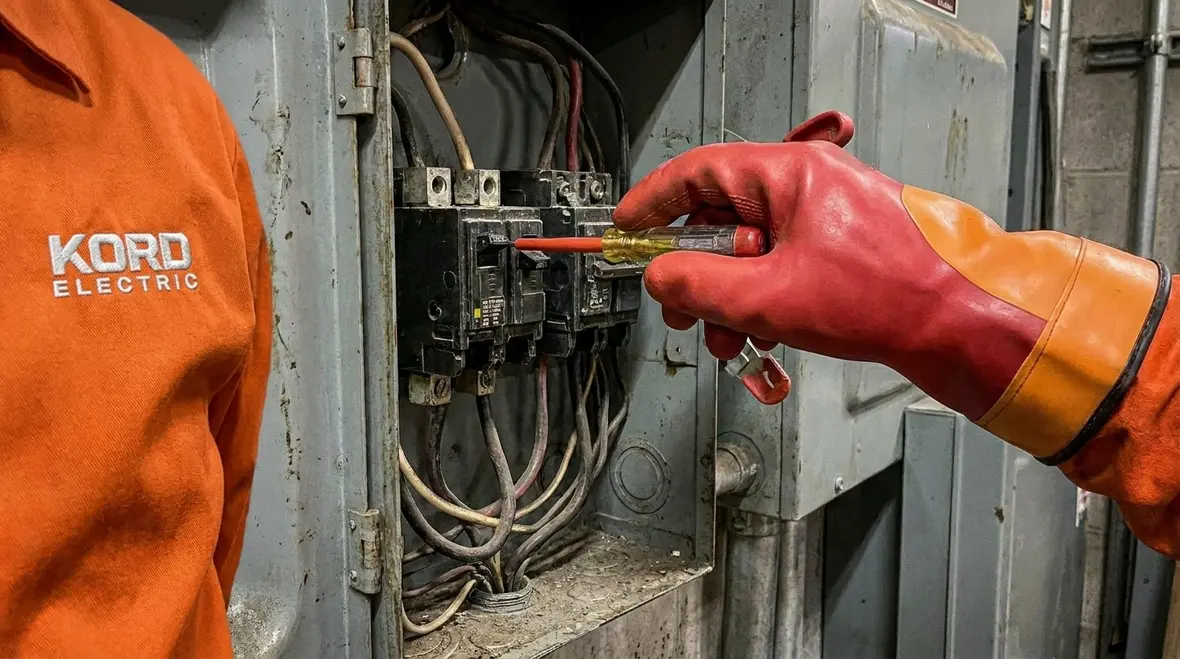
When a breaker trips, commercial circuit breaker troubleshooting starts with one big rule: we identify the reason before we restore service. To keep things clear, our team follows a careful sequence.
- Check the trip state and indicators: We confirm whether the breaker shows signs of a fault event or a sustained overload.
- Review recent changes: If the building added HVAC units, production equipment, chargers, elevators, or lighting upgrades, we treat that as a strong lead.
- Isolate affected loads: We test whether a specific device or branch circuit drives the trip.
- Inspect connections: We look for looseness, corrosion, and uneven contact points that can cause heat and intermittent faults.
- Verify breaker ratings and settings: We ensure the breaker and any protective settings match the real load profile and code intent.
- Perform electrical checks: We validate for short circuit paths, ground fault conditions, and insulation issues.
Meanwhile, we also use good business sense. If the breaker trips again during testing, we do not call it “fixed” and walk away. We keep digging, because repeat trips can mean a hidden problem that only appears when the building runs at full load.
Think of it like troubleshooting a pop quiz in a TV courtroom drama. The first answer rarely ends the case. We find the real evidence.
Why breakers fail to reset after trips
A breaker that will not reset often means the trip condition still exists or the breaker has suffered damage. For instance, if the circuit experiences a persistent short, ground fault, or overload, the mechanism may remain locked out until the fault clears. However, mechanical binding can also occur, especially in panels that see frequent thermal cycling, vibration, or poor housekeeping that leaves moisture or contamination inside.
We also consider coordination. If upstream protective devices act in a way that stresses the downstream circuit, the downstream breaker may show wear sooner than expected. Additionally, wrong settings can create repeated trips that lead to a breaker that feels “stubborn” over time. And because we focus on commercial and industrial facilities and major property buildings, we treat these patterns as system issues, not single-device problems.
Our expert service staff explains the likely causes in plain terms: a reset problem usually comes down to either a still-present fault or breaker damage. Then, we move straight to verification, not debate.
Overheating, smells, and discoloration: treat these as urgent
If you see scorch marks, feel abnormal heat, or catch a burning odor, we treat it as urgent, because heat can degrade insulation and loosen terminations. In commercial panels, the most common source is not always the breaker itself. Often, it is a conductor termination, bus connection, or a component with inadequate contact pressure.
So, we act in a way that protects the building and the people in it. First, we limit exposure and we make the area safe based on the facility’s procedures. Next, we inspect the breaker and the wiring connections. Then, we look for signs of arcing or oxidation, which can lead to intermittent failures and nuisance tripping.
After that, we tighten and correct connections to proper specifications and replace any damaged components. Finally, we monitor the corrected conditions. We do not rely on luck, because overheated electrical parts do not “cool off” into good health. They need correction.
To put it simply, if your panel looks like it has lived through a minor apocalypse, we respond like it did.
Load changes, ground faults, and coordination problems
In commercial and industrial facilities, building loads change. So, even a properly installed breaker can start to behave differently after equipment upgrades, tenant improvements, new motors, or added power draw. Then, if the breaker protection does not align with the updated load profile, it may trip early or selectively fail to protect the right section.
Ground fault issues add another layer. They can appear after moisture intrusion, insulation breakdown, or equipment wear. When a breaker trips due to ground faults, it often points to an issue in wiring, cable insulation, or a failing piece of connected equipment. Again, our expert service staff helps explain the difference between an actual fault and a detection setting problem, so owners and facility managers understand what we found and why it matters.
Coordination problems also show up when the protective devices do not work together as a system. If upstream and downstream breakers do not coordinate properly, you can see wider outages than necessary. That can hurt operations across multiple departments and tenants. We prevent that by reviewing the protection scheme and checking whether the breaker behavior matches expected selectivity.
And yes, we know no one wants to read protection curves like it is a physics novel. Still, it is how we keep the lights on when real faults happen, not only during routine days.
Long term prevention after repair and service restoration
Once we fix a breaker issue, we plan for what comes next. We recommend targeted maintenance steps for commercial panels, such as periodic inspection of terminations, checking torque where applicable, cleaning contamination where moisture or dust accumulates, and verifying that protective device settings still match actual loads.
We also document findings clearly. That matters for property managers and facilities teams, because it helps them track patterns over time. When similar events occur, the history can show whether the cause is repeating due to a particular feeder, a specific equipment area, or a seasonal load trend.
Then, we help the team build a practical approach to upgrades. If the building adds new loads, we review whether the existing breaker capacity and protective coordination still make sense. In major property buildings and industrial operations, this is what separates stable power from recurring headaches.
In other words, we do not just fix the breaker. We protect the system around it.
FAQ
Conclusion and call to action
If your commercial breaker trips, won’t reset, or shows signs of heat, do not gamble with downtime. Kord Electric sends our expert service staff to commercial and industrial facilities and major property buildings to perform thorough diagnostics, correct the real cause, and restore dependable operation. Then we help you reduce the chance of repeat failures with practical next steps.
For properties across the region, our team provides end-to-end commercial electrical support, from detailed electrical preventive maintenance programs to project-based upgrades and emergency response when panels misbehave at the worst possible moment.
If your facility is in Southern California, our dedicated Los Angeles County electrical services team can help you stabilize power, plan future capacity, and keep your critical circuits protected against surprises.
Contact us today to schedule a service visit and get your power system back on a steady track.