Electrical Switchgear Maintenance Tips Guide
At Kord Electric, we treat preventative care as the difference between smooth, boring operation and sudden, exciting downtime that nobody ordered. In our first walkthroughs, we share electrical switchgear maintenance tips that we later expand into a clear routine for commercial and industrial facilities. For example, we help others establish a disciplined approach to visual inspections, cleaning, torque checks, and thermal scanning, so problems show up early, not during peak demand. And yes, we know switchgear can look like a sealed metal box from a distance, but inside it is running a lot of quiet work, every second of the day. To keep that work calm and reliable, we build schedules around real conditions, not guesswork.
What preventative care prevents in switchgear systems
Preventative care matters because electrical switchgear lives in a world where heat, vibration, moisture, and dust do not take breaks. Over time, that pressure can lead to insulation breakdown, loose connections, worn contacts, and contamination that changes how current behaves. Eventually, arc faults and component failures become less of a surprise and more of a pattern. Then the building schedule turns into a drama series, and the facility team becomes the cast.
Our expert service staff explains this in plain terms. They show how small issues grow: a slight loosened bus bar connection creates extra heat, extra heat accelerates aging, and aging reduces safety margin. Moreover, partial discharge and contamination can hide inside equipment until testing reveals the truth. So, rather than “wait until something fails,” we plan for earlier detection. In other words, we shift the story from emergency response to steady protection.
Safety and readiness steps before anyone touches panels
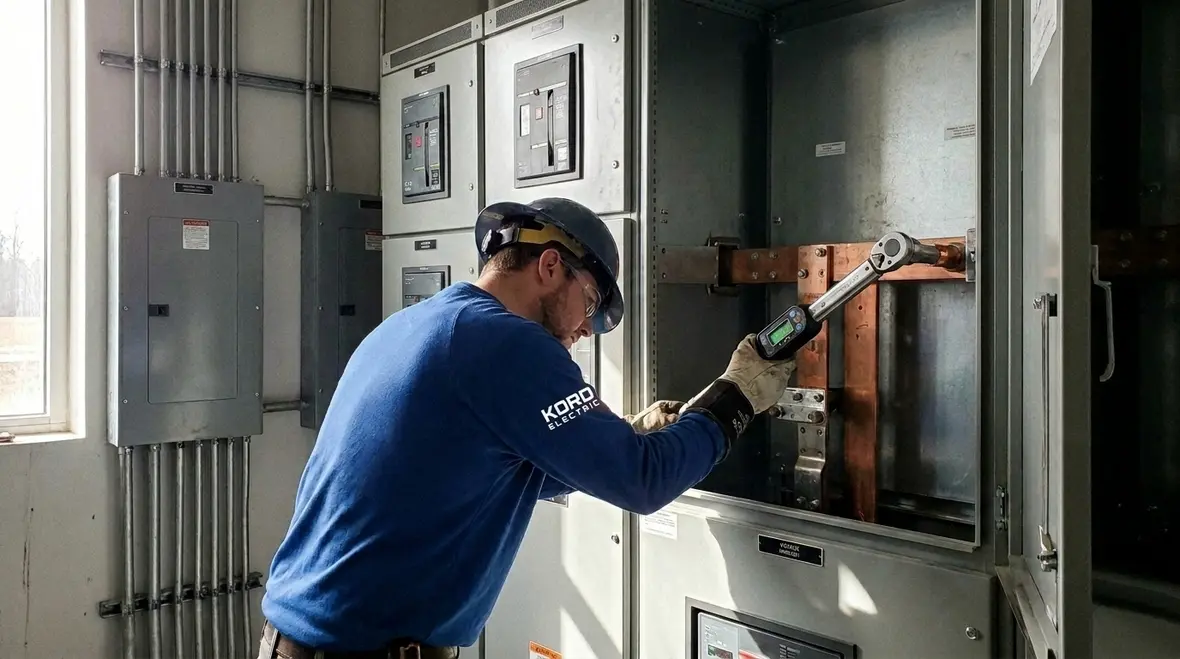
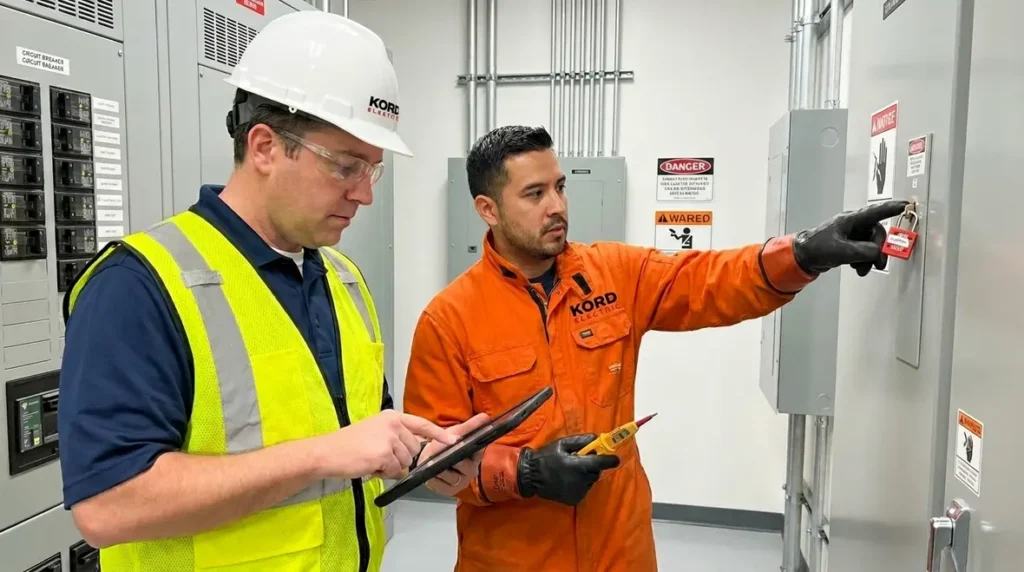
Before maintenance begins, our technicians follow strict readiness steps because switchgear systems can stay energized or store residual energy. We start by confirming lockout tagout procedures, verifying test equipment calibration, and reviewing the site’s one line diagram and recent modification history. Next, we ensure the area stays controlled, with proper signage and limits so unauthorized personnel do not wander in. Then we confirm that inspection cover plates and barriers can be removed safely without damaging seals or introducing contaminants.
Also, we encourage facility managers to treat documentation as part of the safety system. When others capture the date, weather conditions, and observed conditions during each visit, the next service call makes more sense. It is like keeping maintenance receipts for your electrical health. Nobody likes paying later for something they could have prevented earlier.
Visual inspections that catch problems early
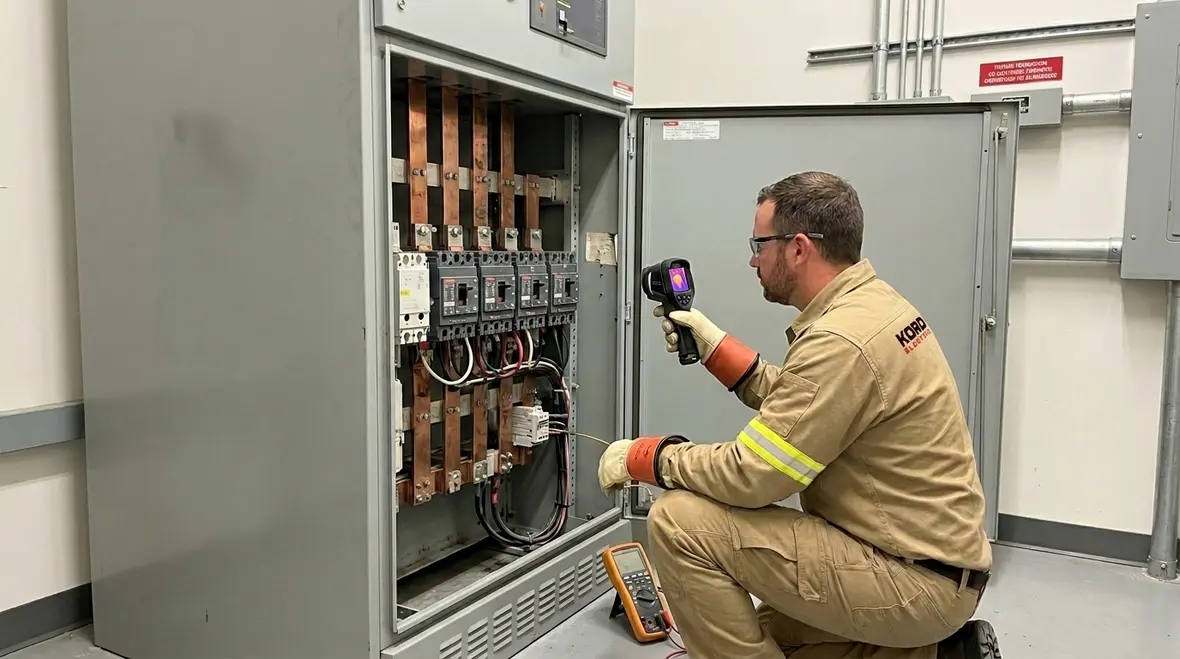
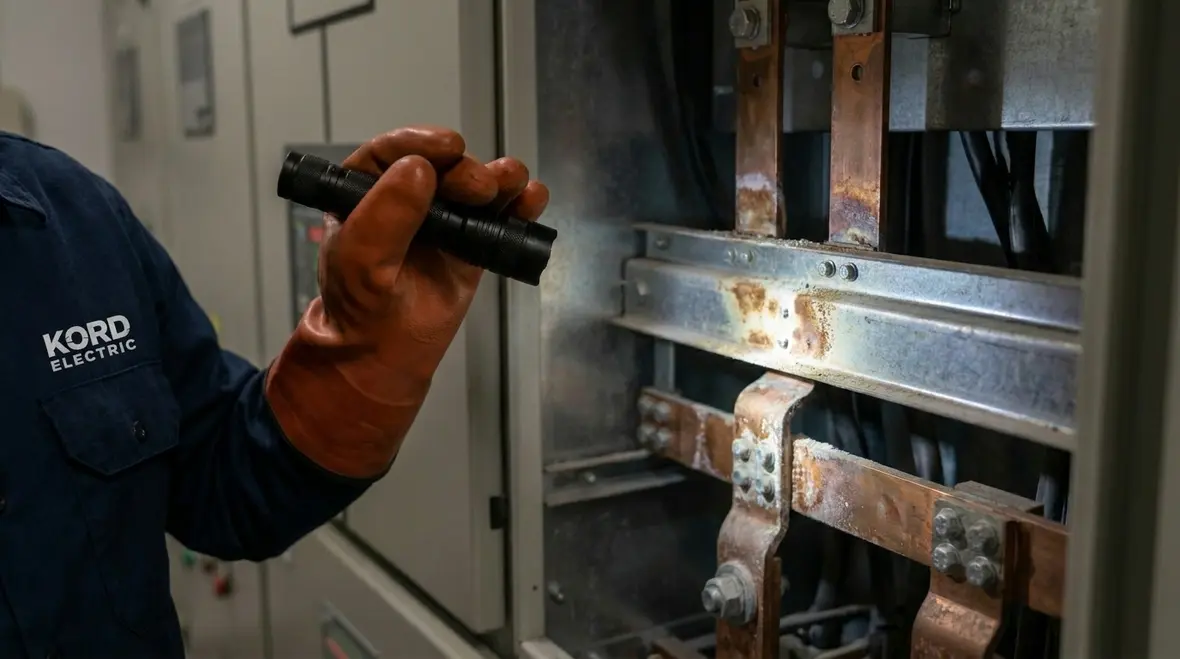
We start with what people can see, because visible clues often appear long before measurements change. Our electrical switchgear maintenance tips focus on practical checks: looking for signs of overheating discoloration, checking for corrosion at terminations, confirming that fans or heaters operate when specified, and scanning for dust buildup that can trap moisture. We also inspect labels and arc flash markings to ensure they remain legible, since outdated information creates avoidable risk. For deeper labeling strategy, some facilities pair this work with a dedicated electrical panel labeling best practices guide so every cabinet tells the truth about the power it controls.
Furthermore, we watch for abnormal mechanical conditions. For example, we check alignment and freedom of motion on doors and interlocks. We also examine seals around openings and verify that cable entries have not cracked or loosened. In many commercial and industrial facilities, vibration from nearby equipment can slowly work connections loose. Therefore, we document any evidence of movement, and we plan follow up testing and tightening where required.
Thermal and imaging checks for real-world hot spots
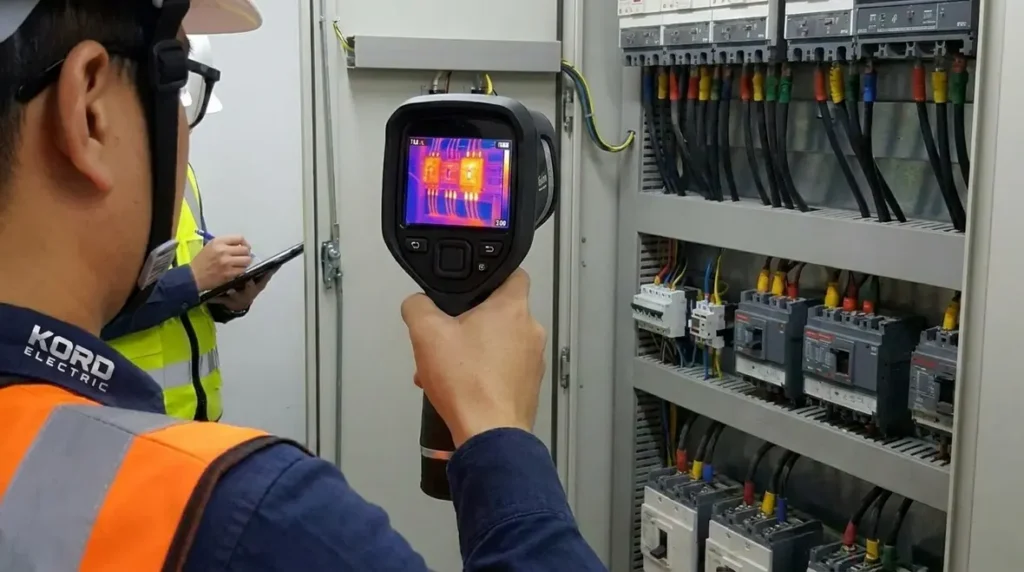
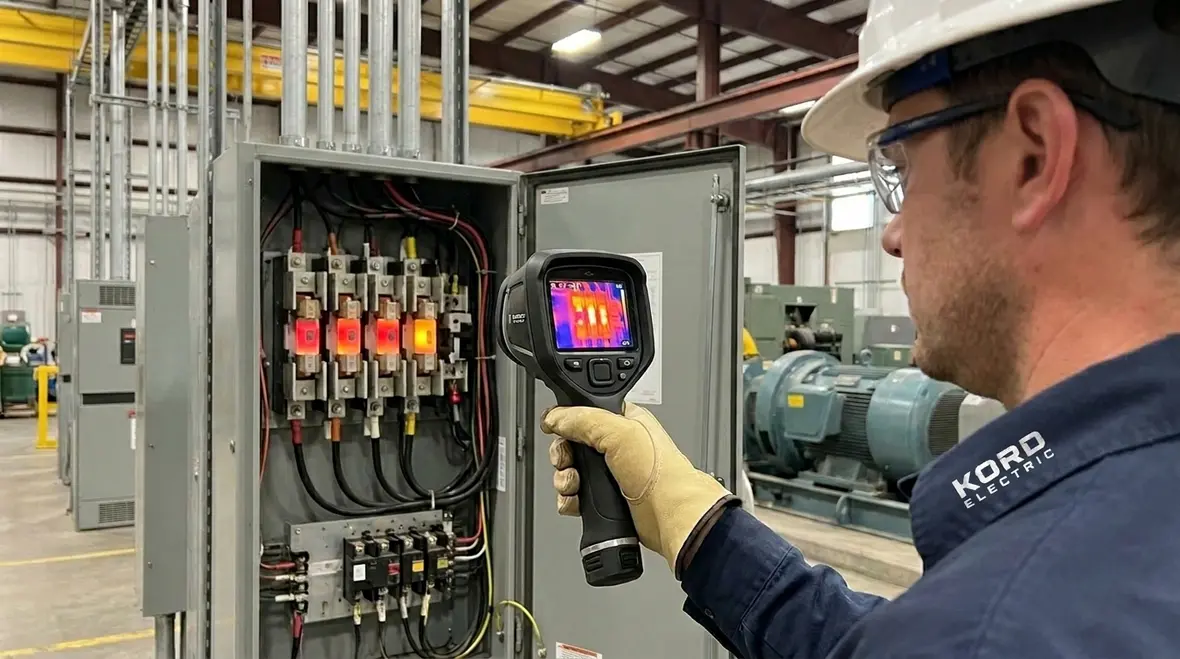
Thermal imaging adds depth to visual work because it shows temperature patterns even when nothing “looks wrong.” Our technicians use imaging during appropriate operating conditions so the equipment is at a stable load. Then they compare readings against baseline targets and manufacturer guidance, rather than relying on a single peak image. This approach helps us avoid false alarms, because airflow changes and ambient temperature can trick the eye.
Once we identify hot spots, we do not stop at the photo. We trace the location to the likely cause, such as a high resistance connection, phase imbalance, or contact wear. After that, we recommend the next action: targeted torque verification, contact inspection, or deeper electrical testing. And yes, we sometimes hear the same phrase from others: “It only ran a little warmer.” That “little warmer” can still mean insulation stress, which is why we keep the analysis grounded and methodical.
Electrical testing and torque checks that keep connections stable
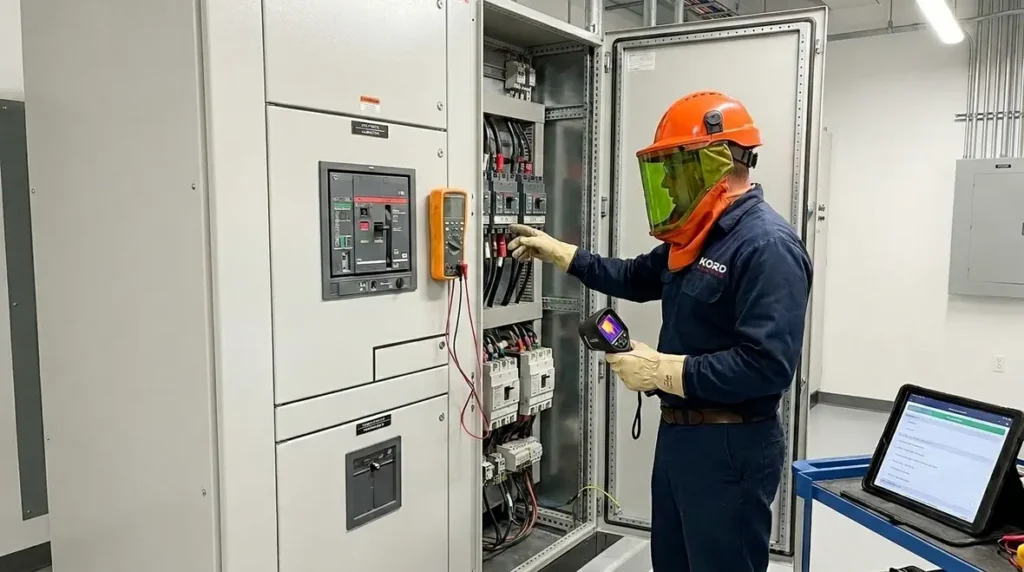
For commercial switchgear, connection integrity controls reliability. Our expert service staff explains that torque checks and electrical testing work together. Torque verification addresses mechanical looseness at bus bars, lugs, and terminations. Meanwhile, electrical testing checks the system’s electrical behavior, including resistance paths and insulation condition depending on the equipment type.
When we plan these tasks, we consider the facility’s environment and load profile. A hospital tower or a data center faces different stress than a manufacturing plant, and a coastal building carries different corrosion risk than an inland one. So, we help others set testing intervals that match real duty cycles, instead of using a one size schedule. Next, we record results so trend analysis becomes possible. If resistance climbs gradually, we catch the issue before it turns into a failure event.
We also help teams understand that maintenance is not just tightening everything. Over torque can damage conductors or hardware, and under torque can still create heat. That is why our process follows manufacturer values and includes verification steps. We do not guess. We measure, we document, and we improve the system’s condition.
Cleaning, lubrication, and component care for tough environments
Cleaning is where many facilities win the long game. Dust, carbon residue, and contamination can reduce insulation strength and create conductive paths. Therefore, our technicians use safe cleaning methods appropriate for the equipment, with care to avoid introducing moisture or damaging insulation surfaces. We also remove debris from vents and confirm airflow paths stay clear, especially in outdoor enclosures and rooms with high dust load.
When lubrication applies, we follow manufacturer requirements closely. Some components require a specific lubricant and others must stay dry. Using the wrong product can cause more issues than it prevents. Additionally, we inspect and verify the condition of gaskets, seals, and barrier materials. If seals degrade, moisture can enter and accelerate corrosion, which then affects contacts and terminations. After cleaning and component care, we recommend verification checks to confirm the system remains within expected operating parameters.
Now, one small joke we share on job sites: “Switchgear does not get dusty because it is lazy. It gets dusty because the building lives.” That is why we plan cleaning around operating reality, not just the calendar.
Maintenance planning, records, and reliability reporting
Preventative care succeeds when the facility team can see what happened, what changed, and what comes next. At Kord Electric, we help others build a maintenance plan that includes inspection frequency, testing intervals, and decision points based on condition, not routine alone. We also focus on record keeping. When others maintain clear service history, they can support warranty needs, manage compliance expectations, and justify capital planning with real data. Many facilities pair this with structured electrical preventive maintenance programs so switchgear work fits into a wider reliability strategy.
Additionally, we recommend coordination across building operations. If equipment downtime must be scheduled, we help align electrical maintenance with facility shutdown windows. Then we prioritize tasks that reduce risk first, such as correcting known high resistance conditions before deeper testing. Over time, this creates a calmer experience for everyone involved. Facility managers get clarity. Operations teams get fewer surprises. And our technicians get to do preventive work, not rescue work.
Dual-column checklist for ongoing switchgear care
What our technicians check
- Visual signs of overheating, corrosion, and damage
- Door, interlock, and mechanical alignment condition
- Cleaning of vents, barriers, and contamination points
- Heaters, fans, and related environmental controls
What the facility team supports
- Provide load and operating schedule details
- Maintain access and clear labeling around panels
- Support downtime planning and safety procedures
- Keep room conditions controlled and monitored
FAQ: Preventative care for commercial electrical switchgear
Conclusion: schedule your next switchgear reliability visit
If your facility runs critical processes, you cannot afford “maybe it will be fine” thinking. Kord Electric helps commercial and industrial teams apply electrical switchgear maintenance tips with real condition checks, clear documentation, and follow up actions that reduce risk. Our technicians take time to explain findings in business casual, no nonsense terms, so your team knows what changed and what comes next.
When you are ready to connect this work with broader building reliability, you can align switchgear inspections with services such as Los Angeles County electrical services for commercial and industrial properties so distribution equipment, panels, and downstream loads all receive the same level of attention. From preventive maintenance to emergency response, Kord Electric helps keep power systems stable enough that your team can focus on operations, not outages.
Contact us today to review your switchgear maintenance needs, coordinate downtime windows that respect your production schedule, and schedule a reliability focused visit that turns preventative care into everyday practice.