
Data Center Power Redundancy Design Guide
In a commercial or industrial facility, data center power redundancy is not a luxury. It is the difference between a calm morning and a chaotic one when a utility hiccup shows up uninvited. At Kord Electric, we design and service power systems so your critical loads keep running, even when something fails. Our approach also focuses on clarity, because our technicians explain what they see in plain language, not mystery novels. After all, nobody wants a “maybe it will work” plan. And if your team has ever stared at a one line diagram like it was written in ancient hieroglyphics, we get it.
How we define redundancy that actually holds up
When others hear the word redundancy, they often picture extra parts. However, we build for performance under real stress: startup surges, maintenance windows, single points of failure, and the messy middle where systems switch and transfer. Therefore, our work begins with a practical definition of risk and uptime targets for commercial data halls and major property buildings.
First, we identify critical loads and group them by behavior. Some loads can wait for a few seconds, while others must ride through without interruption. Next, we review utility sources, generator fuel strategy, transfer paths, and switchgear configuration. Then we confirm what the monitoring system sees, and how fast alarms reach operations.
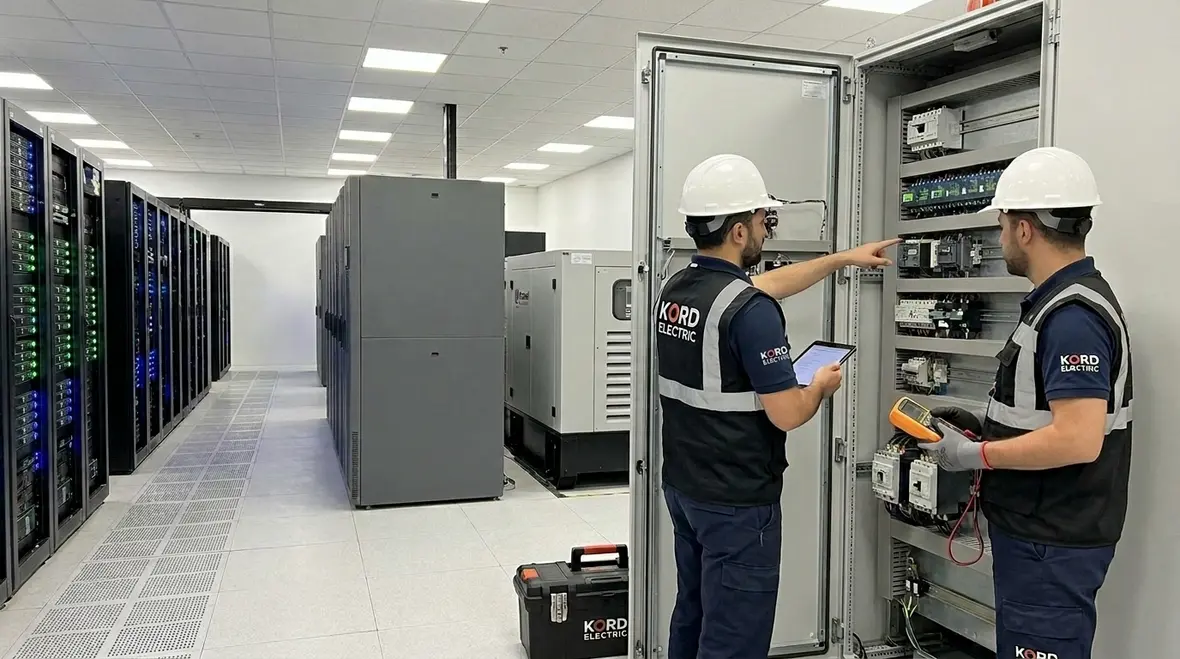
Our expert service staff walks the site team through this thinking step by step. We also show how a single failure can cascade if you do not design the paths carefully. In other words, we treat redundancy as a system of decisions, not a pile of equipment. That way, your data center power redundancy does what you hired it to do, not what it just hopes to do.
Design a power path that avoids single points of failure
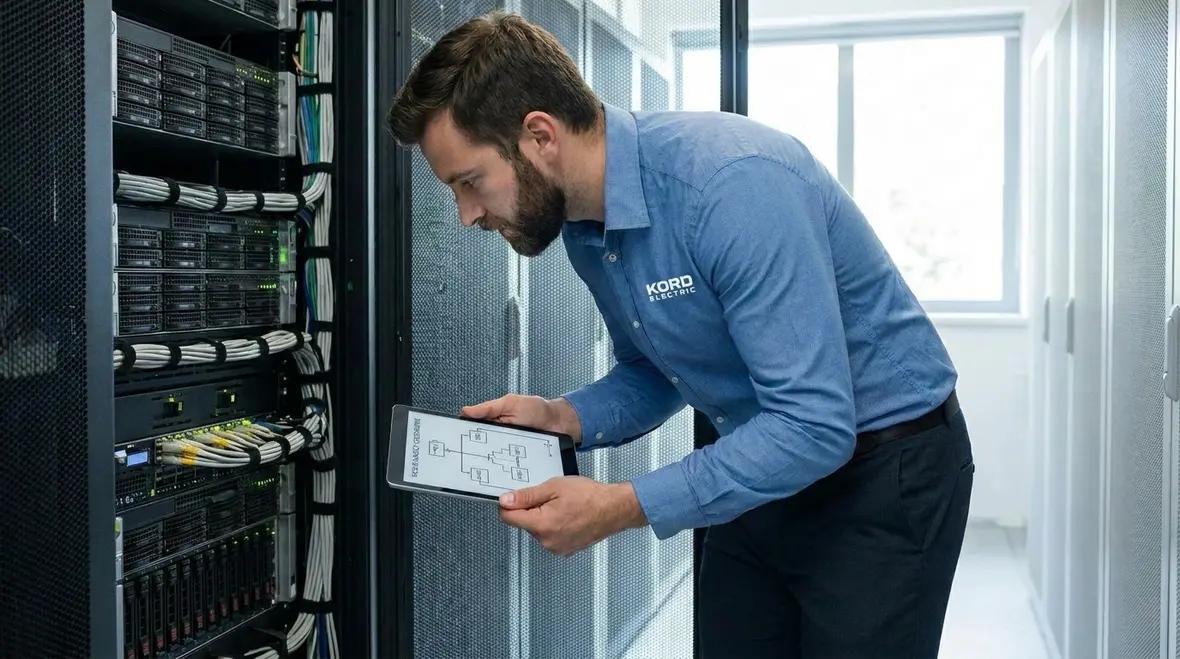
A sound design focuses on paths, not slogans. So we map multiple distribution routes from source to load, then we remove hidden single points. For example, a perfectly sized UPS means little if a bus section transfer relies on a single breaker that never has maintenance clearance.
We typically evaluate the following areas in a structured way:
- Source diversity: utility feeds and generator strategy that do not share the same failure mode
- Transfer architecture: switchgear and transfer switches built to support safe maintenance
- Load distribution: routing that reduces overload risk during transfer events
- Control logic: interlocks that prevent unsafe backfeed and reduce miscoordination
Then we verify that each path supports maintenance without forcing the facility to shut down. And since we work in commercial and industrial environments, we also account for the schedule reality. Nobody wants a downtime plan that needs “perfect weather” and “extra time magic.” Our technicians make sure the design includes workable isolation and testing steps.
Right size the UPS and generator so they share the load the way you intend
In power systems, “almost right” sizing becomes expensive fast. Therefore, we size the UPS, generator, and distribution components based on load behavior, startup inrush, and future growth. That means we do not only look at steady state watts. We also look at surge currents, harmonics, and temperature effects.
For UPS selection, we consider runtime needs and whether the system must ride through certain transitions. If the UPS carries too much duty, heat stress and battery wear rise. If it carries too little duty, the generator may become the main story sooner than planned. Either scenario can hurt reliability.
For generator and transfer design, we review generator starting performance, load acceptance, voltage regulation, and fuel quality. Also, we design for the reality that generators do not behave like lab equipment. They behave like real equipment, with real wear and imperfect conditions.
Our team explains the tradeoffs clearly. If a facility wants the generator to pick up load faster during maintenance, we show how that affects breaker sequencing, voltage stability, and control timing. We do not hide the details, because transparency is what prevents surprises later.
Switchgear coordination and protection settings that keep things stable
Even the best redundancy plan fails if protection coordination trips at the wrong time. So we design the protection scheme around selective clearing, stable voltage, and safe fault response. In practical terms, we ensure that when a fault occurs, the system isolates only the affected section, rather than wiping out power to everything.
Next, we verify coordination among breakers, fuses, and protective relays across the upstream and downstream equipment. We also evaluate how the system behaves during transfer. For instance, a transfer event can create temporary conditions that look like faults if settings are not tuned properly.
Then we connect the dots to operational safety. Interlocks must prevent unsafe states, and labeling must match the actual wiring and sequence. Our technicians use a business casual approach here: firm, direct, and easy to follow. If someone asks, “What happens if we do this wrong,” we answer, and we show the safe alternative. Because yes, people will press the wrong button at some point. Usually under stress. Like opening a group chat during a power outage.
Testing, commissioning, and maintenance planning that supports uptime
Redundancy lives or dies during testing. Therefore, we build commissioning into the schedule, not as an afterthought. We also plan maintenance so it does not become a second job for your operations staff.
Our process typically includes:
- Factory acceptance checks and pre start reviews
- Site acceptance tests that verify transfer sequences and timing
- Load step tests when appropriate to confirm stability
- Battery health verification and runtime validation
- Protection and relay settings verification
- Documentation that matches what operators see in the field
Next, we design a maintenance cadence that supports the real world. Batteries need testing cycles. Breakers need inspection. Fans, filters, and cooling paths need checks. We also make sure the maintenance plan supports your facility needs, especially for commercial and industrial sites that cannot simply “pause operations” whenever equipment wants attention.
To keep the conversation consistent with how we handle other commercial upgrade planning, we apply the same logic we use when teams ask about project budgeting and risk. For example, our commercial lighting upgrade cost guidance emphasizes scope clarity and planning around downtime. Power projects deserve that same discipline, just with more amps and fewer jokes.
How to plan for growth without turning redundancy into a patchwork
Many facilities expand quietly at first. Then suddenly, the electrical load climbs, new tenants move in, and the original plan feels like it was written for an older building. Therefore, we design redundancy with a growth path that avoids patchwork additions.
We start by forecasting load increases based on current equipment, planned process changes, and future building use. Then we evaluate available space in switchgear lineups, spare capacity in distribution, and whether bus and transformer ratings can support additional loads. We also consider whether your cooling strategy will change, because heat affects electrical performance.
As we plan, we also address how future changes will affect transfer and protection. Upgrades should not alter coordination in ways that introduce nuisance trips or reduce fault clearing selectivity. Our technicians confirm these points with the site team so everyone understands what changes are safe and what changes need re evaluation.
In short, we design for now and for the “next thing.” That way, data center power redundancy stays consistent as your facility evolves, rather than becoming a patchwork quilt that looks fine until it gets tested.
Connect redundancy planning with your broader electrical strategy
Power resilience does not live in a vacuum. The same rigor that shapes your data center power redundancy should also guide how you handle commercial lighting, EV charging, and day to day maintenance. When we walk a site, we are not only asking, “Will this ride through a utility event?” We are also asking, “Does this layout make sense when someone has to work on it at 2:00 a.m.?”
That is why many facilities pair redundancy design with structured electrical maintenance programs and targeted upgrades. For example, the way a building budgets for a commercial lighting upgrade cost guide often mirrors how they should think about backup power: clear scope, realistic phasing, and an honest conversation about risk. When those discussions happen together, you avoid the trap of treating reliability as a separate, mysterious line item instead of a core part of your infrastructure plan.
If your property portfolio includes multiple sites or mixed use buildings, aligning redundancy decisions with your long term capital plan helps prevent surprises. It also makes it easier to explain to leadership why certain protection upgrades, UPS refreshes, or generator projects sit near the top of the list. The more your plan reflects real operating conditions, the less it feels like a theoretical exercise and the more it feels like a roadmap your team can actually follow.
For organizations based in Southern California that depend on steady power to keep operations moving, partnering with a team that understands regional grid behavior, code requirements, and commercial facility realities is critical. Kord Electric’s dedicated Los Angeles County electrical services support commercial and industrial properties that cannot afford guesswork when it comes to uptime and safety.
FAQ: quick answers for featured snippets
Conclusion: let’s build a redundancy plan you can trust
Reliable uptime comes from careful design, coordinated protection, and real testing, not hope and extra equipment. Kord Electric serves commercial and industrial facilities with power redundancy systems built for safe maintenance and stable operation. If your facility is planning upgrades, evaluating backup power, or addressing repeated nuisance events, we will help you map the right power paths and validate the switching behavior.
Whether you oversee a single data hall or a portfolio of major property buildings, a well planned data center power redundancy strategy gives your team confidence when the utility blinks, a breaker misbehaves, or a test does not go exactly as planned. From source diversity and UPS runtime to generator performance, switchgear coordination, and long term maintenance, we design with the expectation that real life will stress every assumption. That is the point: when the system has been built and tested for those moments, your operations can stay calm while the infrastructure does the hard work in the background.
If your organization is ready to align redundancy with your broader electrical reliability goals, our commercial and industrial teams are ready to help. Reach out to our team today for an on site review, and let’s turn your power path diagrams from “ancient hieroglyphics” into a clear, confident roadmap your operators can actually use.
When you are ready to move from planning to implementation, you can also connect this redundancy strategy with our broader commercial services portfolio to keep distribution, protection, and monitoring working together across your facility, not just inside the data hall.


