Commercial EV Charging Infrastructure Planning
Planning Commercial EV Charging Infrastructure for Future Growth: A Calm, Smart Approach by Kord Electric
Kord Electric helps commercial and industrial facilities plan commercial ev charging infrastructure that can grow without chaos. We design for today’s parking reality and tomorrow’s demand, because nobody wants to rip up pavement like it is a bad sequel. Instead, our team lays out a clear path: power capacity, site layout, phased installation, and ongoing service. Then we come back with expert technicians who explain what they’re doing, why it matters, and how it keeps operations moving. After all, charging equipment should feel like a utility, not a science fair project.
In this guide, we explain how others can avoid costly upgrades, manage load, and plan for fleets, tenants, and multi building properties. And yes, we’ll keep it practical. Nobody gets paid to guess.
Start with the site, not the chargers
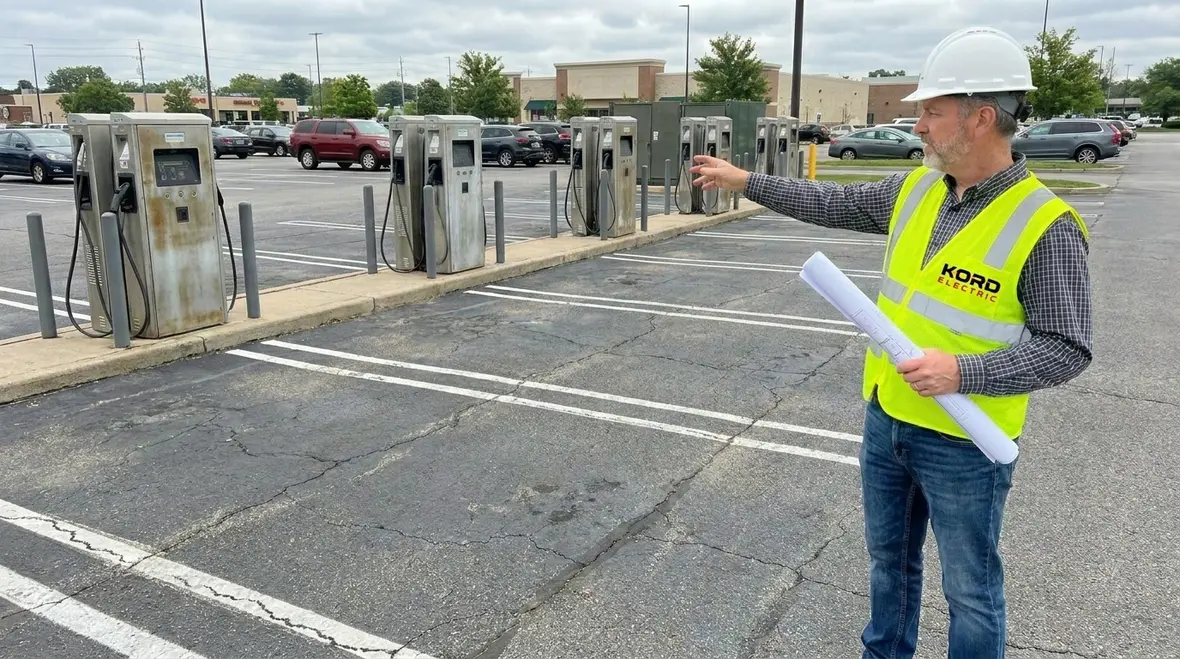
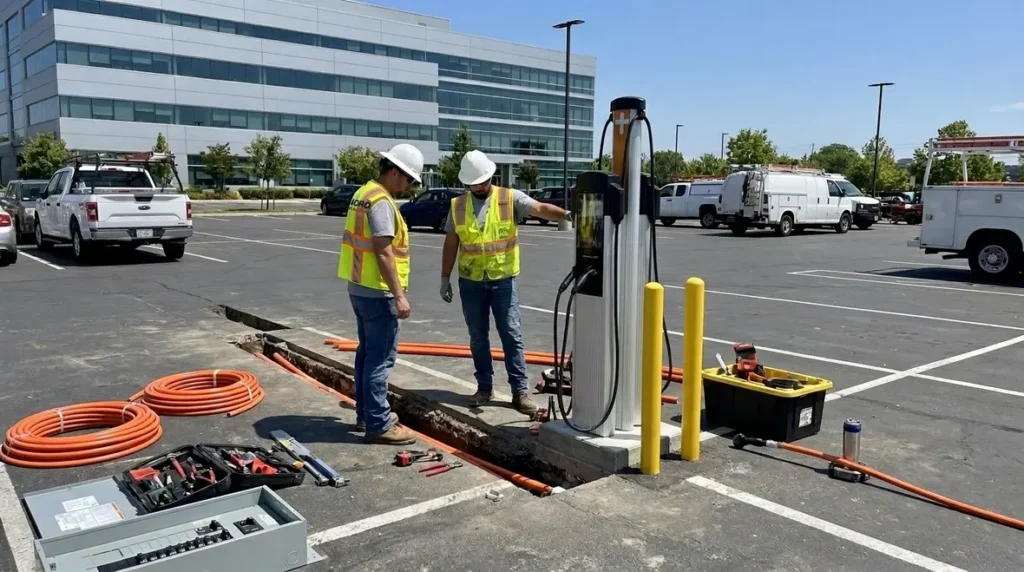
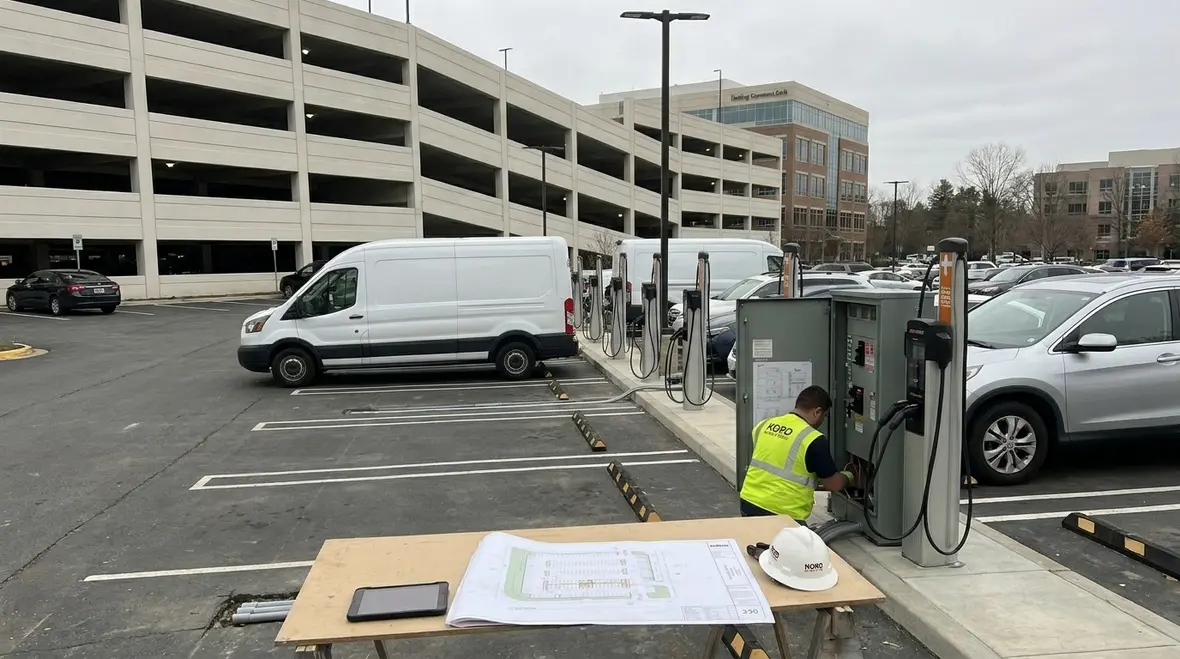
Before anyone buys equipment, Kord Electric treats the property like the main character. We examine electrical service size, transformer capacity, panel headroom, demand patterns, and the physical layout of the site. Then we map routes for cable runs and decide where charging stations make operational sense for deliveries, fleet access, and employee parking.
At this stage, our certified service staff and technicians do more than measure loads. They walk facility managers through their options in plain language. For example, one parking design might require longer conduit runs, which affects cost and timing. Another may allow smarter placement that reduces installation complexity and downtime.
Meanwhile, we also consider how a commercial facility behaves throughout the day. Offices, warehouses, retail centers, and property buildings all “breathe” differently. That breathing impacts when vehicles plug in and how power demand spikes. So instead of planning for an imaginary perfectly balanced grid, we plan for real schedules.
How do we forecast future charging demand without guessing?
We forecast using what the facility already knows and what it reasonably expects to add. We review current EV activity, vehicle types, and likely fleet expansion. Then we discuss charging use cases with the property team, including employee charging, visitor charging, and company fleet needs.
Next, we help others define a growth model. For instance, a logistics center might start with a small set of chargers for routine routes, then expand after vehicles shift from pilot to full deployment. A major property building may add charging capacity when leases begin to attract EV drivers or when tenant requests increase.
Because transition planning matters, we also plan for pricing and access policies. Many operators want controlled access for fleets or tenant groups. Others want a public friendly approach. Either way, we factor in how usage patterns change over time, rather than setting a single rigid plan on day one.
And if someone says, “We’ll just add more chargers later,” we smile politely. Later usually arrives with surprise utility bills, permits, and construction delays.
Grid capacity planning and load management that actually works
The biggest risk in most projects is treating power like an unlimited background feature. It isn’t. For commercial and industrial sites, capacity planning must consider peak demand, transformer limits, and how multiple chargers can hit at the same time. Kord Electric approaches this with careful calculations and load strategy choices.
First, we evaluate the electrical infrastructure and determine what upgrades, if any, are needed now. Then we select load management approaches that keep charging reliable even when many vehicles plug in at once. This helps protect facility operations and reduces the chance of tripping breakers or underperforming chargers.
Next, we consider how commercial ev charging infrastructure supports different charging levels and user behavior. Some sites will need predictable charging windows for fleets. Others will need flexibility for staff schedules. We tune the system design so it meets those needs without forcing constant manual resets.
Finally, we plan for future expansion by leaving room in the electrical pathway, including space in panels and room in the site layout for additional equipment. In other words, we build a foundation that does not collapse the moment growth shows up with a clipboard.
Phased deployment for major property buildings and industrial sites
Many facilities want “future ready” systems, but they also need cost control and minimal disruption. That is why phased deployment often beats a full install on day one. Kord Electric structures rollouts in clear steps that align with vehicle adoption and budget cycles.
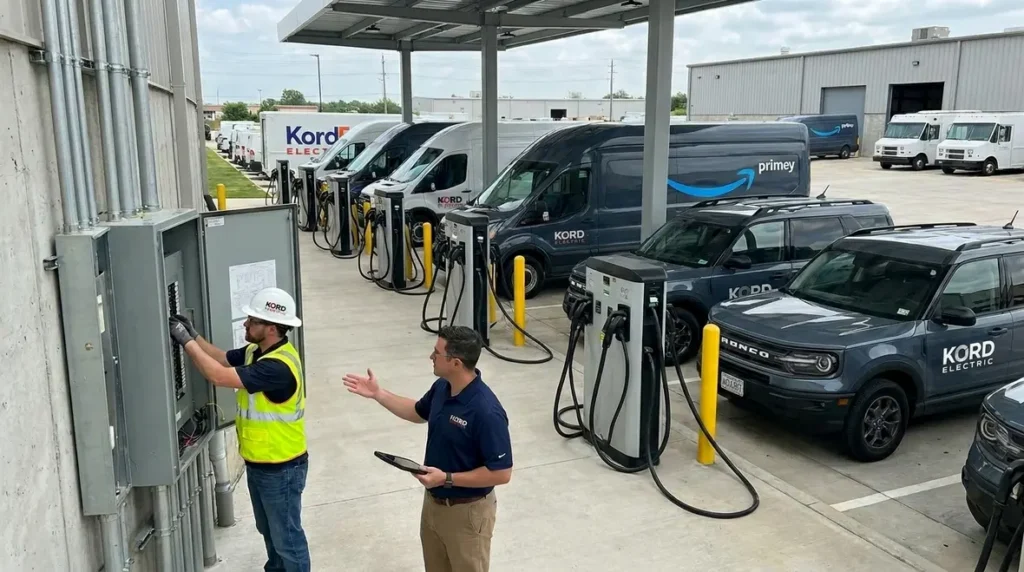
For example, we may install a first phase focused on the highest utilization group, such as fleet vehicles that charge nightly. Then we expand toward tenant and customer usage. During each phase, our technicians ensure wiring pathways, electrical upgrades, and software configurations support the next step.
Additionally, phased deployment helps with permitting and scheduling. Construction work can disturb operations, especially at active warehouses or mixed use buildings. Therefore, we coordinate work windows and plan install steps to reduce downtime. We also document what we build so later phases remain straightforward.
And here is the business truth, stated gently: you cannot manage growth with a plan that requires demolition every time demand changes. We design so future additions feel like adding a room, not tearing down the house.
For facilities that want to dive deeper into how power and budget interact, Kord Electric also shares practical guidance in its Commercial EV Charging Installation Cost Guide, helping teams connect real-world construction steps with realistic financial planning.
Designing placement, safety, and access for real users
Charging equipment must work for people and vehicles, not just on paper. Kord Electric focuses on placement that supports safe movement, clear cable routing, and easy access for users. We also consider traffic flow, wheelbase alignment, lighting, and wayfinding for large lots.
In commercial settings, safety expectations are higher because more drivers share the same space. So we plan cable management, weather protection, and durable installation methods. We also account for accessibility needs and operational constraints, such as how maintenance teams reach equipment and how deliveries move around chargers.
Then we align charging design with operational access control. Some sites require restricted charging for fleets or tenants. Others need an open approach. Our expert service staff helps stakeholders understand the options and chooses a setup that matches business goals.
In practical terms, this means fewer frustrated drivers, fewer operational interruptions, and less time spent on troubleshooting. In other words, charging becomes reliable enough to trust.
Service, monitoring, and upgrades after installation
Installation is not the finish line. Kord Electric supports commercial and industrial facilities with service planning that includes monitoring, maintenance, and updates that keep systems performing. Because when chargers go offline, it affects operations and reputation.
We also plan for upgrades as standards and usage patterns shift. Some facilities add more vehicles and need better load distribution. Others update access methods for tenants or change usage rules for staff. Our technicians explain what changes are needed, what impacts to expect, and how we minimize disruption during service work.
Moreover, we recommend a maintenance rhythm that fits site conditions. Harsh weather, heavy vehicle traffic, and frequent plugging cycles all influence service needs. By staying proactive, facilities reduce downtime and avoid the “why is it broken now” spiral.
And yes, our team brings the calm confidence that comes from doing this work often. We are not here to impress anyone with jargon. We are here to keep charging available.
When your site needs urgent electrical support beyond day-to-day maintenance, Kord Electric’s emergency electrical services in Los Angeles help keep power stable so your commercial ev charging infrastructure remains dependable even when the unexpected shows up.
FAQ: Commercial charging planning, answered quickly
Ready to build charging that grows with your operations?
If your facility serves fleets, tenants, or major property customers, Kord Electric can help you plan commercial ev charging infrastructure that scales without disruption. We start with site power, forecast demand, and design phased deployment so upgrades do not become costly surprises. Then our expert technicians support service, monitoring, and clear explanations so your team stays confident. Reach out today to review your site and map a future growth plan that performs like a business tool, not a temporary fix.
For multi-site operators and facilities throughout the region, Kord Electric also provides broad Los Angeles County electrical services, so your EV charging strategy can align with lighting, panels, power quality, and other critical infrastructure under one coordinated plan.
When your property planning also includes life-safety systems such as fire sprinklers and alarm monitoring, Kord’s sister company offers integrated protection through its full fire protection services, helping commercial buildings coordinate electrical and fire safety upgrades with fewer scheduling conflicts and clearer responsibilities.
Commercial EV charging is not a one-time gadget purchase. It is a long-term infrastructure decision that touches power, parking, safety, and operations. With a calm, methodical plan—and a team that treats your site like the main character—you can build a system that grows with your business instead of fighting it at every turn.