Automated Lighting Controls ROI for Offices
At Kord Electric, we see how automated lighting controls can lift efficiency across office floors, not just in theory, but in daily operations. When lights respond to occupancy, daylight, and real schedules, facilities stop paying for wasted brightness and start running with steadier energy use. Plus, the biggest win is usually the quiet one: fewer manual overrides, fewer tenant complaints, and less “who left the lights on” drama. And yes, even in 2026, some people still treat office lighting like a mood ring. Others treat it like a haunted house. We aim for neither.
In this guide, our approach stays practical. We explain what automation changes, how it pays back, and how our technicians help you plan, install, and keep controls working as intended. We also connect this to preventive maintenance so the ROI does not fade after the first billing cycle.
What ROI really looks like for automated lighting controls in offices
ROI in office spaces does not rely on one magic number. Instead, it comes from several streams that usually show up within months. First, lighting energy use drops because fixtures run only when they need to. Second, operating schedules become more accurate. As a result, you avoid after hours lighting that creeps in like a slow leak. Third, automation improves how spaces get used, and that can reduce maintenance calls related to switches, timers, and misused circuits.
To keep ROI realistic, we calculate savings based on your baseline usage, your lighting type, and your control strategy. Then we consider how your team works. For example, an office with frequent room changes and varying daylight needs a different setup than a steady call center with stable occupancy. And when daylight is strong, a well tuned dimming strategy can cut energy further without making people feel like they are working in a cave.
We also remind stakeholders of one simple truth: ROI improves when controls work the way people expect. That is why we train facilities staff on what the system does and what they can override, instead of leaving them to guess like they are reading a novel written in LED code.

Boosting efficiency through smart schedules, occupancy, and daylight
When our expert service staff designs automated lighting control for offices, we focus on three inputs: time, presence, and light levels. In turn, those inputs help the system make decisions that match real use.
Smart schedules set predictable start and stop times by floor or zone. However, schedules should not be rigid. So we pair them with occupancy sensing to avoid shutting lights off while people still work.
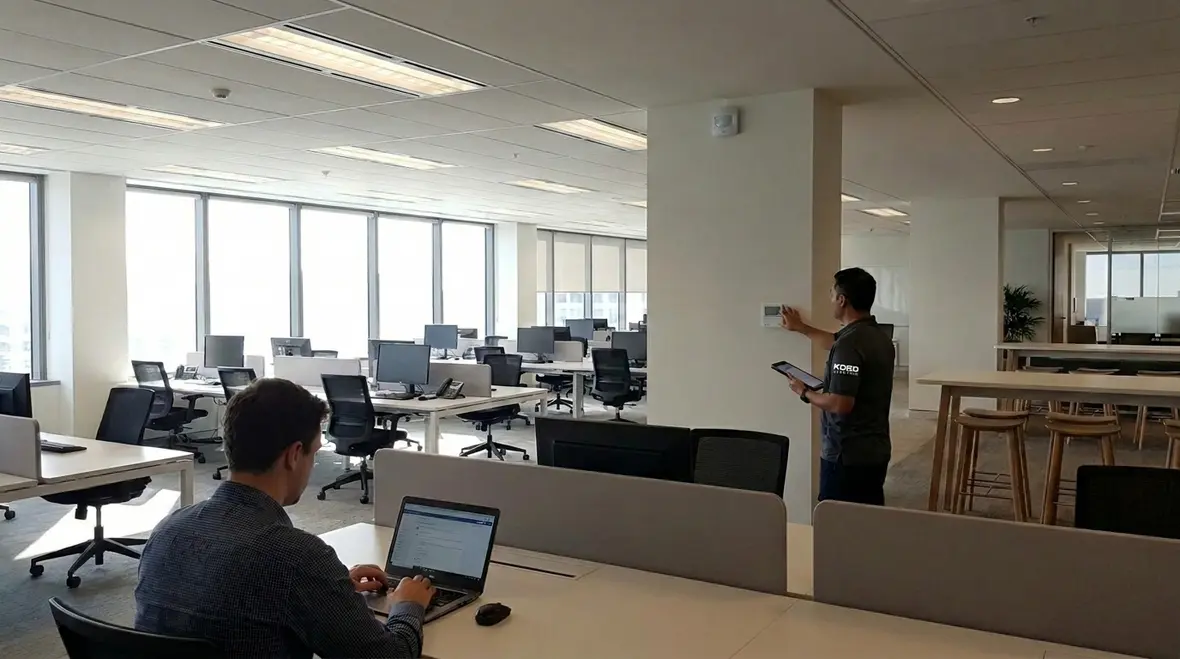
Occupancy detection keeps lights active when spaces are used. Once the space clears, the system steps down and then turns off based on set delay times. This reduces energy waste in conference rooms, offices, restrooms, and storage areas, where usage can swing hour to hour.
Daylight harvesting uses sensors near windows to dim artificial lights when sunlight increases. That way, brightness stays comfortable, and energy use follows the actual conditions. People notice comfort immediately, even when they cannot name the sensor doing the job.
And here is the part that business leaders like: these systems reduce the friction that causes manual mistakes. Instead of relying on someone to remember every policy, the control layer handles it consistently, while you track the benefits of automated lighting control for offices in your actual utility bills and maintenance logs.
How we design controls for commercial and industrial buildings
Office spaces in commercial and industrial facilities come with real-world constraints: shared panels, multi tenant layouts, varied ceiling heights, and zones that have different lighting jobs. Therefore, we do not treat automation like a one size fits all add on. We map your building’s electrical and space layout first, then we match controls to how that power gets used.
Our technicians plan the system in zones that make sense for operations, not just for wiring convenience. We also look at how circuits feed lighting, how dimming behaves with your fixtures, and how your BMS or building systems integrate, when needed. If your facility manages energy through a central platform, we align the lighting controls so the building can report status and run set points without confusion.
To keep performance stable, we also plan for how the system must be supported. After installation, you want fewer surprises. So, our team builds in clear labeling, proper configuration, and a commissioning process that verifies occupancy behavior, daylight response, and schedule accuracy across typical workdays.
Then we do the second part many vendors skip: we plan maintenance. Because if controls drift over time, ROI takes a hit like a delayed train at rush hour. No one cheers for that.
Preventive maintenance that protects the savings
Even the best lighting automation can lose efficiency if sensors drift, firmware changes, or settings get altered during routine work. That is why Kord Electric connects automated controls with preventive maintenance for lasting results.
Our team uses an approach aligned with our electrical preventive maintenance program. The goal is simple: keep your electrical systems and controls operating at expected performance, and catch issues before they become outages or comfort complaints. We pay attention to sensor placement, wiring integrity, and calibration needs, because small changes can cause big shifts in how lights respond.
For example, a sensor can become less accurate if the environment changes. Maybe a nearby wall gets painted lighter. Maybe a new glass partition gets installed. Maybe a temporary construction barrier blocks the sensor’s view. When we inspect and verify conditions, we restore the behavior you designed for.
We also focus on documentation. Our technicians keep records of what we set and why, so when maintenance happens, the next person does not have to rebuild the logic from memory. This reduces downtime and prevents “mystery settings” that turn a steady ROI plan into a guessing game.
If you want the short version: automated lighting controls drive savings. Preventive maintenance keeps the savings real.
Implementation steps that avoid office downtime
We know offices do not pause their work for a construction schedule just because we would like them to. So, we implement in a way that reduces disruption and protects daily operations.
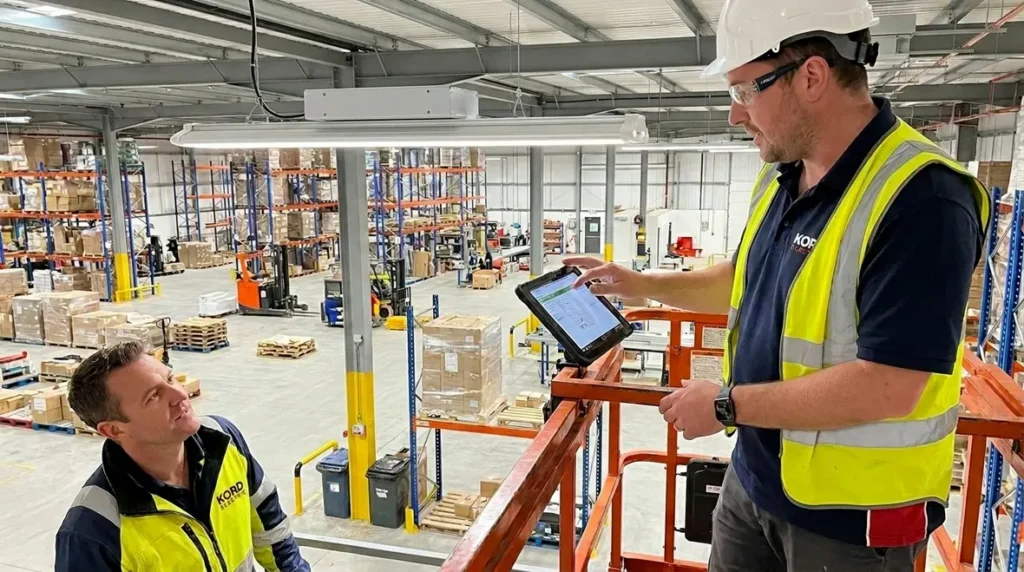
Step one: site survey and control plan. We assess zones, fixture types, sensor locations, and existing panel capacity. Then we create a control map tied to occupancy patterns and daylight exposure.
Step two: phased installation. We schedule work floor by floor or area by area, which helps keep lighting stable in active zones. If a room must be offline briefly, we coordinate timing to match after hours or low traffic windows.
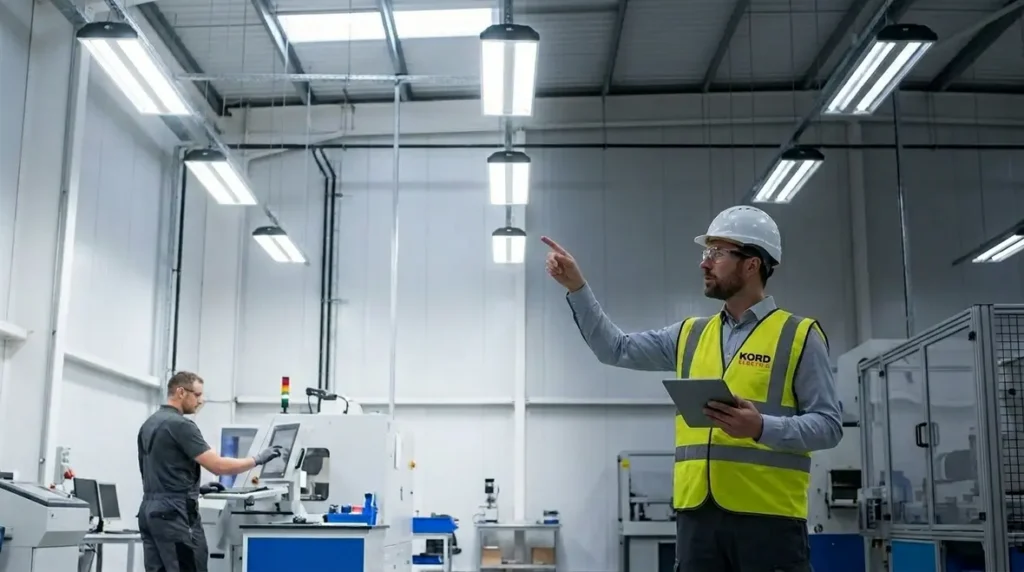
Step three: commissioning and tuning. We test occupancy response, dimming curves, and daylight set points. Then we tune delays so lights do not flip on and off like a TV channel during a sporting event.
Step four: staff handoff and guidance. Our expert service staff explains how the system operates and how facility teams can handle overrides. We show what to expect, what to report, and how to interpret alerts or status changes. This reduces friction and prevents “fixing” something that is actually working correctly.
By the time we finish, your control system should feel simple for users and reliable for your electrical team.
What affects payback time the most
Some offices get a fast payoff. Others take longer, and that is not a failure. It is just math meeting reality. The biggest drivers include:
Current lighting efficiency. If your building already uses efficient fixtures, savings come more from smarter operation than from replacing hardware.
Occupancy patterns. Spaces with variable use, like meeting rooms and shared offices, usually see stronger gains.
Daylight exposure. Buildings with strong window light often benefit from dimming and daylight harvesting, which can reduce energy without harming comfort.
Control coverage. If controls only cover a small part of your lighting, savings stay smaller. If coverage matches real use zones, ROI rises.
Maintenance and calibration. When preventive checks happen on schedule, sensors keep accuracy and the system keeps behaving as designed.
Electric rates and utility incentives. Local energy pricing and incentive programs can change payback timing quickly.
We help facilities leaders model scenarios so decisions stay grounded. And we keep it honest. If the numbers show a longer payback, we still guide you toward the best control approach for your building’s actual usage.
FAQ
Conclusion: Let’s earn the savings with a plan
Automated lighting controls can lower energy use, stabilize comfort, and improve operational efficiency in office spaces. However, the best ROI comes when the system is designed for your actual zones, tuned for occupancy and daylight, and protected by preventive maintenance. At Kord Electric, our technicians and expert service staff guide you from site survey to commissioning, and we help you keep performance steady after installation. If you want predictable payback, contact us for a commercial assessment and a control plan built for your building.
If you are planning broader upgrades to your office or campus, our lighting installation services can pair with automated controls to modernize fixtures, improve visibility, and support long-term efficiency across your portfolio.