
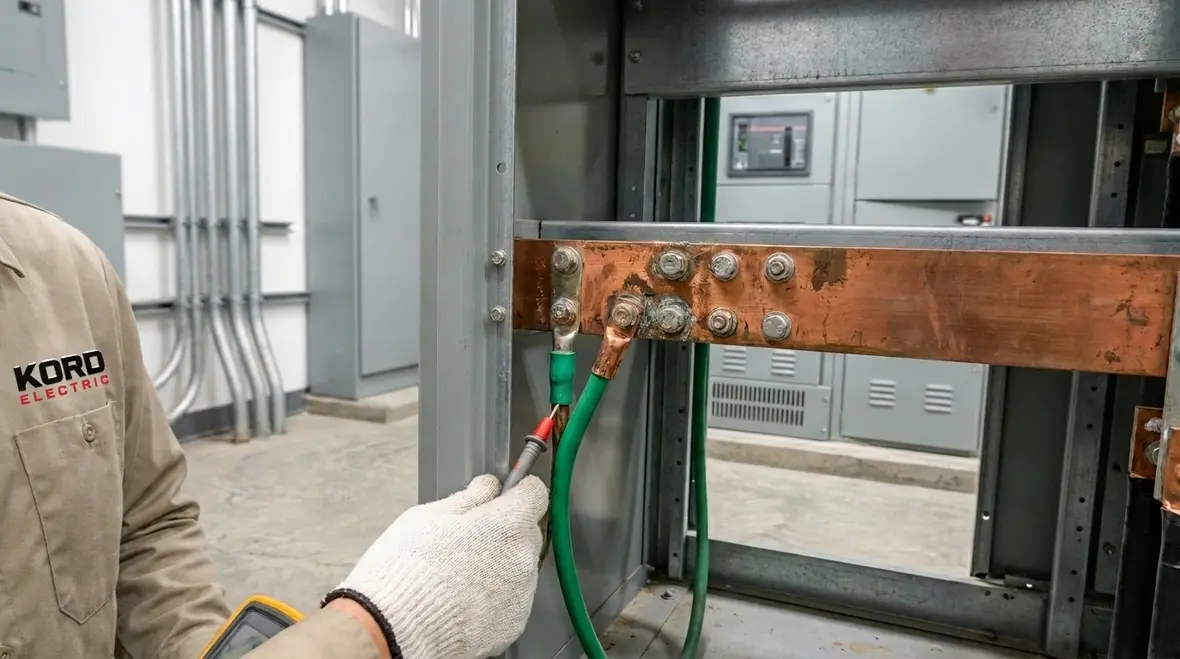
Industrial Electrical Grounding and EV Safety
At Kord Electric, we see it every day: industrial systems that look fine on the surface, yet carry risks you cannot “feel” until something goes wrong. That is why industrial electrical grounding importance sits at the center of safe, dependable power. When grounding fails, current can take the wrong path through metal parts, building systems, and even people, and the results can be sudden, costly, and hard to explain after the fact. Furthermore, we do not treat grounding like a box-check. Instead, our experienced service staff evaluates how current returns, how faults clear, and how safety stays intact from day one to the next maintenance cycle.
What poor grounding quietly does to industrial safety
In industrial sites, electricity behaves like a well trained guest who still might trip over the rug. Everything depends on the route it takes when something fails. When grounding paths are poor, open, or mismatched, fault current may not return to the source the way the design intends. As a result, protective devices can take longer to trip, or they may not trip the right way at all.
Then comes the danger most people miss. Metal enclosures, switchgear cabinets, motor frames, and exposed conduit can rise in voltage above what workers expect. Even if the equipment still “runs,” the risk has moved. In addition, stray current can increase corrosion on embedded metal, affect nearby wiring, and create noise in sensitive controls. In short, a bad ground does not just threaten shock safety, it also threatens uptime.
Common grounding failures we see in commercial and industrial buildings
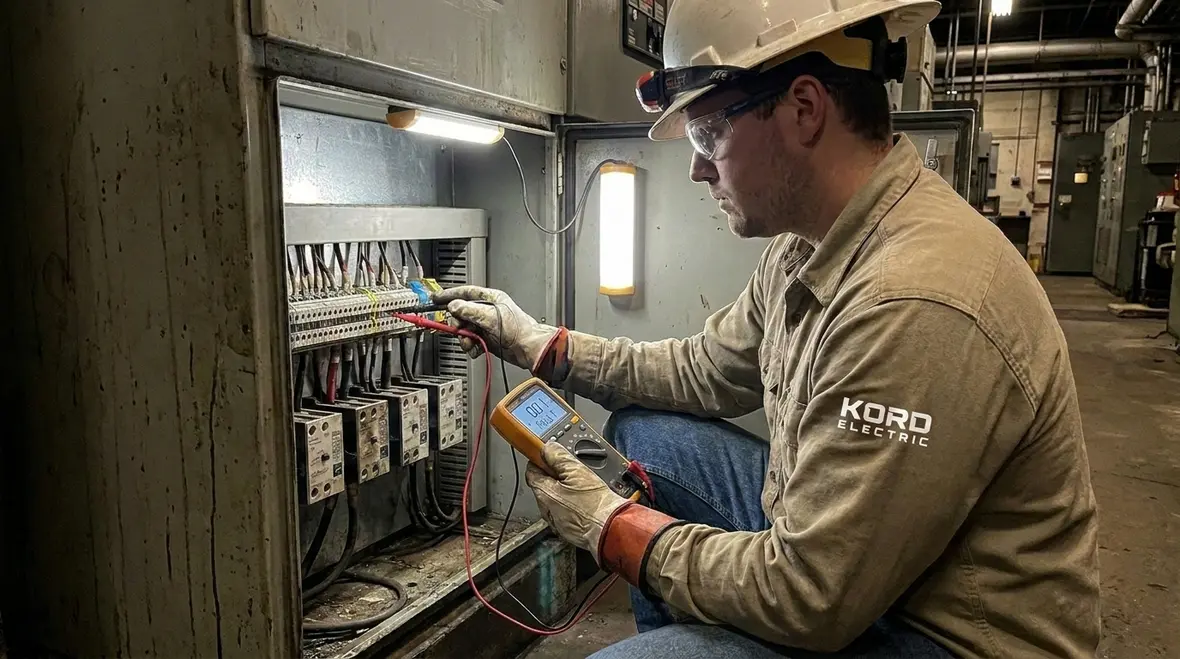
Our technicians spend time on actual jobs, not just theory. And because we only target commercial and industrial facilities and major property buildings, we focus on the patterns that show up in those environments. To be clear, grounding problems rarely come from one dramatic mistake. Usually, they stack.
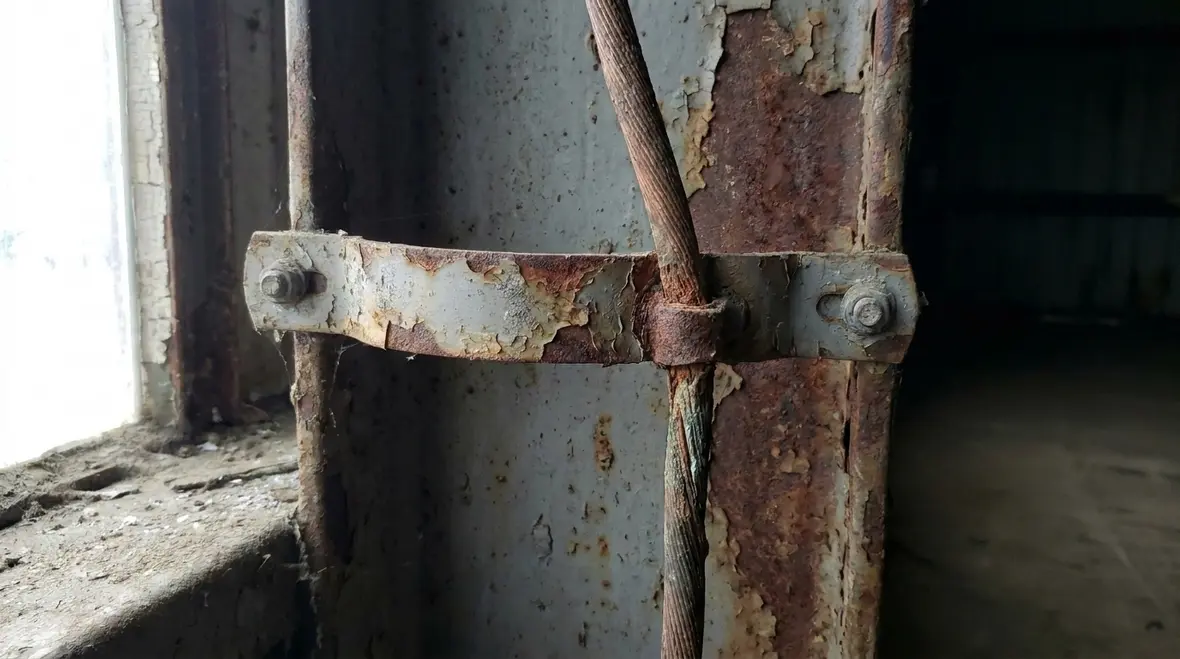
- Loose or corroded connections at grounding electrodes and bonding points, often hidden under paint, conduit straps, or cable trays.
- Missing bonding between raceways, structural steel, metal water lines, and electrical equipment.
- Wrong conductor sizing so the system cannot carry fault current long enough for protection to clear.
- Unverified grounding resistance during install, and then no retest after site changes.
- Grounding scheme mismatches between panels, transformers, and service gear that should coordinate.
- Changes over time such as renovations, new racks, and added loads that interrupt or alter existing paths.
Meanwhile, the “logic” behind these failures often sounds reasonable. Someone replaced a section of conduit, another contractor added a device, and no one rechecked continuity. That is how you end up with a system that looks connected, but is not truly bonded for safety. Yes, it is like tying your shoes and then forgetting you left the laces half undone.
How grounding affects fault clearing and protective devices
Faults do not ask for permission. When insulation fails, a ground fault happens, or a conductor contacts a chassis, protective devices must see enough current and the right conditions to clear the hazard quickly. At that moment, industrial electrical grounding importance becomes more than safety language. It becomes a practical requirement for how quickly the system removes power.
Here is the key point others miss. If grounding is poor, fault current may not be high enough to trip breakers on time. Or the current may flow through unintended conductors, which can overheat them. Additionally, improper bonding can distort fault paths and make it harder for ground-fault protection to operate as designed.
Our expert service staff explains this in plain terms during site walk-throughs. We show where fault current should travel, which components must bond, and how coordination works across panels, gear, and feeders. Then we help facility teams align maintenance and testing so the system stays safe after updates.
Why EV charger installations make grounding issues show up faster
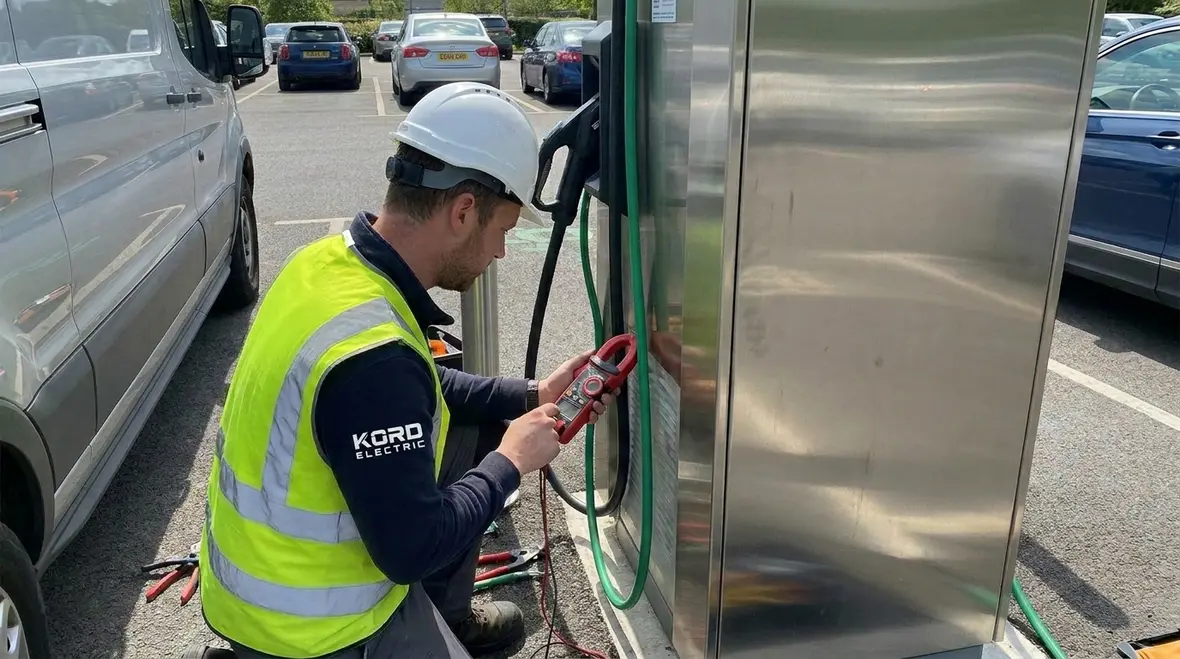
Many sites add EV charging to increase property value and meet tenant demand. And while that is a smart move, it can expose weak grounding practices that were never fully stressed before. In modern charging setups, we often deal with higher continuous loads, more complex circuits, and electronic control systems that do not like mystery voltages. So, when grounding is unreliable, the problems can appear sooner and become more obvious.
For example, our team has experience with EV charger installation at commercial and industrial facilities. We review the site power path, confirm bonding and grounding requirements, and ensure the charger circuits connect to a system that supports safe fault clearing. Furthermore, we coordinate electrical design with real-world site conditions, including routing constraints and how the building’s grounding network performs under load and fault conditions.
If you are planning new chargers or expanding an existing setup, pairing that project with a professional grounding review is one of the fastest ways to protect both uptime and safety. For facilities that want deeper detail on the process, Kord Electric’s dedicated EV charger installation service breaks down how we design, install, and test commercial and industrial EV infrastructure with grounding and bonding baked in from day one.
In other words, adding chargers can feel like upgrading the furniture, but it often turns into an audit of the foundation. And just like in every good movie, the villain is rarely the loud one. It is usually the quiet wiring choice made months or years ago.
Testing and maintenance steps that keep grounding reliable
Grounding does not end when equipment gets installed. It continues through inspections, rework, and site modifications. Our technicians treat grounding like a living system. So we recommend and perform checks that confirm continuity, verify resistance where needed, and confirm bonding integrity after changes.
- Visual and continuity inspections to confirm bonding jumpers, straps, and terminations stay intact.
- Ground resistance testing where applicable, using proper methods for the site and electrode layout.
- Torque checks and retermination for compromised connections, especially in switchgear rooms and service areas.
- Coordination review so breakers and protective devices clear faults as expected.
- Post-renovation verification whenever conduit, structural steel use, panels, or electrical rooms change.
- Documentation updates so facility managers and future contractors do not guess.
Also, we help facility teams understand what “good” looks like in their environment. We explain the risks of skipping retesting and we show how small changes can alter paths. That way, everyone stays calm, and nobody has to improvise when the lights start acting like they have stage fright.
What facility managers should ask before approving electrical work
When commercial and industrial leaders approve upgrades, they should not only focus on the load and the schedule. They need to verify that grounding and bonding stay correct through the entire lifecycle. Therefore, we recommend facility managers ask targeted questions that drive safe outcomes.
- How does the project protect against unsafe touch voltage on enclosures and metal parts?
- Will we verify bonding continuity after installation and after any future modifications?
- How do protective devices coordinate with the grounding scheme during a fault?
- What testing and documentation will the contractor provide for the grounding system?
- Who owns the retest plan when other trades enter the space later?
Our expert service staff supports the answers with on-site observation and clear explanations. We make sure electrical teams understand the safety logic, not just the wiring diagram. And yes, we keep it practical. If the plan cannot be maintained, it is not really a plan.
FAQ
Request an industrial safety check from Kord Electric
If your facility runs critical loads, serves tenants, or adds new power features like EV charging, grounding cannot be an afterthought. At Kord Electric, we help commercial and industrial property teams confirm that grounding supports safe fault clearing, stable operation, and long term reliability. Our technicians and expert service staff walk the site, explain what they find, and recommend the next steps with clear, business ready priorities. Contact us today and let us secure your electrical foundation before the system reminds you the hard way.
For sites that want to go a step further, pairing a grounding assessment with a broader maintenance strategy can be a powerful move. Kord Electric’s commercial and industrial electrical maintenance plans help facilities link grounding health, breaker performance, voltage stability, and long term system longevity into one coordinated effort instead of scattered one-off fixes.
And because electrical issues do not always wait for business hours, many industrial and commercial properties also keep our emergency electrical services on standby. Together with safe grounding practices and disciplined maintenance, that combination gives facilities a clear path from everyday reliability to rapid, code-compliant response when something unexpected happens.
If your next project includes EV infrastructure, system upgrades, or expanded production loads, consider scheduling a combined review that covers industrial electrical grounding importance, protective device coordination, and EV charger readiness in one visit. That way, when you flip the switch on new equipment, you are not just hoping everything works—you are backing it with tested grounding, documented performance, and a team that already knows your site.
When you are ready to reinforce safety and reliability across your facility, our dedicated EV charger installation team and our commercial and industrial service crews can coordinate a plan that supports today’s projects and tomorrow’s expansion without losing sight of grounding fundamentals.
Ultimately, grounding is not the flashiest part of an electrical system, but it is one of the most decisive. Treating it as a living, maintained safety backbone—rather than a one-time checkbox—keeps people safer, equipment happier, and operations steadier, especially as more facilities move toward high-efficiency systems and EV-ready infrastructure.
If your facility is due for a deeper look at its grounding and overall electrical health, the Kord Electric team is ready to help you turn quiet risks into clear, actionable improvements.
Schedule your grounding and EV safety review today
Reach out to the Kord Electric team to schedule an on-site industrial safety check that includes grounding verification, protective device review, and EV charging readiness. We will walk the site, document what we find, and give you a prioritized roadmap so you can decide what to address now and what to budget for later—without guesswork.


