
Business Power Continuity Solutions Guide
Kord Electric helps commercial and industrial facilities protect uptime with business power continuity solutions that keep critical systems running when the grid falters. In this guide, our team explains how we plan for power loss, test backup performance, and secure the equipment that businesses depend on. Whether the threat comes from a storm, a utility issue, or a fast switch event that makes sensitive electronics sulk like they are living in a bad sitcom, we build continuity plans that hold up under real pressure. And yes, we do walk the talk with field support from our technicians and expert service staff, because a plan on paper does not keep servers alive.
What business continuity planning really means for critical power
In third party terms, continuity planning means a facility keeps operating by managing risk across power, controls, and response time. In real life, we see it as a system of actions that prevents chaos when the lights go out or power quality turns messy. First, we map what must stay alive, then we set rules for how fast each system should respond. After that, we build processes for training, maintenance, and verification. This is not guesswork. It is engineering plus discipline.
Our technicians and expert service staff often start by sorting critical loads into groups such as life safety, process controls, refrigeration, security, data, and communications. Then we match those loads to the right protection level, because every bus and every panel has its own tolerance. For example, a production line may require tightly regulated power quality, while an alarm system only needs reliable energy supply and correct signal timing.
And because nothing is ever straightforward, we also plan for “in between” failures. A short outage might not shut down everything, but it can trigger resets, drop sessions, and interrupt automation sequences. Meanwhile, a voltage dip might not trip breakers, yet it can cause controllers to act like they forgot the script. Our continuity planning addresses those events, not just long blackouts.
How we secure the power chain before an outage happens
Most facilities focus on generators because that is what everyone can see. However, our approach secures the entire power chain: utility input, transfer paths, distribution gear, power electronics, and backup sources. In other words, we treat continuity like a relay race, not a solo performance. If one handoff is late, the team loses.
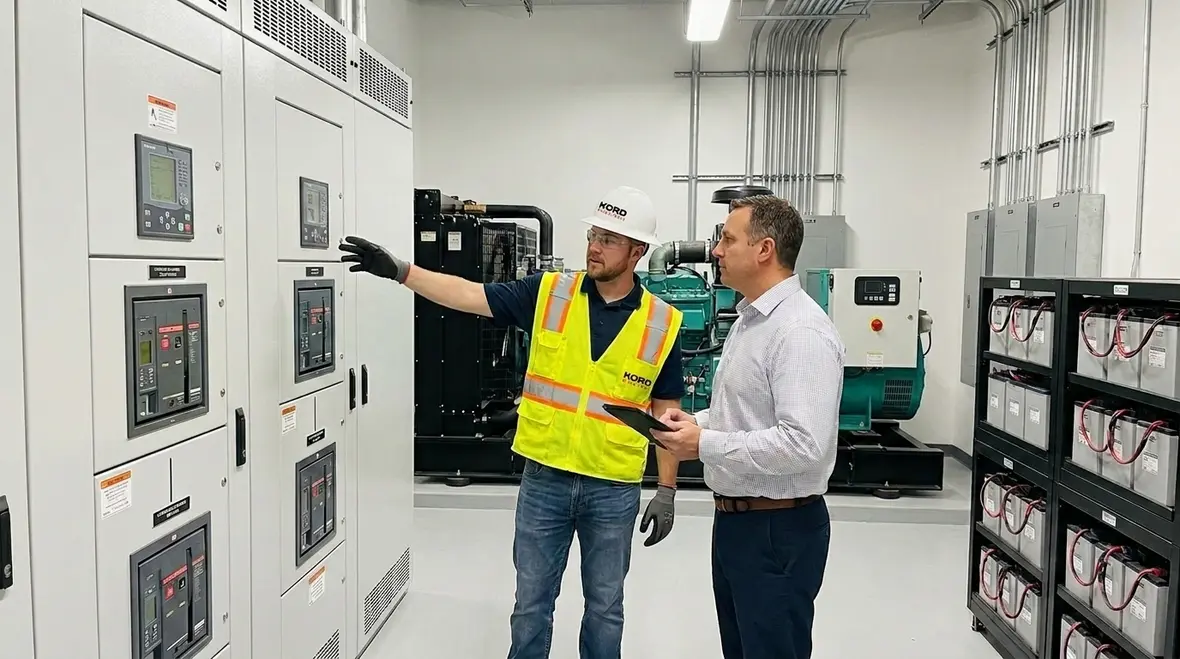
When our team evaluates a site, we look at equipment condition, installation quality, and settings that influence reliability. We verify that breakers, switchgear, and protective devices operate within expected timing. We review control logic so transfer sequences happen safely and predictably. We also inspect battery systems for control power and UPS integrity for sensitive loads. Then we document the dependencies, including which systems need what signals and how long they can run on backup.
Our expert service staff explains the findings in plain language during commissioning and scheduled service. So the customer does not get a mystery report full of cryptic abbreviations and polite confusion. Instead, we show what we found, why it matters, and what we recommend next. We say it slowly, like a pro talking through a knot they have already untangled.
Facilities that operate in high demand regions like Los Angeles County often pair this kind of power chain review with structured preventive maintenance so that generators, panels, and switchgear do not drift out of spec between outages. That kind of planning connects directly with the way Kord Electric approaches electrical preventive maintenance programs for large commercial and industrial properties across California.
Designing outage response that protects uptime
Once the power chain is secure, we design outage response so the facility does not rely on luck. First, we define response objectives using clear timelines. Then we align those goals with equipment capabilities. For instance, generator start and transfer time must match the allowable hold time for critical loads. Likewise, UPS runtime and retransfer rules must match the operational reality of the site.
In addition, we build operational playbooks that staff can follow under stress. This matters because during an emergency, people do not think at normal speed. They move like they are trying to find their keys while the timer on a microwave is screaming. Our playbooks include roles, escalation steps, and communication instructions. We also define what operators should confirm, such as alarm states, transfer position, and load status.
We prefer that facilities practice the plan, because procedures only work if people remember them. Therefore, our continuity efforts include training sessions led by our technicians and expert service staff, with tabletop walkthroughs that mirror the real control panel cues and alarm messages. For multi-site operations or facilities that already work with Kord Electric for emergency electrical services, outage drills often dovetail with existing inspection windows so practice does not feel like a separate burden.
Aligning outage response with local infrastructure realities
In dense regions where feeder loading, utility switching events, and unplanned outages are more common, continuity planning has to account for those realities. That is why our outage response design often references how the local grid behaves, how long typical restoration windows last, and what kind of voltage behavior the facility has experienced before. We then align generator sizing, UPS autonomy, and load shedding strategies around those patterns so you are not overbuilding in one area and underbuilding in another.
Testing and maintenance that actually prove the plan
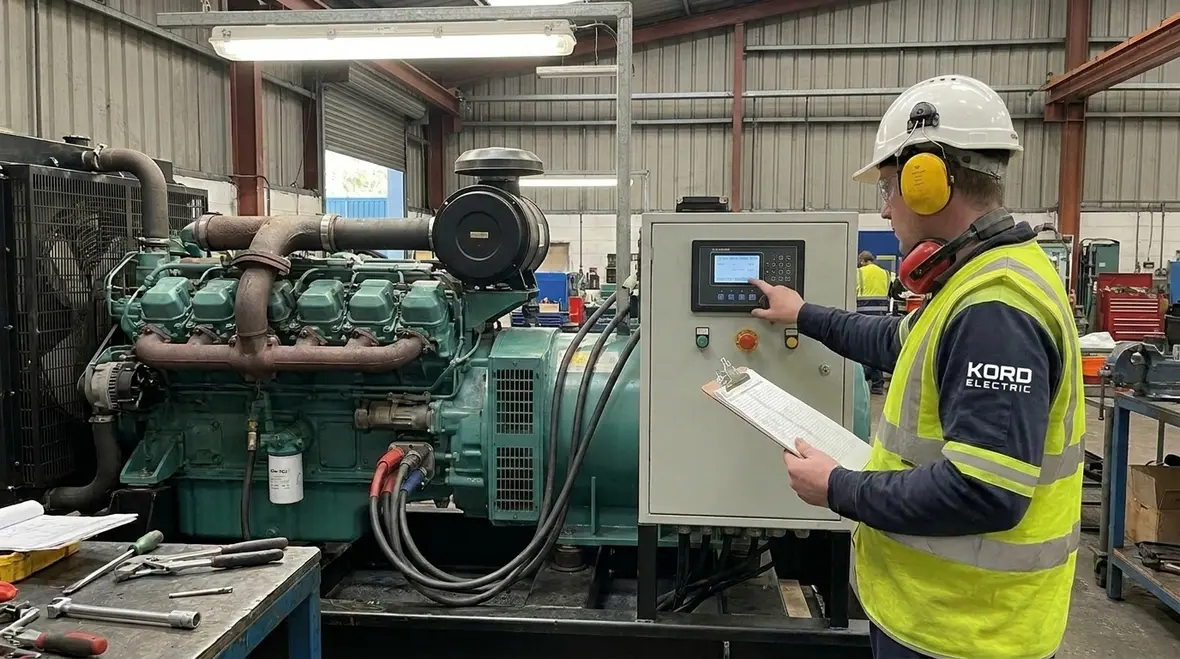
A continuity plan fails when it has never been tested in a meaningful way. That is why we treat testing as a key part of business power continuity solutions. We build a schedule around the equipment type, duty cycle, and criticality of loads. For example, we perform periodic generator testing that evaluates startup, transfer, loading behavior, voltage and frequency stability, and shut down logic. We also verify UPS operation, battery health, and alarm thresholds.
Yet testing alone is not enough. We ensure tests reflect how the facility will use the systems. If the site expects to run certain processes during an outage, we do not just test at low load and call it a day. Instead, we plan load profiles that provide useful results. We then record outcomes so that trending highlights degradation before it becomes a failure.
Our expert service staff also checks the small things that cause big headaches. Switchgear interlocks need to function correctly. Control wiring must stay secure. Paralleling logic must match the current configuration. Settings must remain correct after any upstream changes. And software updates, if applied, should not silently change behavior. In short, we verify so you do not have to reinvent the wheel during a storm.
Connecting continuity testing with preventive maintenance
Because real reliability comes from habits, not heroics, we often align continuity testing with structured preventive maintenance programs. Infrared inspections, breaker testing, generator and ATS inspections, and documentation reviews all feed into the same goal: make outages boring. When Kord Electric teams perform electrical preventive maintenance or NFPA 70B-driven panel and switchgear inspections, we use those windows to confirm that continuity assumptions still match the way the building actually operates.
Power quality, alarms, and controls: the hidden failure points
Continuity does not stop at “power on or power off.” Many commercial and industrial facilities suffer from intermittent issues like voltage sags, harmonics, nuisance trips, or unstable control signals. These problems can reduce productivity long before anyone notices. Therefore, we examine power quality and control performance as part of a full continuity strategy.
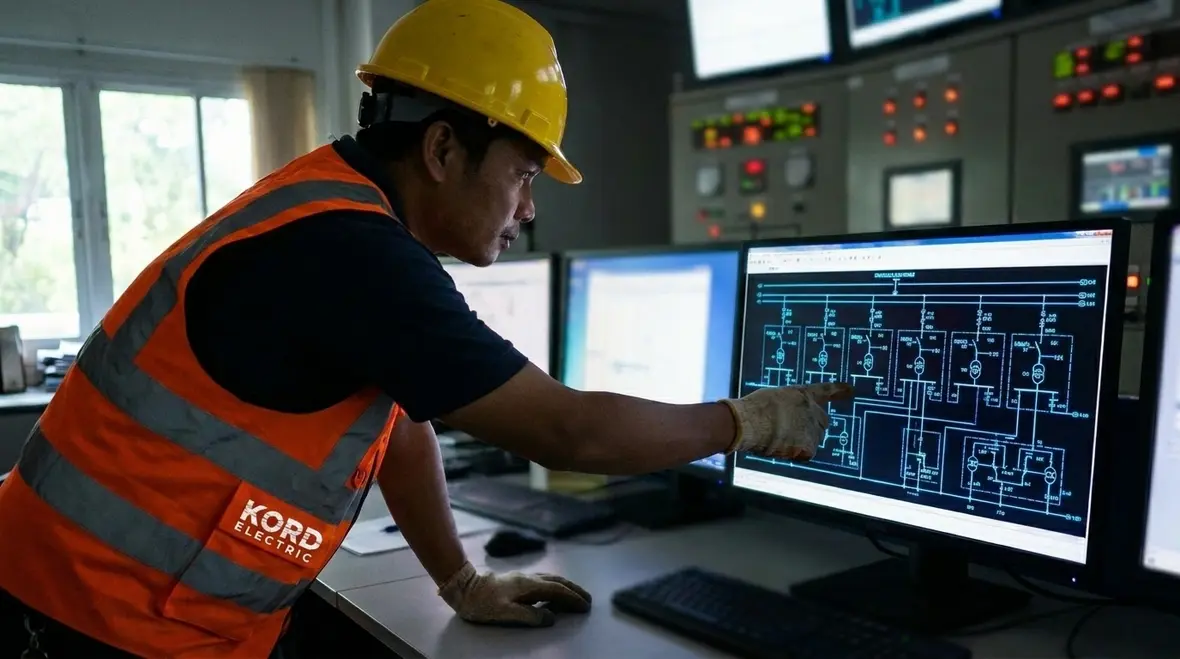
We review how distribution gear responds to transients, how protective settings coordinate, and how sensitive devices react to changes in waveform or frequency. We also examine alarm strategies so the right team gets the right information. If alarms overwhelm operators, they start ignoring them, which is like having a smoke detector that only screams at 3 a.m. and never during the fire.
Our technicians and expert service staff help facilities set realistic alarm thresholds and confirm that system monitoring matches operational needs. Furthermore, we align control logic with actual switching behavior. If a transfer sequence depends on feedback signals, we confirm those signals arrive reliably. Then we validate that the system transitions without unexpected delays.
Turning voltage and power quality into actionable data
Because voltage fluctuations and waveform distortions show up gradually, we treat power quality as a monitored asset, not a one-time measurement. Our field teams deploy analyzers where needed, collect real-world data under normal and stressed conditions, and then translate those findings into corrective actions. Sometimes the fix is as simple as rebalancing loads; other times it calls for targeted equipment upgrades. Either way, our goal is to turn a vague “the power looks weird” complaint into a clear plan that keeps sensitive systems online.
Building a plan staff can follow when the stress hits
Even the best equipment fails if the facility cannot act quickly. So we build continuity planning that supports people, not just hardware. First, we clarify roles for operators, facility managers, and maintenance personnel. Then we include step by step actions for confirming system status, reporting issues, and safely managing load.
We also help facilities create decision boundaries. For example, when should loads be shed, and by whom. When should operations shift to manual controls. How should the team handle partial transfers, delayed transfers, or repeated starts. These boundaries prevent “hero mode,” where one person tries to fix everything and accidentally breaks something else.
Because commercial and industrial sites vary widely, we tailor the plan to the building’s processes and staffing patterns. In one facility, a lean operations team may handle everything. In another, shifts are more specialized. Either way, we make the plan usable, with procedures that match the actual panels and the actual alarms.
Integrating continuity with regional service and support
A written plan gains real strength when it ties into field support from a team that understands your equipment and your region. For factories and large properties, especially those operating in and around Los Angeles County, that often means pairing business power continuity solutions with dedicated regional coverage such as Los Angeles County electrical services that respect industrial timelines, shift work, and production schedules. When your staff knows who to call and what happens next, the plan stops being a binder on a shelf and becomes a muscle memory.
FAQ about securing critical power assets
Contact Kord Electric for continuity planning that holds up
If your commercial or industrial facility depends on critical systems, we recommend starting with a continuity review that covers the full power chain, response timelines, and test proof. Kord Electric brings technicians and expert service staff who explain findings clearly and then support the work through practical maintenance and performance checks. Reach out to us for an assessment tailored to your site and load priorities. When the next outage arrives, you will not improvise. You will execute.
For facilities that operate in high-demand regions, combining structured continuity work with related services such as electrical preventive maintenance, voltage stability improvements, and emergency electrical response builds a complete reliability picture. When your business power continuity solutions are backed by the same team that understands your panels, switchgear, and field conditions, every outage becomes a test you are ready to pass, not a surprise exam.
Kord Electric serves commercial and industrial clients across California with a full system perspective, from panels and switchgear to lighting, controls, and backup power. If you are planning deeper reliability improvements for a facility in or around Los Angeles County, our regional service offerings give you local support with large-facility experience, so decisions about power continuity never happen in a vacuum.
To move from theory to practice, connect your continuity planning with a service partner that understands critical facilities, industrial loading, and real-world outage behavior. That way, when your operation needs every system to stay on tempo, your electrical infrastructure is ready to play its part without drama.
Explore Kord Electric’s emergency electrical services to see how structured outage response, troubleshooting, and rapid dispatch can support your continuity strategy from day one.
When you are ready to coordinate continuity planning with regional coverage, especially for factories and large properties, aligning your internal procedures with dedicated Los Angeles County electrical services helps keep every plan grounded in the realities of your local grid, your staffing model, and your production calendar.
If your team is ready to turn planning into durable, field-tested action, Kord Electric is prepared to help you build, verify, and maintain a critical power continuity strategy that treats uptime like the essential asset it is.


