Commercial EV Fleet Chargers Installation Guide
At Kord Electric, we see commercial fleets make a big shift from “someday” to “right now.” That shift starts with commercial ev fleet chargers that can handle real work schedules, real routes, and real power demand. We install systems for commercial and industrial facilities, plus major property buildings, where uptime matters and excuses do not. As our technicians explain during site walks, charging is not a plug and pray situation. It is planning, design, installation, and ongoing support, all stitched together so your operators can stay on the road and your teams can stay focused on operations. Think of it like building a pipeline for electricity, except the product is mobility and the deadline is usually louder than a pop quiz.
Commercial EV fleet infrastructure planning: what comes first
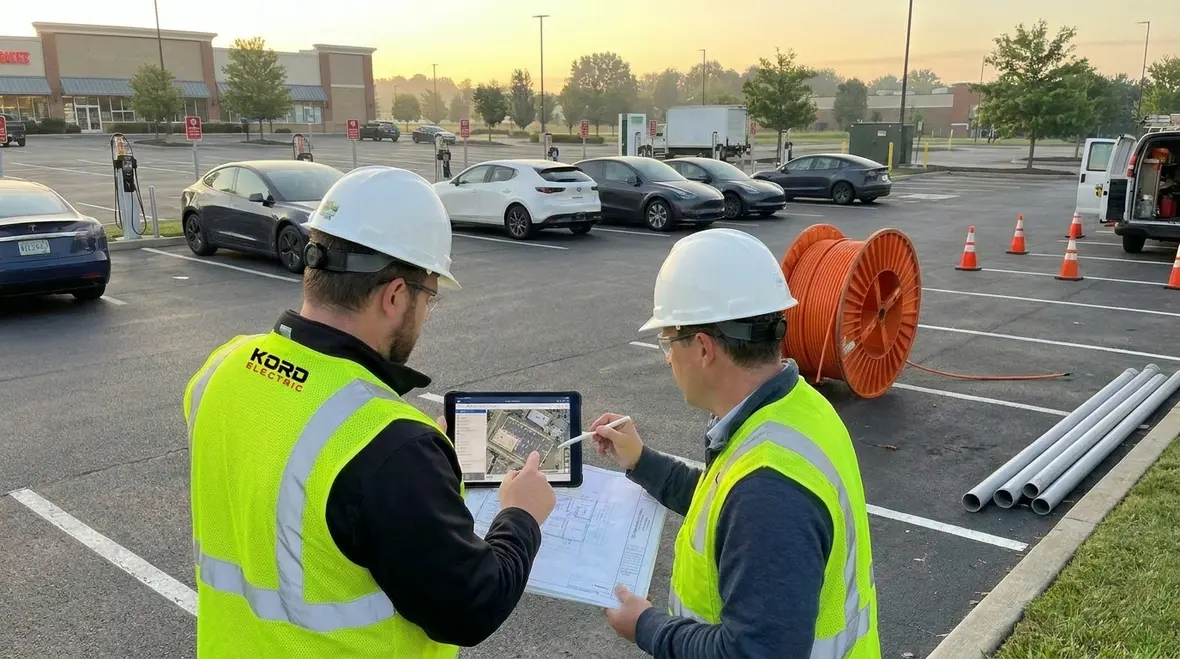
Before anyone buys chargers, we plan the whole charging environment. First, our team reviews fleet size, daily mileage, vehicle types, and charging windows. Then we map charging behavior: who plugs in, when they plug in, and how often each vehicle needs energy. We do this because a fleet that grows next year should not get trapped inside last year’s design.
Next, we assess the site’s electrical capacity. Utilities can take time, so we identify service size, available transformer capacity, and any panel constraints early. After that, we select charger locations based on driver flow, safety, and cable routing. In other words, we help prevent the classic problem where the charger ends up in the worst possible spot, like putting a coffee machine in a closet. It will work, but everyone will hate it.
We also build a phased roadmap. That way, you do not need to install everything in one costly step. Instead, we scale methodically, adding capacity as vehicles increase. And because our expert service staff can explain options clearly, decision makers can choose the best path without guessing.
If you are still in the planning phase and want to understand cost ranges and infrastructure tradeoffs, you can also review Kord Electric’s Commercial EV Charging Installation Cost Guide for deeper context on budgets, layouts, and power strategies that support long term fleet growth.
Site assessment for charging capacity and power delivery
Now we move from “what you want” to “what the site can do.” Our technicians start with a physical survey and an electrical review. We verify the main service, distribution panels, grounding, conduit routes, and available space for breakers. Then we evaluate load management opportunities, because spreading power intelligently reduces stress on the electrical system.
We also look at heat, weather, and uptime needs. Commercial and industrial environments can be tough: dust, vibration, heavy vehicle traffic, and tight installation clearances. Therefore, we select hardware and layouts that stand up to those conditions. If the environment is harsh, we plan for durability and service access, so repairs do not turn into a long downtime drama.
When stakeholders ask about timelines, we explain what can be done in parallel. While one part of the team refines electrical design, others coordinate site logistics and permitting requirements. Consequently, the project moves with less waiting and fewer surprises.
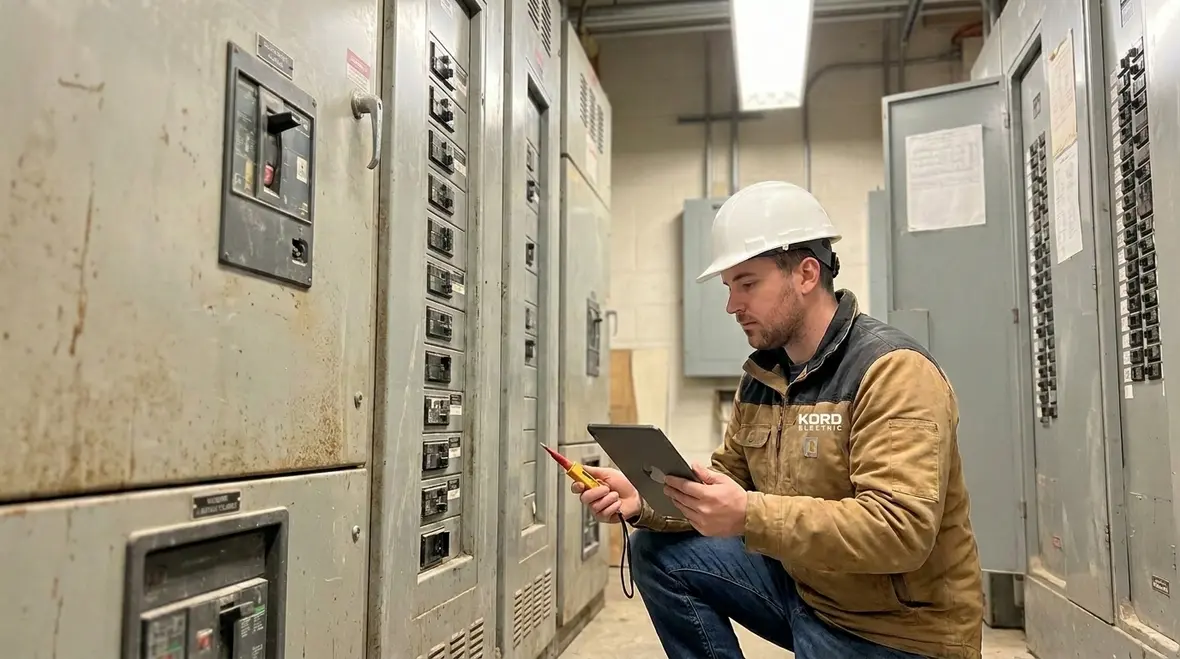
For sites that want a broader reliability strategy wrapped around their charging plans, pairing fleet charger design with electrical preventive maintenance services can help protect panels, feeders, and switchgear that will carry this new load every day.
Designing a system that scales with fleet growth
Scaling commercial charging is not only about adding more ports. It is about building a power system that can grow without tearing everything up. We design architectures that support future expansion, using smart planning around panels, feeders, and load controls.
One key decision involves how charging power is distributed. We help facilities choose between strategies that prioritize consistent charging for all vehicles or strategies that prioritize certain vehicles or time windows. For example, a logistics yard may need fast turnaround for specific routes, while a commercial office fleet may charge more evenly across the day. In both cases, our process stays rooted in how the fleet truly operates.
Our installation design also accounts for cable management and physical spacing. Proper conduit runs and clean cable pathways make maintenance simpler and keep safety clear. Plus, when technicians can reach equipment quickly, service stays faster. That is not just good engineering, it is good business.
And yes, fleets love growth. So we plan with the assumption that new vehicles will arrive sooner than the budget spreadsheet predicts. It is like birthdays. You plan for them, and then they still show up early.
If you want to dive deeper into long term growth strategies, Kord Electric’s article on EV charging infrastructure scalability for commercial sites walks through how to align power planning, load controls, and phased construction so your fleet growth does not turn into a remodel every other year.
Installation guide for commercial and industrial locations
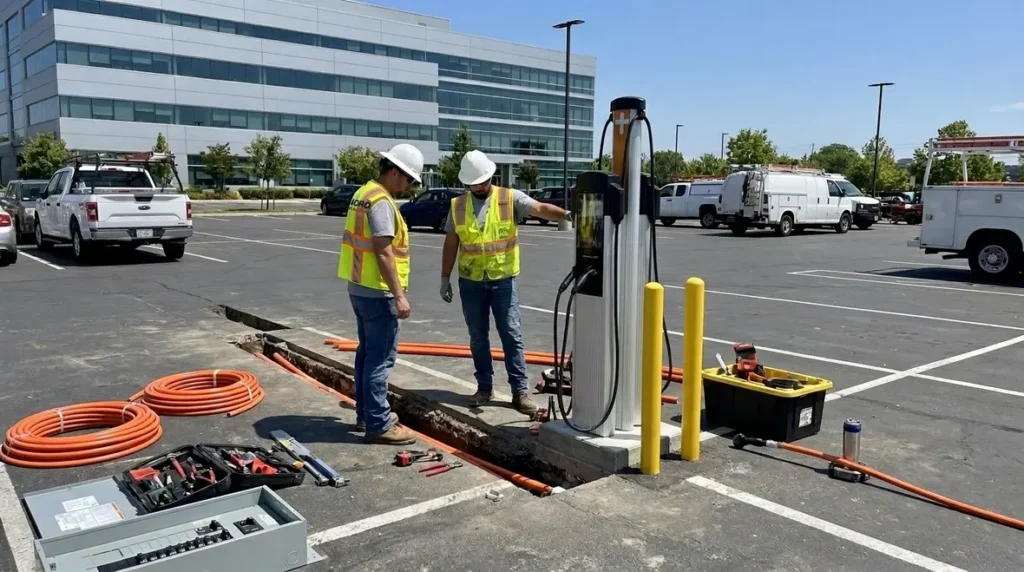
Once design is approved, we handle installation in a stepwise way. First, we schedule site work around operations. We coordinate access routes, equipment staging, and any electrical shutdown windows. Then we install conduit and mounting structures where needed, and we run wiring with attention to code and safe practices.
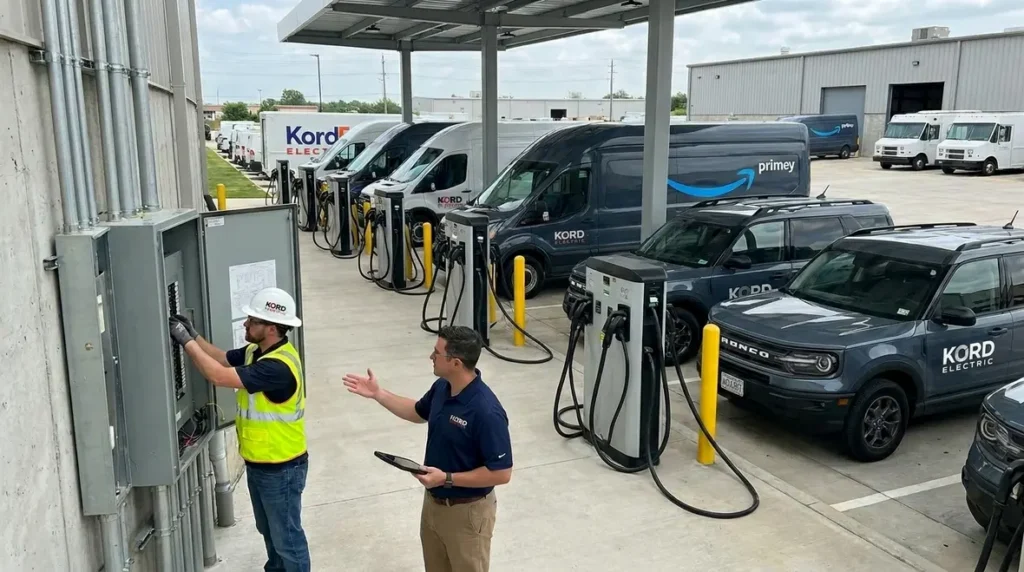
Next, our technicians set up the charging hardware and integrate it into the site’s electrical system. We verify terminations, grounding, and breaker settings. After that, we perform commissioning checks to confirm performance, communication, and safety functions. Only then do we enable the charging environment for vehicles.
Throughout the process, we keep communication clear. We also explain what we are doing and why, because good service staff does not hide behind technical fog. We want your team to understand the system, especially when questions come up during early operation.
For facilities with multiple charging zones, we also ensure labeling and documentation are complete. That matters when a technician needs to troubleshoot later, or when new staff joins and needs quick orientation. In the end, installation is not a one day event. It is the foundation for long term reliability.
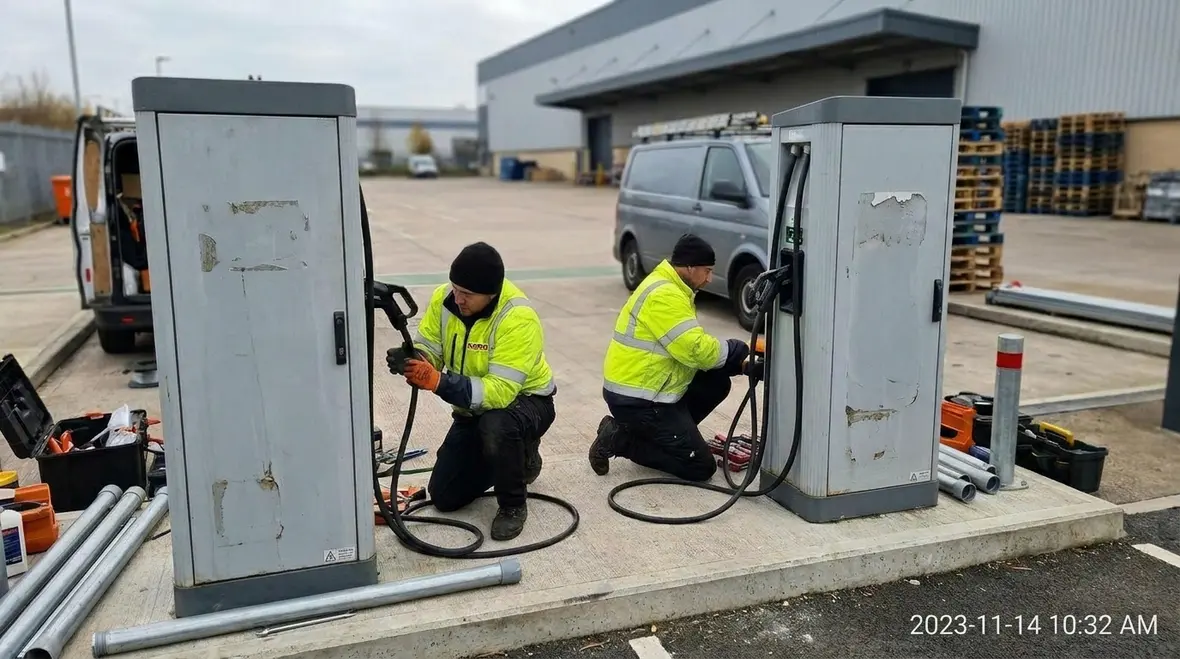
Because many fleet projects live inside larger electrical scopes, some facilities also bundle charger work with panel or distribution upgrades. For those situations, Kord Electric’s electrical panel services can help align new charging loads with safe, modern switchgear that will support growing demand for years.
Load management and operational uptime that fleets rely on
Charging success depends on more than hardware. It depends on control. So we implement load management to balance energy delivery across the site. When demand spikes, smart controls prevent overload and help maintain stable operation.
To keep things practical, we align load management settings with your fleet schedule. For instance, if most vehicles return in the late afternoon, we plan charging so the site does not hit peak stress all at once. Then we tune the system to support realistic charging needs, so vehicles charge reliably without wasting time or capacity.
We also support ongoing monitoring and service readiness. Our expert team helps interpret performance data and addresses issues quickly. And if a facility adds vehicles later, we support the scaling process so upgrades do not create a new set of bottlenecks.
Think of it as keeping the whole operation in rhythm. If your chargers are the band, load management is the conductor. Without it, everyone plays loud, at the wrong time, and somehow nobody knows why the power tripped. Again, that is funny only once.
For facilities across Los Angeles County, load management is often paired with broader support like emergency electrical services, so when something unexpected does happen, there is a clear plan and a licensed team ready to bring systems back online quickly.
Choosing equipment and a long term maintenance plan
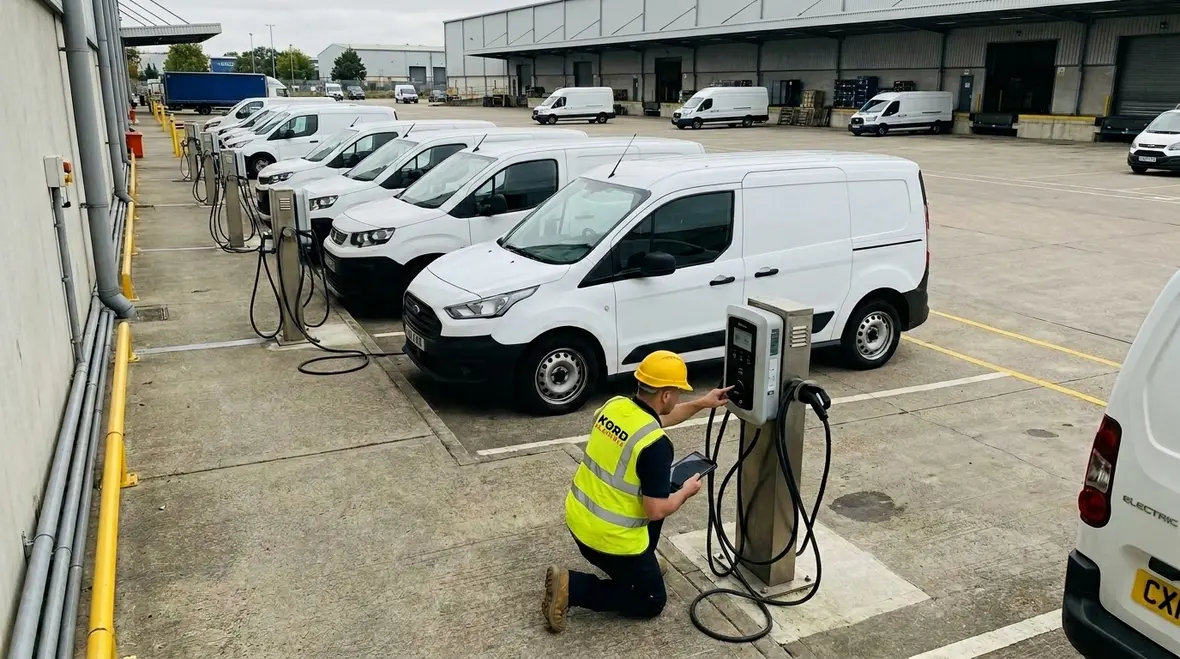
Choosing the right commercial ev fleet chargers starts with matching the charger capability to your duty cycle. We consider power output needs, connector types, vehicle charging profiles, and expected usage. Then we align the charger selection with the electrical design so everything works together.
After installation, a long term maintenance plan protects performance. Our technicians recommend routine checks that keep the system safe and stable. That includes inspections, connection verification, and firmware or settings review where applicable. We also advise on site best practices, such as keeping access clear and ensuring weather protection where needed.
For commercial and industrial facilities, uptime is often tied to revenue. So we prioritize a service approach that responds fast and prevents repeat issues. When a charger needs attention, our team helps facilities keep downtime limited and operations moving.
Finally, we help owners plan for lifecycle decisions. Charging hardware is not a set it and forget it asset, especially when fleets expand. Therefore, we build a service mindset into the project from the start.
Frequently asked questions about fleet charging infrastructure
Next steps with Kord Electric for fleet-ready charging
If you are planning a commercial EV fleet rollout, Kord Electric can help you move from ideas to a working charging system that scales. Our technicians evaluate your site, design a power plan that fits your operations, and install commercial ev fleet chargers with the kind of detail that reduces downtime later. When you are ready, we will schedule a site assessment and map a practical expansion path. Call Kord Electric today and let us turn your charging plan into a dependable workflow.
Organizations across the region rely on Kord Electric for complex electrical work, from EV charging deployments to maintenance and emergency response. If your facilities are located in or around Los Angeles County, explore our dedicated Los Angeles County electrical services to see how fleet charging can integrate with panel upgrades, lighting, and preventive maintenance under one coordinated strategy.
Whether you manage a logistics yard, a mixed use property, or a large industrial campus, the path from “we should electrify” to “our fleet charges smoothly every night” is clearer when you have a team that handles planning, installation, and ongoing support under one roof. Kord Electric connects that path, step by step, so drivers plug in with confidence and operations stay focused on what matters most.
To learn more about commercial and industrial electrical solutions beyond EV charging, you can also visit the main Kord Electric home page and review services that support panels, lighting, maintenance, and emergency response for large facilities.