Commercial Lighting Automation ROI Guide
At Kord Electric, we help commercial and industrial facilities make sense of commercial lighting automation ROI with clear math, real field experience, and practical upgrades that pay back. In the first few weeks, we often see energy use drop, and we also see better comfort for tenants, staff, and visitors. However, the best time to plan the numbers is before the first wire gets pulled, not after the utility bill lands like a surprise pop quiz. In this guide, our team and technicians walk through how others calculate returns for lighting controls, how we estimate savings, and how we confirm results once the system runs.
How we define commercial lighting automation ROI for businesses
When our commercial clients ask about commercial lighting automation ROI, we start with a simple truth: lighting automation does not earn money by magic. It earns money by reducing waste. Then, it can also lower maintenance costs and improve how lights match real use. Because of that, we treat ROI as a mix of energy savings, reduced labor, longer lamp life, and sometimes smarter space use.
In practice, we define return using a short set of steps. First, we estimate annual energy savings from control strategies like occupancy sensing, time schedules, daylight dimming, and zone based control. Next, we price the installed system for your facility type and building layout. Then, we compare the total yearly benefit against the up front and ongoing costs. Finally, we plan a commissioning path so the system performs the way the design intends.
If this sounds like budgeting, it is. And if it sounds like weather forecasting, it is not. We use site measurements, existing lighting data, and control logic rather than guesses. That is how our technicians explain the plan in plain language, not in confusing jargon that makes people reach for the nearest coffee.
What inputs drive the ROI math in real commercial buildings
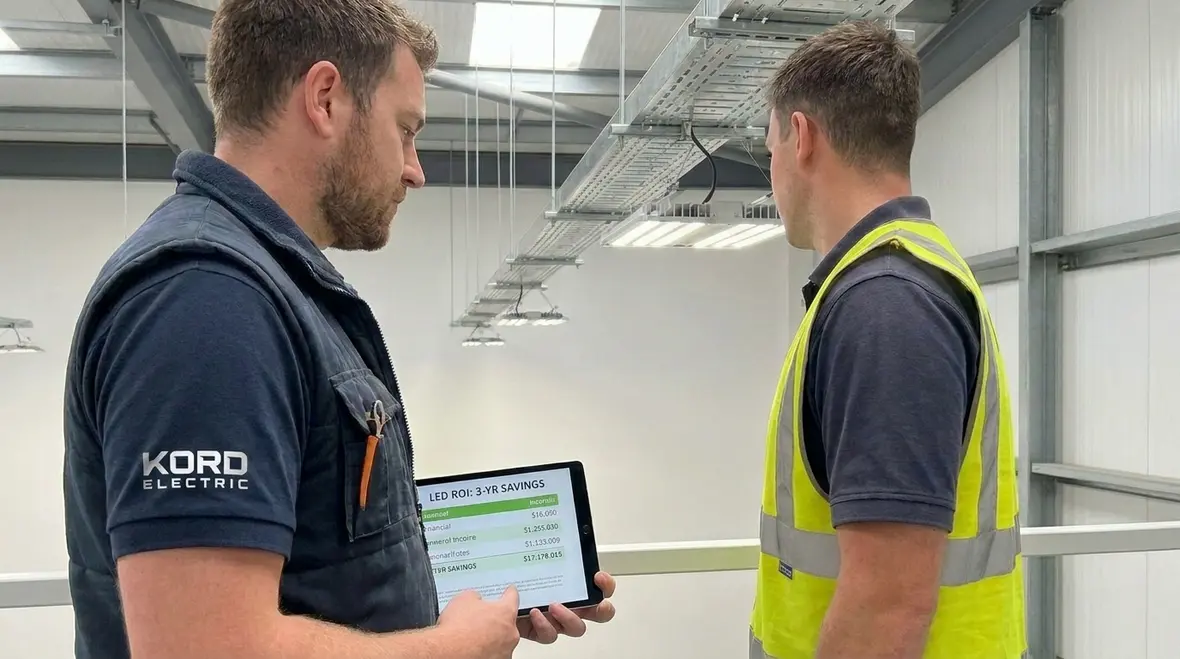
To build an accurate ROI model, we pull inputs that actually move the numbers. Moreover, we do this in a way that helps others understand why one upgrade option pays sooner than another. The main inputs usually include:
- Current lighting load: wattage per fixture, ballast or driver type, and any controls already in place
- Operating schedule: when spaces run, when people work, and when they do not
- Occupancy patterns: open areas, offices, corridors, restrooms, and storage zones
- Daylight exposure: windows, skylights, and how much daylight enters
- Electric rates: utility energy cost, demand charges, and seasonal price changes
- Retrofit scope: new controls, sensor density, panel work, relays, gateways, and wiring effort
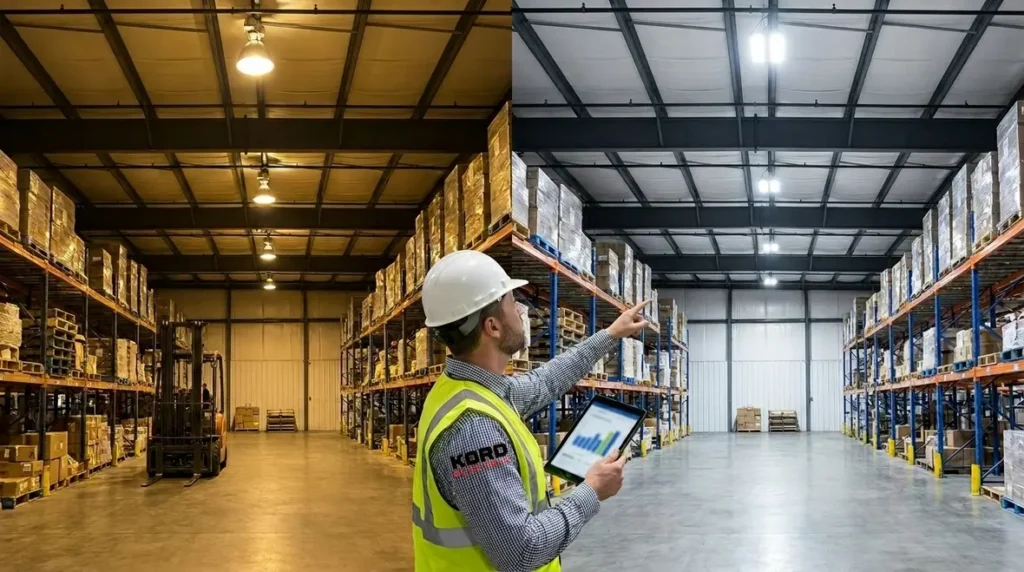
Then we add one detail that many teams overlook. Controls only cut waste if they match how the site actually lives. For example, a warehouse might need different logic than a lobby. A manufacturing floor might need tuning for motion patterns so lights dim when zones are clear, but do not flash like a strobe show from an old music video.
Step by step: estimating energy savings from lighting automation
Next, we help others estimate the energy portion of the commercial lighting automation ROI through a focused savings model. While every site differs, the method stays consistent. First, we identify controllable zones and fixture groups. Then we estimate lighting reduction using typical performance bands based on control type and site behavior. After that, we compute annual savings using hours of operation and the expected dimming or shutoff level.
For instance, occupancy sensors reduce runtime in areas that stay empty often. Time schedules reduce runtime in areas that follow predictable hours. Daylight dimming reduces wattage when sunlight is present, which matters most near windows and exterior walls. Zone control adds precision by preventing “one switch controls everything” waste.
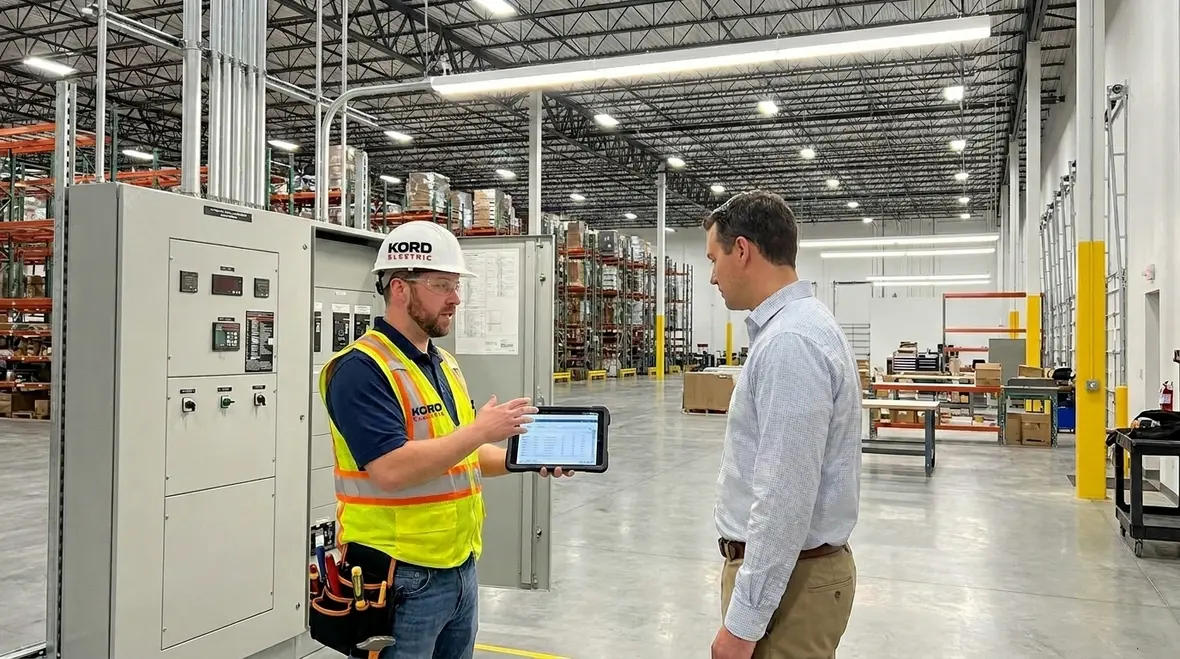
To keep our technicians grounded in reality, we also check the building’s existing electrical setup. We evaluate panel capacity, control wiring paths, and the way the current system interfaces with building management if one exists. In short, we connect the math to what can be installed without costly surprises.
Beyond energy: payback from maintenance and uptime
Energy savings matter, but our commercial and industrial clients often care about uptime too. After all, if a facility loses lighting reliability, it also loses comfort, productivity, and safety confidence. Therefore, we build ROI using both direct and indirect benefits, like maintenance cost reduction and fewer service calls.
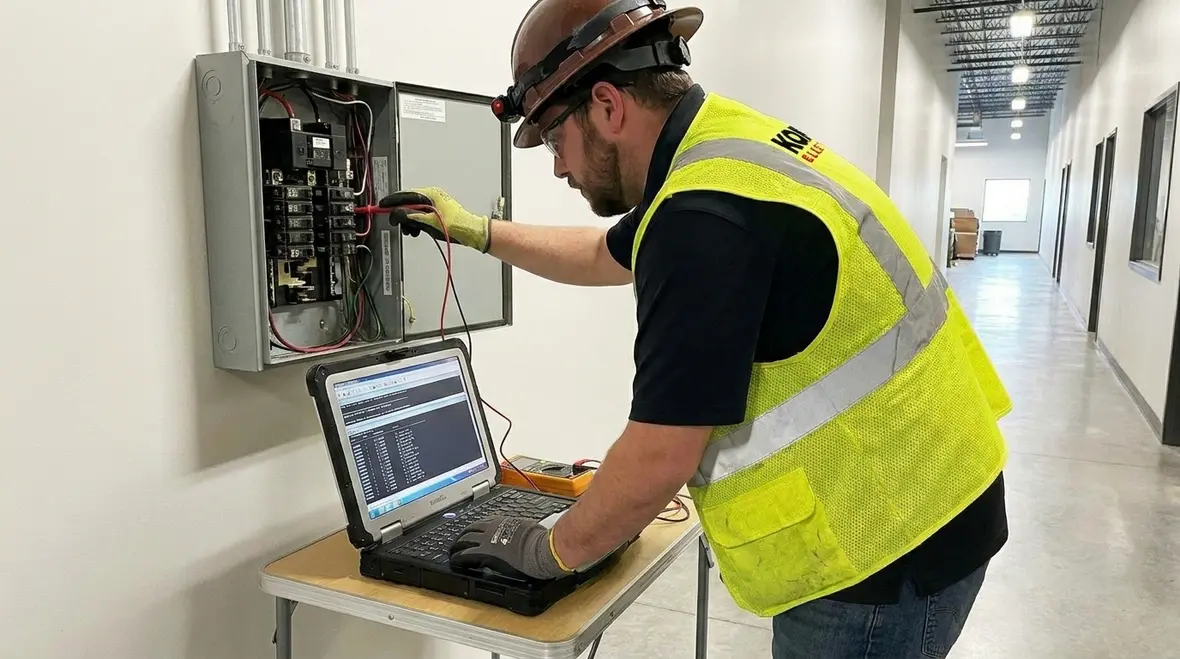
Here is how that shows up in the real world. When fixtures run at a lower level only when conditions allow, and when controls shut off lights in empty areas, the wear cycle changes. Moreover, when the system includes proper diagnostics and stable control logic, it reduces troubleshooting time. Our technicians can also document the logic so facility managers can understand what the system does and why.
Now, let us mention a common pattern we see. Some sites already invest in electrical upgrades, then treat lighting controls as an afterthought. That is like buying the best sandwich in town and forgetting the bread. We like to coordinate electrical scope so the lighting controls align with the facility’s broader power and automation plan. For example, when Kord Electric supports commercial electrical upgrades such as EV charger installation, we can also coordinate panel work and load planning so you do not pay twice for the same electrical effort. That approach helps the full project timeline and improves the payback story.
How we handle costs: what actually affects the installed price
ROI gets messed up when cost estimates include wishful thinking. So we focus on the parts that drive installed cost in commercial and industrial facilities. Because every building has different constraints, the same control type can price differently based on layout and electrical conditions.
Key cost drivers often include:
- Sensor and control density: how many locations we must cover to match real use
- Wiring and conduit complexity: pathway access, ceiling type, and distance to panels
- Control panel integration: relays, contactors, dimming drivers, and gateway hardware
- Commissioning and tuning: setting time schedules, sensitivity levels, and daylight targets
- Documentation and training: clear handoff so maintenance teams can operate confidently
Additionally, our expert service staff explains the plan as we go. We do not treat commissioning as a one and done checkbox. Instead, we walk the site after installation, confirm that zones respond correctly, and adjust where behavior differs from assumptions. That is where performance holds steady, and where the ROI model stops looking like a spreadsheet and starts looking like a promise kept.
Risk checks: making sure the system performs like the model
ROI is only real when the savings show up. So we use risk checks that protect the outcome. First, we verify lighting inventory details and control compatibility before we finalize design. Next, we confirm occupancy behavior and daylight conditions. Then we test the control sequences, including edge cases like partial occupancy, after hours cleaning, and special events.
We also look for the issues that cause “we installed it, but it did not save” stories. Sometimes the building uses spaces differently than the schedule assumes. Sometimes sensors get blocked by new storage setups. Sometimes facility teams disable controls because they think the system is malfunctioning, when it is actually just waiting for the right trigger.
Our technicians prevent that by explaining settings and helping the site owner understand system behavior. And yes, we sometimes hear the same joke from clients: “If the lights dim when nobody is here, we will definitely blame you.” We smile, because we will still help you adjust, tune, and verify. We build trust the way controls build savings.
If your facility is already planning broader upgrades, it can also help to connect lighting automation with a larger electrical strategy. For many properties across Southern California, that means pairing control upgrades with targeted work like lighting installation services or electrical preventive maintenance so the entire system supports long term performance, not just today’s project.
For organizations operating across the region, especially those with sites in and around Los Angeles County, it is often more efficient to centralize planning and execution. That is one reason many teams review how comprehensive Los Angeles County electrical services fit alongside lighting controls, EV charging, and reliability work inside a single roadmap instead of scattered upgrades.
FAQ for commercial lighting automation ROI
Request a real ROI plan from Kord Electric
If you run a commercial or industrial facility, you deserve an ROI estimate that matches your building, not a generic brochure. Kord Electric will review your lighting, schedules, and electrical setup, then we help you model savings, select the right control approach, and commission it so performance holds. Our technicians and expert service staff explain the system clearly, tune it carefully, and support you after go live. Contact us today, and let us turn your lighting upgrade from a guess into a number you can defend.
When you are ready to connect commercial lighting automation ROI with a broader strategy for reliability, upgrades, and future capacity, our team can fold your project into a larger service plan that includes work like panel improvements, lighting installations, and other commercial services across your footprint. That way, every control sequence, sensor, and relay serves the same long term goal: a safer, more efficient facility that spends less time wasting energy and more time supporting your operations.
To explore how a structured electrical plan supports your lighting automation project, you can also review related services we provide for complex facilities across the region, including dedicated programs for industrial equipment, emergency response, and long term preventive maintenance that keep savings locked in year after year.
For sites that prefer a single partner across upgrades, service, and expansion, this unified approach often simplifies budgeting, shortens timelines, and keeps every project aligned with your operating goals instead of treated as a one off task.
If you are already mapping out a multi year plan for electrical work and lighting improvements, this is the right time to build in control strategies that can grow with you, instead of bolting them on later. That is where thoughtful commercial lighting automation ROI planning stops being a spreadsheet exercise and becomes a practical roadmap for your facility.