
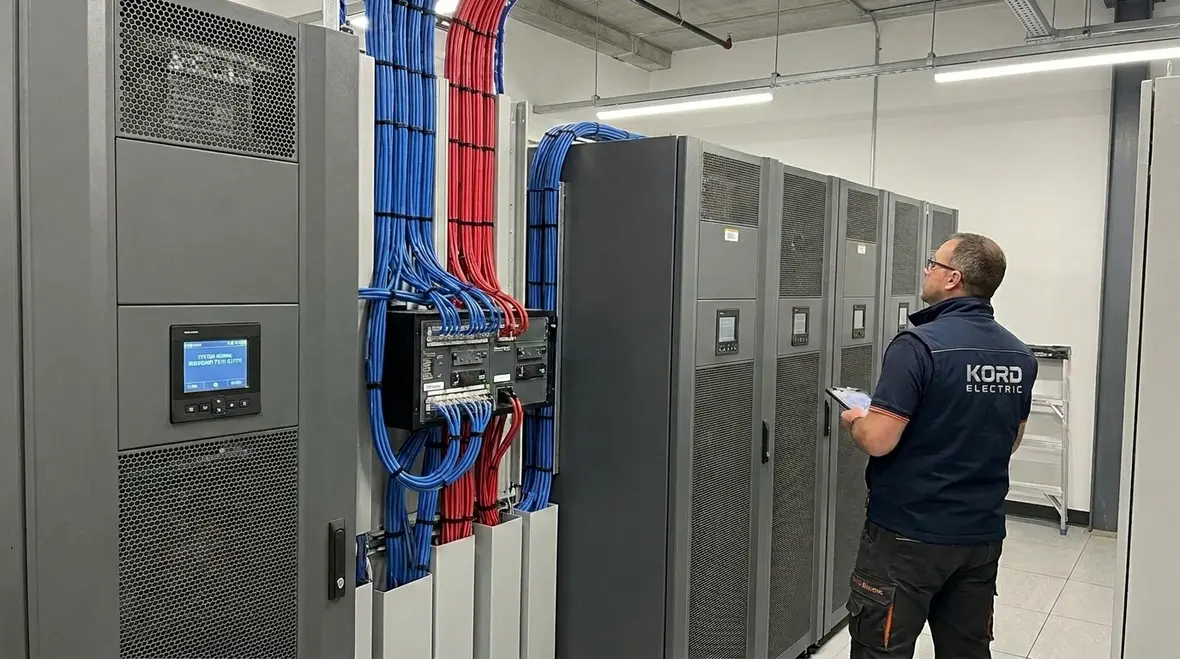
Data Center Power Redundancy for Critical Uptime
At Kord Electric, we help commercial and industrial facilities keep their operations steady when the grid does not. We build resilient power systems for data halls and other mission critical spaces by using data center power redundancy as a foundation, not a marketing phrase. In the first moments of a power event, milliseconds matter. So we design for that reality, with engineered paths that stay stable, protected, and ready.
Others may call it “backup power,” but our technicians and expert service staff know better. A real system stays powered even when something fails, because a single point of failure is like putting one cup of coffee on an elevator with no safety bar. It might work, until it absolutely does not.
Critical data centers run on more than uptime, they run on data center power redundancy
In real facilities, uptime is not a slogan on a brochure. It is the quiet agreement behind every contract, every SLA, and every promise you make to customers who expect their data, applications, and workflows to be available whenever they need them. That is why true data center power redundancy is not about flashy buzzwords. It is about engineered realities, tested paths, and systems that behave the same way every time something goes wrong.
When we approach a critical environment, we assume the worst day will eventually arrive. Utility lines will sag, upstream equipment will stumble, and components that looked perfectly fine last week will decide that today is their retirement party. Our job is to make sure that, on that day, your data hall keeps humming like nothing happened.
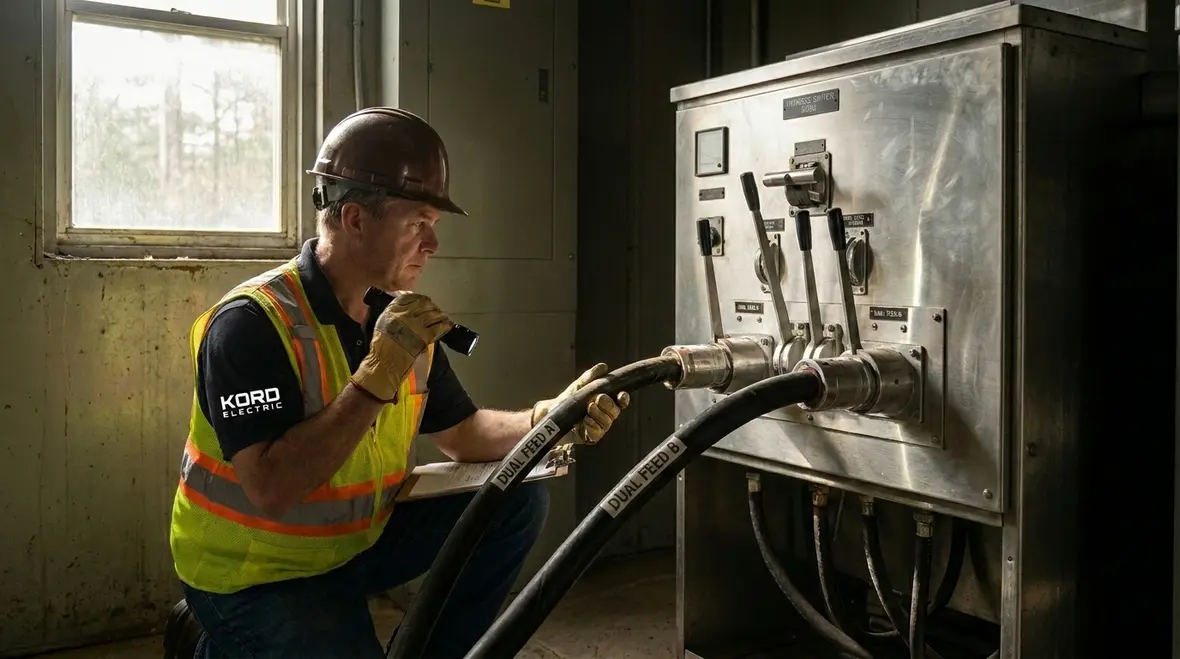
So when we talk about resilient design, we are really talking about calm days during chaotic moments. Operators stay composed because they know what their power system will do. Loads remain stable, alarms act like useful information instead of jump scares, and leadership can focus on decisions instead of wondering what is happening behind the walls.
That mindset informs everything from breaker settings to cable routing. It is why we ask difficult “what if” questions during design instead of waiting for those questions to show up in the middle of a real outage. A strong data center power redundancy plan makes those hard conversations easier long before anyone hears the word “failure.”
What a resilient power system must handle in real life
To keep critical loads alive, teams have to think beyond a simple generator parked out back. We evaluate how power behaves during everyday disruptions and the messy events in between. For example, we plan for utility sags, brief interruptions, maintenance shutdowns, and component failures that happen quietly at first. Then, later, they decide to make themselves known.
As a result, our team looks at the whole chain, from incoming service gear to distribution panels, UPS modules, transfer equipment, and the final feed to racks and support systems. Additionally, we consider starting and running loads that change throughout the day, because a facility is never “average” on a real shift schedule. Peak IT usage rarely lines up perfectly with cooling demand, janitorial schedules, and after-hours maintenance.
We also consider the practical interruptions that come from inspections, tenant changes, or expansion projects. A hallway full of carts and temporary panels is not the time to discover that a seemingly minor task requires a building-wide shutdown. Resilient design should give you safe pathways for work, not force you into uncomfortable all-or-nothing decisions every time you need to touch the system.
Our technicians explain the risks in plain language. When customers ask what matters most, we point to the locations where power paths split and where bypass or isolation lets service continue without turning off the building like a lights-out reality show. It is one thing to know the one-line diagram. It is another thing to know how that diagram behaves when someone actually opens a breaker or throws a switch.
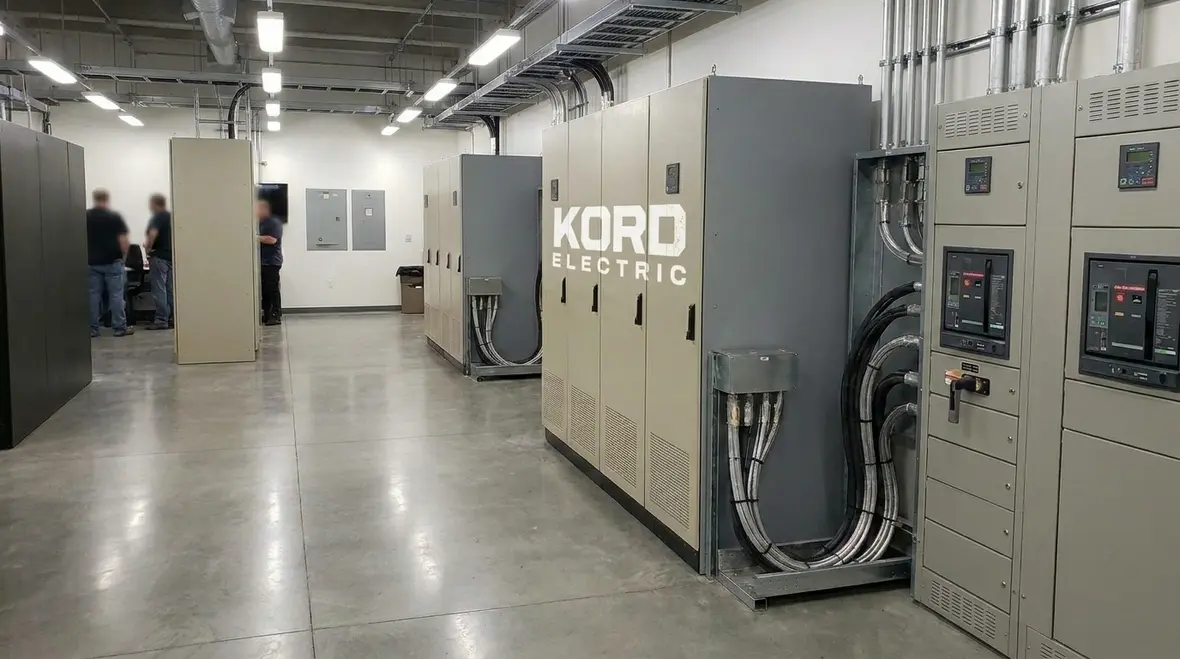
In many commercial and industrial properties, that means coordinating with building operations so that critical tenants, data rooms, security systems, and elevators all get the power quality they need without being tied to a single fragile path. Real life is not neat, but your electrical strategy can still be organized.
How we design layered redundancy for mission critical loads
Layered resilience means more than one power source, but it also means more than simply doubling everything and hoping for the best. We design multiple independent pathways so that failure in one layer does not bring down the load. In practice, we may use dual power feeds, separate routing, and engineered transfer logic that avoids downtime during switching.
Then we align that design with load categories. We do not treat the building like a single bucket. Instead, we separate IT loads from mechanical support, life safety systems, and other critical services. This approach improves reliability while also keeping commissioning practical. When each category has a clear role and a clear power path, it becomes much easier to test, document, and maintain.
We also map where redundancy truly matters and where it offers diminishing returns. Not every plug strip deserves a mirrored twin. But the cooling that keeps your racks within temperature, the UPS modules that bridge disturbances, and the control systems that orchestrate the whole show absolutely deserve careful attention. Strategic redundancy keeps projects realistic while still respecting critical uptime goals.
Next, we verify that the power distribution can handle abnormal conditions. For example, we confirm coordination of protective devices and ensure that switching does not create unstable behavior for sensitive equipment. We also plan the operational sequence, so maintenance work does not accidentally turn the “resilient” system into a “resume later” system. A good design is one that a tired human can still operate correctly at 2:00 a.m.
For facilities with future expansion plans, we also leave room in the architecture so that additional feeds, UPS capacity, or distribution sections can be added without tearing apart everything that already works. Layered resilience should evolve with the building rather than paint it into a corner.
Where UPS, generators, and transfer systems fit together
UPS systems and generators each serve a purpose, and we make sure they work as a team. Typically, UPS equipment handles the fast timing during utility disturbances. After that, generators can take over with the right transfer strategy. However, the real difference comes from how the equipment transfers, how it synchronizes, and how it maintains stable output under load.
Our technicians and expert service staff walk clients through the full sequence. For example, during a utility event, the UPS bridges the gap. Then the transfer system moves loads to generator power once the source is ready. Meanwhile, critical controls keep the transition safe and predictable. That calm, orchestrated handoff is the heartbeat of any serious data center power redundancy plan.
We also pay close attention to what happens when power comes back. Poorly coordinated systems can introduce more risk during retransfer than during the original outage. We design logic and settings so that voltage, frequency, load steps, and reconnection strategies play nicely together. Sensitive electronics should not feel like they are riding a roller coaster every time utility power has an opinion.
And yes, people do forget things like voltage thresholds and time delays. So we document the settings, we test them, and we make sure the team that operates the facility understands the steps. It is one thing to have hardware. It is another thing to have a system that behaves the same way every time, even under stress.
Protecting data center power redundancy with smarter monitoring and testing
Power resilience fails when people stop measuring it. Therefore, we support commercial and industrial facilities with monitoring and planned testing routines. We identify trends like battery degradation, load imbalances, and potential hot spots in distribution paths. Then we schedule maintenance before issues become outages.
We design monitoring strategies that do more than flood inboxes with alarms. The goal is actionable visibility: dashboards and reports that show what is changing, which components deserve attention, and how the system responds under real-world conditions. Early warning is only helpful if you can actually understand it and act on it.
We also help clients build a testing plan that respects operations. Because major property buildings and data halls cannot just “close for the day.” Instead, we use procedures that validate system health while keeping critical functions online. That may include staged load tests, transfer simulations, and documented playbooks for how everyone communicates during planned events.
In many cases, our technicians create simple, clear checklists and explain what each test proves. That way, facility teams do not need to guess. They know what they are looking for, and they can act quickly if something drifts out of range. Over time, that discipline turns testing into a rhythm instead of a scramble.
Electrical coordination, layout, and installation standards that prevent hidden failures
Even the best equipment can underperform if installation leaves hidden problems. So we pay attention to layout, cable routing, grounding, and separation of power paths. We help prevent disturbances from moving through shared routes. Additionally, we review clearances, termination quality, labeling, and torque practices so the field work matches the engineering intent.
Then we coordinate the protection layers. Protective devices must clear faults without causing unnecessary shutdowns. That means we plan for fault currents, selective coordination, and safe interrupting capacity. Otherwise, a minor issue can trigger a bigger trip than it should, like a sneeze that becomes a full parade.
We also align installation practices with operational needs. If the facility has specific workflows, we account for them. We plan access for service work, because future maintenance is not optional. It is part of resilience. Clear labeling, realistic working space, and safe access routes all matter just as much as the shiny equipment inside the gear.
For many operators, this is where a structured electrical preventive maintenance approach pays long-term dividends. Documented inspections, infrared scanning, torque checks, and scheduled upgrades help keep that carefully coordinated system behaving the way it was meant to, long after the construction dust has settled.
Keeping reliability practical for commercial and industrial buildings
Some teams overbuild on paper and ignore the budget realities of major properties. We do not do that. We design for reliable performance, then we make sure it fits the project scope and long term needs. In other words, we keep reliability practical, while still respecting the hard requirement for uptime.
For example, our approach to electrical projects often follows a “whole site” mindset. If a building adds new load, we plan the power path so the system still behaves correctly. If upgrades arrive later, we plan for expansion without disrupting service. That includes thinking ahead about conduit routing, spare capacity, and the realities of working in an occupied facility.
If you are already building out electrical capacity, you may find our work on EV charger installation helpful as a reference for how we think about load, planning, and jobsite details. You can review our process here: https://kordelectric.com/ev-charger-installation/. While EV chargers target mobility loads, the underlying discipline matters for any commercial electrical upgrade. Power systems do not like surprises, and neither do we.
The same disciplined mindset applies when we support broader commercial electrical systems, from lighting and panels to emergency power and specialty equipment. By treating the facility as an integrated environment instead of a pile of separate projects, we help owners and managers build resilience one well-planned upgrade at a time.
Frequently asked questions about data center power redundancy
Call Kord Electric for resilient data center power planning
If your facility depends on continuous operation, you deserve a power system designed for failure, not just for normal days. Kord Electric works with commercial and industrial buildings to engineer, install, and support resilient solutions using data center power redundancy and disciplined testing. Our technicians and expert service staff explain each step, so your team knows what the system will do during real events. Contact us now to review your power needs and build a plan that keeps your critical loads on.
Whether you manage a data hall, a multi-tenant property, or a large industrial campus, our commercial electrical services are built to support long-term reliability. From emergency power planning to structured maintenance and strategic upgrades, we help Los Angeles County facilities keep the lights on, the systems stable, and the operations moving. You can explore broader regional support on our Los Angeles County electrical services page when you are ready to coordinate projects across multiple sites.
If you are planning complex upgrades, integrating new technology, or simply tired of holding your breath every time the utility flickers, now is the time to treat uptime as a design requirement instead of a lucky outcome. The right combination of data center power redundancy, thoughtful coordination, and ongoing testing can turn “we hope things hold” into “we know exactly what happens next.”


