Calculating Industrial Smart Lighting ROI Guide
Calculating industrial smart lighting ROI starts with one simple goal: we want to measure how smart controls, better fixtures, and tighter power use pay for themselves in real time. At Kord Electric, we help commercial and industrial facilities and major property buildings upgrade lighting systems with a practical process, not guesswork. In this guide, our team breaks down the math step by step, then we translate the numbers into business decisions. And yes, we keep it calm and clear, because no one should feel like they are doing taxes at midnight. After all, the only thing that should be “smart” is the lighting, not the spreadsheet.
How we start an industrial lighting ROI plan
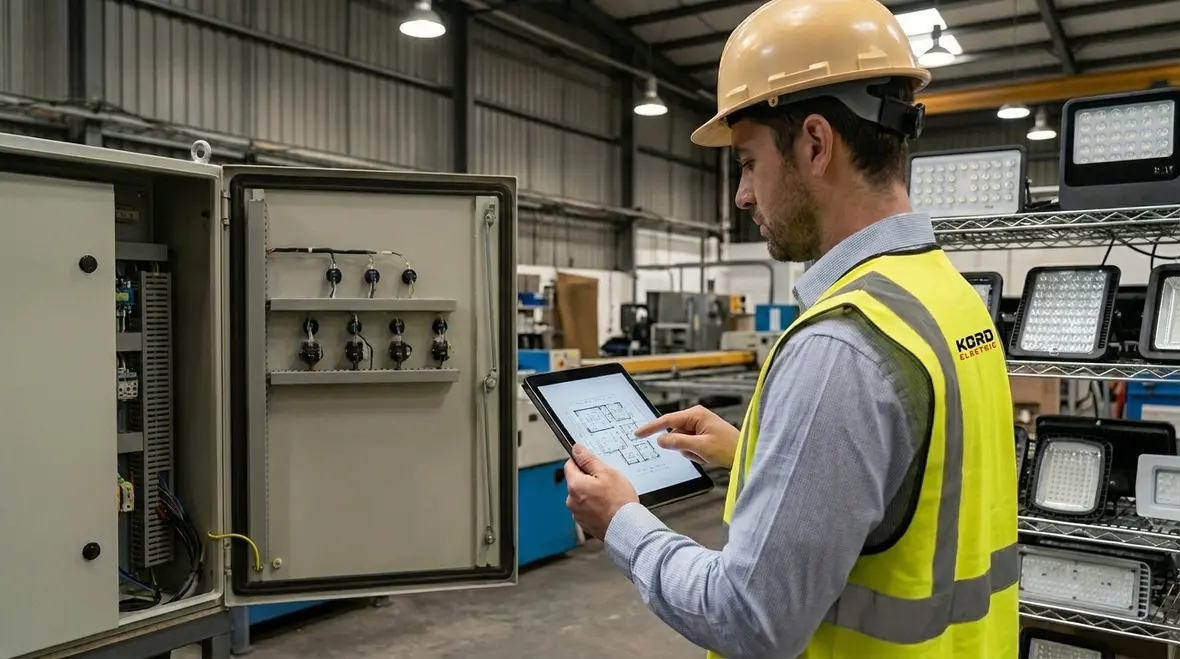
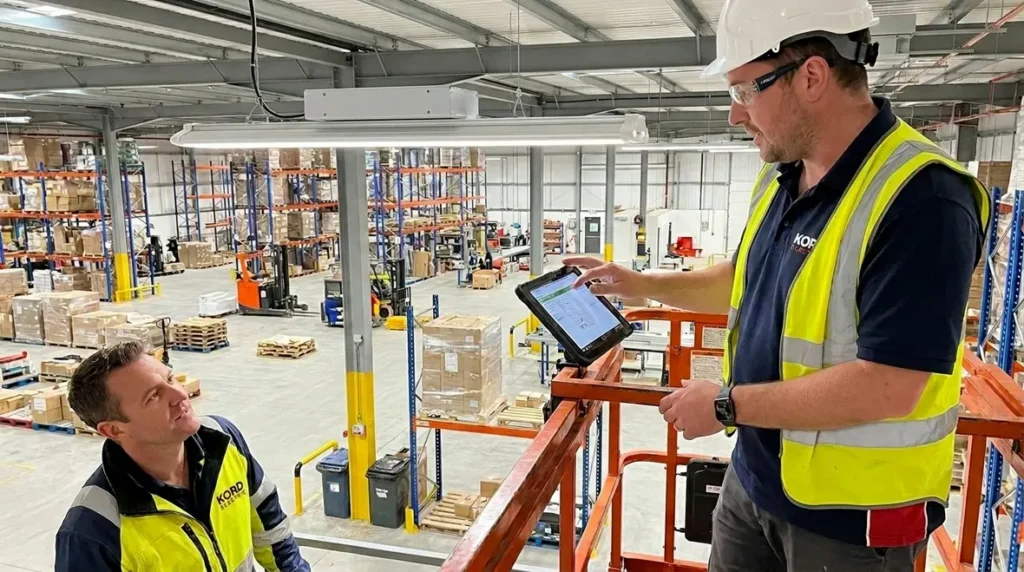
When others look at smart lighting, they often focus on brightness. We focus on the cost chain. First, we gather baseline data for energy, maintenance, labor time, and downtime risks. Then we map how the new system changes those costs across the equipment life. After that, we build a forecast that reflects how the space is used hour by hour, not how it is used in theory.
Next, our technicians explain the plan in plain language. They walk facilities leaders through what matters and what does not, and they do it without rushing. One of our expert service staff members once said, “If we cannot explain it, we cannot own it.” That attitude keeps projects grounded. And frankly, it prevents a common mistake: installing smart controls that look impressive on paper, but do not match real occupancy patterns.
What to measure before upgrades
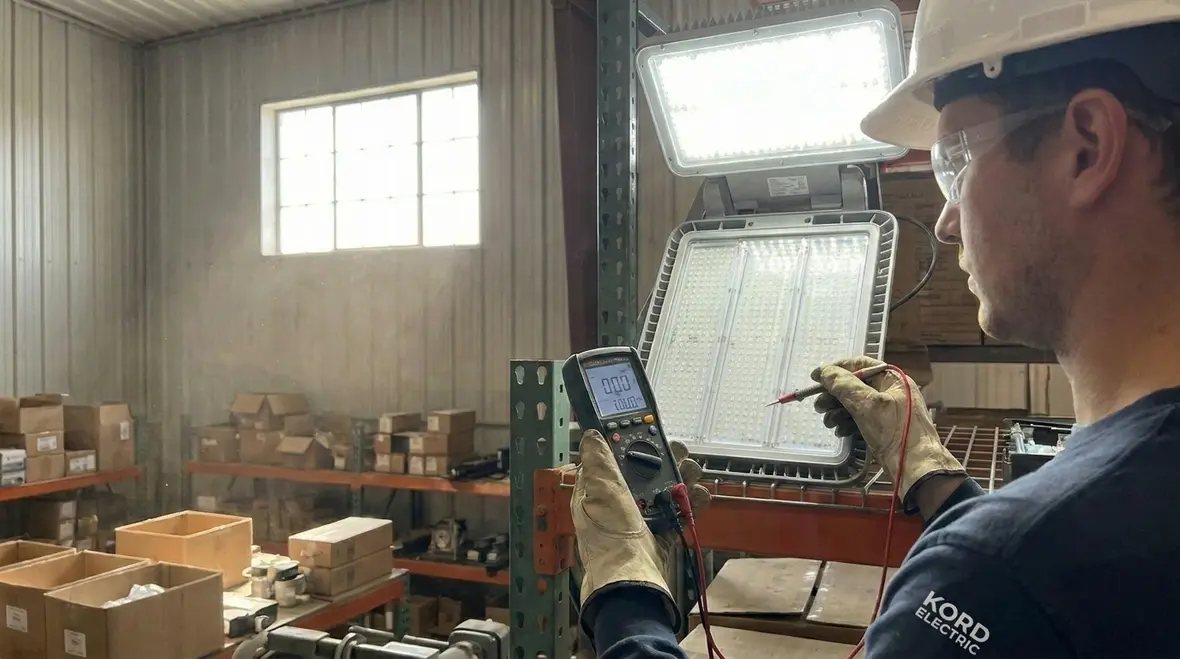
To calculate industrial smart lighting ROI in a way that holds up in the real world, we measure these items first. Then we verify them with site checks and utility data.
- Lighting energy use: current fixture wattage, operating hours, and control settings
- Demand and peak impact: whether lighting drives peak demand charges in your rate structure
- Maintenance costs: relamp cycles, labor, and shutdown time for access
- Occupancy behavior: when spaces run, when they sit idle, and how that varies by shift
- Quality and safety needs: any lighting standards you must meet for work tasks
Then we connect those facts to the lighting design and distribution approach for reliability. For example, our engineers consider how electrical distribution supports long term uptime, and they plan layouts that reduce risk and improve serviceability. In the way we discuss electrical distribution design for reliability, we treat power as a system, not a single component. That same thinking helps ROI calculations stay accurate, because reliability work protects against costly “fix it later” outcomes.
How smart controls cut energy without killing comfort
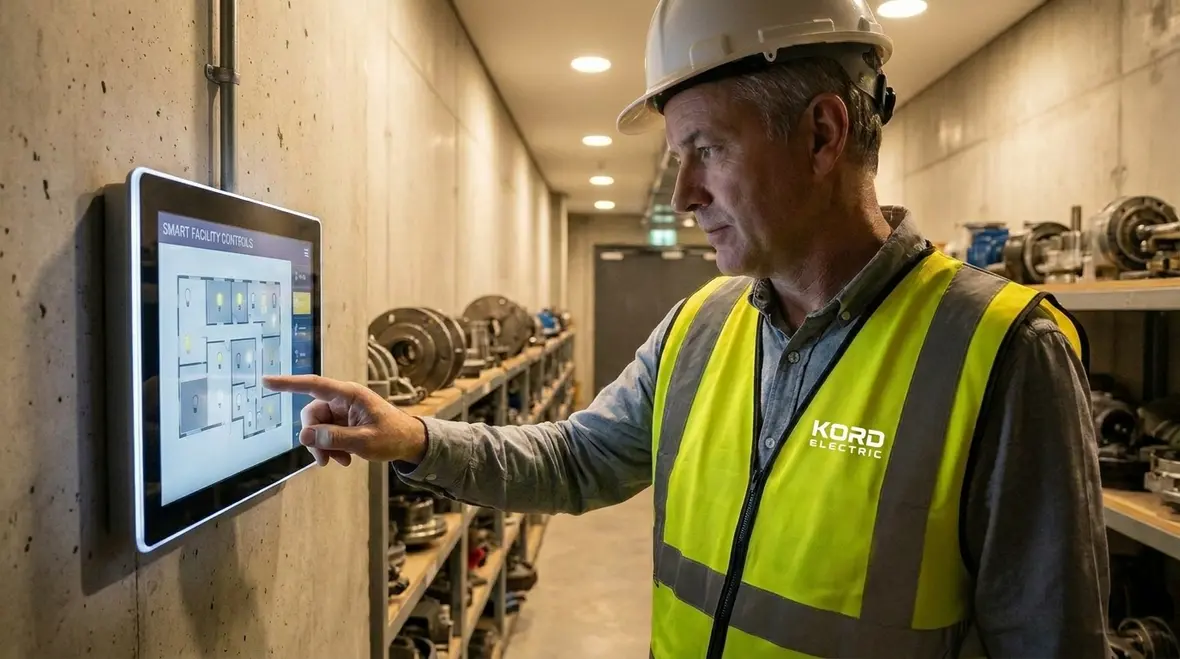
Smart lighting usually earns its payback in two ways. First, it reduces run time through smart dimming and scheduling. Second, it prevents over lighting by adjusting light levels based on actual activity and daylight. However, we do not chase savings in a vacuum. We keep comfort and safety in mind, especially for commercial and industrial work.
To make this practical, our teams help set control logic that matches each area. For example, a loading dock might need bright light during active movement and moderate levels when idle. A corridor might need lower levels overnight. Meanwhile, a work zone might need stable output to support task performance. In other words, we tune the system to how people and processes behave, not how a brochure imagines it.
And when someone says, “We tried occupancy sensors once,” we respond with a smile and a safety checklist. Sometimes the issue was placement. Sometimes it was settings. Sometimes it was the fact that the lighting system was not integrated with the building’s electrical and control plan. We address those gaps upfront, so your ROI does not rely on wishing.
Calculate your industrial smart lighting ROI step by step
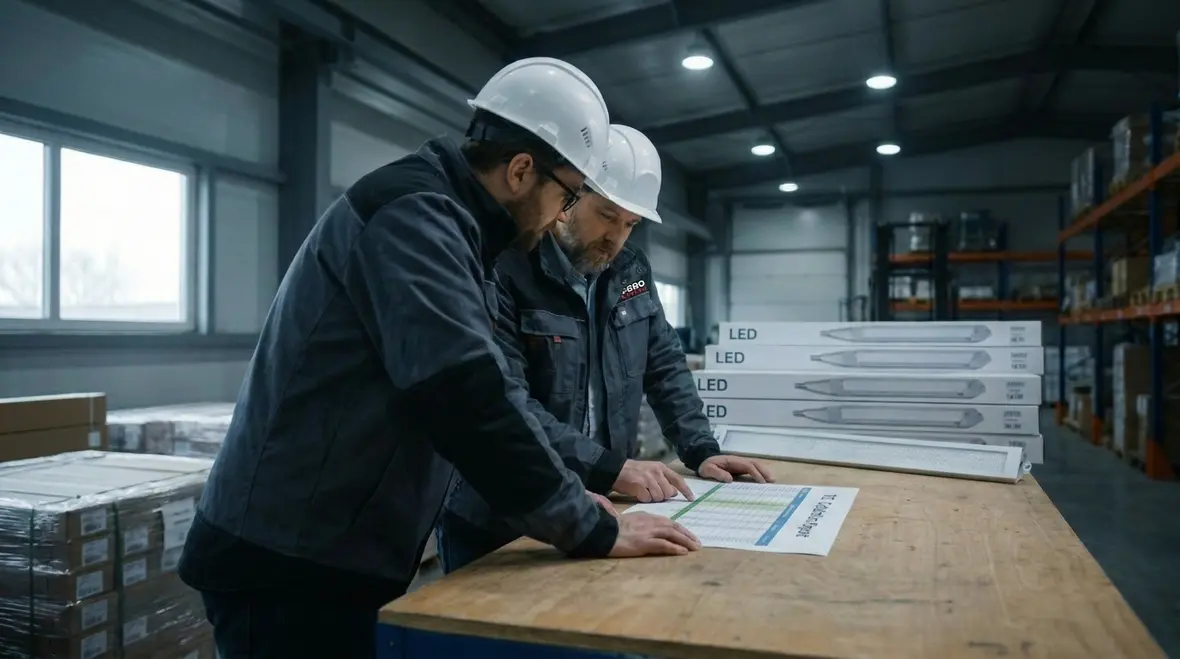
Now we get to the heart of it. We calculate ROI using a clear set of inputs and a realistic timeline. We typically model savings using current utility rates, expected hours of operation, and the performance of the control strategy.
We use this logic:
- Step 1: Estimate annual energy savings by comparing current fixture power to expected post upgrade power levels, then multiplying by adjusted operating hours
- Step 2: Add demand savings if your utility plan charges for peak demand and if lighting controls reduce demand peaks
- Step 3: Include maintenance savings from longer lamp and driver life, plus reduced labor time
- Step 4: Add avoided downtime cost where maintenance shutdown time creates a real business impact
- Step 5: Compute net benefits by subtracting project cost from total annual benefits over a chosen term
- Step 6: Confirm with the payback period to see how fast the system returns value
Dual column view we use in client discussions
| Input we gather | Why it affects ROI |
| Operating hours by zone | It sets the baseline for energy run time and the control savings window |
| Fixture wattage and driver type | It drives the real energy reduction when dimming schedules run |
| Maintenance access constraints | It changes the cost of relamping and service work |
| Utility rate structure | It determines whether savings show up as energy charges, demand charges, or both |
Finally, we run a sensitivity check. Because in the real world, “optimistic” can be a synonym for “short lived.” We test for variations in occupancy, weather patterns that affect daylight use, and how teams actually use spaces. That is how we make the industrial smart lighting ROI projection feel less like a guess and more like a plan you can defend at a management meeting.
Reliability and electrical distribution support the payoff
Energy savings win attention, but uptime protects the business. When lighting upgrades connect into a well planned distribution and reliability approach, we reduce service interruptions and avoid costly fixes. That mindset matters for commercial and industrial facilities, where downtime costs can land fast.
We think in systems, not parts. For instance, our process considers how distribution design affects safe service access, how component choices influence long term performance, and how the electrical layout supports stable operation. In our discussion of data center electrical distribution design for reliability, the core idea stays consistent: we treat reliability as a design target, not a hope. We apply the same discipline when we help customers plan electrical paths, switching strategy, and integration points for smart lighting controls.
As a result, industrial smart lighting ROI does not get “erased” by maintenance surprises. Instead, it stays on track because the system supports stable operation across the life of the upgrade.
Plan the payback: costs, incentives, and practical timelines
ROI is not only about savings. It also depends on how we manage project cost and schedule. We help facilities map timelines based on operational needs, so the work does not disrupt production, security operations, or critical operations in major property buildings.
We also handle incentives carefully. Many energy programs reward performance and documentation, and the paperwork can be as time consuming as the job itself. Our expert service staff helps track what you need so the project does not stall. If incentives apply, we include them in the ROI model, but we also show the base case so leadership sees the full picture. That way, nobody feels like they are drinking from a fountain labeled “maybe.”
Then we talk about phasing. If you cannot upgrade everything at once, we plan zones in a way that still produces measurable results early. That approach improves cash flow and builds confidence with stakeholders, because they see progress without waiting for the final ribbon cutting.
Frequently asked questions about smart lighting ROI
Connect lighting ROI with preventive maintenance strategy
Lighting upgrades land in the real world, alongside panels, switchgear, and everything else that keeps your operation moving. When you tie industrial smart lighting ROI to a structured electrical preventive maintenance plan, you protect both the savings and the uptime.
That is why many facilities pair lighting controls and fixture upgrades with electrical preventive maintenance services. Routine inspections, testing, and documentation help catch issues that could shorten equipment life or eat into energy savings. Instead of treating lighting as a standalone project, you fit it into a broader reliability roadmap for your electrical system.
Conclusion: let us model the numbers with you
At Kord Electric, we do not sell “smart” as a buzzword. We help commercial and industrial facilities and major property buildings calculate industrial smart lighting ROI with real inputs, honest assumptions, and a reliability focused design mindset. Our technicians and expert service staff walk your team through the math, the controls, and the timeline, so leadership gets clarity instead of confusion. If you want a payback model you can trust, contact us today for an upgrade assessment and ROI calculation that fits into your broader maintenance and reliability plan.
If you are ready to see how industrial smart lighting ROI connects to your electrical backbone, we can also align your upgrade with preventive maintenance, Title 24 lighting compliance, and emergency lighting testing through our dedicated electrical preventive maintenance services. That way, savings, safety, and uptime move together instead of fighting for attention.